


White-bellied Korhaan
Eupodotis senegalensis

Number Of Mature
Individuals (Regional)
1 000 – 2 000

Regional
Population Trend
Decreasing
2025
Regional Category
Vulnerable
Search by species
CONTENTSOverview
Names
|
IOC English Name: |
White-bellied Bustard |
|
SA & IOC Scientific Name: |
Eupodotis senegalensis barrowii |
|
BirdLife International Taxonomy (scientific name): |
Eupodotis senegalensis |
|
Order: |
OTIDIFORMES |
|
Family: |
Otididae |
|
Species name author: |
Vieillot 1821 |
|
Afrikaans: |
Witpenskorhaan |
|
Sesotho (South Africa): |
Lekakarane la mpasweu |
|
Sesotho (Lesotho): |
Unknown |
|
Siswati: |
|
|
Zulu: |
inkakulo |
Current Assessment Status
|
2025 Regional Category [Criteria] |
VU [C1] |
|
2024 Global Category [Criteria] |
LC (BirdLife International 2024) |
|
Population size (Regional) |
1000 – 2000 (<2500 mature individuals) |
|
Population size (Global) |
Unknown (BirdLife International 2024) |
|
Distribution size (EOO) (Regional) km2 |
491 196 (Lee 2024) |
|
Distribution size (EOO) (Global) km2 |
23 600 000 (BirdLife International 2024) |
|
Distribution size (AOO) (Regional) km2 |
41 740 (Lee 2024) |
|
Generation time |
10.3 years (BirdLife International 2016), 6.39 years (BirdLife International 2024) |
|
Status change reason |
No Change |
|
Migrant (in the region) |
Resident |
|
Regional endemic |
No |
Historic Listing Information
|
2000 Regional Status |
VU [A1c+2c; C1] |
|
2015 Regional Status |
VU [A2c+3c+4c; C1] |
|
Status change reason (if applicable) |
No Change |
|
2015 Population size (Regional) |
<10 000 mature individuals |
|
2015 Global Status |
LC |
Reason for Inclusion
Reason for Inclusion in the Assessment
>5% of the global distribution of this species occurs within the region. In addition, the species was listed as regionally Vulnerable in the 2015 assessment (du Plessis et al. 2015).
Category Justification
Category Justification
In 2015, White-bellied Korhaan Eupodotis senegalensis was classified as regionally Vulnerable due to a declining population, the drivers of which was not understood or expected to cease declining (du Plessis et al. 2015).
No updated population estimate based on census data exists for this species nor have any additional monitoring studies been conducted. Citizen science data indicates that there have been continued decline of the regional population in the last three generations. The magnitude of decline is not clear. While modelled Area of Occupancy (AOO) change suggests that the decline might be as much as 34%, Coordinated Avifaunal Roadcounts (CAR) count data indicates a much smaller decline. While it is probable that the regional population is declining, it does not necessarily meet the 30% threshold of Vulnerable under Criterion A.
Using an updated AOO (Lee 2024) and the density estimates from Moreira (2004), the regional population size is estimated at fewer than 2500 mature individuals (more details below). Both AOO and Extent of Occurrence (EOO) are well above the thresholds for Vulnerable.
Regionally, the small declining is assessed as Vulnerable, Criterion C1. That the regional population is relatively isolated from the rest of the sub-Saharan population (Kirwan et al. 2021) means that a rescue effect is considered highly unlikely.
Population Justification
The global population has not been quantified (BirdLife International 2024). Evaluating the conservation status of such a low-density, widely distributed species is challenging (Senyatso et al. 2013).
An updated regional population estimate is provided from density estimates from Moreira (2004) and an updated AOO from Lee (2024), assuming a linear relationship between AOO and population size. Moreira (2004) reported densities of 0.047 birds/km2 within the species stronghold north of Wakkerstroom in Mpumalanga. This estimate therefore represented a best-case scenario.
Mean AOO from atlas data is 41 740 km2 (Lee 2024). Extrapolating from the densities reported by Moreira (2004) this would place the regional population at 2000 mature individuals. This estimate does assume that the species is distributed evenly across its entire AOO, which is unlikely. In most parts of the recorded range, especially the ecotones of the Eastern Cape, densities are probably lower due to the patchiness of suitable habitat in an ecotone with grassland, Fynbos, and Subtropical thicket. An estimate of 1000 to 2000 mature birds is provided. Confidence in this estimate is low.
Trend Justification
The global population is in decline (BirdLife International 2024). Regionally, both CAR and bird atlas data indicate that the species is in decline (Lee 2024). Although the magnitude of decline varies between datasets.
From Southern African Bird Atlas (SABAP) data (Figure 1), there is evidence of historic declines and localised recent declines over the past three generations. Within SABAP2, the modelled decline in AOO is 38% over the past three generations. The regional population is also fragmented, with a small, isolated subpopulation occurring in the Eastern Cape. Understanding the status this subpopulation is urgently required.
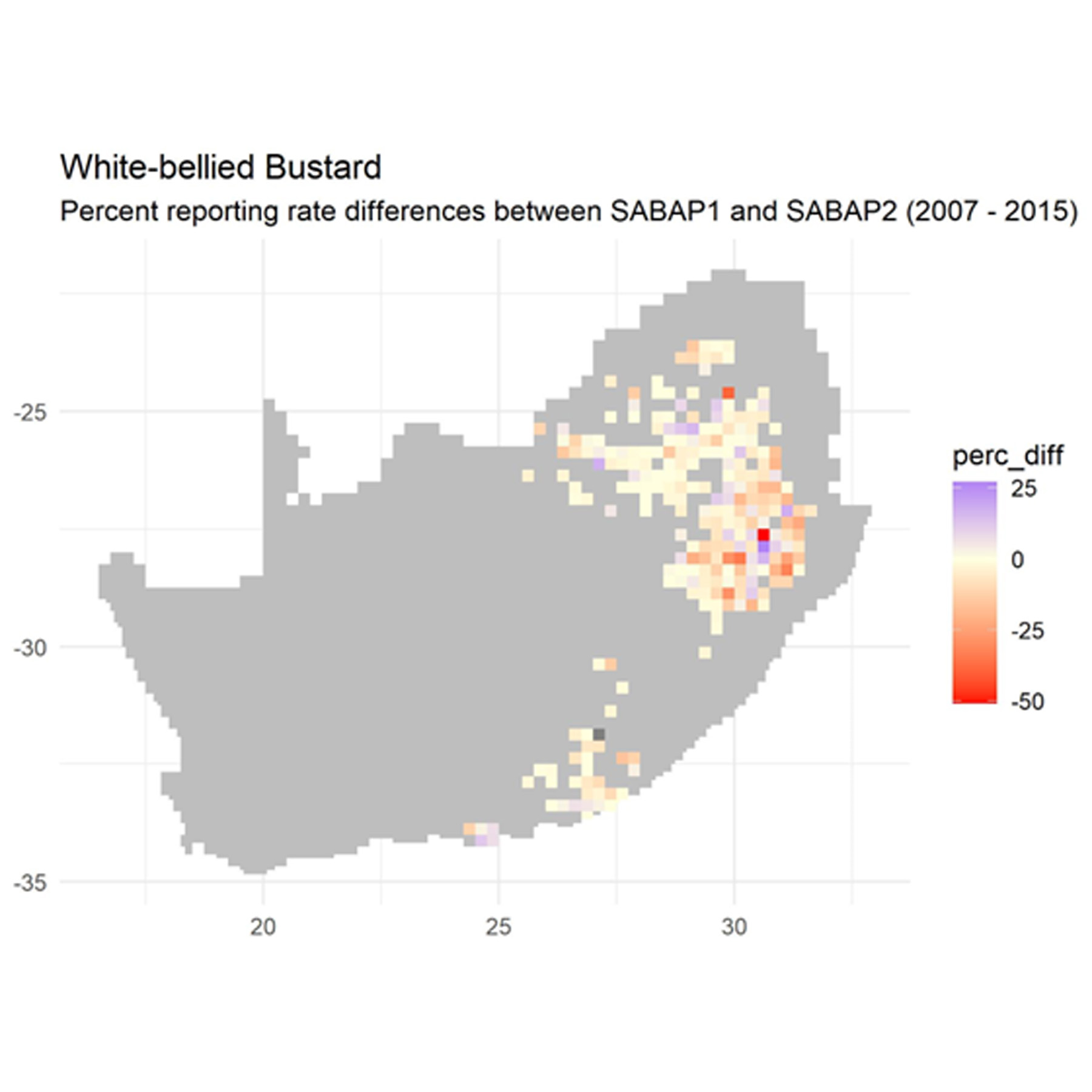
Figure 1a: SABAP distribution map showing percent reporting rate change between SABAP1 (1987-1991) and SABAP2 (2007-2015).
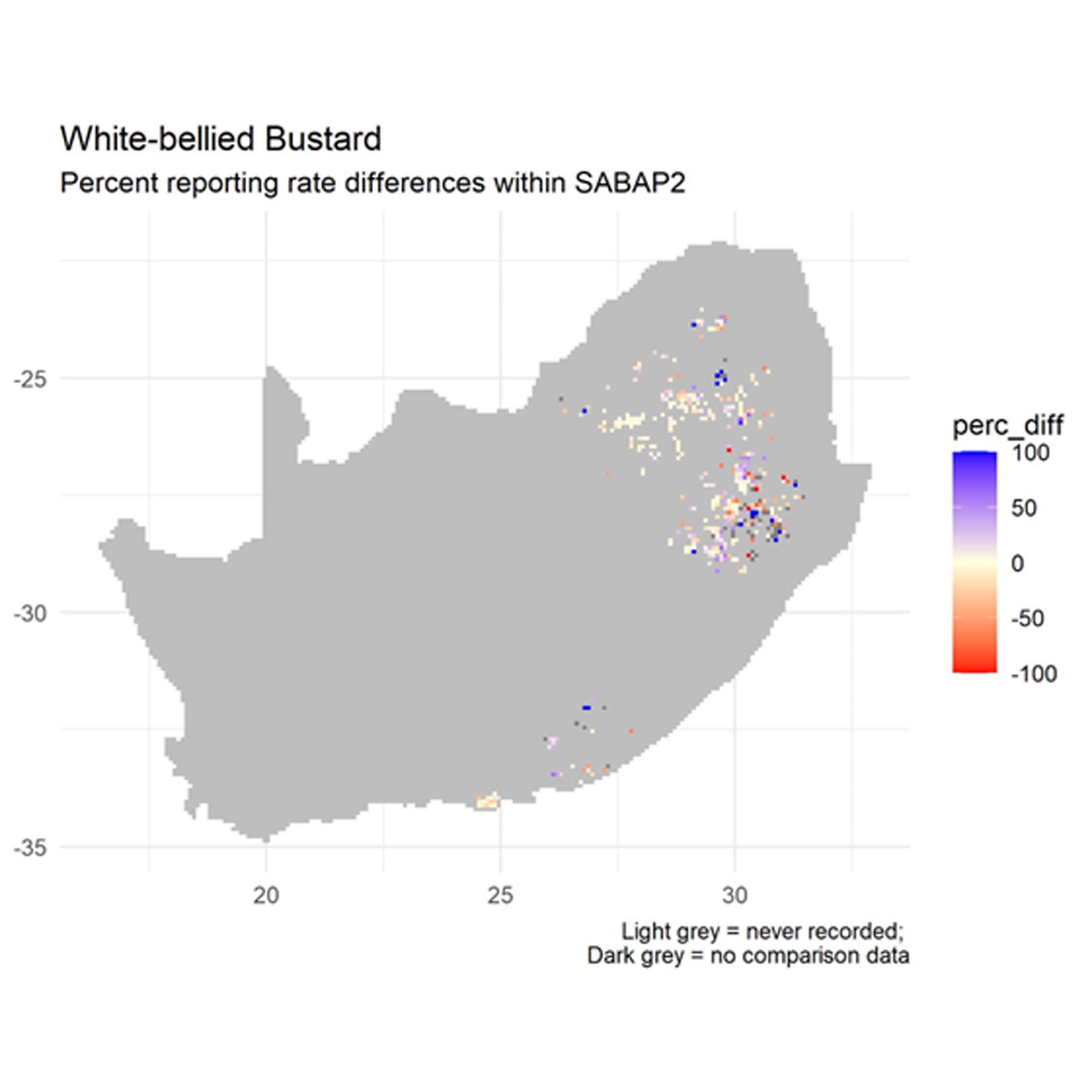
Figure 1b: Recent SABAP2 distribution maps showing very erratic number of records during SABAP2 (2007-2015).
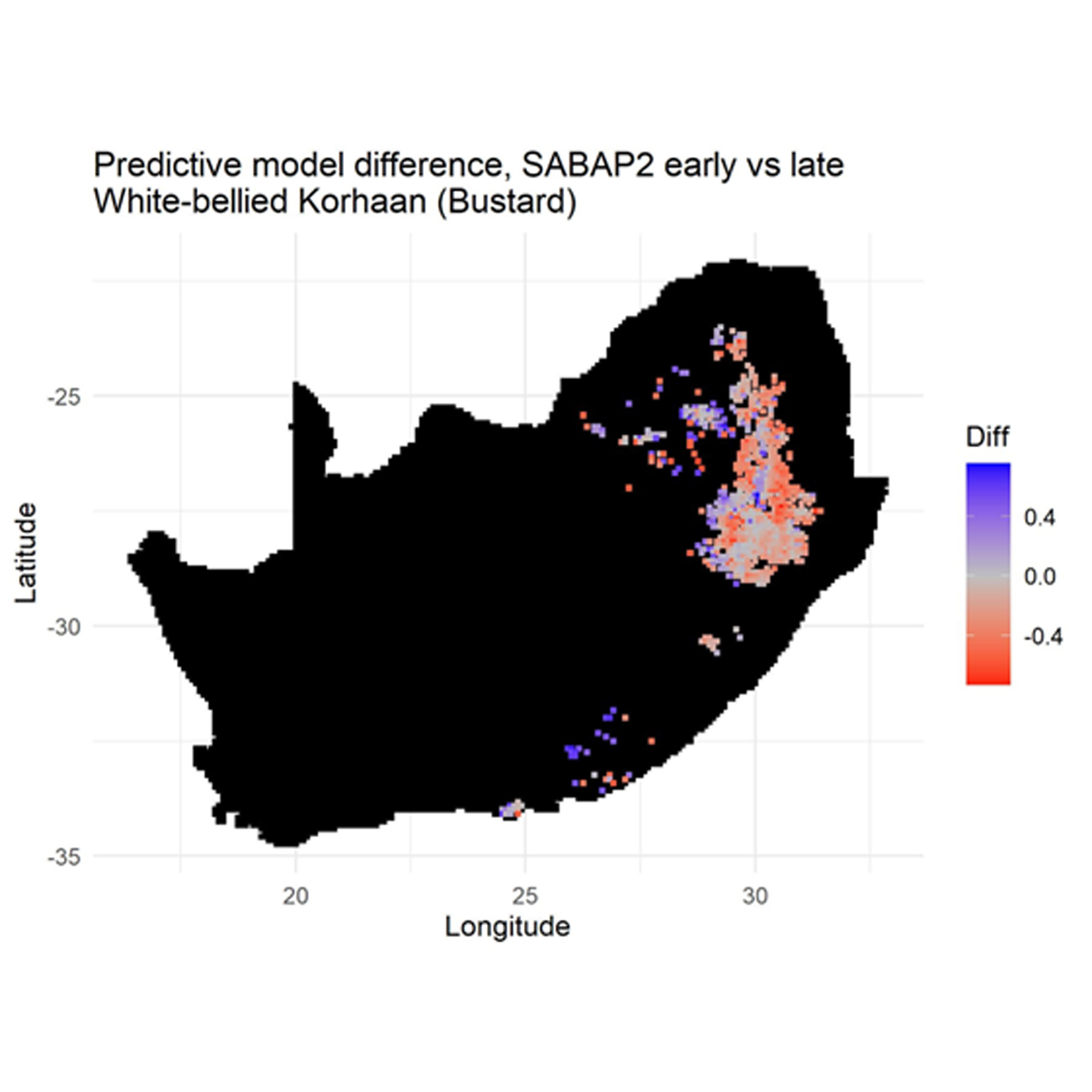
Figure 1c: Predictive modelled range change for White-bellied Korhaan over three generations between early (2007-2015) and late (2016-2023) SABAP2. Red indicating regions of decline.
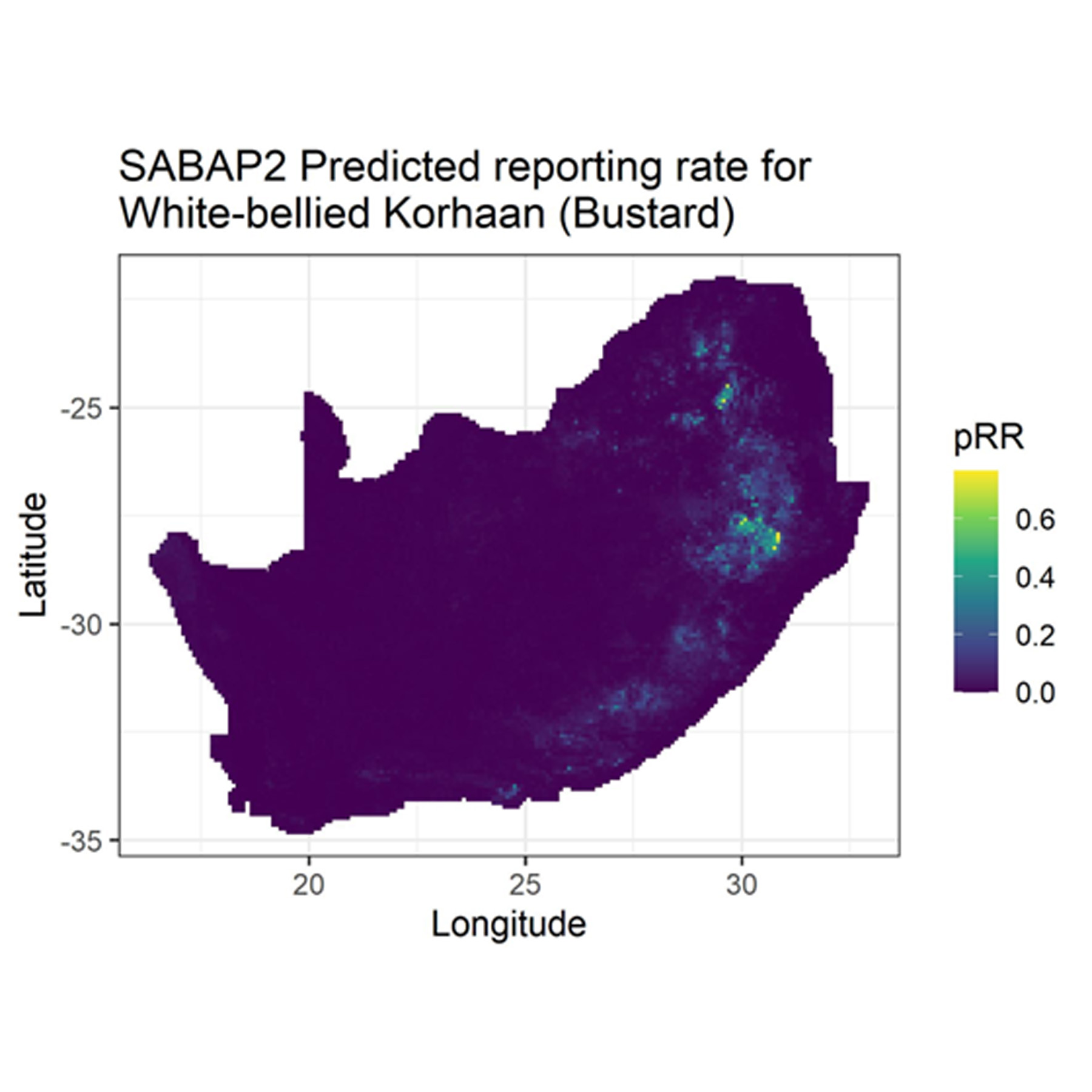
Figure 1d: The SABAP2 reporting rate prediction model indicating reasonably widespread yet fragmented White-bellied Korhaan distribution throughout the eastern grasslands (from Lee 2024).
Biology & Ecology
Taxonomy
(mostly following the 2015 text, but some updates)
The White-bellied Korhaan (more widely known as the White-bellied Bustard) has had a confusingly dynamic history in terms of its taxonomy and nomenclature (reviewed by Allan (2010a, 2010b)). The type specimen was collected in the Eastern Cape by Levaillant in the late 1700s. This specimen was sold in 1793 (and subsequently disappeared) but the sale catalogue prepared by Lichtenstein, served as the formal type description of the species, as Otis cafra. However, Lichtenstein’s son later erroneously attributed his father’s description to Denham’s Bustard (now Neotis denhami), and not White-bellied Korhaan (Denham’s Bustard’s actual type specimen was collected at Lake Chad, some forty years after Levaillant’s Eastern Cape bird). A separate specimen of a White-bellied Korhaan from Senegal undeservingly carried the type description for the species, published by Vieillot in 1820 as Otis senegalensis.
This mistake was discovered a century later. The International Commission on Zoological Nomenclature ruled to suppress the name cafra, changing Denham’s Bustard to denhami and retaining senegalensis for White-bellied Korhaan in the mid-1950s. Regrettably, this change was not adapted in South African ornithological literature, in which the name Eupodotis cafra was used for the White-bellied Korhaan until it was finally corrected in 2005 (Allan 2005). Soon thereafter, a new development occurred in the proposal that the isolated South African population be elevated to species-level, as Barrow’s Korhaan E. barrowii. Five subspecies of the White-bellied Korhaan are generally recognised (del Hoyo et al. 1996): E. s. senegalensis (Mauri- tania and Guinea to Sudan and Eritrea), E. s. canicollis (Ethiopia to Tanzania), E. s. erlangeri (Kenya and western Tanzania), E. s. mackenziei (Central Africa, south to Zambia and Angola) and E. s. barrowii (South Africa). However, Collar (1996) was of the opinion that subtle differences in plumage and call alone do not justify the treatment of barrowii as a separate species, but Barnes (2000) insisted that the taxonomic status of the White-bellied Korhaan deserves investigation, and the recognition of barrowii rapidly gained traction in the popular literature. This elevation would be of particular significance for conservation, raising the status of the taxon to a threatened South African endemic, instead of merely an outlying population of a widespread Afrotropical species listed as Least Concern.
The affinities and indeed validity of some subspecific taxa introduced further confusion. Two main groupings are considered (Kirwan et al. 2021); the northern senegalensis group (including subspecies E. s. canicollis and E. s. erlangeri) with darker colouration, grey-blue necks, and moustachial stripes; and the southern group (subspecies E. s. barrowii and E. s. mackenziei) with rufous hind-necks and lack of moustachial stripes (Kirwan et al. 2021). Clarity on the phenotypic characteristics separating the different sub-species are inconsistent (see Kirwan et al. 2021), but the rufous hind-neck and moustachial stripes are the most prominent differences separating the southern and northern group. Isolated sight records of White-bellied Korhaans from northern Namibia (attributable to the subspecies mackenziei), raised the question of whether mackenziei should be included with barrowii under Barrow’s (Southern White-bellied) Korhaan E. barrowii or included with the other three African races as (Northern) White-bellied Bustard E. senegalensis. Sinclair and Ryan (2003) opted for the latter, despite the similarity of barrowii and mackenziei, both of which differ from populations in East Africa in e.g. having a rufous hind-neck and lacking a moustachial stripe. There has been no further study on the taxonomy of White-bellied Bustard across Africa (Kirwan et al. 2021).
The subspecies barrowii (South Africa) and mackenziei (mainly occurring in Zambia and Angola) are separated by c. 1000 km of arid Kalahari savanna, and this barrier would be at maximum during glacial maxima. The subspecies mackenziei is separated from erlangeri by c. 1500 km in western Tanzania, separated by miombo woodland. Recent sightings from Southern Zambia and northern Namibia represent subspecies mackenziei. Kirwan et al. (2021) claims that the mackenziei subspecies is somewhat intermediate in colouration between the southern and northern subspecies, by having the rufous hind-neck of barrowii, but the rufous breast band of senegalensis group. Yet, photographs on iNaturalist show that some erlangeri also lacks the tawny breast band. Based on current evidence, the South African population is best considered a subspecies, but given the declining AOO and estimates of mature barrowii individuals, a thorough study is needed. It will be important to assess the degree of gene-flow and dispersal between mackenziei and barrowii and to what extend barrowii represents a distinct evoluntionary significant unit.
Identification
44–55 cm, 0.9–1.1 kg. An attractive medium-sized korhaan that is usually detected by its far-carrying honking or croaking calls. Sexes differ in size and plumage colouration. In adult male, crown and front of neck blue-grey; hind neck rufous in southern races barrowii and mackenziei (but blue-grey in the northern races senegalensis, canicollis and erlangeri). Subspecies mackenziei shows a tawny band across chest, separating blue-grey neck from white belly (Kirwan et al. 2021). Remainder of upperparts tawny-rufous, lacking distinct markings. Face white, with black patch on nape and throat.
Southern groups barrowii and mackenziei lack a black malar stripe, with barrowii occasionally showing a blue patch below the eye (Kirwan et al. 2021). In barrrowii, both sexes show a shorter tarsus length than in mackenziei (Kirwan et al. 2021). White underside diagnostic in both sexes. Females lack blue colouration and dark throat markings. Females of race barrowii distinguished by buffy face (white in other races) and darker back, and dark vermiculation on the crown (Kirwan et al. 2021). Bill dusky with pinkish base. Eyes brown. Legs whitish yellow. Juvenile similar to female but has speckled or vermiculated crown (Allan 2005).
Distribution
The White-bellied Korhaan is patchily distributed in the Afrotropics from West Africa to South Africa (Allan 2005) (Figure 2). Of the five subspecies, barrowii, is geographically separated from other races further north in Africa, being restricted to eastern South Africa and adjacent south- western Eswatini (Allan 1997, Barnes 2000). This southern subspecies, barrowii, is separated from subspecies mackenzii on the upper Zambezi floodplain by >1000 km of arid Kalahari savanna. There have been no further records from south-eastern to central Botswana where the species was sporadically reported from in the 1980-1990s, despite the former area being well covered during SABAP2 period (grid cell 2525A) (Cyrus and Robson 1980, Penry and Jahns 1994).
The habitat in south-eastern Botswana represents an extension of the South African Highveld grassland/moist savanna ecotone along the hills in the vicinity of Kanye and Lobatse, bordering the arid Kalahari savanna. This region would represent very marginal habitat for White-bellied Korhaan and would explain the lack of further records from the area. There have also been no recent reports from the lowlands of Lesotho (see Bonde 1993).
Densities vary greatly in different parts of the range, but overall, it is most commonly reported along the Witwatersrand east of Zeerust, to northern Gauteng, northern Mpumalanga, southern Limpopo (Figure 1), with strongholds in the distribution in southern Mpumalanga and north-western KwaZulu-Natal (north and south of Wakkerstroom district (Moreira 2004)). There are fewer reports from the central North West province (east and north of Potchestroom) compared to SABAP1. Populations occur on the Polokwane Plateau and Waterberg Plateau in Limpopo, but these are not clearly isolated from the Highveld populations SABAP2 (Tarboton et al. 1987, Allan 1997). Numerous isolated populations also persist in the Eastern Cape: the species currently occurs in a fragmented band from Komani (Queenstown), southwards to Bedford, and through to the Albany Region (Makana, Bathurst, and Sidbury districts), with a further remnant population on the coastal plain between Humansdorp and St Francis Bay (Figure 1).
The Eastern Cape population seems to have become more isolated from the Highveld population in recent years, with no records between Komani (Queenstown) and the Orange River, and reduced sightings in the former Ciskei regions and Qonce (King Williamstown region) during SABAP2. The White-bellied Korhaan is apparently absent from the former Transkei (Quickelberge 1989, Allan 1997), although this area is still poorly covered by SABAP2. Within the SABAP2 period, the AOO has decreased by 38%, and that succeeds a 50% reduction reported in AOO between SABAP2 and SABAP1 (du Plessis et al. 2015). The White-bellied Korhaan is well represented in the IBA network, being recorded at 14 different sites (du Plessis et al. 2015).
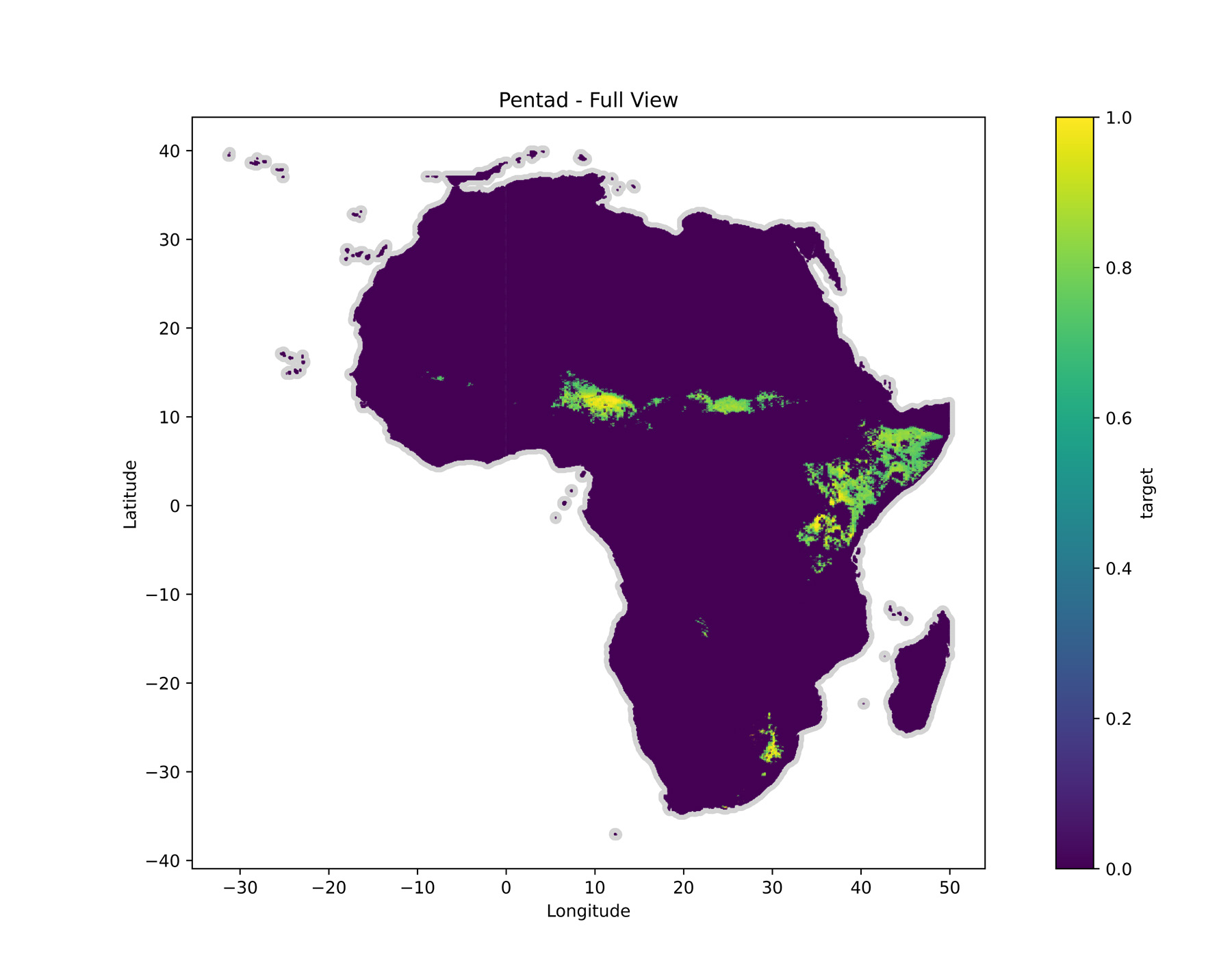
Figure 2: Probability distribution map for White-bellied Korhaan, showing occurrence across Africa from iNaturalist, eBird and ABAP data. Yellow indicates regions of greater probability of occurrence. Map from Lee (2024).
Ecology
The White-bellied Korhaan is a near-endemic to the Grassland Biome (Allan 1997, 2005), often occurring in ecotones with savannah and fynbos (Allan 2005). On the Highveld, the White-bellied korhaan is more frequently found at altitudes below 1400 m asl, where they reach their highest reporting rate density below the escarpment of Mpumalanga and KwaZulu-Natal, e.g. the region south of Utrecht, KZN. Although most sources state that the species requires longer grass (30–60 cm) than most other bustards and generally avoids overgrazed and recently burnt areas (Moreira 2004), the birds do occasionally move into open areas in winter to forage (Moreira 2004), including recently burnt grassland. It appears that landscapes with a mosaic of tall and short grassland is most preferred (B Smit pers obs). On farms they may also make use of cultivated pastures as an artificial grassland habitat (Young et al. 2003) but are found in crop fields only after harvesting (D Swanepoel pers obs).
Threats & Conservation
Threats
The main threats are a familiar list of problems also facing other bustard species. The relative severity and potential impact of these threats have not been quantified or even assessed, but of particular concern are habitat loss and degradation due to agriculture, afforestation (invasive alien vegetation and timber plantations), overgrazing, urban development, unsuitable burning practices, and other habitat modifications as a result of growing human populations (Moreira 2004, Allan 2005). Clancey (1972) mentioned fires as a threat to chicks, but this is unlikely to constitute a major threat during the breeding season in the summer rainfall area. The loss of habitat to bush encroachment poses a threat to White-bellied Korhaans, although the species appears to be adaptable to low levels of woody cover in grasslands. Apart from habitat loss, the threat of subsistence hunting and poaching, due to high human densities, also needs to be considered. Collisions with powerlines do not seem to pose as serious a threat as it does to larger bustard species, with only a single record of a male killed in this fashion on record (Allan 2005). There has also been a substantial increase in wind farms in prime-habitat for White-bellied, particularly in the Eastern Cape around Bedford and Humansdorp. There is no information on the risk of wind turbine mortality to White-bellied Korhaans.
Conservation Measures Underway
Biodiversity stewardship programmes in the relevant biomes will reduce further habitat loss and unsustainable persecution. A specific Research and conservation of White-bellied Korhaan projected was initiated in the 2000s but disbanded. In 2024, the NGO Bustards Without Borders initiated a collaboration between bustard experts that aims to complete a multi-species action plan for bustards globally. This will include a conservation action plan for southern African species, with a strong focus on threatened species such as the White-bellied Korhaan.
Conservation Measures Proposed
There is a danger that declines over long periods go unrecognised and hence unremedied; the White-bellied Korhaan is a prime candidate for this risk. Conservation of larger parts of the grassland biome on private and government level (formal protection currently <3%) is strongly recommended. Proper management of fires and grazing pressure should be implemented in conservation areas and on private land, in order to create heterogeneity in the structural and floristic components of preferred habitats.
Research Priorities and Questions
- The regional population size needs to be established.
- An investigation into the life-history traits of the species should be conducted, including research on its breeding biology, foraging ecology, habitat requirements on a temporal and spatial scale, inter-and intra-specific behaviour, seasonal movements and density effects related to habitat use and availability.
- Clarification of the taxonomic status of E. s. barrowii and E. s. mackenziei is still needed urgently.
- An assessment of whether the existing IBA and protected areas network in the region are sufficient to ensure long-term survival of the White-bellied Korhaan in South Africa should be undertaken.
Contributors & References
Assessor/s
Ben Smit
Reviewer/s
Niall Perrins
References
Allan DG. 1997. White-bellied Korhaan Eupodotis cafra. In: Harrison JA, Allan DG, Underhill LG, Herremans M, Tree AJ, Parker V, Brown CJ (eds), The atlas of southern African birds Vol I: Non-passerines. Johannesburg, South Africa: BirdLife South Africa. pp 256–257.
Allan DG. 2005. White-bellied Korhaan Eupodotis senegalensis. In: Hockey PAR, Dean WRJ, Ryan PG (eds), Roberts – Birds of Southern Africa 7th Edn. Cape Town, South Africa: The Trustees of the John Voelcker Bird Book Fund. pp 304–305.
Allan D. 2010a. The White-bellied Korhaan’s identity crisis-Part 1. Bustard Beat 1:20–21.
Allan D. 2010b. The White-bellied Korhaan’s identity crisis-Part 2. Bustard Beat 2:23–25.
Barnes KN. 2000. White-bellied Korhaan Eupodotis cafra. In: Barnes KN (ed), The Eskom Red Data Book of Birds of South Africa, Lesotho and Swaziland. Johannesburg, South Africa: BirdLife South Africa. pp 107–109.
BirdLife International. 2016. Eupodotis senegalensis. The IUCN Red List of Threatened Species 2016: e.T22691996A93332403. https://dx.doi.org/10.2305/IUCN.UK.2016-3.RLTS.T22691996A93332403.en. [Accessed on 19 September 2024].
BirdLife International. 2024. Eupodotis senegalensis. The IUCN Red List of Threatened Species 2024: e.T22691996A263667271. https://dx.doi.org/10.2305/IUCN.UK.2024-2.RLTS.T22691996A263667271.en. [Accessed on 24 January 2025].
Bonde K. 1993. Birds of Lesotho: a guide to distribution past and present. Pietermaritzburg, South Africa: University of Natal Press.
Collar NJ. 1996. The reasons for red data books. Oryx 30: 121–130.
Cyrus DP, Robson N. 1980. Bird Atlas of Natal. Pietermaritzburg, South
Africa: University of Natal Press.
del Hoyo J, Elliot A, Sargatal J. 1996. Handbook of the Birds of the World,
Vol. 3: Hoatzin to Auks. Barcelona, Spain: Lynx Edicions.
du Plessis D, Taylor MR, Peacock F, In: Taylor MR, Peacock F, Wanless RM. 2015. The 2015 Eskom Red Data Book of Birds of South Africa, Lesotho and Swaziland. Johannesburg: BirdLife South Africa. pp 232–234.
Kirwan GM, Collar N, Garcia EFJ, Boesman PDF. 2021. White-bellied Bustard (Eupodotis senegalensis). In: Keeney BK (ed), Birds of the World (version 2. Cornell Lab of Ornithology. Ithaca, New York.
Lee ATK. 2024. Regional Red Data Book of the Birds of South Africa, Lesotho and Eswatini: SABAP2 synthesis and supporting information and graphics for White-belllied Korhaan (Bustard). Unpublished report. Johannesburg: BirdLife South Africa.
Moreira F. 2004. Distribution patterns and conservation status of four bustard species (Family Otitidae) in a montane grassland of South Africa. Biological Conservation 118: 91–100.
Penry H, Jahns A. 1994. Bird Atlas of Botswana. Pietermaritzburg, South
Africa: University of Natal Press.
Quickelberge C. 1989. Birds of the Transkei. Durban, South Africa: Durban Natural History Museum.
Sinclair I, Ryan PG. 2003. Birds of Africa: south of the Sahara. Cape Town, South Africa: Struik.
Senyatso KJ, Collar NJ, Dolman PM. 2013. Assessing range-wide conservation status change in an unmonitored widespread African bird species. Diversity and Distributions 19: 106–119.
Tarboton WR, Kemp MI, Kemp AC. 1987. Birds of the Transvaal. Pretoria,
South Africa: Transvaal Museum.
Young DJ, Harrison JA, Navarro RA, Anderson MD, Colahan BD (eds). 2003. Big Birds on Farms: Mazda CAR Report 1993–2001. Cape Town, South Africa: University of Cape Town, Avian Demography Unit.
Citation
Smit B 2025. White-bellied Korhaan. In: Lee ATK, Rose S, Banda S, Bezeng SB, Maphalala MI, Maphisa DH, Smit-Robinson H (eds), The 2025 Red Data Book of Birds of South Africa, Lesotho and Eswatini. Johannesburg, South Africa: BirdLife South Africa. Available at: https://www.birdlife.org.za/red-list/white-bellied-korhaan/
Our generous sponsors


