


Red Listing
Acknowledgements
To All Involved: a Heartfelt Thank You
The species accounts associated with the Red Listing were compiled over a long period of time, starting with planning in 2021. During 2022 and 2023 we collected data where we could and started to analyse the citizen science databases (SABAP2, CWAC and CAR), providing synthesis documents for previously assessed species as well as species newly identified to be in decline. Many people have helped along the way: thanks to all assessors and reviewers for each species account, for which this work would not have been possible.
Domitilla Raimondo provided funding via the South African National Biodiversity Institute (SANBI) to the Centre for Statistics in Ecology, the Environment and Conservation (SEEC) for assistance with occupancy modelling resulting in the BIRDIE project, where modelling was undertaken by Fransico (Pachi) Cervantes guided by Res Altwegg. Maria Paul (SANBI) assisted immeasurably with foundation texts for new species which had never been assessed before. Carol Poole and Dewidine van der Colff (SANBI) also provided assistance and feedback on tricky assessments. Kevin Shaw was contracted to undertake species assessments when taxon experts were unavailable and to provide an independent account of controversial species.
A lot of the database is based on the information compiled by Martin Taylor during his time at BirdLife South Africa. Martin Taylor provided advice, guidance, and helped profile additional species flagged as declining from SABAP2 data. Ernst Retief was part of the Science and Innovation Programme until the end of 2023 and played a significant role in guiding the process, as well as contributing to our state of the knowledge on detailed species distribution maps. David Ehlers Smith provided immeasurable assistance on all components of Red Listing, from modelling, to a very large number of species accounts written and reviewed.
Ian Burfield and Rob Martin of BirdLife International provided helpful resources and guidance. It’s been a pleasure to work with the South African Names for South African Birds group (SANSAB), who suggested species specific local names for those species for which such names were lacking or confusing – also for new species which happens to be new in the region. We concentrated on isiZulu, Siswati and Sesotho because Zulu is the only language which until now has names for all the region’s birds, and because the region covers the sovereign nations of Eswatini and Lesotho.
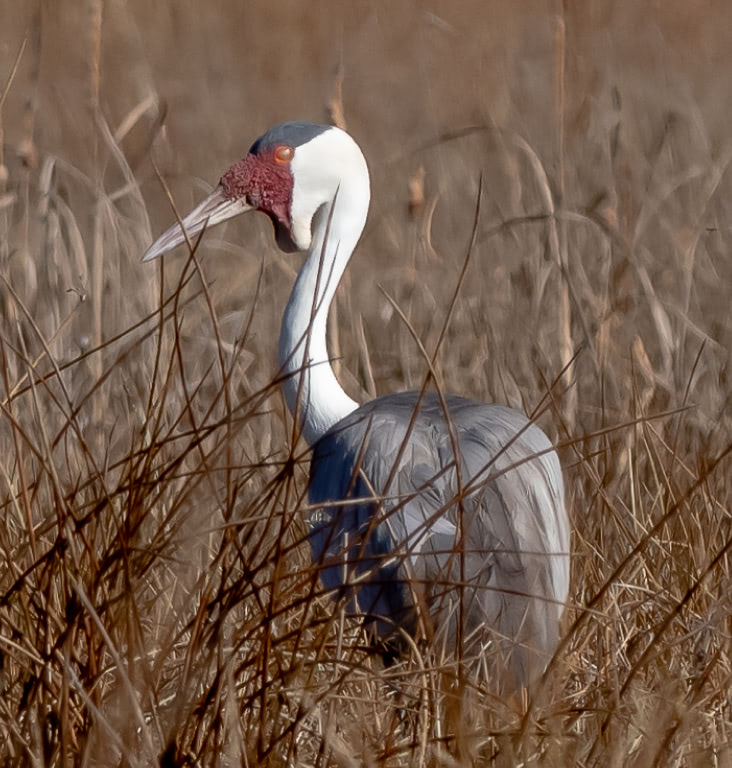
Christie Wooding helped with formatting, website assistance, sourced photographs and worked behind the scenes to amalgamate our point count data, provided by various contributors including Steven Segang, Daniel Cloete and Eric Herrmann. Kyle Lloyd provided the section on White-winged Flufftail to the Introduction. Kurt Martin, Richard Park, and Hilda Kritzinger provided invaluable assistance with website design, and Cindy de Bruyn was very patient with our demands for the website.
Susan du Toit was an influential supporter, especially working with Italtile and Ceramic Foundation. Inba Pillay laid the groundwork for securing Eskom co-sponsorship over a three-year period of this project, subsequently overseen by Iris Cloete and Fiona Havenga: the support of Eskom is much appreciated. Ester van der Westhuizen-Coetzer has been a strong supporter of BirdLife South Africa and a strong conservation ally in the Northern Cape, together with Ekapa Minerals. Thanks to Carol Poole (SANBI) for facilitating the Spatial Biodiversity Assessments, Prioritisation and Planning (SBAPP) grant, with supported Sanjo and Shamiso’s involvement in this project. Thanks to the EDF Renewables for contributions that assisted in the final stages, specifically the website. Nokulunga Gasa and Anisha Maharaj-essack are thanked for her stewardship from the FirstRand Foundation Trust. Tshepo Ramodibe from IDC is thanked for their support of the project. This publication would also not be possible without the support from AFRIT, especially Gerben and Gerrit van de Wetering.

Henk Nel of BirdLasser provided point location data for the use of habitat suitability models: thanks to all users of the BirdLasser app and those that contribute to the Threatened Species Cause. Thanks to Michael Brooks for his management of the citizen science projects hosted at the FitzPatrick Institute of African Ornithology at the University of Cape Town, and all the coordinators and participants that have made these databases the phenomenal foundation of knowledge that they are. The citizen scientists that have supported and continue to support SABAP2, CAR and CWAC are the foundation of the state of knowledge of South Africa’s birds. Donations were received from Eckhart J. Buchmann, Renier Balt and David Ludlow to undertake SABAP2 atlassing expeditions and support aspects of SABAP2 data analysis. Schalk Burger (Nitrique Energy) made a donation which contributed to the developments of these webpages. The Lesotho Highlands Development Agency (LHDA) part-sponsored atlassing expeditions to Lesotho. Pierre Pistorius, Ben Smit and Christiaan Brink were helpful in planning stages identifying taxon experts. Dominic Henry provided R functions and templates for occupancy modelling. John Kinghorn provided expert opinion from the bird guide perspective.
Thanks to the many photographers who contributed photos, especially Barry Cohen, Warwick Tarboton, Albert Froneman, Cassie Carstens, Steven Mills, Peter Ryan, Hugh Chittenden, Dylan Vasapolli and many more.
Azwianewi Makhado and Rob Crawford (Department of Forestry, Fisheries and the Environment (DFFE)) provided seabird population data/estimates and deserve special mention due to the outsize contribution of their efforts.
Alan wishes to thank co-workers who collaborated on funding grant applications that supported this work, including Andrea Angel, Ernst Retief and Nandi Thobela. He would also like to thank Elizabeth Parker and the Mapula Trust for supporting his work into the future. This has been a long journey, and apologies for forgetting you if you helped along the way (reach out and let me know so I can update this document!).
And once again, thanks to the sponsors of BirdLife South Africa, without which this work would not have been possible.
Our generous sponsors


