


White-backed Duck
Thalassornis leuconotus

Number Of Mature
Individuals (Regional)
2 088 – 4 959

Regional
Population Trend
Decreasing
2025
Regional Category
Near Threatened
Search by species
CONTENTSOverview
Names
|
IOC English Name: |
White-backed Duck |
|
SA & IOC Scientific Name: |
Thalassornis leuconotus |
|
BirdLife International Taxonomy (scientific name): |
Thalassornis leuconotus |
|
Order: |
ANSERIFORMES |
|
Family: |
Anatidae |
|
Species name author: |
Eyton 1838 |
|
Afrikaans: |
Witrugeend |
|
Sesotho (South Africa): |
letata-nkatatshowana |
|
Sesotho (Lesotho): |
letata-nkatatooana |
|
Siswati: |
|
|
Zulu: |
inzwinzwi |
Current Assessment Status
|
2025 Regional Category [Criteria] |
NTo [C1] |
|
2024 Global Category [Criteria] |
LC (BirdLife International 2024) |
|
Population size (Regional) |
2088 – 4959 |
|
Population size (Global) |
8500 – 20 000 (BirdLife International 2024) |
|
Distribution size (EOO) (Regional) km2 |
1 002 016 (Lee 2024) |
|
Distribution size (EOO) (Global) km2 |
25 000 000 (BirdLife International 2024) |
|
Distribution size (AOO) (Regional) km2 |
35 250 (BIRDIE 2024) |
|
Generation time |
5.55 years (BirdLife International 2024) |
|
Status change reason |
Genuine change in status |
|
Migrant (in the region) |
No |
|
Regional endemic |
No |
Historic Listing Information
|
2000 Regional Status |
Not Evaluated |
|
2015 Regional Status |
Not Evaluated |
|
Status change reason (if applicable) |
Not applicable |
|
2015 Population size (Regional) |
Unknown |
|
2015 Global Status |
LC |
Reason for Inclusion
Reason for Inclusion in the Assessment
White-backed Duck Thalassornis leuconotus was not previously considered to be a species of conservation concern and was listed as Least Concern. Preliminary screening of Coordinated Waterbird Counts (CWAC) data indicated a significant decline in number of White-backed Duck counted per year (Lee 2024).
Category Justification
Category Justification
The White‐backed Duck’s Extent of Occurrence (EOO) and Area of Occupancy (AOO) both exceed the thresholds for listing under Criterion B. Trend estimates from CWAC data indicate a decline over three generations sufficient (>30%) to potentially meet the threshold for Vulnerable under Criterion A, but the very broad confidence intervals complicate the interpretation of these findings. Nonetheless, current information suggests that the regional population likely numbers fewer than 10 000 mature individuals, meeting the numerical threshold for listing under Criterion C. Subpopulations are not well quantified, precluding C2. Given the low confidence in the exact rate of decline and the possibility of rescue effects from populations outside the region, the species is best assessed as Near Threatened, specifically under Criterion C1 as declines likely exceed 10% over three generations.
Population Justification
The global population is estimated at 8500 – 20 000 mature individuals (BirdLife International 2024). The regional population size was unknown but assumed to be <10 000 mature individuals. Modelled Africa wide distribution suggests 26.1% of the species range occurs in the region, implying the regional population is 2088 – 4959.
These results from the CWAC database provide a rough indication of White-backed Duck numbers across surveyed sites. When aggregating data from all seasons, the sum of mean counts across sites is approximately 2344 individuals, with a maximum combined total of 5568 from 6674 recorded counts at sites where the species has been recorded. Breaking the data down by season suggests that the species is encountered more often in winter. In winter, the sum of site means is 2237 (max 4369), while in summer, it drops to 1364 (max 2308). Whether this is due to changes in populations or behaviour is unclear. These figures should be treated as minimum estimates, since not all locations are surveyed consistently, and they are likely underestimates of the actual regional population. However, the results are in line with the estimates derived from the BirdLife International population estimates, providing more confidence that that value represents the number of mature individuals in the region.
It is therefore assumed that the regional population is less than 10 000 for assessment against Criterion C.
Trend Justification
Determining regional population trends of duck species is very challenging. Besides being nomadic, White-backed Ducks are small and therefore easily overlooked. The global trend is decreasing (BirdLife International 2024). Trend analyses of Southern African Bird Atlas Project (SABAP2) data suggest a stable population trend with high confidence (Lee 2024), while data from the CWAC indicates a significant decline in counts over time (Figure 1). Seasonal fluctuations in abundance may exist, for example, White-backed Ducks were significantly more encountered during the winter months at Wilderness Lakes in the Western Cape (Russell 2023). Trends too in abundance appear to fluctuate over time, with a low abundance recorded during the 1980s followed by higher abundance during the 1990s and 2000s, then with a substantial decline in the 2010s on the Swartvlei system, Western Cape (Russell 2023).
Linear trend models applied to the top 20 most frequently counted sites suggest an annual rate of decline of 1.54% (CI: -3.0 to +0.06%). Analysis of White-backed Duck counts using the poptrend (Knape 2016) package indicates a potential overall decline of approximately 66 or 68% between 1998 and 2023 (three generations), using all CWAC data and excluding counts with >100 birds. However, the confidence intervals for both estimates are extremely broad (ranging from a possible 92–93% decline to an increase of around 49–54%), suggesting that the true trend is highly uncertain. These results therefore point to a likely decline in the population but highlight the need for caution given the wide range of possible outcomes.
This highlights the value and need for frequent and systematic monitoring at sites where this species occurs.
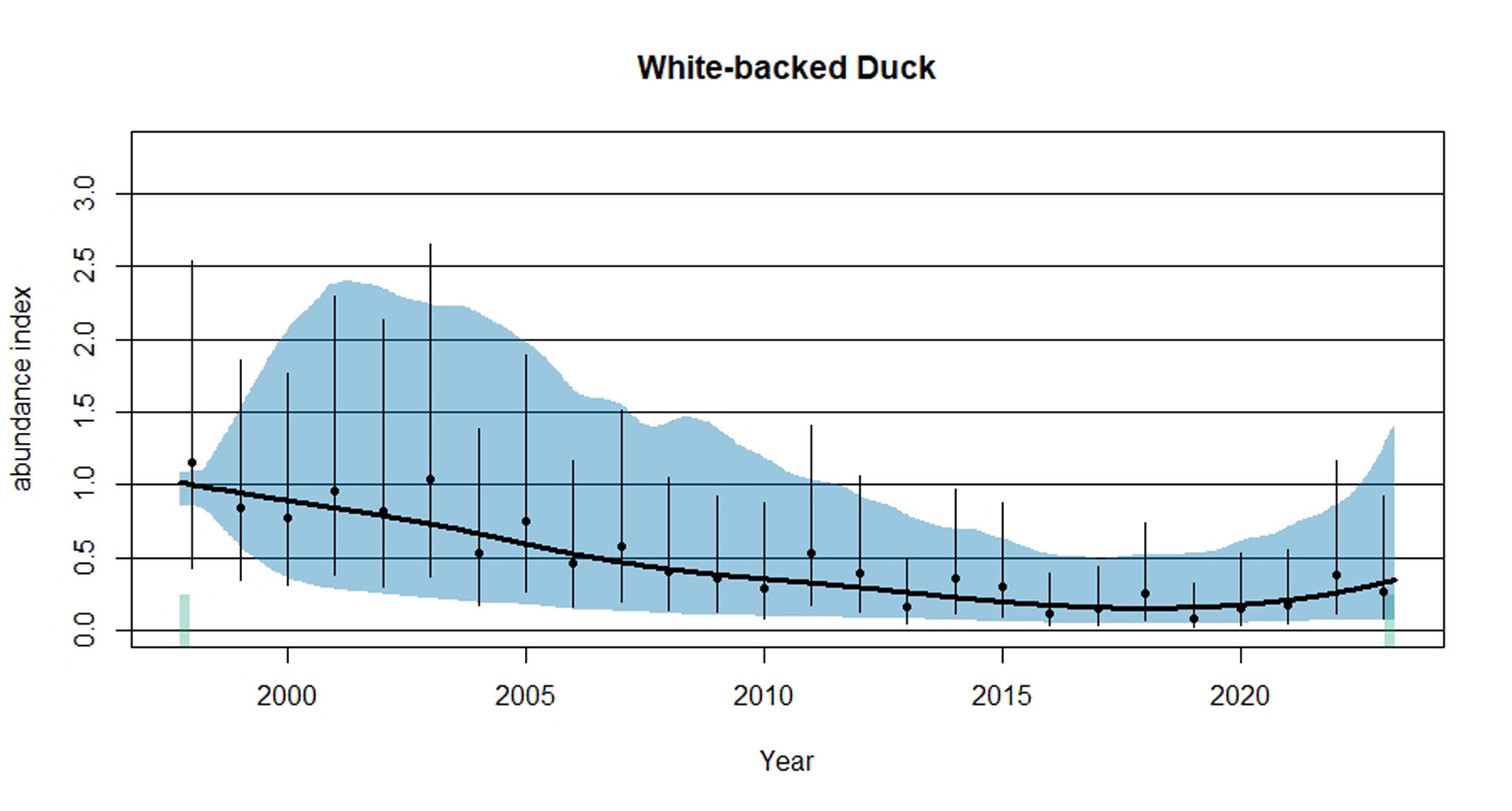
Figure 1: The poptrend (Knape 2016) model from the Coordinated Waterbird Counts (CWAC) results for White-backed Duck.
Biology & Ecology
Taxonomy
Two subspecies of White-backed Duck exist, the mainland African White-backed Duck T. l. leuconotus (Eyton 1838) and the Madagascar White-backed Duck T. l. insularis (Richmond 1897).
Identification
38–43 cm (Kear 2005). Sexes are similar in appearance (Safford and Hawkins 2013). The White-backed Duck has a black rump and upper tail coverts with narrow white barring and a black mid-back (Carboneras and Kirwan 2020). The crown, nape, and back of the neck are black, with feathers finely barred and edged in buff (Hockey et al. 2005). The face is buff-coloured with dense, coarse black speckles, darkest around the eyes, and a noticeable white patch over the front lores that sometimes reaches the eye, extending down past the gape to the tip of the chin (Hockey et al. 2005). The tail is short and tapered, blackish brown, with feathers edged and notched with buff (Hockey et al. 2005). The bill is slate black with yellow and green speckles, and the eyes are brown, with grey legs (Clancey 1964, Clancey 1967, Brown et al. 1982). Juveniles are darker with a smaller spot near the beak and have less distinct patterns, featuring black-spotted sides on the face and neck (Hockey et al. 2005).
Distribution
The White-backed Duck has an Afrotropical distribution, ranging from Ethiopia, Senegal and Chad in the north to South Africa in the south (Figure 2, Scott and Rose1996). Also, the species exists in Madagascar (Scott and Rose1996). The White-backed Duck is generally uncommon in northeastern South Africa (Tarboton et al. 1987). In the northern and eastern Free State and KwaZulu-Natal, the species is widespread but sparse (Hockey et al. 2005). In the Eastern Cape, it is scattered (Maclean 1997). The duck is uncommon and localised in the Western Cape, with most of the population confined to a few water bodies, primarily on the northern fringes of the Cape Peninsula and the southern coastal lowlands (Hockey et al. 1989).
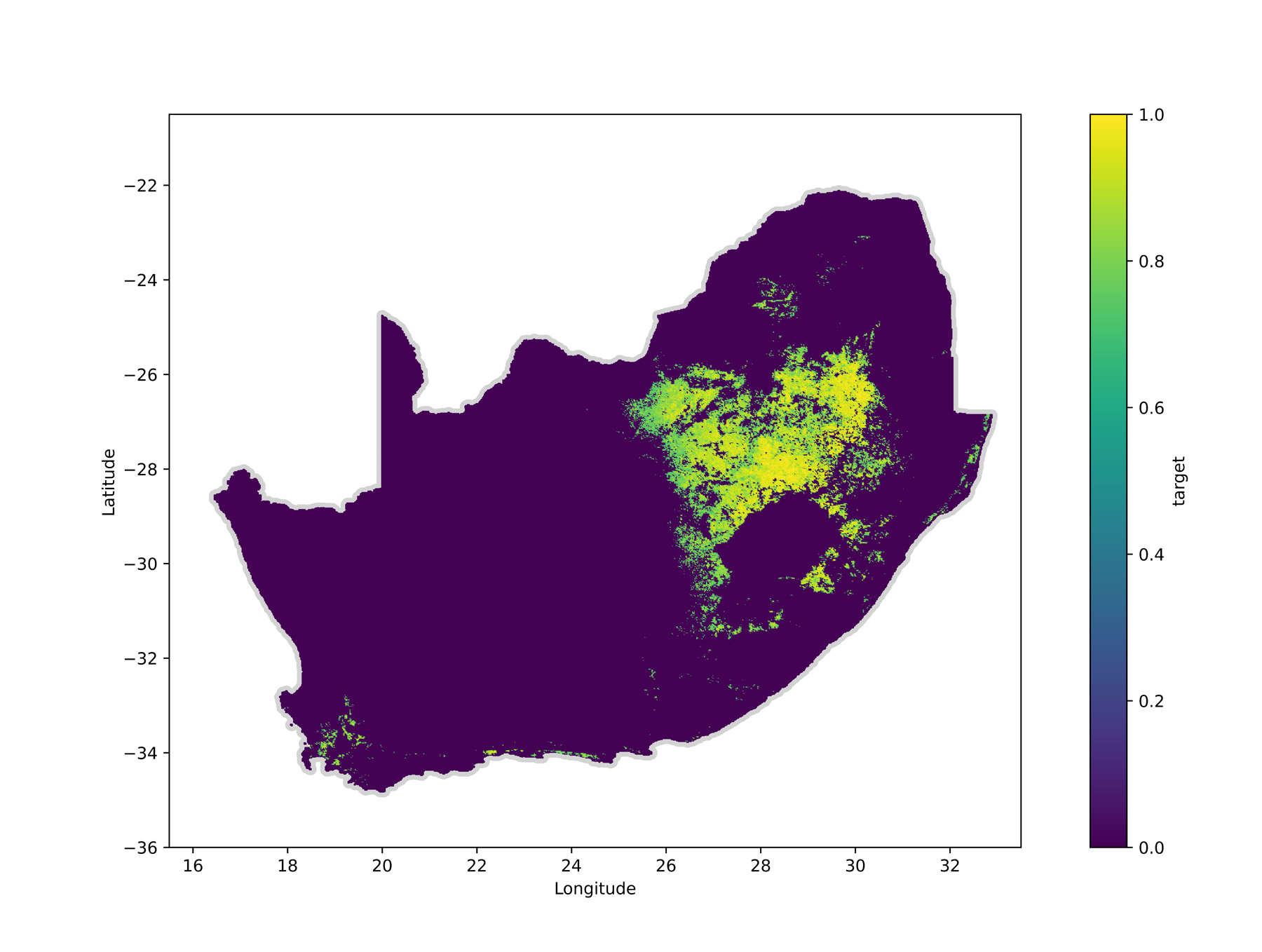
Figure 2: A probability distribution model of White-backed Duck at the 2×2 km grid resolution, trained by data from BirdLasser, iNaturalist and eBird data (from Lee 2024).
Ecology
This species typically resides in calm, shallow freshwater environments such as lakes, pools, and lagoons (del Hoyo et al. 1992). It is also found in pans, inland deltas, floodplains, marshes, and swamps that are surrounded by abundant emergent and floating vegetation, like reeds, papyrus, and water lilies (Nymphaea spp.) (Brown et al. 1982, Madge and Burn 1988, del Hoyo et al. 1992, Kear 2005). They generally avoid very open water (del Hoyo et al. 1992).
Migration pattern is mainly sedentary subject to local movements based on rainfall and water availability.
Timing of breeding varies geographically but it is theorised to coincide with higher water levels (del Hoyo et al. 1992). Age of first breeding likely less than one year old (Zaloumis 1987). Both sexes participate in constructing the nest (Kear 2005). The nest is made from weeds and typically lined with fine plant material, occasionally including some down or feathers (Tarboton 2001). Clutch consists of 4–10, chocolate brown eggs that are laid at 1–day intervals (Tarboton 2001, Kear 2005). Incubation is by both parents and lasts around 29–33 days (Tarboton 2001). Chicks are born capable of diving and swimming in a few hours and are cared for both parents (Safford and Hawkins 2013). Oldest known bird is 12 years (Hillgarth and Kear 1982).
Breeding success rate: A captive pair produced eight clutches over 18 months (Wintle 1981), suggesting they may be double- or multiple-brooded. Eggs were often found near nests, possibly due to displacement or egg-dumping attempts (Craib 1977). The nests, which do not float or rise with water levels, are vulnerable to flooding (Craib 1977).
This species is an excellent diver and forages by diving to the bottom of the water (Hockey et al. 2005). Mainly herbivorous, feeding mostly on seeds and leaves of aquatic plants, especially water lilies (Carboneras and Kirwan 2020). Young may feed on insect larvae (Chironomidae) and aquatic invertebrates (Kear 2005).
Threats & Conservation
Threats
Modification of wetlands, especially where native aquatic flora is affected, e.g. through the introduction of herbivorous fish (Kear 2005), introduction of exotic plants, deterioration in water quality through sedimentation and soil erosion in catchment areas (Scott and Rose 1996), and pollution (Kear 2005). Avian influenza and other pathogens are a potential risk, especially with spillover from domesticated and agriculturally kept birds (Abolnik et al. 2022).
Conservation Measures Underway
White-backed Ducks are protected in 169 pentads within a distribution of 672 pentads, yielding a relatively low protected ratio score of 0.25 (Lee 2024). They are not included in any species action recovery plan.
Conservation Measures Proposed
- Protect and restore wetland habitats crucial for the White-backed Duck, focusing on maintaining native aquatic flora and preventing the introduction of invasive species, particularly herbivorous fish.
- Develop and implement management plans for wetlands within the species’ range, addressing issues such as water quality, pollution, and habitat degradation due to deforestation and soil erosion in catchment areas.
- Collaborate with local communities, landowners, and government agencies to promote sustainable land-use practices and reduce the impact of human activities on wetland ecosystems.
- Establish a species-specific monitoring programme to track population trends, distribution, and habitat quality over time, complementing existing monitoring schemes like CWAC.
Research Priorities and Questions
- Investigate the factors driving the population decline indicated by CWAC data, such as habitat loss, degradation, or other threats, to inform targeted conservation actions.
- Conduct comprehensive surveys to estimate the regional population size and distribution of the White-backed Duck, filling knowledge gaps and establishing a baseline for future monitoring.
- Study the breeding biology, habitat requirements, and ecological interactions of the White-backed Duck to better understand its role in wetland ecosystems and identify critical areas for conservation.
- Assess the impact of invasive species, particularly herbivorous fish and exotic plants, on the White-backed Duck’s habitat and develop strategies for their management and control.
- Evaluate the effectiveness of current protected areas in safeguarding the White-backed Duck’s populations and identify potential sites for the expansion of the protected area network.
Contributors & References
Assessor/s
David Ehlers Smith, Maria Paul
Reviewer/s
Josephine Mundava-Maringa, Sanjo Rose
References
Abolnik C, Phiri TP, van der Zel G, Anthony J, Daniell N, de Boni L. 2022. Wild bird surveillance in the Gauteng Province of South Africa during the high-risk period for highly pathogenic avian influenza virus introduction. Viruses 14(9): 2027.
BIRDIE. 2024. An online platform for African wetland and waterbird data. Available: https://biodiversityadvisor.sanbi.org/contentmanagement/index?guid=42305260-12b0-4a92-912e-7d801d15fdac
BirdLife International. 2016. Thalassornis leuconotus. The IUCN Red List of Threatened Species 2016: e.T22679785A92830036. Available at https://dx.doi.org/10.2305/IUCN.UK.2016-3.RLTS.T22679785A92830036.en.
BirdLife International. 2024. Thalassornis leuconotus. The IUCN Red List of Threatened Species 2024: e.T22679785A209286572. https://dx.doi.org/10.2305/IUCN.UK.2024-2.RLTS.T22679785A209286572.en. [Accessed on 03 March 2025].
Brown LH, Urban EK, Newman K. 1982. The Birds of Africa, vol. 1. London: Academic Press.
Clancey PA. 1964. The Birds of Natal and Zululand. London: Oliver & Boyd.
Clancey PA. 1967. Gamebirds of Southern Africa. Cape Town: Purnell.
Craib C. 1977. Breeding of the White-backed Duck (R.104) on the Witwatersrand. WBC News 97: 4–5.
del Hoyo J, Elliott A, Sargatal J. 1992. Handbook of the Birds of the World, vol. 1: Ostrich to Ducks. Barcelona: Lynx Edicions.
Dowsett-Lemaire F, Dowsett RJ. 2006. The Birds of Malawi: An Atlas and Handbook. Liège: Tauraco Press & Aves.
Hillgarth N, Kear J. 1982. Diseases of stiff-tailed ducks in captivity. Wildfowl 33: 140–144.
Hockey PAR, Underhill LG, Neatherway M, Ryan PG. 1989. Atlas of the Birds of the Southwestern Cape. Cape Town: Cape Bird Club.
Hockey PAR, Dean WRJ, Ryan PG (eds). 2005. Roberts birds of southern Africa (7th Edn). Cape Town: Trustees of the John Voelcker Bird Book Fund.
Kear J. 2005. Ducks, Geese and Swans, vol. 1: General chapters; species accounts (Anhima to Salvadorina). Oxford, UK: Oxford University Press.
Knape J. 2016. Decomposing trends in Swedish bird populations using generalized additive mixed models. Journal of Applied Ecology 53: 1852–1861.
Lee ATK. 2024. Regional Red Data Book of the Birds of South Africa, Lesotho and Eswatini: SABAP2 synthesis and supporting information and graphics for White-backed Duck. Unpublished report. Johannesburg: BirdLife South Africa.
Madge S, Burn H. 1988. Wildfowl. London: Christopher Helm.
Maclean GL. 1997. Whitebacked Duck. In: Harrison JA, Allan DG, Underhill LG, Brown CJ, Herremans M, Parker V, Tree AJ (eds), The Atlas of Southern African Birds. Vol. 1. Johannesburg: BirdLife South Africa. pp 120–121.
Russell IA. 2023. Waterbird community changes in the Wilderness Lakes, South Africa (Part 1 of 3): Herbivores and omnivores. Koedoe 65: 1.
Safford RJ, Hawkins AFA (eds). 2013. The Birds of Africa. Volume 8. The Malagasy Region. London, UK: Christopher Helm.
Scott DA, Rose PM. 1996. Atlas of Anatidae populations in Africa and western Eurasia. Wetlands International, Wageningen, Netherlands.
Tarboton WR, Kemp MI, Kemp A. 1987. Birds of the Transvaal. Pretoria: Transvaal Museum.
Tarboton W. 2001. A Guide to the Nests & Eggs of Southern African Birds. Cape Town: Struik Publishers (Pty) Ltd.
Zaloumis EA. 1987. The nesting requirements of southern African waterfowl. In: Milstein P le S, Middleton E (eds), Partial Proceedings of the Gamebird Symposium. Pretoria: South African Wildlife Management Association. pp 126–135.
Citation
Ehlers Smith DA, Paul M 2025. White-backed Duck. In: Lee ATK, Rose S, Banda S, Bezeng SB, Maphalala MI, Maphisa DH, Smit-Robinson H (eds), The 2025 Red Data Book of Birds of South Africa, Lesotho and Eswatini. Johannesburg, South Africa: BirdLife South Africa. Available at: https://www.birdlife.org.za/red-list/white-backed-duck/
Our generous sponsors


