


Sooty Albatross
Phoebetria fusca

Number Of Mature
Individuals (Regional)
3 566

Regional
Population Trend
Decreasing
2025
Regional Category
Endangered
Search by species
CONTENTSOverview
Names
|
IOC English Name: |
Sooty Albatross |
|
SA & IOC Scientific Name: |
Phoebetria fusca |
|
BirdLife International Taxonomy (scientific name): |
Phoebetria fusca |
|
Order: |
PROCELLARIIFORMES |
|
Family: |
Diomedeidae |
|
Species name author: |
Hilsenberg 1822 |
|
Afrikaans: |
Bruinalbatros |
|
Sesotho (South Africa): |
Masikaledikepe yo mosootho |
|
Sesotho (Lesotho): |
|
|
Siswati: |
|
|
Zulu: |
unozulanyanonsundu |
Current Assessment Status
|
2025 Regional Category [Criteria] |
EN [A3e] |
|
2024 Global Category [Criteria] |
EN [A4bd] (BirdLife International 2018) |
|
Population size (Regional) |
c. 3566 breeding pairs |
|
Population size (Global) |
c. 10 617 – 14 328 (breeding, BirdLife International 2018) |
|
Distribution size (EOO) (Regional) km2 |
c. 720 (regional; breeding) |
|
Distribution size (EOO) (Global) km2 |
76 200 000 (BirdLife International 2018) |
|
Distribution size (AOO) (Regional) km2 |
334 (regional; based on colonies) |
|
Generation time |
21.6 years (Bird et al. 2020) |
|
Status change reason |
No change |
|
Migrant (in the region) |
No |
|
Regional endemic |
No |
Historic Listing Information
|
2000 Regional Status |
NT [A2d] |
|
2015 Regional Status |
EN [Followed the global status] |
|
Status change reason (if applicable) |
Genuine |
|
2015 Population size (Regional) |
c. 2800 pairs (based on 2008 counts) |
|
2015 Global Status |
EN [A4bd; B1ab(v)+2ab(v)] |
Reason for Inclusion
Reason for Inclusion in the Assessment
The Sooty Albatross Phoebetria fusca breeds at the Prince Edward Islands and is a regular visitor to South African continental waters. It was regionally assessed in 2000 as Near Threatened (Barnes 2000), and in 2015 as Endangered (Wanless 2015) and is currently listed as globally Endangered (BirdLife International 2018).
Category Justification
Category Justification
The Sooty Albatross meets the criteria for regionally Endangered (EN) under Criterion A3 due to projected future declines based on expert-assessed extinction horizons due principally to the threat of House Mice Mus musculus on Marion Island (Preston et al. 2019). While there is limited direct evidence of ongoing population decline currently, predictive assessments suggest that the species may experience a significant reduction over the next three generations. The extinction horizon estimates indicate that the species’ population may decline by 50% within this period, meeting the threshold for EN under A3 (Lee 2025).
Since a Regional Rescue Effect is not applicable the Category is retained as EN [A3e].
Population Justification
The global breeding population is estimated to be between 10 617 and 14 328 pairs (BirdLife International 2018). More detailed population estimates for various islands can be accessed here: http://datazone.birdlife.org/species/factsheet/sooty-albatross-phoebetria-fusca/text. Counts in the region suggest a population size of c. 3566 annual breeding pairs. The most recent count of the Prince Edward Island population in 2009 estimated 1210 pairs (ACAP 2010). In 2019, a count on Marion Island provided a population estimate of 2356 (DFFE unpubl data). Lower counts were recorded in 2020 (1664) and 2021 (1447) but this may be due to reduced counting effort rather than a population decline (M. Connan and S. Schoombie pers comm). Confidence in the regional estimate is medium.
Trend Justification
The overall declining trend of the global population is said to have begun in 1960 (BirdLife International 2018). The Gough Island population decreased by over 50% between 1972 and 2000 (Cuthbert and Sommer 2004) followed by a period of stability from 2000 to 2011 (Cuthbert et al. 2014). In the French territories, the population at the reference colony on Ile de la Possession (Crozet Archipelago) has been in steady decline since 1980 (Delord et al. 2008, Weimerskirch et al. 2018), and the island population at Amsterdam Island decreased by 23% between 2003 and 2012 (Weimerskirch et al. 2018). Regional counts on Marion Island are conducted on an annual basis since 1996. There was an average annual decline of about 2.6% between 1990 and 1998 (Crawford et al. 2003) resulting in a 25% decrease over this period. The decline rate increased to about 3% from 1998 to 2006 and the population subsequently increased at an estimated 4% per year from 2006 to 2014 (Schoombie et al. 2016). The latest count of moderate to high confidence on Marion Island was in 2019, when 2356 breeding pairs were counted. Compared to the 1975 estimates of 2032 breeding pairs (Berruti 1979), there may be an c. 16% increase over the last 44 years (c. two generations). However, given the lower confidence of the 1975 estimate, the breeding population of Sooty Albatrosses on Marion Island is likely currently stable.
Future population projections based on extinction horizon estimates suggest that significant reductions may occur within the next three generations (Preston et al. 2019). While no significant recent declines have been observed, the potential for future declines justifies careful consideration under Criterion A3 (Lee 2025). Ongoing monitoring is essential to validate these projections and determine whether the species is experiencing measurable population decreases.
Biology & Ecology
Taxonomy
There are two species in the genus Phoebetria: fusca (Sooty Albatross) and palpebrata (Light-mantled Albatross). A new mitochondrial DNA and microsatellite study suggests two P. fusca subspecies exist – corresponding to the Atlantic and Indian Ocean populations. Morphologically, both species are distinguished by the richness of their yellow sulcus colour (Abeyrama et al. In prep).
Identification
Their uniform, smoky-brown plumage is the most striking diagnostic feature – typically darker than Light-mantled Albatrosses, which have a lighter mantle and upperwing coloration. The sides of their head are slightly darker, and there is a distinct, contrasting white crescent above and behind the eye (Figure 1a, b, and c). They have black bills with a yellow sulcus (Figures 1a and b). The diamond shaped tail is also diagnostic (Figure 1c). The sexes are alike, with males being slightly larger. General size expectations are 85–90 cm and 2.4–2.7 kg. The plumage of juveniles and immature individuals is similar to that of the adults (Ryan 2005).
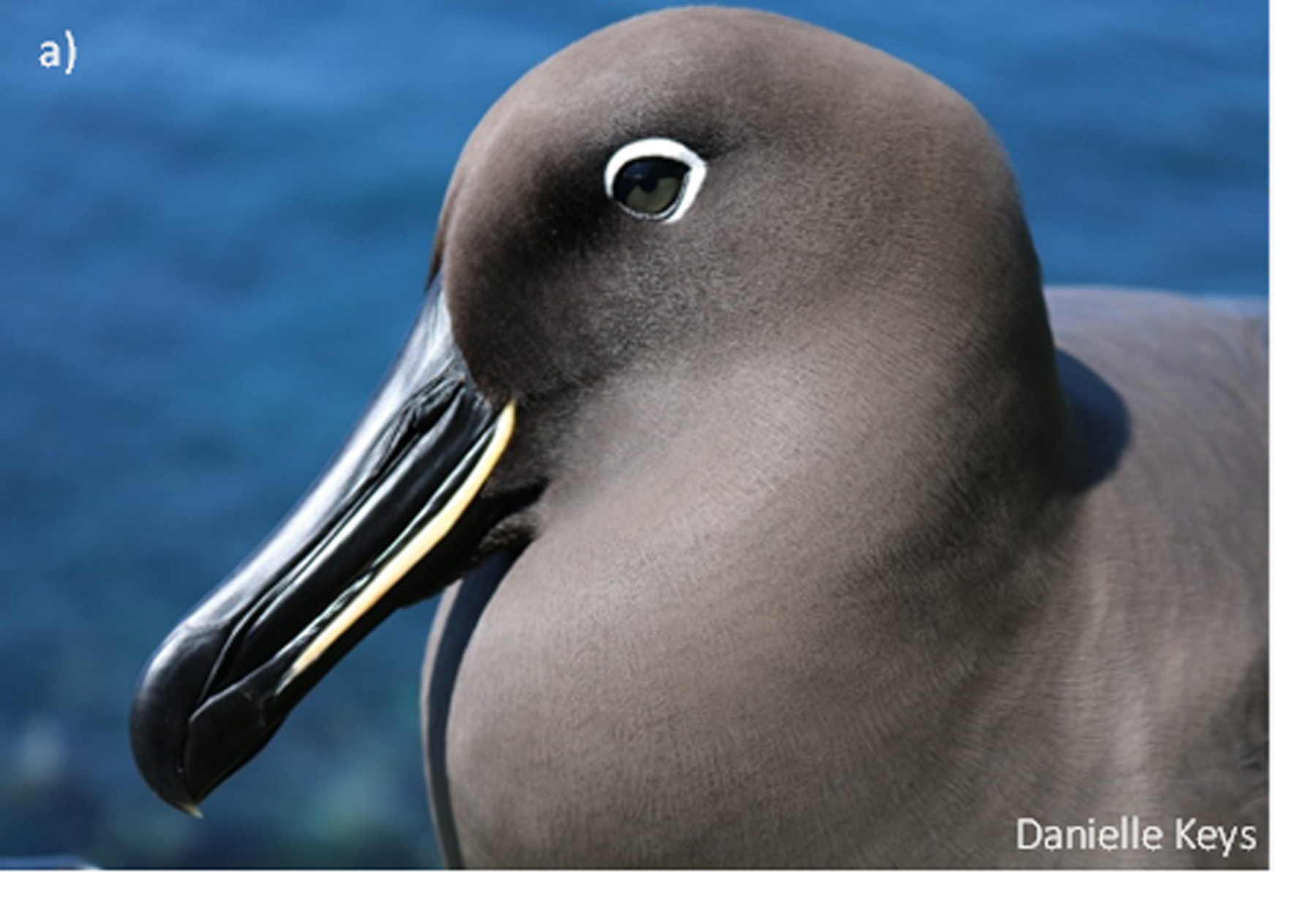
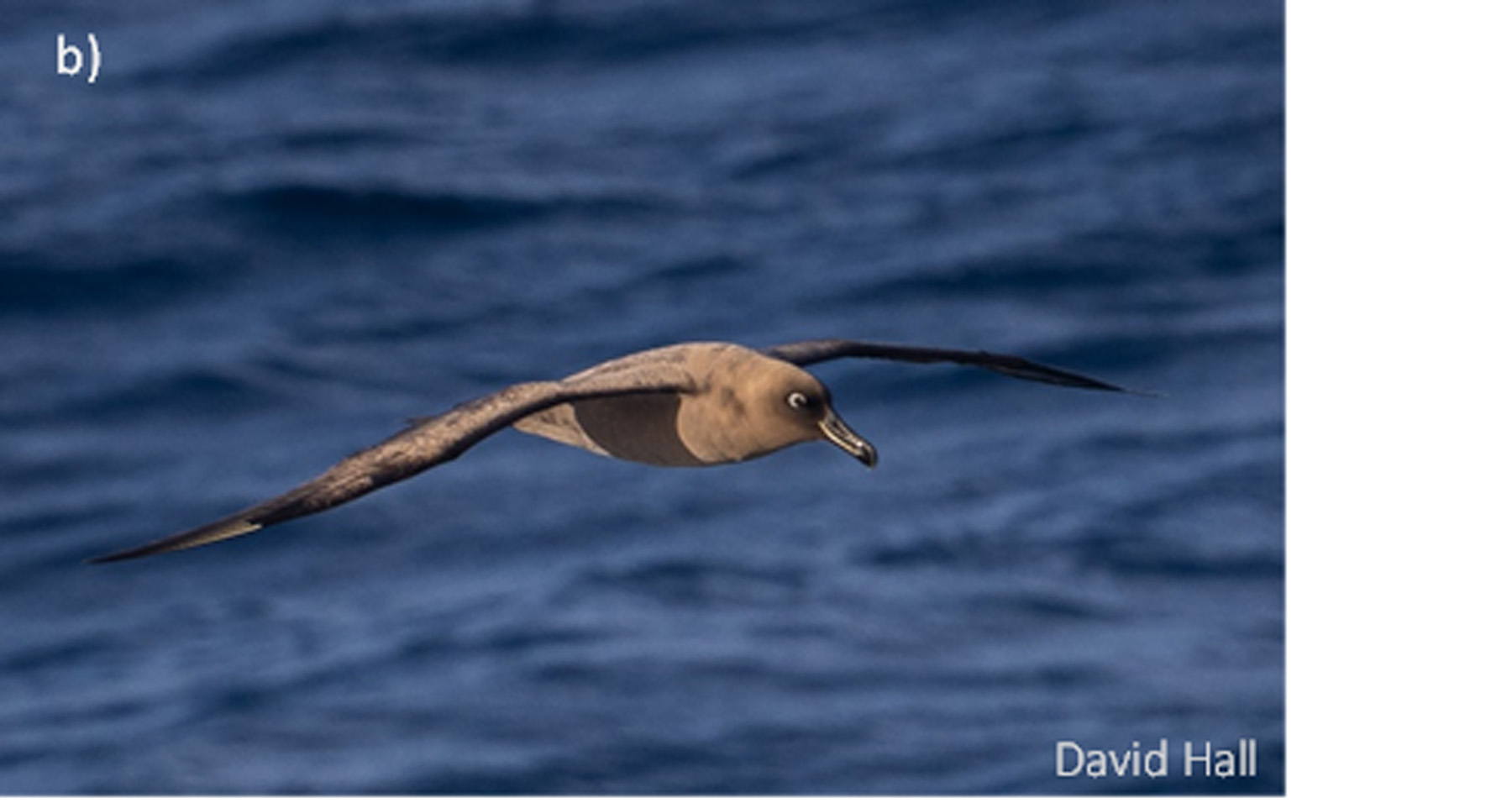
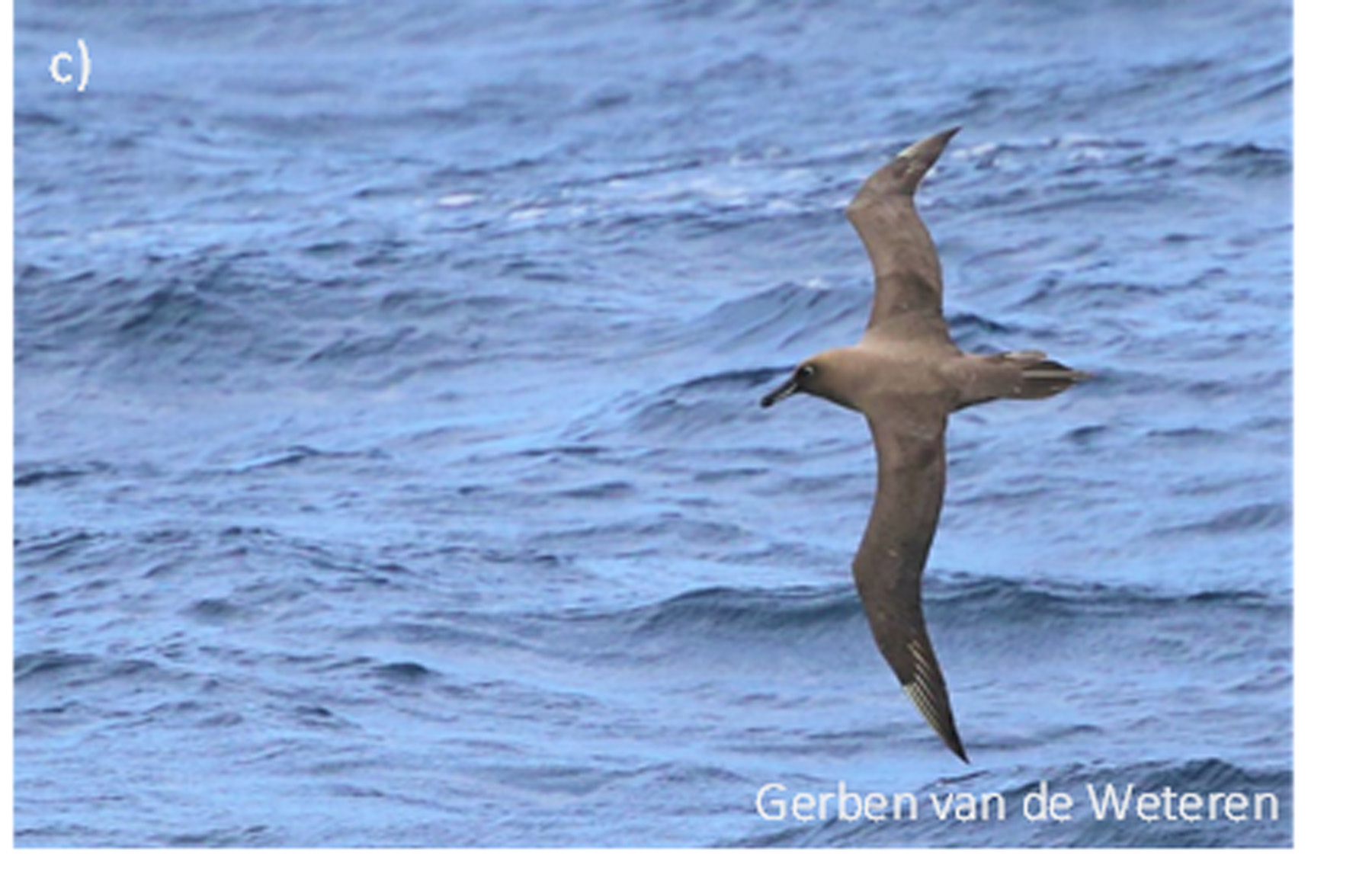
Figure 1: Photographs of Sooty Albatrosses by, Danielle Keys (a), David Hall (b), and Gerben van de Weteren (c).
Distribution
In the region, the Sooty Albatross breeds on Prince Edward Island and Marion Island. Their global distribution is within the South Atlantic and south-west Indian Oceans (BirdLife International 2018). According to ACAP (2010) and later updated by Schoombie et al. (2017), the sub-Antarctic Prince Edward Islands (c. 24%) and temperate Gough Island (c. 37%) have the two largest Sooty Albatross breeding populations. The remaining populations are distributed between the French Southern Territories (Crozet, Kerguelen, and Saint-Paul-Amsterdam Island archipelagos) and the Tristan da Cunha archipelago (c. 20%). Their distribution is mainly oceanic; rarely venturing into continental shelf waters (Ryan 1997).
Ecology
The Sooty Albatross nests in small colonies (Berruti 1977) and is a biennial breeder laying a single egg (Weimerskirch et al. 1986). Birds show high fidelity to sites, with egg-laying taking place from mid-September to late October, although this is synchronised within each colony (ACAP 2010). A generation length of 21.6 years is provided by Bird et al. (2020).
Birds on Marion Island have been tracked during various stages of their breeding cycle. During incubation, their foraging distribution includes oceanic fronts and the region north of the Subtropical Front (Schoombie et al. 2017, Carpenter-Kling et al. 2020, Banda 2022). During the brooding phase, they have been found to forage in the Polar Frontal Zone region and within the Sub-Antarctic Front (Banda 2022). Non-breeding adults mostly utilise subtropical and sub-Antarctic waters (Schoombie et al. 2022).
Feeding primarily involves surface-seizing, with squid, fish, and crustaceans being significant components of the diet (Cooper and Klages 1995, Connan et al. 2014). However, in contrast to the findings in the two earlier studies, recent dietary research of samples collected between 2015 and 2017 identified bird remains, not fish, as the next most abundant prey category after cephalopods (Banda 2019). Dietary analysis has revealed spatial and trophic segregation among Sooty Albatrosses, Light-mantled Albatrosses and Grey-headed Albatrosses breeding sympatrically on Marion Island (Connan et al. 2014).
Threats & Conservation
Threats
Currently, the effect of introduced House Mice is possibly the largest threat to Sooty Albatrosses on Marion Island. Since a solitary case of a mouse attack on a chick in 2009 (Jones and Ryan 2010), attacks have increased where at least 4% of fledglings were affected in 2014 (Dilley et al. 2016). If the mouse population increases and the severity and frequency of attacks on fledglings (or even adults) increase, there could be a severe impact on the breeding population of Marion Sooty Albatrosses. Mice are absent from Prince Edward Island.
Mortality induced by longline fisheries has been proposed as a significant threat to the Sooty Albatross population both globally (Dias et al. 2019) and regionally (Nel et al. 2002, Petersen et al. 2009, Schoombie et al. 2016). During their incubation (Schoombie et al. 2017) and non-breeding (Schoombie et al. 2022) stages, Sooty Albatrosses are often distributed north of the Subtropical Front where longline fishing vessels are commonly found (Huang and Liu 2010). Based on the analysis of two years of tracking data, the Marion Island population’s attraction to fishing vessels could be considered to have a daily bycatch rate of 1.15 individuals if we estimate that 1 in 20 individuals interacts with a fishing boat (Banda et al. 2023, Huang and Liu 2010).
The Prince Edward Islands are situated within the rapidly warming Southern Ocean (Desbruyères et al. 2017) where island air temperature has been warming at an average rate of 0.4 °C per decade since the 1960s (Le Roux and McGeoch 2008). Marion Island has warmed by between 0.8 °C and 1.7 °C since air temperature recordings began in the mid-20th century (Nel et al. 2023). This dynamic environment is responding to a changing climate (Morley et al. 2020, Cavanagh et al. 2021), exposing species to changing conditions. Climate change is generally considered one of the most important threats faced by seabirds (Dias et al. 2019), with a major reason being the causation of variable prey availability (Rodhouse 2010, Rodhouse et al. 2014, Phillips et al. 2016). The foraging areas being used by Sooty Albatrosses breeding on Marion Island (Schoombie et al. 2017, Carpenter-Kling et al. 2020, Banda 2022) are still within good reach. Furthermore, the foraging plasticity that this population has been found to exhibit (Carpenter-Kling et al. 2020, Banda 2022) may be advantageous in the face of a continued climate warming trend. However, temperature related dietary changes (Banda 2019) pose a potential threat if warmer diet nutrition is lower. Additionally, the species has been found to ingest plastic (Banda 2019), but the extent of this potential threat is currently unknown. Plastics, or suspected plastics, were found in roughly 8% of 65 content samples collected between 2015 and 2018 (S Banda pers. obs.) but the extent of the plastic ingestion threat is unknown. In comparison to other species (e.g., Ryan 1987) the low incidence and size of recovered plastics suggests it is a relatively unimportant threat to the species at this stage.
Conservation Measures Underway
The species is listed by the Agreement on the Conservation of Albatrosses and Petrels – Annex 1 and by the Convention on the Conservation of Migratory Species of Wild Animals – Appendix II. Within the region it is protected under the Sea Birds and Seals Protection Act, 1973 (Act No. 46 of 1973), Marine Living Resources Act (Act No. 18 of 1998): Publication of Policy on the Management of Seals, Seabirds and Shorebirds: 2007 and the National Plan of Action (NPOA) for Reducing the Incidental Catch on Seabirds in Longline Fisheries (2008). The Prince Edward Islands are listed as a Ramsar Wetland of International Importance, as a Special Nature Reserve under the Environment Conservation Act (No 73 of 1989) and protected by the Prince Edward Islands Management Plan, 1996. The Sustainable Development Goal 14: Life Below Water, includes targets to protect marine ecosystems – which Sooty Albatrosses are a part of. The eradication of House Mice from Marion Island is being planned.
Conservation Measures Proposed
Efforts by BirdLife International and BirdLife South Africa to reduce incidental mortality of seabirds should continue to be supported. Observer programmes reporting on the scale of incidental mortality and potential effectiveness of mitigation measures must be continued. A mouse eradication at Marion Island is impending. In the long term, continued monitoring will play an important role in ensuring adequate trend analysis. Increasing human capacity to produce high confidence population counts is an essential task for this, and several other species in the region.
Research Priorities and Questions
- Monitoring of breeding population at Marion Island should continue.
- Prince Edward Island population estimate needs updating.
- Determine if the population trend on Marion Island is similar on Prince Edward Island.
- Map sex-, stage- and age-specific foraging distributions of Sooty Albatrosses.
- Determine whether there are changes in breeding success in years of higher temperatures, and determine which conditions are favourable for breeding.
- Monitor diet and determine the nutritional value of their dietary components.
- Determine the population-level frequency distribution of sabbaticals.
Contributors & References
Assessor/s
Shamiso Banda
Reviewer/s
Maelle Connan, Stefan Schoombie
References
Agreement on the Conservation of Albatrosses and Petrels. 2010. ACAP Species assessment: Sooty Albatross Phoebetria fusca. Available: http://www.acap.aq. [Accessed on 05 May 2023].
Banda S. 2019. Trophic ecology of the Sooty Albatross Phoebetria fusca at sub-Antarctic Marion Island. BSc Honours Thesis. Gqeberha: Nelson Mandela University.
Banda S. 2022. Foraging behaviour of the Sooty Albatross Phoebetria fusca in relation to climatic variability and fisheries. MSc Thesis. Gqeberha: Nelson Mandela University.
Banda S, Pistorius P, Collet J, Corbeau A, Weimerskirch H, Pajot A, Orgeret F. 2023. Exposure and attraction of Sooty Albatrosses and White-chinned Petrels to fisheries activities in the Southern Indian Ocean. ICES Journal of Marine Science 81: 75–85.
Barnes KN. 2000. The Eskom Red Data Book of Birds of South Africa, Lesotho and Swaziland. Johannesburg, South Africa: BirdLife South Africa.
Berruti A. 1977. Co-existence in the Phoebetria albatrosses at Marion Island. MSc Thesis. Cape Town: University of Cape Town.
Berruti A. 1979. The breeding biologies of the sooty albatrosses Phoebetria fusca and P. palpebrata. Emu – Austral Ecology 79: 161–175.
Bird JP, Martin R, Akçakaya HR, Gilroy J, Burfield IJ, Garnett ST, Symes A, Taylor J, Şekercioğlu ÇH, Butchart SH. 2020. Generation lengths of the world’s birds and their implications for extinction risk. Conservation Biology 34: 1252–1261. DOI: https://doi.org/10.1111/cobi.13486.
BirdLife International. 2018. Phoebetria fusca. The IUCN Red List of Threatened Species 2018: e.T22698431A132645596. Available: https://dx.doi.org/10.2305/IUCN.UK.2018-2.RLTS.T22698431A132645596.en. [Accessed on 05 May 2023].
Carpenter-Kling T, Reisinger RR, Orgeret F, Connan M, Stevens KL, Ryan PG, Makhado A, Pistorius PA. 2020. Foraging in a dynamic environment: response of four sympatric sub-Antarctic albatross species to interannual environmental variability. Ecology and Evolution 10: 11277–11295.
Cavanagh RD, Melbourne-Thomas J, Grant SM, Barnes DKA, Hughes KA, Halfter S, Meredith MP, Murphy EJ, Treblico R, Hill S. 2021. Future risk for Southern Ocean ecosystem services under climate change. Frontiers in Marine Science 7: 615214.
Connan M, McQuaid CD, Bonnevie BT, Smale MJ, Cherel Y. 2014. Combined stomach content, lipid and stable isotope analyses reveal spatial and trophic partitioning among three sympatric albatrosses from the Southern Ocean. Marine Ecology Progress Series 497: 259–272.
Cooper J, Klages NT. 1995. The diets and dietary segregation of sooty albatrosses (Phoebetria spp.) at sub-Antarctic Marion Island. Antarctic Science 7: 15–23.
Crawford RJ, Cooper J, Dyer B, Greyling M, Klages NT, Ryan P, Petersen S, Underhill L, Upfold L, Wilkinson W. 2003. Populations of surface-nesting seabirds at Marion Island, 1994/95–2002/03. African Journal of Marine Science 25: 427–440.
Cuthbert RJ, Cooper J, Ryan PG. 2014. Population trends and breeding success of albatrosses and giant petrels at Gough Island in the face of at-sea and on-land threats. Antarctic Science 26: 163–171.
Cuthbert RJ, Sommer ES. 2004. Population size and trends of four globally threatened seabirds at Gough Island, South Atlantic Ocean. Marine Ornithology 32: 97–103.
Delord K, Besson D, Barbraud C, Weimerskirch H. 2008. Population trends in a community of large Procellariiforms of Indian Ocean: potential effects of environment and fisheries interactions. Biological Conservation 141: 1840–1856.
Desbruyères C, McDonagh EL, King BA, Theirry V. 2017. Global and full-depth ocean temperature trends during the early twenty-first century from argo and repeat hydrography. Journal of Climate 30: 1985–1997.
Dias MP, Martin R, Pearmain EJ, Burfield IJ, Small C, Phillips RA, Yates O, Lascelles B, Borboroglu PG, Croxall JP. 2019. Threats to seabirds: a global assessment. Biological Conservation 237: 525–537.
Dilley BJ, Schoombie S, Schoombie J, Ryan PG. 2016. Scalping of albatross fledglings by introduced house mice spreads rapidly at Marion Island. Antarctic Science 28: 73–80.
Huang H-W, Liu K-M. 2010. Bycatch and discards by Taiwanese large-scale tuna longline fleets in the Indian Ocean. Fisheries Research 106: 261–270.
Jones MGW, Ryan PG. 2010. Evidence of mouse attacks on albatross chicks on Subantarctic Marion Island. Antarctic Science 22: 39–42.
Lee ATK. 2025. The application of IUCN Regional Red List Criteria to the species of South Africa’s Prince Edward Islands. Unpublished report. Johannesburg: BirdLife South Africa.
Le Roux PC, McGeoch MA. 2008. Changes in climate extremes, variability and signature on sub-Antarctic Marion Island. Climatic Change 86: 309–329.
Morley SA, Abele D, Barnes DKA, Cardenas CA, Cotte C, Gutt J, Henley SF, Hofer J, Hughes KA, Martin SM, Moffat C, Raphael M, Stammerjohn SE, Suckling CC, Tulloch VJD, Waller CL, Constable AJ. 2020. Global drivers on Southern Ocean ecosystems: changing physical environments and anthropogenic pressures in an earth system. Frontiers in Marine Science 7: 547188.
Nel DC, Ryan PG, Crawford RJM, Cooper J, Huyser OAW. 2002. Population trends of albatrosses and petrels at sub-Antarctic Marion Island. Polar Biology 25: 81–89.
Nel W, Hedding DW, Rudolph EM. 2023. The sub-Antarctic islands are increasingly warming in the 21st century. Antarctic Science 35: 124–126.
Petersen SL, Honig MB, Ryan PG, Underhill LG. 2009. Seabird bycatch in the pelagic longline fishery off southern Africa. African Journal of Marine Science 31: 191–204.
Preston GR, Dilley BJ, Cooper J, Beaumont J, Chauke LF, Chown, SL, Devanunthan N, Dopolo M, Fikizolo L, Heine J, Henderson S, Jacobs CA, Johnson F, Kelly J, Makhado AB, Marais C, Maroga J, Mayekiso M, McClelland G, Mphepya J, Muir D, Ngcaba N, Ngcobo N, Parkes JB, Paulsen F, Schoombie S, Springer K, Stringer C, Valentine H, Wanless RM, Ryan PG. 2019. South Africa works towards eradicating introduced house mice form the sub-Antarctic Marion Island: the largest island yet attempted for mice. In: Island Invasives: Scaling up to Meet the Challenge. Veitch CR, Clout MN, Martin AR, Russell JC, West CJ (eds), Occasional Paper of the IUCN Species Survival Commission; Vol. 62 pp 40–46. IUCN. https://portals.iucn.org/library/node/48358.
Ryan PG. 1987. The incidence and characteristics of plastic particles ingested by seabirds. Marine Environmental Research 23: 175–206.
Ryan PG. 1997. Dark-mantled Sooty Albatross Phoebetria fusca. In: Harrison JA, Allan DG, Underhill LG, Herremans M, Tree AJ, Parker V, Brown CJ (eds), The atlas of southern African birds, Vol I: Non-passerines. Johannesburg: BirdLife South Africa. pp 756.
Ryan PG. 2005. Sooty Albatross Phoebetria fusca. In: Hockey PAR, Dean WRJ, Ryan PG (eds). Roberts – Birds of Southern Africa, 7th Edn. Cape Town: The Trustees of the John Voelcker Bird Book Fund. pp 653.
Ryan PG, Jones MGW, Dyer BM, Upfold L, Crawford RJM. 2009. Recent population estimates and trends in numbers of albatrosses and giant petrels breeding at the sub-Antarctic Prince Edward Islands. African Journal of Marine Science 31: 409–417.
Schoombie S, Crawford RJM, Makhado AB, Dyer BM, Ryan PG. 2016. Recent population trends of sooty and light-mantled albatrosses breeding on Marion Island. African Journal of Marine Science 38(1): 119–127.
Schoombie S, Dilley BJ, Davies D, Glass T, Ryan PG. 2017. The distribution of breeding Sooty Albatrosses from the three most important breeding sites: Gough, Tristan and the Prince Edward Islands. Emu-Austral Ornithology 117(2): 160–169.
Schoombie S, Connan M, Dilley BJ, Davies D, Makhado AB, Ryan PG. 2022. Non-breeding distribution, activity patterns and moulting areas of Sooty Albatrosses (Phoebetria fusca). Polar Biology 45: 31–44.
Wanless RW. 2015. Sooty Albatross. In: Taylor MR, Peacock F, Wanless RW (eds), The Eskom Red Data Book of Birds of South Africa, Lesotho and Swaziland. Johannesburg, South Africa: BirdLife South Africa. pp 89–90.
Weimerskirch H, Jouventin P, Stahl JC. 1986. Comparative ecology of the six albatross species breeding on the Crozet Islands. Ibis 128: 195–213.
Weimerskirch H, Delord K, Barbraud C, Le Bouard F, Ryan PG, Fretwell P, Marteau C, 2018. Status and trends of albatrosses in the French southern territories, western Indian Ocean. Polar Biology, 41: 1963–1972.
Citation
Banda S 2025. Sooty Albatross. In: Lee ATK, Rose S, Banda S, Bezeng SB, Maphalala MI, Maphisa DH, Smit-Robinson H (eds), The 2025 Red Data Book of Birds of South Africa, Lesotho and Eswatini. Johannesburg, South Africa: BirdLife South Africa. Available at: https://www.birdlife.org.za/red-list/sooty-albatross/
Our generous sponsors


