


Red Lark
Calendulauda burra

Number Of Mature
Individuals (Regional)
26 925 (23 303 – 31 110)

Regional
Population Trend
Decreasing
2025
Regional Category
Vulnerable
Search by species
CONTENTSOverview
Names
|
IOC English Name: |
Red Lark |
|
SA & IOC Scientific Name: |
Calendulauda burra |
|
BirdLife International Taxonomy (scientific name): |
Calendulauda burra |
|
Order: |
PASSERIFORMES |
|
Family: |
Alaudidae |
|
Species name author: |
Bangs 1930 |
|
Afrikaans: |
Rooilewerik |
|
Sesotho (South Africa): |
|
|
Sesotho (Lesotho): |
|
|
siSwati: |
|
|
Zulu: |
ungqwashobomvu |
Current Assessment Status
|
2025 Regional Category [Criteria] |
VU [A3bc] |
|
2024 Global Category [Criteria] |
VU [C2a(ii)] (BirdLife International 2021) |
|
Population size (Regional) |
26 925 (CI: 23 303 – 31 110) (Colyn et al. 2024, unpubl data) |
|
Population size (Global) |
6300 (BirdLife International 2021) |
|
Distribution size (EOO) (Regional) km2 |
71 500 – 77 300 (Lee 2024) |
|
Distribution size (EOO) (Global) km2 |
77 200 (BirdLife International 2021) |
|
Distribution size (AOO) (Regional) km2 |
26 000 – 33 000 (Lee 2024) |
|
Generation time |
3.3 years (BirdLife International 2021) |
|
Status change reason |
No change |
|
Migrant (in the region) |
Not a Migrant |
|
Regional endemic |
Yes |
Historic Listing Information
|
2000 Regional Status |
VU |
|
2015 Regional Status |
VU [A2c; C2a] |
|
Status change reason (if applicable) |
No change |
|
2015 Population size (Regional) |
6300 |
|
2015 Global Status |
VU [C2a(ii)] |
Reason for Inclusion
Reason for Inclusion in the Assessment
The Red Lark Calendulauda burra is endemic to the region, specifically South Africa. The species was listed as regionally Vulnerable in 2000 (Barnes 2000) and 2015 (Peacock 2015) and is currently listed as globally Vulnerable (BirdLife International 2021).
Category Justification
Category Justification
The Red Lark is a range-restricted species endemic to South Africa’s Northern Cape Province, occurring predominantly in red-sand dune habitats. Its Extent of Occurrence (EOO) and Area of Occupancy (AOO) exceed the thresholds for threatened categories under Criterion B, and the population is estimated to be greater than 10 000 mature individuals, ruling out Criteria C and D classifications.
While there is no strong evidence of past population declines exceeding the thresholds for Criterion A2, projected future declines linked to climate change justify classification under Criterion A3b. Rising temperatures are expected to significantly reduce survival across much of the species’ range, with models suggesting an annual decline of 4.89%, equating to nearly 39% by 2030 (based on values in Kemp et al. 2020). This decline is driven by increased exposure to extreme heat, which directly impacts Red Lark survival and reproduction.
Although the species’ population is not fragmented (by the IUCN definition), and no extreme fluctuations in numbers or distribution have been documented, the susceptibility of its specialized dune habitat to degradation and climate change remains a critical concern. Threats such as renewable energy developments, overgrazing, and invasive plant species exacerbate these risks.
Based on the above, the Red Lark qualifies for regional classification as Vulnerable [A3bc] due to the projected population declines driven by climate change impacts and habitat loss.
Population Justification
The Red Lark was described as locally common but highly localised and fragmented in distribution (Dean and Ryan 2005). The first attempt at a population estimate was by Dean et al. (1991). Their comprehensive paper covers ecology (diet and habitat), distribution and abundance of Red Lark. They surveyed red sands and dunes in the Brandvlei, Pofadder, Aggeneys and Steinkopf areas. The abundance of Red Larks was assessed by walking through areas where the larks were seen or had been recently recorded. 44 sites were selected based on previous records or suitable looking habitat. Detailed habitat variables were taken at localities where the species was recorded. Based on these surveys, they estimated a pair / 30 ha (6.67 ind/km2), although their published table of results suggests 10.18 ± 5 ind/km2.
The Dean et al. (1991) methods section does not detail how range and suitable habitat were calculated, but in the Discussion of the paper information is presented and appears guided by the assertion that “The recorded distribution of the red lark follows the distribution of red-sand dunes south of the Orange River”. Certainly, the highest densities appear to be associated with dune habitat south-west of the town of Aggenys (see further details from Kemp et al. (2024) below), with clear dune structure. However, this sand-dune dominated habitat is perhaps a third of the range. The ‘Brandvlei’ range (from east of Kenhardt to east of Vanwyksvlei, and north of Williston to south of Kenhardt) displays very poor dune structure. The Dean et al. (1991) paper state: “Red larks are not present on all red sands in this region, nor do they occur on red dunes in the southern Kalahari or in the Upington district. It remains an enigma why the species should be confined to the area south of the Orange River, particularly as dunes in the southern Kalahari are well within its dispersal capabilities”, tacitly acknowledging that red dunes do not define the species distribution. They also write: “According to the 19th- century naturalist Sir Andrew Smith, the red lark was ‘found all over the Bushman Flats, during the month of July’ (Roberts, 1936), suggesting a relatively common bird not confined to dunes.”, which appears to be still applicable in parts of its range today (Lee pers obs).
In determining their population estimates, Dean et al. (1991) wrote:
“The total area in which red larks occur is about 112 500 km2. Of this, at least 86% (96 750 km2) is totally unsuitable for red larks and consists of inselbergs, synclines, stony ridges and flats, gravel plains, wide tree-covered drainage lines, extensive poorly drained shrublands and large endorheic shallow saline pans. Of the remaining 15 850 km2, about one-third (5625 km2) is suitable habitat. However, available habitat within this area is further reduced when a weighting factor, based on land-use and the condition of dune grasslands in the area, is applied. A realistic estimate of suitable habitat may be less than 25% (1406 km2) of total red sand habitat. We estimated the average density of red larks in suitable habitat at 1 pair/ 30 ha, and this gives an estimated population size of about 9400 birds.”.
By excluding ‘extensive poorly drained shrublands’, a very large area of potentially suitable habitat is excluded, and the reduction of the 15 850 to 5625 is poorly quantified. This area is then further reduced by applying a ‘weighting factor’ based on the condition of dune grasslands, resulting in 1406 km2. It is questionable whether this should be applied to the entire range, or even if the habitat conditions from their surveys still apply today: the surveys were conducted after an extended period of drought: “the effects of a drought from 1978 to 1985, have possibly degraded suitable red lark habitat”. Overall, these reductions to an ‘AOO’ seem overly severe and can at best provide a lower bound on any realized AOO, meaning the Dean et al. (1991) population estimate is a minimum estimate, especially since it is based on a ‘background’ density estimate of 6.7 ind/km2 resulting in the population estimate of 9373. Applying the prime habit estimate of 17 ind/km2 to the 1406 results in an estimated population of 24 667. Applying the 6.7 to 5625 ‘suitable habitat’ value from Dean et al. (1991) results in a value of 37 500. In his SABAP1 species account, Dean (1997) acknowledged the species was likely more common and widespread than previously thought.
The alternative population range values from the Dean et al. (1991) presented above are more in line with the most recent survey undertaken to quantify population sizes of birds in South Africa’s Karoo region (Lee and Wright 2024), who present a population estimate of 47 779 (CI: 31 665 – 72 093) for an area of 33 729 km2 based on a density of 1.42 ind/km2 (CI: 0.94–2.14). Although not explicitly stated, these results were for calling individuals, and the value presented represents numbers of mature individuals. The density estimates were obtained from point counts using Distance Sampling from across the species entire range conducted from 2017-2018, with the ‘range’ value being the area contained within a Minimum Convex Polygon containing all points where the species had been recorded. As such, density estimates are lower than reported by Dean et al. (1991), who considered prime habitat only.
A recent study specifically focused on assessing the population status of Red Lark across its core range (Colyn et al. 2024, unpubl data) present a population estimate of 26 925 (CI: 23 303 – 31 110). This estimate was derived from walked transect (>250) data sampled across a gradient of suitability’s generated by a species distribution model. Transects in the northern extremity of the species range between Aggeneys and west of Springbok yielded the highest densities (avg. 8 individuals/km2) and the most consistent presence across years sampled (80–100% naive occupancy across years). Conversely, areas along the eastern periphery of the species range from Poffadder southwards to Brospan (east of Brandvlei) yielded stochastic presence (5–20% naive occupancy). Habitat suitability modelling coupled with in-situ habitat assessments suggested highly suitable habitat with higher densities distributed in an arc from Aggeneys to Kangnas (east of Springbok) and southwards to Loeriesfontein and Brandvlei. Swathes of less suitable gravel dominant, sparsely vegetated plains are distributed in the central regions of this arc.
Density estimates have also been calculated by Kemp et al. (2024), who provide density estimates of 4.76 ind/km2 from a telemetry study, and density estimates from transects of 0.1 ind/km2 for unsuitable habitat, and values of 8.4 and 8.7 for prime habitat, with density estimates of 12.7 ind/km2 from habitat suitability and home range assessments. These result in a population range for the c. 90 km2 Black Mountain Mine Conservation Area (BMMCA) of 263 – 382 mature individuals.
Trend Justification
There is no strong evidence of a historic range contraction: there are two accounts of Red Lark from Kenhardt, one anecdotal and one from a museum specimen, given in Dean et al. (1991). However, confusion with Fawn-coloured Lark C. africanoides is a problem in that area – there are recent BirdLasser records of Red Lark from this area which are likewise doubtful. Likewise, there is a single photographic record of a Red Lark on iNaturalist west of Springbok, outside the established range: https://www.inaturalist.org/observations/62612410. Thus, these isolated records may represent vagrants and contribute little to comprehensive proof of range decline or contraction.
As population estimation methods were not created using comparable methods, these cannot be used to infer population trends. Thus, the only source of data on population trends is the Southern African Bird Atlas (SABAP2) project, with the caveat that the range of the Red Lark is not comprehensively covered by this project. However, contrary to Peacock (2015), there is no evidence for range contraction between SABAP1 and SABAP2, with the species more frequently recorded during SABAP2 compared to SABAP1 (Lee et al. 2017, Lee and Wright 2024). As per the comments on the population estimation, this may be related to drought and local conditions in the range, if observation effort is excluded as a confounding variable. Within SABAP2 reporting rates are lower for the period 2016-2023 compared to 2007-2015 (33.5% vs 25.8%, a 23% difference, Lee 2024), again with the later period associated with droughts across the Karoo. However, logistic regression models suggest a stable probability of reporting with high confidence (Lee 2024), with the caveat that this is presence-absence modelling at the pentad level and thus may not be sensitive to population decrease. Kemp et al. (2024) suggest the population at BMMCA has declined by 50% since 1988/89, attributing the decline to the increased number of days when temperatures exceeded 35°C, a threshold where Red Lark males lose mass (Kemp et al. 2020). Kemp et al. (2020) state the Red Lark is unlikely to persist across much of its range by 2100 due to this, writing:
“Linking our Mb data with climate models assuming a business-as-usual emissions scenario reveals that, by the end of this century, Red Larks will be exposed to the zero daytime Mb gain threshold value for ≥ 5 consecutive days per summer over c. 98% of their current range and ≥10 consecutive days per summer over c. 46% of their entire range. These conditions will result in a c. 40 g nonbreeding male lark losing approximately 7.2 g and 14.3 g over five and ten consecutive days, respectively, conditions under which it is unlikely that the species will be able to persist.”
Taken together, there is no strong evidence for recent overall population declines exceeding 30%, the threshold for Vulnerable under Criterion A2. However, the more recent Distance Sampling survey by Colyn (2024, unpubl data) does produce a much lower population estimate compared to that of Lee and Wright (2024), suggesting localized declines may be approaching this level, suggesting Near Threatened (A2b). More importantly, there is strong evidence for projected population declines attributable to increasing temperatures associated with global climate change, where the Red Lark range will be particularly susceptible (see Conradie et al. 2019). While metabolically well adapted to arid conditions and able to tolerate temperatures of up to 50°C, the species does not display particularly efficient thresholds of evaporative water loss, with panting commencing at 38°C (Kemp and McKechnie 2019). Presuming 100% of the population in 2020 and 2% of the population in 2100 (following Kemp et al. 2020), this equates to an annual rate of decline of 4.89%, which predicts a 38.7% population decline by 2030, which means the species qualifies for Vulnerable under A3b.
Biology & Ecology
Taxonomy
The Red Lark has a complex taxonomic history. Some authors have argued that it should be seen as a subspecies of the widespread Karoo Lark Calendulauda albescens, or the localised Namibian endemic Dune Lark C. erythochlamys; it has also been placed in the alternative genera Ammomanes, Certhilauda and Mirafra. However, recent evidence suggests that, although it is closely allied with Karoo, Dune and Barlow’s (C. barlowi) larks, there is no evidence for hybridisation between these species and the Red Lark (Ryan and Bloomer 1997). It is now placed in the genus Calendulauda. In addition, three debatable subspecies have been described: the plain-backed, reddish nominate C. b. burra from the north-western dunes around Aggeneys; the streaky-backed brown C. b. harei from the central alluvial plains; and the plain, dark red C. b. aridula from the dunes around Van Wyksvlei. However, these phenotypes overlap and interbreed and are not distinctly separable genetically (Ryan and Bloomer 1997).
Identification
18–19 cm. A large, robust lark with a long tail, heavy flight action and a short, deep bill, which appears stubby in the field. Occurs in two distinct forms: populations occurring on red dune crests mainly sandy red to deep brick-red in colour with limited or no streaking above; birds occurring in dwarf shrublands on clay soils mainly rufous-brown with moderate to distinct but narrow blackish streaking above. All have heavy, blotchy, blackish brown, wedge-shaped spots on the breast; some birds show a few scattered flank streaks. Face boldly patterned with a white supercilium and eye- surround, faint black eye-stripe and black malar and moustachial stripes. Chin and throat white; remainder of underparts white or pale cream. Bill blackish horn, base paler. Eyes brown. Legs and feet greyish brown. Sexes are alike, but the female is smaller and sometimes paler in plumage. Juveniles are redder and brighter rufous above, with whitish-tipped crown and back (Peacock 2015).
Distribution
The Red Lark is endemic to South Africa’s Northern Cape Province. The distribution encapsulates the band from east of Steinkopf (in the north), eastwards to Aggenys and south to the Kliprand area, then east to Vanwyksvlei. Sight records from near Kenhardt in the early 1960s and 1985 suggest that it occasionally occurs further to the north-east. There are also two putative specimen records from southern Namibia: one from dunes north of Oranjemund and one from Kleinkaras, but these are considered doubtful (Ryan and Bloomer 1997) or may reflect occasional vagrancy (Dean and Ryan 2005).
Using parameters unknown but possibly including records from Namibia and east of Kenhardt, Dean et al. (1991) stated total area in which red larks occur is about 112 500 km2, interpreted as Kemp et al. (2020) as an EOO. Lee (2024) used location records from the iNaturalist, eBird and Birdlasser citizen science datasets to estimate distribution at the 2×2 km grid cell level, using random forest predictive models (Figure 1).
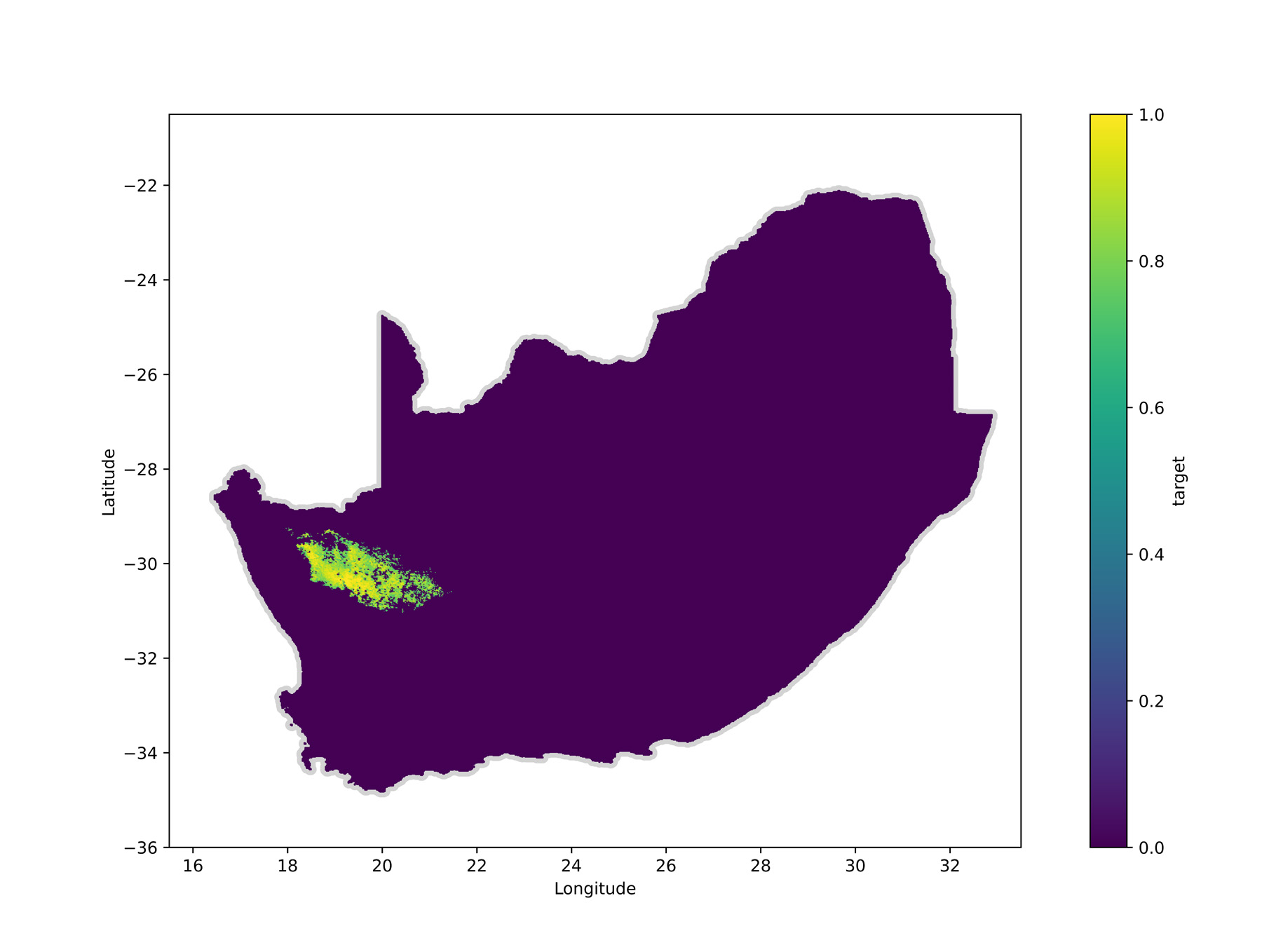
Figure 1: Distribution of Red Lark at the 2×2 km grid resolution based on BirdLasser, eBird, and iNaturalist occurrence records using a random forest predictive model (from Lee 2024).
Ecology
Red Lark presence across its range was strongly correlated by increasing cover of sand and grass, but favoured sites classified as ‘light grazing’ rather than ‘heavy grazing’ (Lee and Wright 2020). That survey also indicated it was less likely to be encountered at higher temperatures. It avoids pans and degraded dune habitats (Dean et al. 1991). A recent study (Colyn et al. 2024, unpubl data) further corroborates the impact of livestock management on the species. Dune habitat within a heavily stocked unit yielded 70% lower cover of ephemeral grasses and 20x lower encounter rates (0.1 birds/km2) when compared to the lower stocked unit (2 birds/km2) directly adjacent to it. The species favours areas where large 50 cm tall tussock grasses, such as Stipagrostis ciliata, S. brevifolia and Brachiaria glomerata are dominant (Dean et al. 1991). It requires multi-level vegetation, with annual large-seeded grasses for food, perennial grasses with plumed awns for nesting material and nest sites, and scattered small trees and shrubs 1–1.5 m in height, such as Driedoringbos Rhigozum trichotomum, Green Hair Tree Parkinsonia africana and Blue Bush Pogonospermum incanum, from which to sing and to provide it with shade (Dean et al. 1991). These taller tree structures (>1 m) are generally sparsely distributed are used extensively by the species to conduct vocal and aerial displays from. Bird will often fly from tall perch to perch actively establishing and defending territories. The introduction of anthropogenic perch sites within Red Lark habitat can disrupt territories and lead to protracted territorial fights between conspecifics (Colyn et al. 2024, unpubl data). The placement of 1.5 m wooden stakes for road marking during wind farm construction activities in the Koa Dunes led to the failure of two monitored nest sites due to conspecific territorial fighting (Figure 2). Dune slopes and tops often yield deeper sands and a higher composition of taller denser graminoid vegetation (Figures 3 and 4). These habitat features yielded significantly higher nest densities compared to dune troughs and flats (Colyn et al. 2024, unpubl data). Food items (taken from the ground or directly from vegetation or excavated from sand using the heavy bill) include large, smooth seeds of grasses, forbs and shrubs and adult and larval insects (Dean et al. 1991). Nest building generally takes place post-rainfall, but multiple nest building activities have been recorded a few days (1–3) prior to rainfall possibly suggesting birds can respond to pressure changes and proactively be ready to breed once rainfall is received. Peak naive nest encounter rates in prime habitat were typically 0.5–2 weeks after rainfall. Breeding months recorded in a recent study was highly variable, but generally included the first big rains in late-spring or early summer in the Koa Dunes in the northern part of the species range (e.g. Aggeneys), or autumn and spring in the southern part of the range (e.g. Loeriesfontein) (Colyn et al 2024, unpubl data).
Threats & Conservation
Threats
The major threat to Red Lark arising from this assessment is increasing temperatures associated with global climate change and specifically prolonged periods of temperatures >35 (Kemp et al. 2020, Kemp et al. 2024). Prolonged droughts and desertification, exacerbates these issues by making the environment increasingly inhospitable, especially to invertebrates, which are a major food source (Dean and Ryan 2005).
Historically, the Red Lark faced significant threats from habitat degradation in its limited range in the Northern Cape due to overgrazing by livestock, and now increasing game, during droughts. Poor farm management practices lead to reduced vegetation cover, soil compaction, and trampling of nests, which negatively impact the bird’s ability to forage and breed. However, changes in land use and human population demography attributed to societal factors has associated with depopulation of the Karoo and potentially reduced impacts in recent years (Walker and Hoffman 2024).
A growing and serious threat to the Red Lark comes from renewable energy projects, specifically wind and solar farms (Rehbein et al. 2020). Solar projects, which require large areas of land for panels, disrupt the open, sandy plains that the Red Lark depends on for nesting and foraging. These developments often require the complete removal of all vegetation and maintenance of this state for the lifespan of the facility, thereby removing any suitable habitat. Although wind energy developments could proportionally involve less habitat loss to that of solar developments, they still require extensive road networks and compacted hardstands for wind turbines and associated infrastructure (control rooms, substations, etc.). A recent study (Colyn et al. 2024, unpubl data) assessing the footprint of three operational wind farms concluded that habitat lost for the species ranged between 100–176 ha. Additionally, multi-year transect data suggests a decrease in both naive occupancy and density estimates derived pre- and post-operation, potentially suggesting that the impact of displacement due to energy infrastructure needs further investigation. Furthermore, this study also suggests that the species yielded a high exposure rate (50–80%) within typical wind turbine blade swept heights (25–300 m) whilst conducting aerial territorial displays. Exposure rates within this height profile exceeded 50% which could suggest a very high collision risk during the breeding season when males are most territorial and actively displaying (Figure 5). Average flight heights pre-rainfall (average = 25 m) was generally below the typical hazardous wind turbine rotor swept zone, but increased notably post-rainfall (average = 55 m). However, a large variation in exposure and collision risk was observed regionally, whereby flight heights were notably higher in the Koa Dunes region compared to the flatter shrublands in the south (e.g. Kliprand, Loeriesfontein). The extensive vertical dune structures that are common in the northern Koa Dunes regions allowed displaying birds to cover a large gradient of flight heights as they flew from dune tops across dune troughs. This facet yielded average flight heights in both pre- and post-rainfall conditions that exceeded 25 m and possibly predisposes the species to higher collision risks in this region. Significant fatality rates associated with wind turbine collisions have been recorded for grassland-associated lark species that exhibit extended aerial displays within wind turbine rotor swept heights, such as Horned Lark Eremophila alpestris and Skylark Alauda arvensis (Bose et al. 2020, Garvin et al. 2024). The cumulative impact of wind farms on Skylark breeding populations, for example, accounted for an estimated 184% increase in the mortality rate of breeding individuals between 2007 and 2021 (Bastos et al. 2016). There are currently numerous (>25) renewable energy applications within the species range (Colyn et al. 2024, unpubl data), heightening the need for caution and further investigation into the impact of habitat loss, collision and displacement.
The presence of wind turbines increases the risk of bird-turbine collisions, potentially leading to direct fatalities during these display flights. The construction and operation of renewable energy infrastructure also fragment habitats, disturb breeding behaviours, and isolates populations further.
Alien vegetation, specifically Australian wattles of the genus Prosopis, have been linked to lower abundance of Karoo endemic bird species, and may pose a threat to Red Lark in some parts of its range (Lee and Wright 2019).
Conservation Measures Underway
There are no conservation measures currently in place for this species and the species is especially poorly represented in protected areas, with most of its range (>95%) outside of formal protected areas.
Conservation Measures Proposed
- Overgrazing by game and livestock can be mitigated through sustainable grazing practices such as rotational grazing and setting limits to prevent land degradation.
- Restoration of degraded land through replanting native vegetation and stabilizing soils is essential.
- Controlling invasive species like Prosopis through mechanical removal, biological agents, and herbicides will help restore the Red Lark’s habitat, with regular monitoring to ensure these efforts are effective.
- Renewable energy development poses another significant risk, particularly wind farms, which threaten Red Larks during their flight displays. Strategic site selection for wind and solar farms, avoiding key habitats, and deploying collision mitigation technologies, such as bird detection systems, can help minimize risks. Infrastructure related to renewable projects should be designed to minimize habitat fragmentation and ecosystem disruption. Biodiversity offsets in Red Lark habitat should be encouraged.
- Establishing protected areas and encouraging private landowners to engage in conservation stewardship programs will safeguard key habitats.
- Climate change adaptation is critical, including measures to improve water retention, control soil erosion, and potentially provide artificial shading to minimize the impact of rising temperatures. Research into the effectiveness of artificial shading as a way to reduce heat stress could be important for managing Red Lark populations in a changing climate.
- Community engagement and public awareness campaigns will foster local stewardship, ensuring conservation efforts are supported. Long-term monitoring of Red Lark populations and habitats will track conservation effectiveness.
Research Priorities and Questions
- Continue population monitoring at key sites, e.g. BMMCA using a repeatable methodology. Likewise, continue to encourage citizen science contributions, especially to the SABAP2 project, across the species range to monitor for range contraction.
- How do demographic factors (e.g. age structure, reproductive success, and survival rates) influence population dynamics in the Red Lark?
- How do social and environmental factors (e.g., land use, agricultural practices, mining) influence local population densities of Red Larks?
- How is climate change affecting the habitat quality and availability of the Red Lark, particularly in relation to temperature and precipitation changes?
- What role does artificial shading play in mitigating the impacts of climate change on Red Lark habitats, and how can it be effectively implemented?
- What is the impact of wind farm installations on Red Lark occurrence, density, and collision risk?
- What is the current and projected future cumulative impact of renewable energy developments on the habitat availability and population status of Red Lark? Cumulative impacts should consider habitat loss, degradation, fragmentation, species displacement and collision fatalities. What are the ecological trade-offs associated with renewable energy development in areas inhabited by Red Larks, and how can these be mitigated?
Contributors & References
Assessor/s
Robin Colyn, Alan Lee
Reviewer/s
Ryno Kemp
References
BirdLife International. 2021. Calendulauda burra. The IUCN Red List of Threatened Species 2021: e.T22717180A177650907. Available: https://dx.doi.org/10.2305/IUCN.UK.2021-3.RLTS.T22717180A177650907.en. [Accessed on 04 December 2024].
Bose A, Durr T, Klenke RA, Henle K. 2020. Assessing the spatial distribution of avian collision risks at wind turbine structures in Brandenburg, Germany. Conservation Science and Practice 2: https://doi.org/10.1111/csp2.199.
Colyn RB, Lee A, Smit-Robinson H, Ryan P. 2024. The distribution, population status and habitat requirements of two threatened range restricted arid lark species in South Africa. PhD chapter.
Conradie SR, Woodborne SM, Cunningham SJ, McKechnie AE. 2019. Chronic, sublethal effects of high temperatures will cause severe declines in southern African arid-zone birds during the 21st century. Proceedings of the National Academy of Sciences USA 116: 14065–14070. https://doi.org/10.1073/pnas.1821312116.
Dean WRJ, Milton SJ, Watkeys MK, Hockey PAR. 1991. Distribution, habitat preference and conservation status of the red lark Certhilauda burra in Cape Province, South Africa. Biological Conservation 58: 257–274.
Dean WRJ. 1997. Red Lark Certhilauda burra. In: Harrison JA, Allan DG, Underhill LG, Herremans M, Tree AJ, Parker V, Brown CJ (eds), The atlas of southern African birds Vol II: Passerines. Johannesburg, South Africa: BirdLife South Africa. pp 25.
Dean WRJ, Ryan PG. 2005. Red Lark Calendulauda burra. In: Hockey PAR, Dean WRJ, Ryan PG (eds), Roberts – Birds of Southern Africa, 7th Edn. Cape Town, South Africa: The Trustees of the John Voelcker Bird Book Fund. pp 871–872.
Garvin JC, Simonis JL, Taylor JL. 2020. Does size matter? Investigation of the effect of wind turbine size on bird and bat mortality. Biological Conservation 291: 110474.
Kemp R, McKechnie AE. 2019. Thermal physiology of a range-restricted desert lark. Journal of Comparative Physiology B 189: 131–141.
Kemp R, Freeman MT, van Jaarsveld B, Czenze ZJ, Conradie SR, McKechnie AE. 2020. Sublethal fitness costs of chronic exposure to hot weather vary between sexes in a threatened desert lark. Emu-Austral Ornithology 120(3): 216–229.
Kemp R, Colyn R, Freeman MT, McKechnie AE. 2024. Population status of the range-restricted Red Lark Calendulauda burra in a conservation area stronghold. Ostrich 95(2): 140–151.
Lee ATK, Wright DR. 2020. Patterns of bird species richness at two sampling scales in the Karoo biome of South Africa. Journal of Arid Environments 174: 104077.
Lee ATK, Wright DR. 2024. A conservation assessment of birds in the Karoo region of South Africa: densities, populations, ranges, and trend estimates. Ostrich 95(2): 129–139.
Lee ATK. 2024. Regional Red Data Book of the Birds of South Africa, Lesotho and Eswatini: SABAP2 synthesis and supporting information and graphics for Red Lark. Unpublished report. Johannesburg: BirdLife South Africa.
Peacock F. 2015. Red Lark Calendulauda burra. In: Taylor MR, Peacock F, Wanless RM (eds), The Eskom Red Data Book of Birds of South Africa, Lesotho and Swaziland. Johannesburg, South Africa: BirdLife South Africa.
Rehbein JA, Watson JE, Lane JL, Sonter LJ, Venter O, Atkinson SC, Allan JR. 2020. Renewable energy development threatens many globally important biodiversity areas. Global Change Biology 26(5): 3040–3051.
Ryan PG, Bloomer P. 1997. Geographic variation in Red Lark Certhilauda burra plumage, morphology, song and mitochondrial DNA haplotypes. Ostrich 68: 31–36.
Walker C, Hoffman MT (eds). 2024. Contested Karoo: Interdisciplinary perspectives on change and continuity in South Africa’s drylands. African Sun Media.
Figure 2: Road marking with long wooden stakes during the construction of a wind farm introduced numerous new territorial perch sites within Red Lark territories and led to numerous protracted territorial fights between conspecifics. This clutch was ultimately destroyed by a conspecific Red Lark individual. Credit: Robin Colyn.
Figure 3: A Red Lark carrying graminoid vegetation during nest building. Taller graminoid tufts interspersed with shrubs on deep sandy soils are prominent nesting habitats for the species in the Koa dune region. Credit: Robin Colyn.
Figure 4: Red lark nest with chicks located on a dune top in an area with relatively high (20%) graminoid and low shrub cover. This dune habitat feature yielded the highest nesting densities post very good summer rainfall (>50mm). Credit: Robin Colyn.
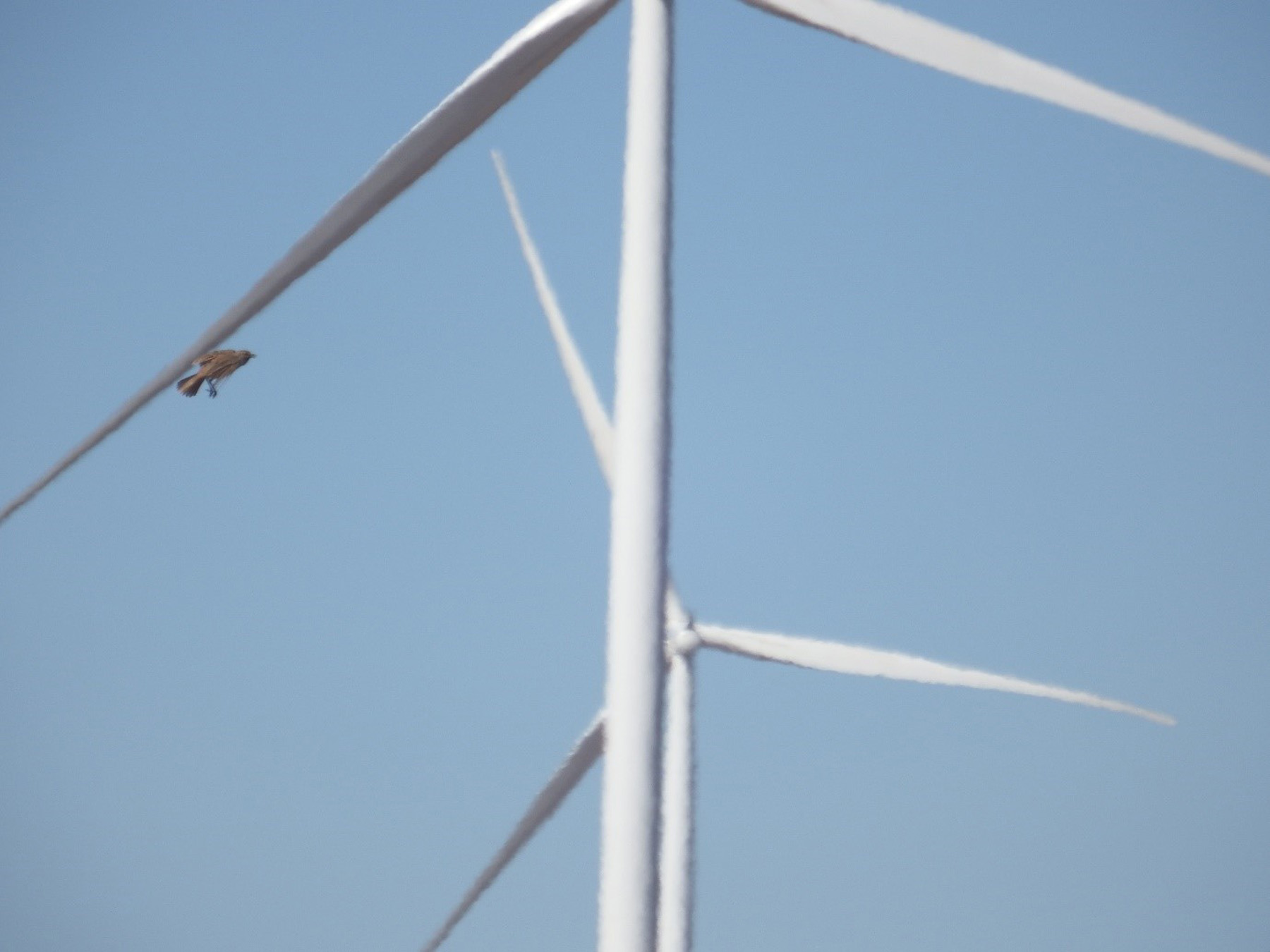
Figure 5: A Red Lark displaying within the rotor swept zone of a wind turbine on an operation wind farm in South Africa. Credit: Robin Colyn.
Citation
Colyn R, Lee ATK 2025. Red Lark. In: Lee ATK, Rose S, Banda S, Bezeng SB, Maphalala MI, Maphisa DH, Smit-Robinson H (eds), The 2025 Red Data Book of Birds of South Africa, Lesotho and Eswatini. Johannesburg, South Africa: BirdLife South Africa. Available at: https://www.birdlife.org.za/red-list/red-lark/
Our generous sponsors


