


Red-knobbed Coot
Fulica cristata

Number Of Mature
Individuals (Regional)
>100 000

Regional
Population Trend
Decreasing
2025
Regional Category
Least Concern
Search by species
CONTENTSOverview
Names
|
IOC English Name: |
Red-knobbed Coot |
|
SA & IOC Scientific Name: |
Fulica cristata |
|
BirdLife International Taxonomy (scientific name): |
Fulica cristata |
|
Order: |
GRUIFORMES |
|
Family: |
Rallidae |
|
Species name author: |
Gmelin JF, 1789 |
|
Afrikaans: |
Bleshoender |
|
Sesotho (South Africa): |
mmabolesana |
|
Sesotho (Lesotho): |
’mabolesana |
|
Siswati: |
Ihohlo |
|
Zulu: |
intuntwane |
Current Assessment Status
|
2025 Regional Status [Criteria] |
LCo |
|
2024 Global Status [Criteria] |
LC (BirdLife International 2016) |
|
Population size (Global) |
71 690 – 677 370 (Wetlands International 2016) |
|
Population size (Regional) |
>100 000 |
|
Distribution size (EOO) (Regional) km2 |
1 333 251 (Lee 2024) |
|
Distribution size (EOO) (Global) km2 |
27 100 000 (BirdLife International 2016) |
|
Distribution size (AOO) (Regional) km2 |
459 450 (BIRDIE 2024) |
|
Generation time |
7 years (BirdLife International 2016) |
|
Status change reason |
No change |
|
Migrant (in the region) |
No |
|
Regional endemic |
No |
Historic Listing Information
|
2000 Regional Status |
Not Evaluated |
|
2015 Regional Status |
Not Evaluated |
|
Status change reason (if applicable) |
Not applicable |
|
2015 Population size (Regional) |
Unknown |
|
2015 Global Status |
LC |
Reason for Inclusion
Reason for Inclusion in the Assessment
Red-knobbed Coot Fulica cristata was not assessed regionally during previous red list assessments and was presumed to be Least Concern. Preliminary screening of Coordinated Waterbird Counts (CWAC) data indicated a significant decline in the number of Red-knobbed Coot counted per year (Lee 2024).
Category Justification
Category Justification
Red-knobbed Coot occurs throughout the region with a large Extent of Occurrence (EOO) and Area of Occupancy (AOO) (Figure 1). The population is estimated to be well over 10 000, with estimates for the Cape Floristic Region alone of 144 764 (68 753 – 304 811) (Lee et al. In prep).
Both CWAC and Southern African Bird Atlas Project (SABAP2) indicate that this species has undergone significant declines in parts of its range in the past three generations (Table 1, Figures 1-3). While SABAP2 rate of decline from modelled change in AOO suggests that the 30% threshold for Vulnerable are not yet met, declines from CWAC suggest that the threshold is exceeded. Considering that a rescue effect for this species is highly probable, the assessment outcome is Least Concern. However, ongoing monitoring efforts should be prioritised.
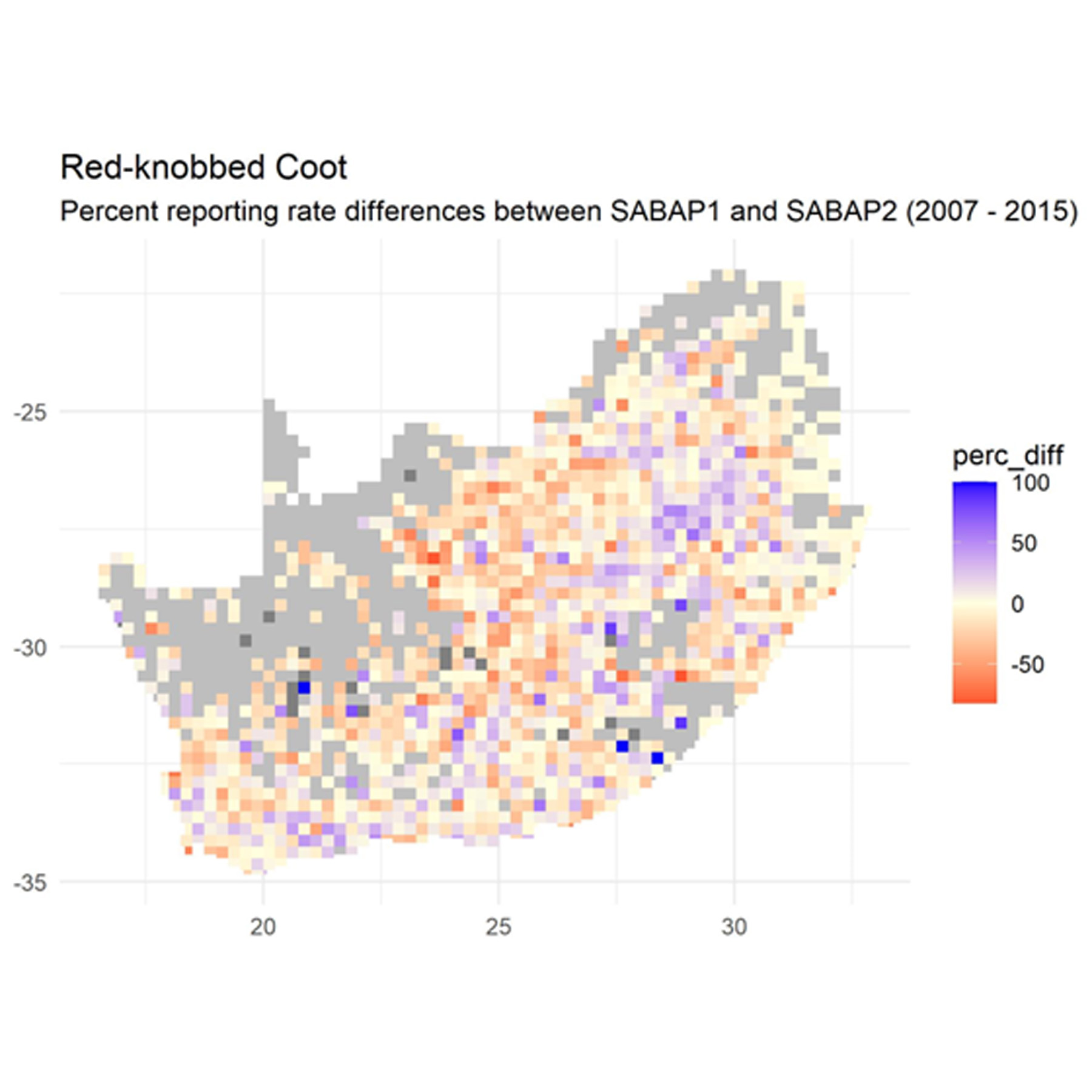
Figure 1a: SABAP1 distribution maps depict the extensive former range.
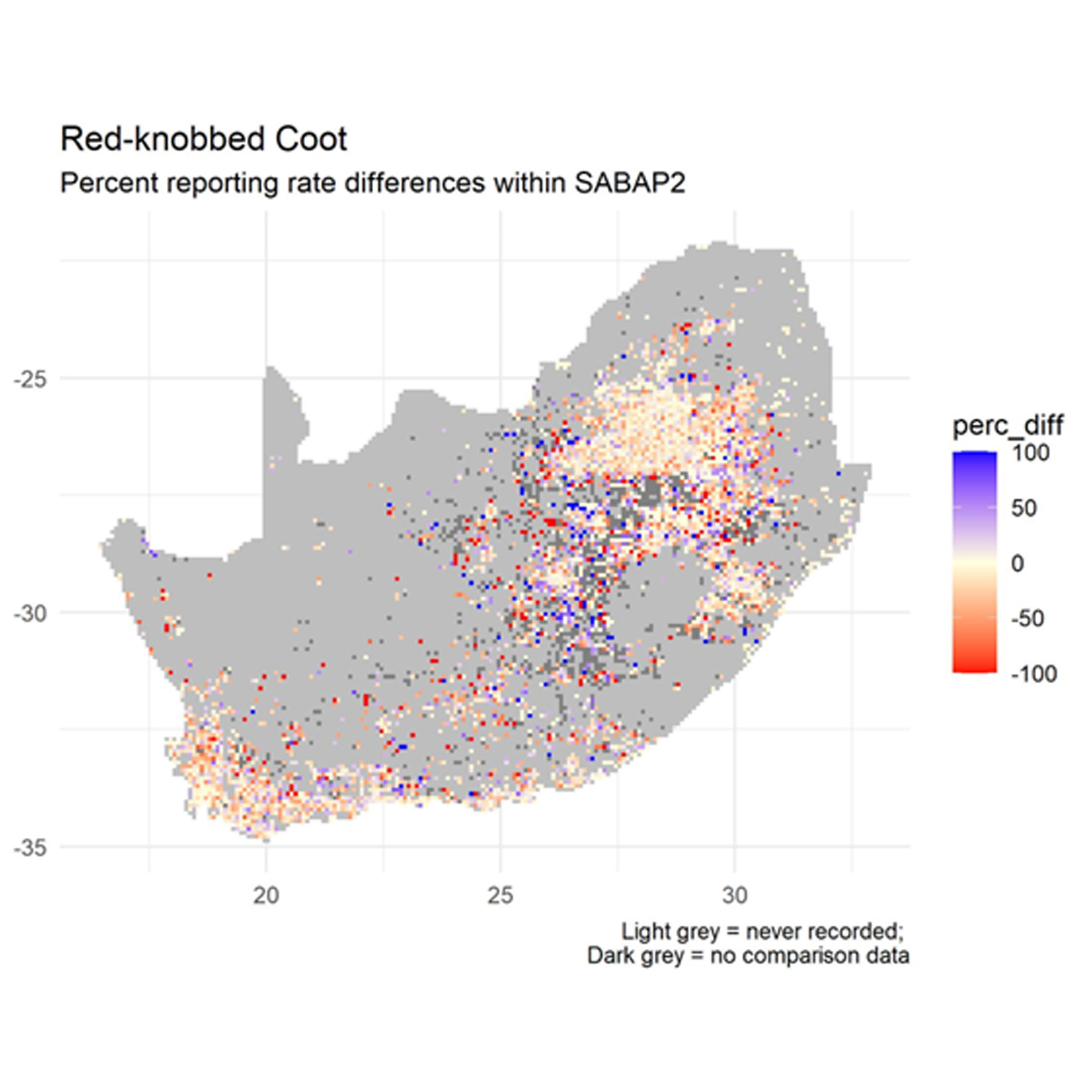
Figure 1b: SABAP2 distribution maps depict recently erratic number of records.
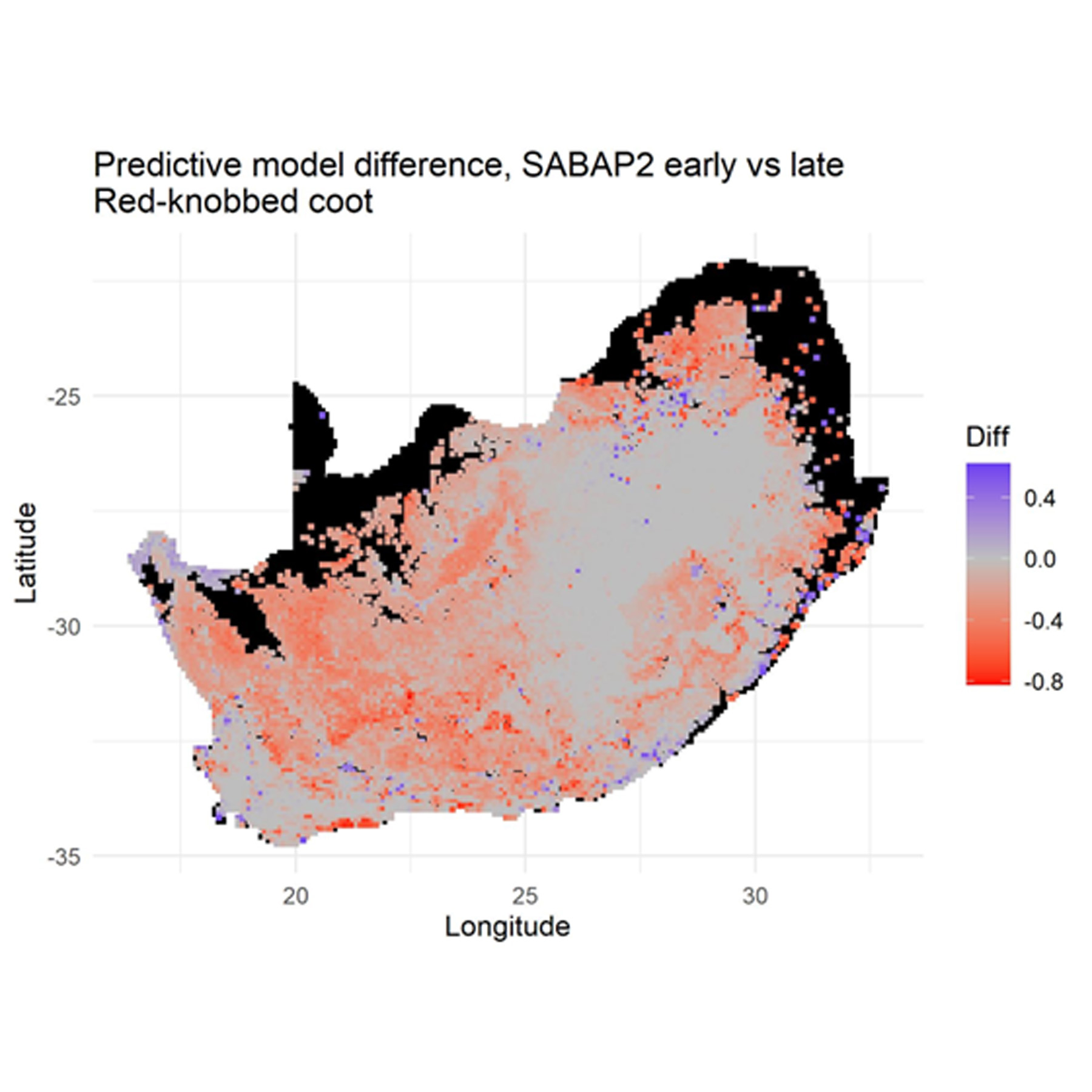
Figure 1c: SABAP distribution maps depict extensive predicted range contraction within SABAP2.
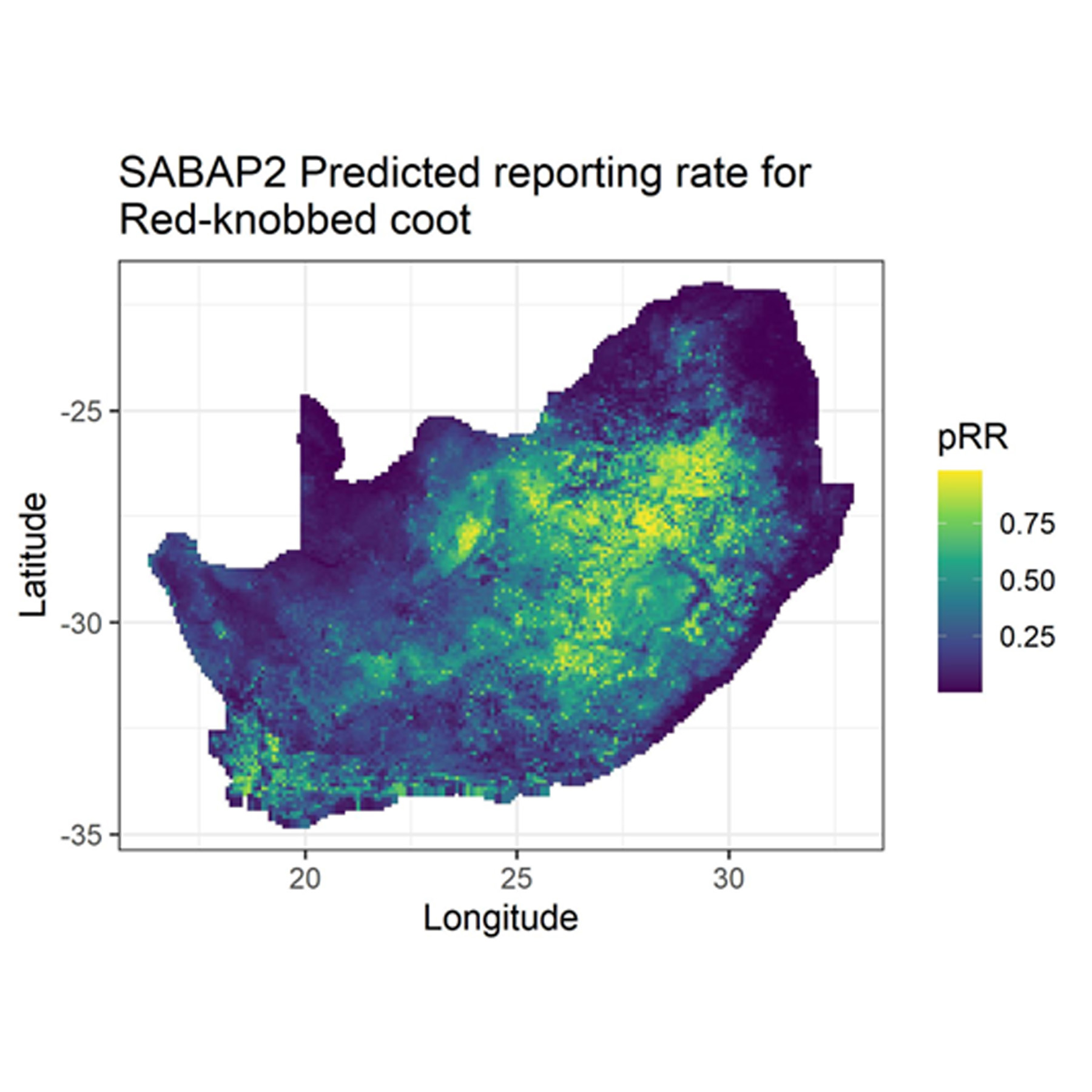
Figure 1d: The SABAP2 reporting rate prediction model indicates the species is still widespread throughout the region (from Lee 2024).
Population Justification
The global population is estimated at 107 000 – 1 011 000 individuals (c.1 690 – 677 370 mature individuals) (Wetlands International 2016). The regional population size is unknown, but previous estimates of the sub–Saharan population size estimated that the number fluctuates between 100 000 – 1 000 000 individuals (Underhill et al. 1999). The regional population is assumed to be >10 000. Population estimates for the Cape Floristic Region alone are 144 764 (68 753 – 304 811) (Lee et al. in prep). For all South African CWAC sites where the species was recorded for the period 1997-2007 (n = 373) a total of 86 209 and 190 851 Red-knobbed Coot were obtained using the sum of the site mean counts and sum of the site maximum counts respectively. Using the same methodology for 2008-2023 (350 sites) provided a total of 65 925 for the sum of the site mean counts and 161 530 for the sum of the site maximum counts. Considering that CWAC counts do not cover all waterbodies on which this species may occur these counts probably underestimate the size of the regional population using the mean counts. The regional population is assumed to be >100 000.
Trend Justification
The global population is declining (BirdLife International 2016). SABAP2 and CWAC data show that the regional population is declining across the range, especially in the arid interior (Figures 1-3). Counts at CWAC sites were modelled using the poptrend package (Knape 2016). These models estimated a percentage change over three generations (Figures 2, 3). There is some uncertainty however in the magnitude of the decline: it is as high as 68% when excluding outliers (Figure 3), but only 3% when examining the difference of mean counts for 350 repeated sites for the periods 1997-2007 and 2008-2023. At a local scale, significant declines have been recorded in the Wilderness Lakes Complex, Western Cape Province, in which a significant part of the global population (>1%) occurs (Russell 2023). Confidence in this trend is high.
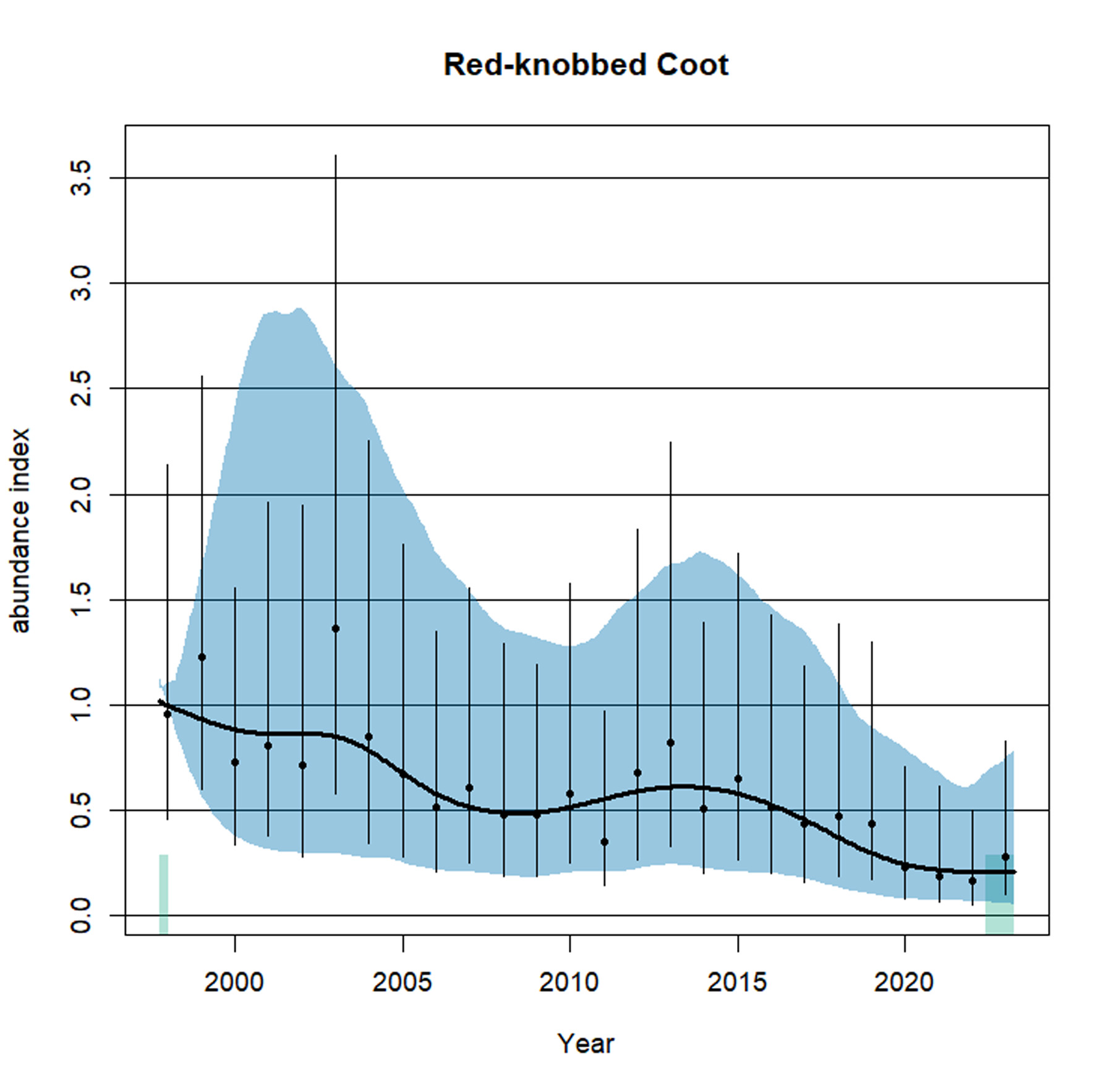
Figure 2: Change in abundance index by year in population size for Red-knobbed Coot using the poptrend package (Knape 2016). The magnitude of decline is -76% (95% CI: -92%, -19%) (from Lee 2024).
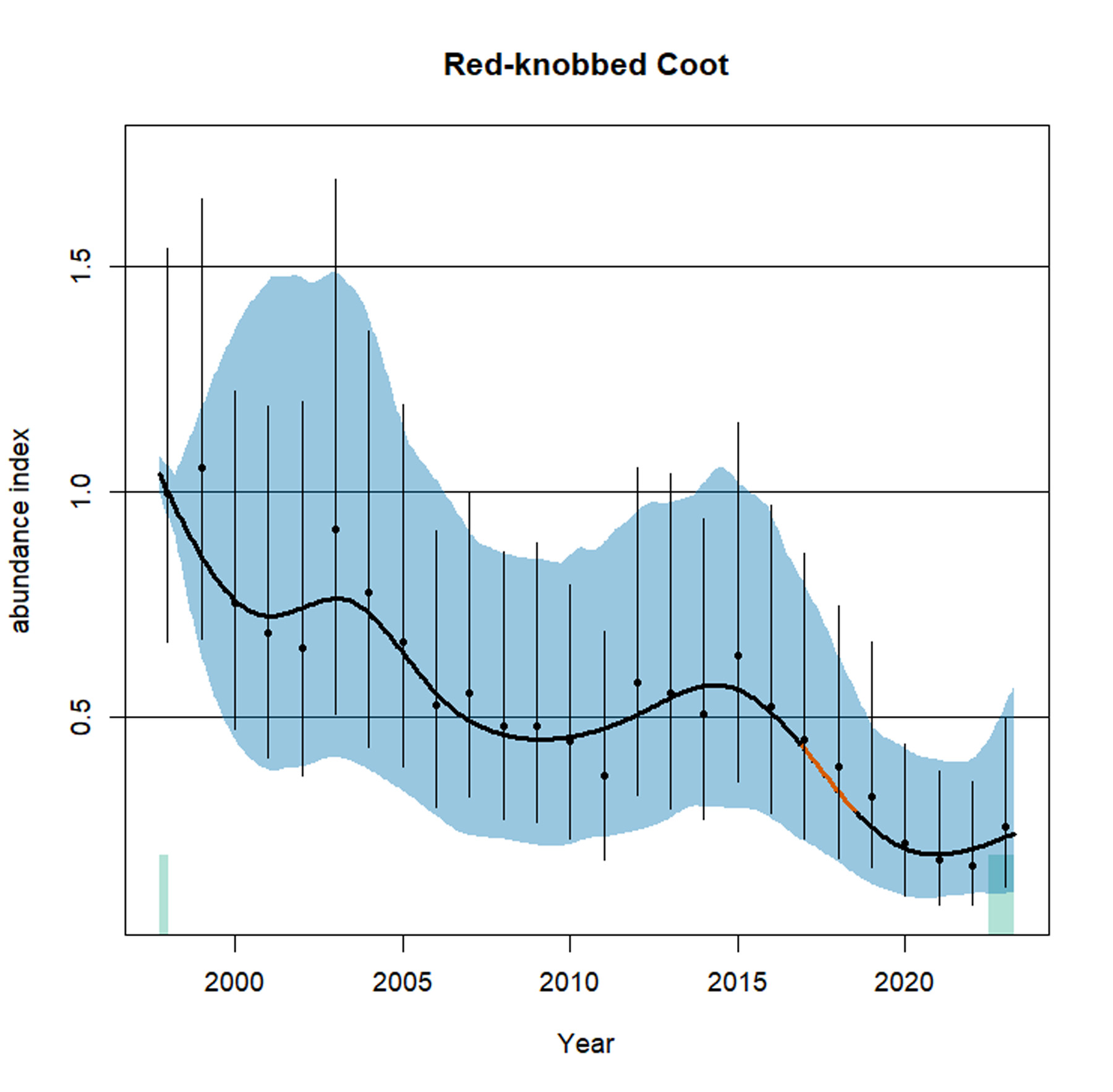
Figure 3: Change in abundance index by year in population size for Red-knobbed Coot with potential outliers removed (counts >10 000 individuals) using the poptrend package (Knape 2016). The magnitude of decline is -68% (95% CI: -84%, -37%). Orange indicates period of significant decrease.
Table 1: Percentage predicted range change from SABAP2 data, modelling the predicted number of pentads a species could occur in for the period up to 2015, and then until the end of 2023 (from Lee 2024).
|
Information |
|
|
Pentads 2015 |
13252 |
|
Pentads 2023 |
10420 |
|
Annual rate of change |
0.97 |
|
Percent change (10 years or 3 generations) |
-23.70% |
|
Category (A2) |
NT |
Biology & Ecology
Taxonomy
Monotypic.
Identification
35–42 cm (Dean 2005). Sexes are similar in appearance (Dean 2005). Adult: The plumage is largely black except for its white facial shield. Bill and frontal shield are predominately white, while the bill has a blueish tinge (Dean 2005). Two red knobs are present on top of the shield, which is highly visible when breeding but otherwise inconspicuous (Dean 2005). Eyes are red with greenish legs and feet (Dean 2005). Juvenile: dark brown above with, sides of head, neck and flanks dark olive (Dean 2005).
Distribution
Widespread from Europe to South Africa but in disjointed, isolated populations. There is a disjunct population centred on Morocco and Spain separated from the eastern and southern African populations by the Sahara. Distributed in South Africa in wetter regions (Taylor 1997, Figure 4), and can be found in dams in arid regions of the Karoo. Distribution models suggest Southern Africa represents the African stronghold for this species (Lee 2024).
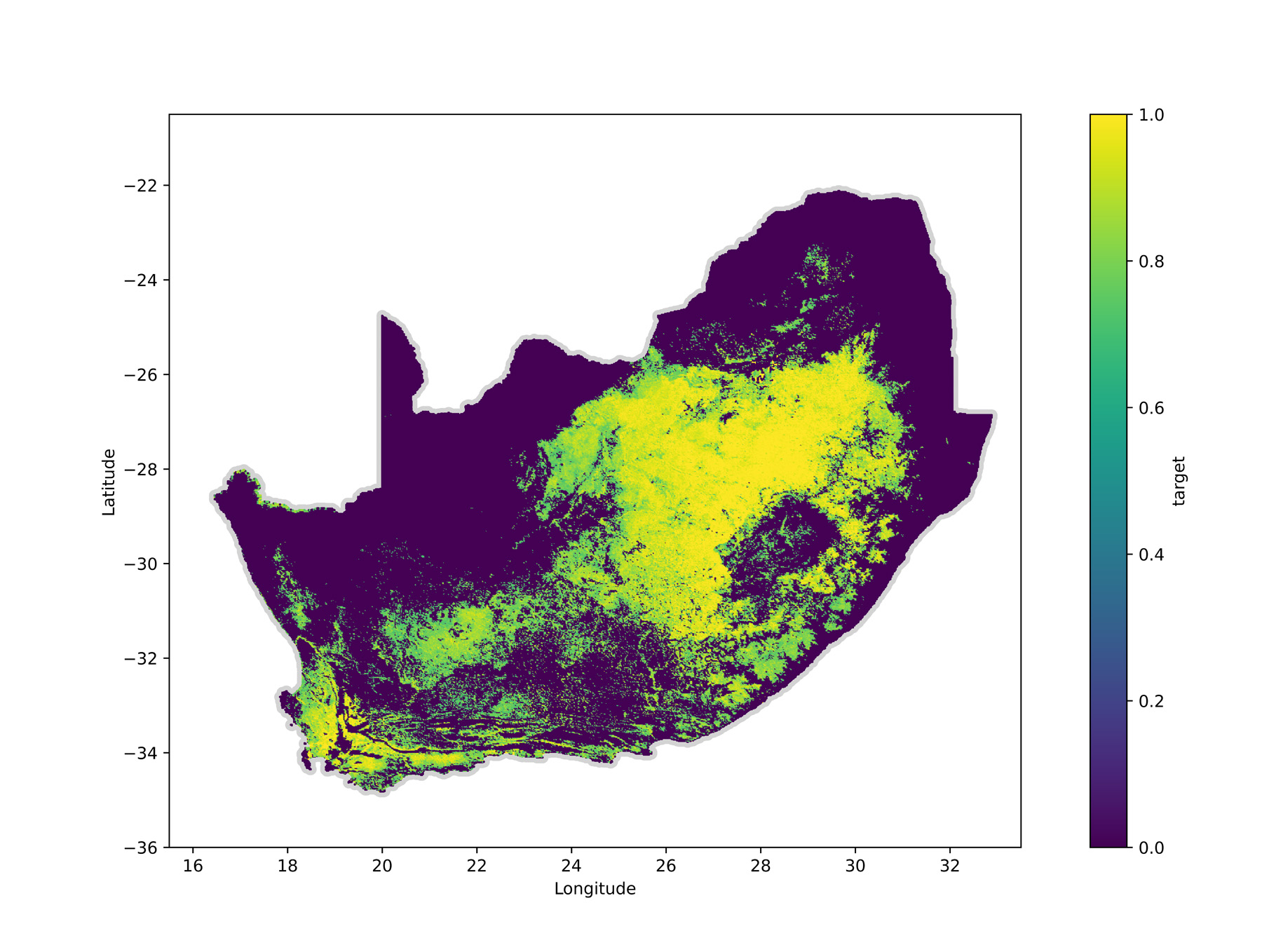
Figure 4: Red-knobbed Coot distribution across South Africa based on BirdLasser, iNaturalist and eBird data indicating widespread regional range although mostly absent from the dry interior (Lee 2024).
Ecology
Habitat:
Occurs in a range of water habitats, from open freshwater or slightly brackish lakes, lagoons, ponds, dams, sewage ponds, reed-, papyrus-, Typha swamps and both permanent and temporary pans and floodplains (Urban et al. 1986, del Hoyo et al. 1996). Prefers habitats with submerged aquatic vegetation and still water for foraging, fringing or emergent vegetation for nesting during the breeding season (del Hoyo et al. 1996). During flightless moult periods, adults prefer more permanent open waters that are rich in submerged aquatic vegetation (Dean and Skead 1979, Taylor 1998). Occasionally, it inhabits rivers and tidal lagoons (Urban et al. 1986, del Hoyo et al. 1996).
Migration:
Poorly understood in the region. Not considered to be migratory. Local movements are assumed to be in response to rainfall, water levels and the availability of its favoured foods but is poorly understood (Underhill et al. 1999, Dean et al. 2015).
Breeding:
Breeding time varies depending on geographic location (del Hoyo et al. 1996). The nest is built by both sexes and is usually a floating mound made from leaves and stems and is typically placed in open shallow water or floating on water and anchored to emergent vegetation (Taylor 2020). Females typically lay 2– 6 eggs, laid at daily intervals (Hockey et al 2005). Incubation is 18–25 days and is done by both sexes (Taylor 2020). The chicks hatch asynchronously, are precocial and cared for by both adults and occasionally, immature siblings (Taylor 2020). Fledges at 55–60 days (Taylor and Van Perlo 1998, Taylor 2020). Oldest ringed bird was 23 years and 9 months (Underhill et al. 1999)
Breeding success varied by location, with challenges including predation, environmental factors, parasitism, and pollution. In Western Cape out of 504 eggs (from 109 nests), 175 hatched. The main causes of nest failure included predation (20 nests), wave action (18 nests), and rising water levels (18 nests) (Dean 2005) Grey Heron was the only identified predator (Winterbottom 1966). Overall breeding success was 29.3% (Winterbottom 1966). In Gauteng, eggs contained high levels of heavy metals, which likely contributed to poor hatching success and early chick mortality (Van Eeden 1990). Overall, other causes of mortality include botulism (Blaker 1967, Van Eeden 1990), collisions with buildings, fences and overhead wires as well as road casualties (SAFRING unpubl data).
Diet:
This species is omnivorous and generalist. It is assumed to mainly consume aquatic vegetation, especially non-rooting submerged or floating plants, filamentous algae, and various grasses and seeds (Dean 2005, Taylor 2020). Red-knobbed Coot may also feed on molluscs, crustaceans, arthropods and insects, and carrion, such as ducks washed up on shore (Urban et al. 1986, del Hoyo et al. 1996).
Threats & Conservation
Threats
Red-knobbed Coot are vulnerable to disease outbreaks (such as avian botulism) which have decimated certain local populations (e.g. Russell et al. 2019). It was the most frequently recorded species during a botulism related mortality event at Kamfers Dam in December 2024 with >100 carcasses retrieved (DWA unpubl data). Additionally, this species faces threats from both intentional and unintentional poisoning – either from pest control measures or from pesticides used on crops (Dean 2005). Although considered common in sub-Saharan Africa, Red-knobbed Coot is considered close to extinction in its European range for reasons that are not understood (Taylor 2020). Population monitoring in South Africa is required.
Increased disturbance within protected areas by recreational users may also be contributing to declines (e.g. Russell 2023).
Conservation Measures Underway
No species-specific conservation measures are currently underway.
Conservation Measures Proposed
Recommending conservation measures for this declining waterbird is difficult as the drivers of decline are not understood. The decline may be related to avian disease, habitat degradation or disturbance within protected areas (e.g. Russell et al. 2019, Russell 2023). Disease management needs to continue, through the early and regular location and removal of bird carcasses during avian botulism outbreak periods (typically November to June) (Russell 2023).
The ongoing degradation of freshwater habitats by pollutant run offs, sewage, encroachment of vegetation, alien invasives and increased recreational users needs to be addressed urgently (e.g. Skowno et al. 2019, Russell 2023).
Research Priorities and Questions
- A regional population estimate needs to be established.
- The widespread drivers of decline need to be investigated and identified.
- Ongoing population monitoring is crucial.
- No Population Viability Analysis (PVA) exists for this species. Given that this species is still common it would be an ideal candidate for such an analyses.
Contributors & References
Assessor/s
Sanjo Rose, Maria Paul
Reviewer/s
Josephine Mundava-Maringa
References
BirdLife International. 2016. Fulica cristata. The IUCN Red List of Threatened Species 2016: e.T22692907A89656879. Available at https://dx.doi.org/10.2305/IUCN.UK.2016-3.RLTS.T22692907A89656879.en [Accessed on 4 June 2024].
BIRDIE, SANBI. 2024. Red-knobbed Coot (Fulica cristata). Available at https://biodiversityadvisor.sanbi.org/contentmanagement/index?guid=42305260-12b0-4a92-912e-7d801d15fdac [Accessed on 22 August 2024].
Blaker D. 1967. An outbreak of botulinus poisoning among waterbirds. Ostrich 38: 144–147.
Dean WRJ, Milton SJ, Forsyth HP, Tissiman DR. 2015. Fluctuations in bird numbers on sewage treatment ponds in an arid environment, South Africa. Ostrich 86: 145–153.
Dean WRJ, Skead DM. 1979. Moult and mass of the Red-knobbed Coot. Ostrich 50: 199–202.
Dean WRJ. 2005. Red-knobbed Coot. In: Hockey PAR, Dean WRJ, Ryan PG (eds), Roberts birds of southern Africa (7th Edn). Cape Town: Trustees of the John Voelcker Bird Book Fund.
del Hoyo J, Elliott A, Sargatal J (eds). 1996. Handbook of the Birds of the World, vol. 3: Hoatzin to Auks. Barcelona: Lynx Edicions.
Knape J. 2016. Decomposing trends in Swedish bird populations using generalized additive mixed models. Journal of Applied Ecology 53(6): 1852–1861. https://doi.org/10.1111/1365-2664.12720.
Lee ATK. 2024. Regional Red Data Book of the Birds of South Africa, Lesotho and Eswatini: SABAP2 synthesis and supporting information and graphics for Red-knobbed Coot. Unpublished report. Johannesburg: BirdLife South Africa.
Lee ATK, Clark M, Ferraz A, Measey J, Salas L, Schneider F, Seymour C, Turner A. In prep. Avian density and distribution in the Fynbos and adjacent Cape Floristic Region. Unpublished manuscript.
Russell IA, Rodney M, Randall DZ, Govender D. 2019. Outbreak of avian botulism and its effect on waterbirds in the Wilderness Lakes, South Africa. Koedoe 61: a1553.
Russell IA. 2023. Waterbird community changes in the Wilderness Lakes, South Africa (Part 1 of 3): herbivores and omnivores. Koedoe 65(1): a1770.
Skowno AL, Poole CJ, Raimondo DC, Sink KJ, Van Deventer H, Van Niekerk L, Harris LR, Smith-Adao LB, Tolley KA, Zengeya TA, Foden WB, Midgley GF, Driver A. 2019. National Biodiversity Assessment 2018: The status of South Africa’s ecosystems and biodiversity. Synthesis Report. Pretoria, South Africa: South African National Biodiversity Institute, Department of Environment, Forestry and Fisheries.
Taylor PB. 1997. Red-knobbed Coot. In: Harrison JA et al. (eds), The Atlas of Southern African Birds, vol. 1. Johannesburg: BirdLife South Africa. pp 342–343.
Taylor B. 1998. Rails: A Guide to the Rails, Crakes, Gallinules and Coots of the World. Robertsbridge: Pica Press.
Taylor PB, Van Perlo B. 1998. Rails: A Guide to the Rails, Crakes, Gallinules and Coots of the World. Mountfield, Sussex: Pica Press.
Taylor B. 2020. Red-knobbed Coot (Fulica cristata), version 1.0. In: del Hoyo J, Elliott A, Sargatal J, Christie DA, de Juana E (eds), Birds of the World. Ithaca, NY: Cornell Lab of Ornithology. Available at https://doi.org/10.2173/bow.rekcoo1.01 [Accessed on 3 June 2024].
Underhill LG, Tree AJ, Oschadleus HD, Parker V. 1999. Review of Ring Recoveries of Waterbirds in Southern Africa. Cape Town: Avian Demography Unit, University of Cape Town.
Urban EK, Fry CH, Keith S (eds). 1986. The Birds of Africa, vol. 2. London: Academic Press.
Van Eeden PH. 1990. Die voorkoms en akkumulering van geselekteerde swaarmetale in die rioolbesoedelde, organiesverrykte Elsburgspruit-Natalspruit vlei-ekosisteem. MSc thesis. Potchefstroom: Potchefstroom University.
Winterbottom JM. 1966. Some notes on the Red-knobbed Coot Fulica cristata Gmelin in South Africa. Ostrich 37: 92–94.
Citation
Rose S, Paul M 2025. Red-knobbed Coot. In: Lee ATK, Rose S, Banda S, Bezeng SB, Maphalala MI, Maphisa DH, Smit-Robinson H (eds), The 2025 Red Data Book of Birds of South Africa, Lesotho and Eswatini. Johannesburg, South Africa: BirdLife South Africa. Available at: https://www.birdlife.org.za/red-list/red-knobbed-coot/
Our generous sponsors


