


Red-chested Flufftail
Sarothrura rufa

Number Of Mature
Individuals (Regional)
1 588 444

Regional
Population Trend
Decreasing
2025
Regional Category
Least Concern
Search by species
CONTENTSOverview
Names
|
IOC English Name: |
Red-chested Flufftail |
|
SA & IOC Scientific Name: |
Sarothrura rufa |
|
BirdLife International Taxonomy (scientific name): |
Sarothrura rufa |
|
Order: |
GRUIFORMES |
|
Family: |
Sarothruridae |
|
Species name author: |
Vieillot 1819 |
|
Afrikaans: |
Rooiborsvleikuiken |
|
Sesotho (South Africa): |
Tsuanelehlaka ya sefubafubedu |
|
Sesotho (Lesotho): |
|
|
Siswati: |
|
|
Zulu: |
ubhavuzilobomvana |
Current Assessment Status
|
2025 Regional Category [Criteria] |
LC |
|
2024 Global Status [Criteria] |
LC (BirdLife International 2024) |
|
Population size (Regional) |
1 588 444 (Ehlers Smith et al. 2024) |
|
Population size (Global) |
Unknown |
|
Distribution size (EOO) (Regional) km2 |
1 135 474 (Lee 2024) |
|
Distribution size (EOO) (Global) km2 |
18 100 000 (BirdLife International 2024) |
|
Distribution size (AOO) (Regional) km2 |
3574 (Ehlers Smith et al. 2024) |
|
Generation time |
3.3 years (BirdLife International 2024) |
|
Status change reason |
No change |
|
Migrant (in the region) |
Local |
|
Regional endemic |
No |
Historic Listing Information
|
2000 Regional Status |
Not Evaluated |
|
2015 Regional Status |
Not Evaluated |
|
Status change reason [if applicable] |
Not applicable |
|
2015 Population size (Regional) |
Unknown |
|
2015 Global Population |
LC |
Reason for Inclusion
Reason for Inclusion in the Assessment
The Red-chested Flufftail Sarothrura rufa was not assessed regionally prior to this assessment. Preliminary analyses of the Coordinated Waterbird Counts (CWAC) indicated that the species could be declining within the region (Lee 2024).
Category Justification
Category Justification
The Area of Occupancy (AOO) is estimated at 3574 km2 in the region, which can support a population size of 1 588 444 individuals (Ehlers Smith et al. 2024). Declines are not thought to exceed 30% over three generations. Consequently, the Red-chested Flufftail does not meet any of the threatened IUCN categories and thus maintains a regional threat status of Least Concern.
POPULATION JUSTIFICATION
Habitat suitability modelling using 10 460 presence records of Red-chested Flufftail collected from the BirdLasser mobile app and cross-verified with the Southern African Bird Atlas Project 2 (SABAP2) with a 50% likelihood of suitability predicts an AOO of 3574 km2 (Ehlers Smith et al. 2024). Extrapolating from a territory size of 0.45 ha (Taylor and van Perlo 1998), it is estimated that 1 588 444 individuals can be supported in South Africa (Ehlers Smith et al. 2024).
Trend Justification
Trend analysis of SABAP2 data with a high confidence of reporting Red-chested Flufftail indicated a percentage predicted range change increase of 14.9% since 2015 (Lee 2024). Reporting rates have mostly remained consistent across the species’ range since the last assessment period with an overall 1.4% increase in mean reporting rate (Lee 2024). BirdLasser location data over the assessment period show that the Red-chested Flufftail has a high probability of occurrence along the foothills of the Eastern Escarpment of South Africa with 10.2% of records made in 24 protected areas (Lee 2024). CWAC trends for the species showed a decrease in the average total counts across surveyed sites between 1998 and 2011 but increased gradually over the assessment period (Lee 2024). CWAC may not be a suitable assessment method for the Red-chested Flufftail as it mostly inhabits vegetated wetlands and not open water bodies with fringe riparian habitat where CWAC is typically conducted. The species is also primarily detected by vocalisations which require specialised knowledge by the public performing the survey.
Biology & Ecology
Taxonomy
There are no recognised subspecies and no notable issues.
Identification
15–17 cm, c. 37 g. Sexes are dimorphic in plumage colouration, but both have a white-flecked black tail that extends beyond the wing tips (Hockey et al. 2005). Adult males have a deep reddish chestnut to mahogany-red head, neck, chest, and upper belly distinguishing it from other flufftail species in the region. The remainder of body is black with white streaks. Adult females are darker brown without chestnut colouration. The chin, throat, and centre belly are buff to off-white (Hockey et al. 2005). Young birds and immatures are similar to adults but have duller chestnut and fewer white markings in males, while females are dark brownish black with fewer and paler spots (Hockey et al. 2005).
Distribution
The Red-chested Flufftail is widespread throughout sub-Saharan Africa, including South Africa and Eswatini (Urban et al. 1986, Parker 1994, Taylor 1997a, Taylor and Van Perlo 1998, Parker 1999). In South Africa, the bird occurs along the east coast to the Western Cape Province where wetlands occur. The distribution extends inland on the mesic eastern half of the region up to 2100 m.
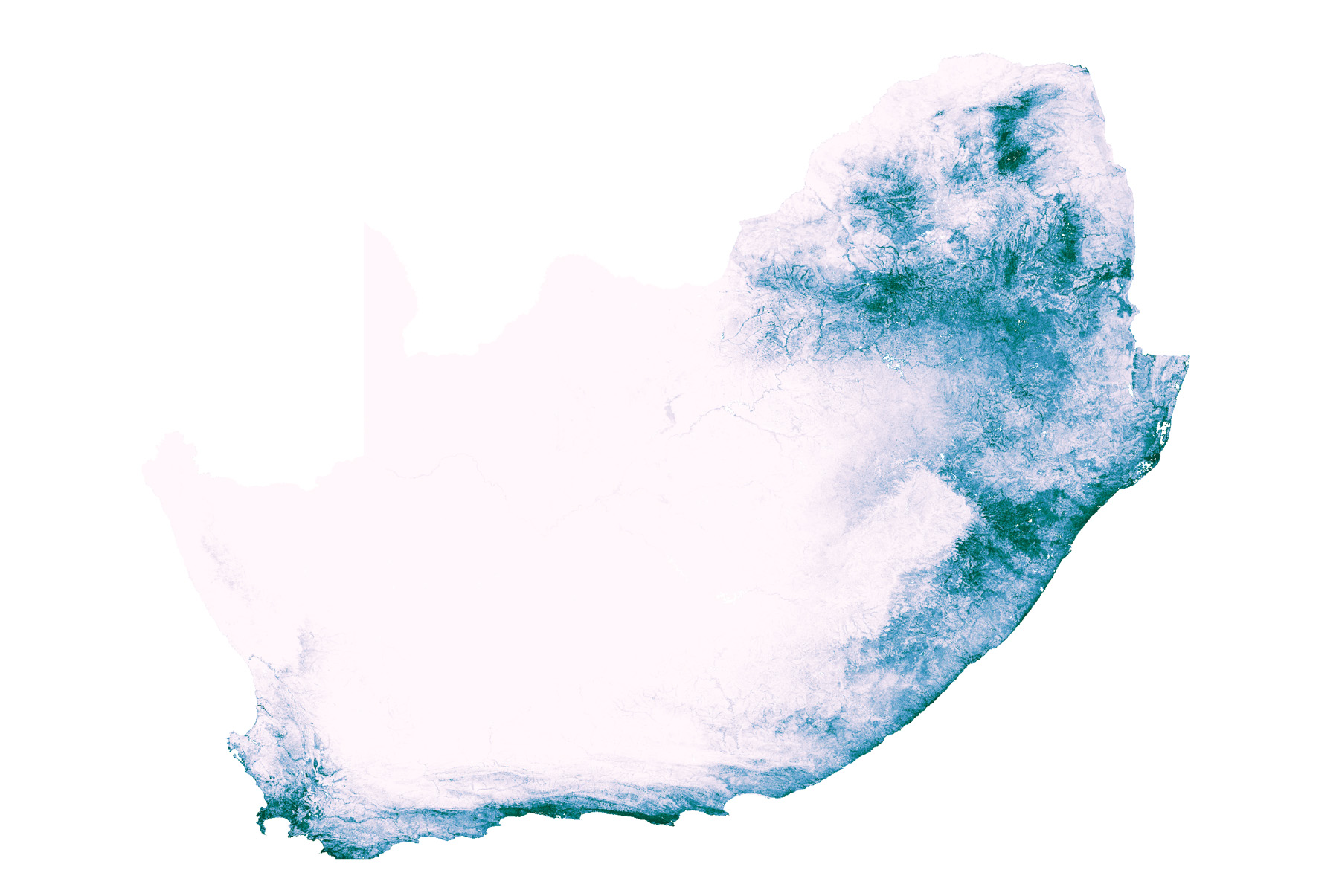
Figure 1: Maxent Species Distribution Model for the Red-chested Flufftail in South Africa, Eswatini, and Lesotho (from Ehlers Smith et al. 2024).
Ecology
The Red-chested Flufftail occupies varying water levels within vegetated wetlands from seasonally to permanently saturated zones (Taylor 1994, Hockey et al. 2005). The plant communities along this gradient can be dominated by grasses, sedges (Cyperus, Carex, and Juncus spp.), reeds (Typha and Phragmites spp.), or even papyrus (Cyperus papyrus) with accompanying vegetation heights of 550 mm to 3 m but prefers a mosaic of plant species (Taylor 1994). Inhabited wetlands can be isolated within grasslands, woodlands, and forests or associated with adjacent aquatic ecosystems like streams, rivers, lakes, ponds, and dams (Taylor 1994, Taylor 1997b). Movements are likely localised in the non-breeding season but appears sedentary and territorial during the breeding season (Hockey et al. 2005). In South Africa, breeding has been recorded during the austral wet season (September to March) with birds at higher elevations starting 1–2 months later in the season (Urban et al. 1986, Taylor 1994, Taylor and Van Perlo 1998). The species is monogamous with both sexes incubating (16–18 days) and caring for the young (3–4 weeks) (Taylor 1994). The nest is constructed from herbaceous plants into a cup shape (80–95 mm wide, 30–40 mm deep) within the vegetation understorey above the ground or water level to provide camouflage and protection (Taylor 1994, Taylor and van Perlo 1998). Chicks are precocial meaning they are born relatively mature and are mobile shortly after hatching. Clutches comprise 2– 3 eggs with 1–3 clutches laid per season (4–9 weeks between clutches) (Taylor 1994). Young may remain to help feed the subsequent clutch of chicks but eventually disperse. Diet comprises a range of invertebrates (arthropods, annelids, gastropods, crustaceans) of both larval and adult phases foraged in dry and moist soils, shallow waters, and vegetation (del Hoyo et al. 1996, Taylor and van Perlo 1998). Seeds, mainly grasses, can also form a large component (del Hoyo et al. 1996). Calls are diverse with at least 113 different vocalisations, most of which are territorial/aggressive and contact calls (Taylor 1994).
Threats & Conservation
Threats
While population trends have not been empirically established and distributions appear to have slightly increased according to public records, the Red-chested Flufftail’s wetland habitat continues to be destroyed, degraded, and fragmented by various land-use activities both within wetlands and the surrounding catchments (Skowno et al. 2019). This includes mining, agriculture, afforestation, urbanisation, water pollution and abstraction, and many more practices that directly and indirectly alter or modify wetland inputs and drivers.
Conservation Measures Underway
There is no conservation action directed specifically at the Red-chested Flufftail. However, conservation measures that better manage, protect, steward, and rehabilitate wetlands also benefit the species inhabiting these ecosystems, including the Red-chested Flufftail. The Red-chested Flufftail benefits from the conservation efforts of crane species and the Critically Endangered White-winged Flufftail Sarothrura ayresi, a threatened conspecific flufftail that utilises high-elevation, mesic grassland wetlands within its distribution.
Conservation Measures Proposed
Wetlands need to be sustainably managed with ecological drivers, such as grazing and burning, correctly applied. The protected area network must be expanded to safeguard more inland wetlands. Threats to wetlands and the surrounding catchments (especially alien invasive species) must be removed and rehabilitated to restore wetland health. Legislation exists that regulates the use of wetland resources, but compliance to regulation is limited to non-existent outside of protected areas in some parts of the bird’s distribution.
Research Priorities and Questions
- A more robust, empirically derived population estimate is required that considers variability in habitat suitability given the dynamic nature of wetlands. This involves in-field surveys using techniques with higher detection rates for cryptic species (e.g., acoustics).
- Understanding core vs edge habitat requirements, and how this affects population dynamics, will help determine the species’ tolerance to changing habitat conditions.
- Understanding movement patterns both during and between the breeding and non-breeding seasons will assist in planning developments with adequate mitigation measures (e.g. buffer zones).
Contributors & References
Assessor/s
Kyle J. Lloyd, Maria Paul
Reviewer/s
Hanneline A. Smit-Robinson
References
BIRDIE. 2024. An online platform for African wetland and waterbird data. Available at: https://biodiversityadvisor.sanbi.org/contentmanagement/index?guid=42305260-12b0-4a92-912e-7d801d15fdac [Accessed on 12 September 2024].
BirdLife International. 2024. Species factsheet: Red-chested Flufftail Sarothrura rufa. Available at: https://datazone.birdlife.org/species/factsheet/red-chested-flufftail-sarothrura-rufa [Accessed 12 September 2024].
del Hoyo J, Elliott A, Sargatal J. 1996. Handbook of the Birds of the World, vol. 3: Hoatzin to Auks. Barcelona, Spain: Lynx Edicions.
Ehlers Smith D, Rose S, Lee A. 2024. Range, population estimates and conservation recommendations for Baillon’s Crake, Allen’s Gallinule, African Swamphen and Red-chested Flufftail in South Africa. Afrotropical Bird Biology: Journal of the Natural History of African Birds 4.
Lee ATK. 2024. Regional Red Data Book of the Birds of South Africa, Lesotho and Eswatini: SABAP2 synthesis and supporting information and graphics for Red-chested Flufftail. Unpublished report. Johannesburg: BirdLife South Africa.
Parker V. 1994. Swaziland Bird Atlas 1985–1991. Mbabane, Swaziland: Websters. In: Hockey PAR, Dean WRJ, Ryan PG (eds), Roberts – Birds of Southern Africa (7th Edn). Cape Town, South Africa: The Trustees of the John Voelcker Bird Book Fund.
Parker V. 1999. The Atlas of the Birds of Sul do Save, Southern Mozambique. Cape Town & Johannesburg: Avian Demography Unit & Endangered Wildlife Trust.
Skowno AL, Poole CJ, Raimondo DC, Sink KJ, Van Deventer H, Van Niekerk L, Harris LR, Smith-Adao LB, Tolley KA, Zengeya TA, Foden WB, Midgley GF, Driver A. 2019. National Biodiversity Assessment 2018: The status of South Africa’s ecosystems and biodiversity. Synthesis Report. Pretoria, South Africa: South African National Biodiversity Institute, Department of Environment, Forestry and Fisheries.
Taylor B, Kirwan GM, Boesman PFD. 2021. Red-chested Flufftail (Sarothrura rufa), version 1.1. In: del Hoyo J, Elliott A, Sargatal J, Christie DA, de Juana E (eds), Birds of the World. Ithaca, NY, USA: Cornell Lab of Ornithology. Available at: https://doi.org/10.2173/bow.recflu1.01.1.
Taylor PB. 1994. The biology, ecology and conservation of four flufftail species Sarothrura (Aves: Rallidae) [PhD thesis]. Pietermaritzburg, South Africa: University of Natal. In: Hockey PAR, Dean WRJ, Ryan PG (eds), Roberts – Birds of Southern Africa (7th Edn). Cape Town, South Africa: The Trustees of the John Voelcker Bird Book Fund.
Taylor PB. 1997a. Red-chested Flufftail. In: Harrison JA, Allan DG, Underhill LG, Herremans M, Tree AJ, Parker V, Brown CJ (eds), The Atlas of Southern African Birds, Vol. 1: Non-passerines. Johannesburg, South Africa: BirdLife South Africa. pp 328–329.
Taylor PB. 1997b. The status and conservation of rallids in South Africa: results of a wetland survey in 1995/96. ADU Research Report No. 23. Cape Town, South Africa: Avian Demography Unit, University of Cape Town. In: Hockey PAR, Dean WRJ, Ryan PG (eds), Roberts – Birds of Southern Africa (7th Edn). Cape Town, South Africa: The Trustees of the John Voelcker Bird Book Fund.
Taylor PB. 2005. Red-chested Flufftail Sarothrura rufa. In: Hockey PAR, Dean WRJ, Ryan PG (eds), Roberts – Birds of Southern Africa (7th Edn). Cape Town, South Africa: The Trustees of the John Voelcker Bird Book Fund. pp 317–318.
Taylor PB, Van Perlo B. 1998. Rails: A guide to the rails, crakes, gallinules and coots of the world. Robertsbridge, UK: Pica Press.
Urban EK, Fry CH, Keith S. 1986. The Birds of Africa, Vol. 2. London, UK: Academic Press. In: Hockey PAR, Dean WRJ, Ryan PG (eds), Roberts – Birds of Southern Africa (7th Edn). Cape Town, South Africa: The Trustees of the John Voelcker Bird Book Fund.
Citation
Lloyd KJ, Paul M 2025. Red-chested Flufftail. In: Lee ATK, Rose S, Banda S, Bezeng SB, Maphalala MI, Maphisa DH, Smit-Robinson H (eds), The 2025 Red Data Book of Birds of South Africa, Lesotho and Eswatini. Johannesburg, South Africa: BirdLife South Africa. Available at: https://www.birdlife.org.za/red-list/red-chested-flufftail/
Our generous sponsors


