


Pel’s Fishing Owl
Scotopelia peli

Number Of Mature
Individuals (Regional)
90 – 120

Regional
Population Trend
Decreasing
2025
Regional Category
NA
Search by species
CONTENTSOverview
Names
|
IOC English Name: |
Pel’s Fishing Owl |
|
SA & IOC Scientific Name: |
Scotopelia peli |
|
BirdLife International Taxonomy (scientific name): |
The same as SA & IOC |
|
Order: |
STRIGIFORMES |
|
Family: |
Strigidae |
|
Species name author: |
Bonaparte 1850 |
|
Afrikaans: |
Visuil |
|
Sesotho (South Africa): |
Morubisihlapi |
|
Sesotho (Lesotho): |
|
|
Siswati: |
|
|
Zulu: |
isikhovanhlanzi |
Current Assessment Status
|
2025 Regional Category [Criteria] |
NA Species of Conservation Concern |
|
2024 Global Category [Criteria] |
LC (BirdLife International 2018) |
|
Population size (Regional) |
90 – 120 |
|
Population size (Global) |
Unknown |
|
Distribution size (EOO) (Regional) km2 |
131 156 (128 755 – 604 635) (Lee 2024) |
|
Distribution size (EOO) (Global) km2 |
18 500 000 (BirdLife International 2018) |
|
Distribution size (AOO) (Regional) km2 |
5660 (3448 – 8664) (Lee 2024) |
|
Generation time |
6.1 years (BirdLife International 2018) |
|
Status change reason |
Application of criteria |
|
Migrant (in the region) |
No |
|
Regional endemic |
No |
Historic Listing Information
|
2000 Regional Status |
VU [A2c; C1+2a] |
|
2015 Regional Status |
EN [D1] |
|
Status change reason (if applicable) |
Increased Knowledge |
|
2015 Population size (Regional) |
70 – 100 mature individuals |
|
2015 Global Status |
LC |
Reason for Inclusion
Reason for Inclusion in the Assessment
The species was assessed as regionally Endangered in 2015 (Botha 2015).
Category Justification
Category Justification
The regional population of Pel’s Fishing Owl Scotopelia peli was assessed as ‘Not Applicable’ for the regional assessment, as the region likely comprises less than 1% of the species total range (see Distribution section) and likely supports less than 5% of the global population. As such, the global status (LC as of 2024) applies. In addition, as a raptor with diminishing range outside of protected areas and population likely declining due to the poor state of South Africa’s rivers, it is listed as a national Species of Conservation Concern.
Population Justification
There has been no new information published on population size of Pel’s Fishing Owl since the last Regional Red Data Book assessment by Botha (2015). The global population of Pel’s Fishing Owl has not been quantified (BirdLife International 2018). Overall densities are variable, with one pair/1–10 km of river, depending on number of suitable sites for fishing, nesting and roosting, with 23 territories along 60 km of river in Botswana (König et al. 2008). Along the Luvuvhu (Levubu) River 5–8 pairs recorded along 18 km (König et al. 2008). Mendelsohn (1997) estimated fewer than 500 pairs in Southern Africa, with the Okavango Delta in Botswana being the stronghold. Brooke (1984) speculated that there may be fewer than 60 mature individuals within South Africa, and this was later revised to 120 – 150 mature individuals by Barnes and Parker (2000), with the majority (c. 60 mature individuals) located within Kruger National Park. Surveys conducted by Botha (2010) along the Luvuvhu and Olifants Rivers in Kruger National Park estimated 15–25 breeding pairs within the park, and additional surveys on the Olifants River west of Kruger identified a further 5–7 breeding pairs. Citizen science records (eBird, Southern African Bird Atlas Project (SABAP2), iNaturalist) indicate presence along the Limpopo River between South Africa and Zimbabwe and Botswana. In KwaZulu-Natal, Cyrus (1998) estimated fewer than 60 mature individuals, but reliable, updated population estimates for this region are unavailable.
Considering these findings, the regional population is estimated at 90 – 120 mature individuals, with most occurring in protected areas. However, confidence in this estimate remains low due to the difficulty of surveying this elusive species and the patchy distribution of suitable riparian habitat.
Trend Justification
The global population is suspected to be decreasing (BirdLife International 2018). The regional population is thought to be in decline, although difficulties in estimating a regional population have hampered attempts to obtain an accurate rate of decline. There are declines in reporting rate and range between Southern African Bird Atlas Projects, SABAP1 and SABAP2, with notable declines in reporting rate from the northern Kruger National Park (Lee 2024). Within SABAP2 probability of reporting is stable, with a modelled three generation range decline of 4% (Lee 2024), mostly from the KwaZulu-Natal population. The low recent decline rates are likely because currently most of the population is contained within protected areas: the species was recorded from 33 pentads with protected status and eight unprotected as of 2023 (Lee 2024).
Biology & Ecology
Taxonomy
Monotypic. There are no notable issues.
Identification
63 cm, 2.14 kg. A large, unmistakable owl easily identified by its orange-rufous plumage, round head with large, dark eyes and no distinct facial disk (Botha 2015). The sexes are similar in appearance, although males have a deeper rufous colouration while females are slightly larger. Plumage is covered by dark spots, bars or transverse lines. Legs and feet are large and powerful and adapted for predation on fish and other slippery aquatic creatures with the tarsi being bare and the soles of the feet covered with sharp spicules to assist in grasping prey. Juveniles retain most of their pale white down for the first six months of their lives (Kemp 2005).
Distribution
The species has a large but patchy range across sub-Saharan Africa (BirdLife International 2018). The species is considered uncommon but widespread along tropical rivers and other suitable wetland habitat. Within the region, Pel’s Fishing Owl has been found in the north-east of South Africa on the Limpopo, Luvuvhu, Olifants, Sabie and Crocodile rivers in the Lowveld of Limpopo and Mpumalanga as well as on the Pongolo, Mkuze, Mfolozi and uMlalazi rivers, Lake St Lucia and at a number of larger pans in KwaZulu-Natal (Mendelsohn 1997). Although there are records of vagrant birds from as far south as Cape Town, there are currently no known breeding populations of this species south of Mtunzini (Mendelsohn 1997). In Eswatini, it was formerly a breeding resident in the Umbuluzi Gorge, and possibly in other river gorges in the Lebombo Mountains, but there have been no confirmed records since the 1984 floods caused by Cyclone Demoina removed all suitable riparian habitat (Parker 1994). There are no verified BirdLasser records for the species for the 2016-2023 period (Lee 2024), and there are no iNaturalist records for Eswatini either as of December 2024. The Extent of Occurrence (EOO) and Area of Occupancy (AOO) is based on the modelled species distribution model (Figure 1) at the 2×2 km2 grid level. Actual occupied area, presuming the population estimate is reasonable, will be much lower (<500 km2, Botha 2015).
A critical issue for this assessment is whether the species should be considered for the regional assessment. It was previously stated that >5% of the global range fell within the subregion (Botha 2015). However, this does not appear to be the case. Using the Africa modelled distribution based on presence from the African Bird Atlas Project, iNaturalist research grade records and eBird at the pentad level (Figure 2) and summing pentads with probability of >0.5, there are 30 715 pentads across Africa where the species is predicted to occur. Of these, 181 pentads are within the South Africa, Lesotho and Eswatini region (0.6%). This value is greater than the 50 pentads from SABAP2 as of end 2024 from where the species has been recorded since 2007, including vagrant records. As such, even if the predicted range is over-estimated, so would be the area in South Africa. The regional EOO is 0.7% of the global EOO. Taken together, <1% of the range and thus <5% of the global population occurs within South Africa. This species thus does not meet criteria for a regional assessment and the global status applies.
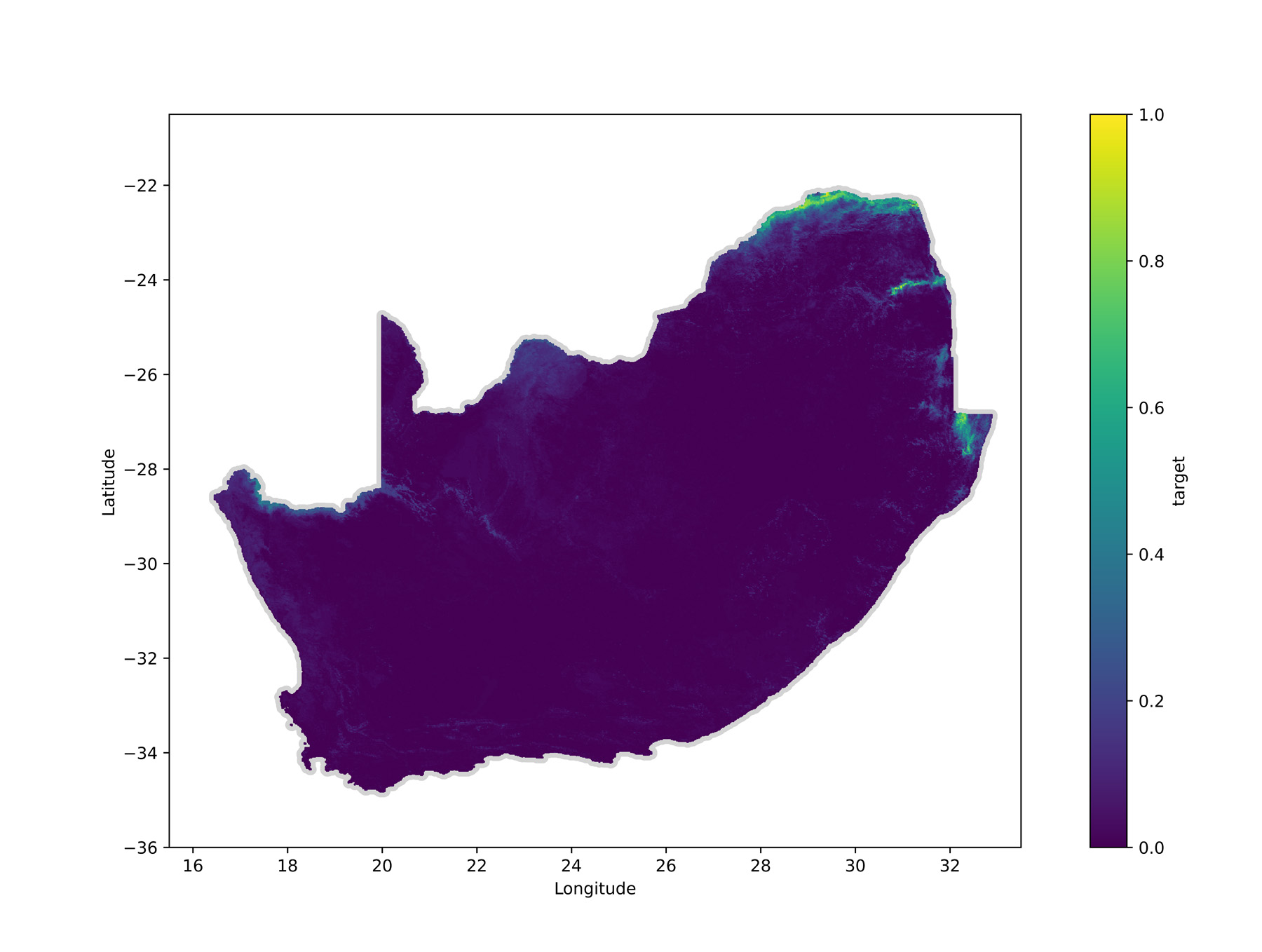
Figure 1: Modelled regional distribution at the 2×2 km scale using a random forest model and data from BirdLasser, eBird and iNaturalist.
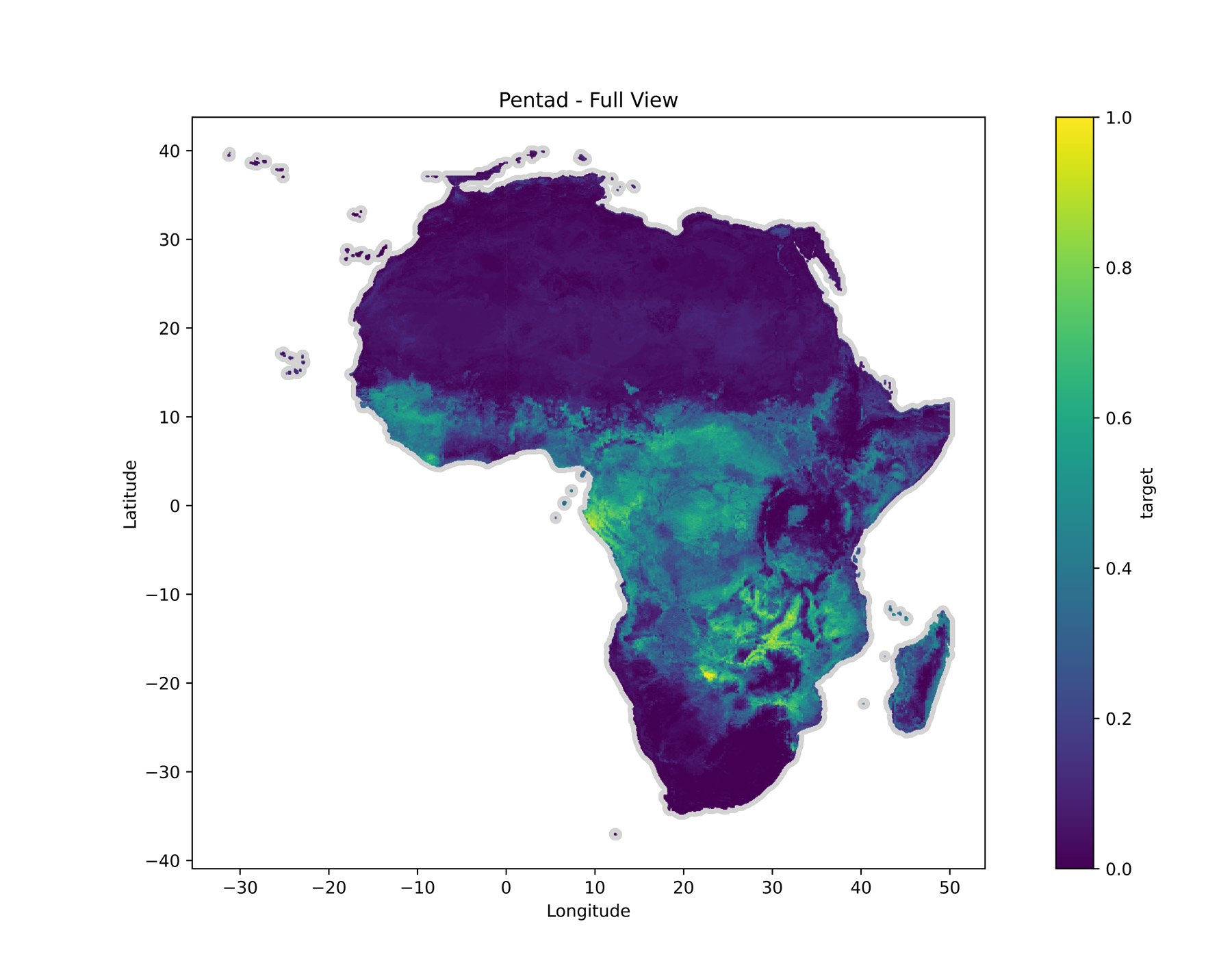
Figure 2: Modelled distribution across Africa at the pentad scale using a random forest model and data from the African Bird Atlas Project, eBird and iNaturalist.
Ecology
Pel’s Fishing Owl is found along river systems, pans and quiet backwaters that are fringed by suitable riparian vegetation, which provides hunting perches, cover and natural cavities in trees that the birds breed in (Mendelsohn 1997). Breeding in neighbouring Botswana occurs January-June with egg-laying peaking February-April (Skinner 1996), and March-April in northern South Africa (Tarboton et al. 1987). One chick is reared per breeding attempt. Fledglings may wander widely in search of suitable habitat to establish a territory. Adults are resident and territorial, and are usually found in pairs, although birds may move locally or concentrate due to waterbodies drying up, or when extensive flooding destroys riparian vegetation (Barnes and Parker 2000). They usually hunt from a perch over clear water and feed mainly on fish, occasionally on other aquatic vertebrates (Holt et al. 2020).
Threats & Conservation
Threats
The threats to Pel’s Fishing Owl remain those identified in previous assessments. The most significant threat to the species is loss of suitable habitat due to a decline in the quality and quantity of water in rivers and other waterbodies (Barnes and Parker 2000). This may be a result of water extraction and pollution, due to such activities as water provision to urban settlements, agricultural, industrial and mining activities, and the construction of impoundments within catchments. The species is particularly sensitive to clearing and disturbance of tall riparian fringes (Mendelsohn 1997). Although the effects of global climate change are difficult to predict, extensive flooding from increased rainfall may destroy riparian vegetation along rivers and make certain areas unsuitable for the species. Similarly, severe drought conditions within the species’ range could also significantly reduce the extent of available habitat (Botha 2015).
Conservation Measures Underway
The Birds of Prey Programme of the Endangered Wildlife Trust conducted annual surveys of the population of this species along two of the major river systems in Kruger National Park (Botha 2015). The Birds of Prey Programme endeavours to create greater awareness of the impact of human activities on the habitat and population of this species and actively engages with stakeholders within the catchments of river systems that could have an impact on water quality and quantity, and riparian habitats. The species is listed under Schedule 2: Specially Protected Wild Animal under the Limpopo Environmental Management Act No 7 of 2003. It is a CITIES Appendix II species.
Conservation Measures Proposed
Conservation measures proposed are those proposed by Botha (2015). A Population and Habitat Viability Assessment (PHVA) is recommended, as is a Biodiversity Management Plan, culminating in a National Species Recovery Plan. Conservation interventions required include adequate enforcement of protection of known breeding sites outside protected areas. Regular monitoring of Pel’s Fishing Owl populations in northern KwaZulu-Natal is required to accurately determine the regional population and true conservation status of the species. Implementation of an awareness programme throughout the species’ range, involving all stakeholders and highlighting threats, is necessary. Appropriate management of catchment areas upstream of protected areas that support this species is essential (Barnes and Parker 2000). Potential impacts should be considered during assessment of development applications in catchments where this species occurs.
Research Priorities and Questions
- Annual surveys of populations in Kruger National Park and adjacent river systems should be continued to monitor population trends and improve the regional population estimate, and results of previous surveys need to be published.
- The influence that season has on territory occupation, within the major river systems, needs to be investigated.
- An accurate estimate of the KwaZulu-Natal population is required.
Contributors & References
Assessor/s
Alan Lee
Reviewer/s
Kevin Shaw
References
Barnes KN, Parker V. 2000. Pel’s Fishing Owl Scotopelia peli. In: Barnes KN (ed), The Eskom Red Data Book of Birds of South Africa, Lesotho and Swaziland. Johannesburg, South Africa: BirdLife South Africa. pp 113–114.
BirdLife International. 2018. Scotopelia peli. The IUCN Red List of Threatened Species: e.T22689032A130158217. https://dx.doi.org/10.2305/IUCN.UK.2018-2.RLTS.T22689032A130158217.en. [Accessed on 19 December 2024].
Botha AJ (ed). 2010. Report of the surveys of Kruger National Park River systems for Pel’s Fishing Owl and other species: 2007-2010. Johannesburg, South Africa: Endangered Wildlife Trust.
Botha AJ. 2015. Pel’s Fishing Owl Scotopelia peli. In: Taylor MR, Peacock F, Wanless RM (eds), The Eskom Red Data Book of Birds of South Africa, Lesotho and Swaziland. Johannesburg, South Africa: BirdLife South Africa. pp 58–60.
Brooke RK. 1984. South African Red Data Book – Birds. Pretoria, South Africa: Foundation for Research Development: CSIR.
Cyrus DP. 1998. A review of the aquatic avifauna of the Mhlatuze Estuary. Unpublished report.
Holt DW, Berkley R, Deppe C, Enríquez PL, Petersen JL, Rangel Salazar JL, Segars KP, Wood KL, Kirwan GM, Marks JS. 2020. Pel’s Fishing-Owl (Scotopelia peli), version 1.0. In: del Hoyo J, Elliott A, Sargatal J, Christie DA, de Juana E (eds), Birds of the World. Ithaca, NY, USA: Cornell Lab of Ornithology. Available: https://doi.org/10.2173/bow.pefowl1.01.
Kemp AC. 2005. Pel’s Fishing-Owl Scotopelia peli. In: Hockey PAR, Dean WRJ, Ryan PG (eds), Roberts – Birds of Southern Africa, 7th Edn. Cape Town, South Africa: The Trustees of the John Voelcker Bird Book Fund. pp 259–260.
König C, Weick F, Becking J-H. 2008. Owls of the World. Second Edition. London, UK:
Christopher Helm.
Lee ATK. 2024. Regional Red Data Book of the Birds of South Africa, Lesotho and Eswatini: SABAP2 synthesis and supporting information and graphics for Pel’s Fishing Owl. Unpublished report. Johannesburg: BirdLife South Africa.
Mendelsohn JM. 1997. Pel’s Fishing Owl. In: Harrison JA, Allan DG, Underhill LG, Herremans M, Tree AJ, Parker V, Brown CJ (eds), The atlas of southern African birds, Vol I: Non-passerines. Johannesburg, South Africa: BirdLife South Africa. pp 596.
Parker V. 1994. Swaziland bird atlas, 1985-1991. Mbabane, Swaziland: Websters.
Skinner NJ. 1996. The breeding seasons of birds in Botswana 2: non-passerine families (sandgrouse to woodpeckers). Babbler 31: 6-16.
Tarboton WR, Kemp MI, Kemp AC. 1987. Birds of the Transvaal. Pretoria, South Africa: Transvaal Museum.
Citation
Lee ATK 2025. Pel’s Fishing Owl. In: Lee ATK, Rose S, Banda S, Bezeng SB, Maphalala MI, Maphisa DH, Smit-Robinson H (eds), The 2025 Red Data Book of Birds of South Africa, Lesotho and Eswatini. Johannesburg, South Africa: BirdLife South Africa. Available at: https://www.birdlife.org.za/red-list/pels-fishing-owl/
Our generous sponsors


