


Martial Eagle
Polemaetus bellicosus

Number Of Mature
Individuals (Regional)
950 – 1 100

Regional
Population Trend
Decreasing
2025
Regional Category
Endangered
Search by species
CONTENTSOverview
Names
|
IOC English Name: |
Martial Eagle |
|
SA & IOC Scientific Name: |
Polemaetus bellicosus |
|
BirdLife International Taxonomy (scientific name): |
Polemaetus bellicosus |
|
Order: |
ACCIPITRIFORMES |
|
Family: |
Accipitridae |
|
Species name author: |
Daudin 1800 |
|
Afrikaans: |
Breëkoparend |
|
Sesotho (South Africa): |
ntsu-botha |
|
Sesotho (Lesotho): |
ntsu-botha |
|
Siswati: |
Lusweti |
|
Zulu: |
inkosiyezinkozi, isihuhwa |
Current Assessment Status
|
2025 Regional Category [Criteria] |
EN [A2acde+3cde+4acde] |
|
2024 Global Category [Criteria] |
EN [A2acde+3cde+4acde] (BirdLife International 2020) |
|
Population size (Regional) |
c. 950 – 1100 (EWT unpubl data) |
|
Population size (Global) |
Unknown (BirdLife International 2020) |
|
Distribution size (EOO) (Regional) km2 |
1 533 117 (Lee 2024) |
|
Distribution size (EOO) (Global) km2 |
26 000 000 (BirdLife International 2020) |
|
Distribution size (AOO) (Regional) km2 |
824 792 (Lee 2024) |
|
Generation time |
11.1 years (BirdLife International 2020) |
|
Status change reason |
No change |
|
Migrant (in the region) |
No |
|
Regional endemic |
No |
Historic Listing Information
|
2000 Regional Status |
VU [A1a; C1] |
|
2015 Regional Status |
EN [A2cde; C1] |
|
Status change reason (if applicable) |
Genuine (recent) |
|
2015 Population size (Regional) |
c. 800 |
|
2015 Global Status |
NT [A2cde] |
Reason for Inclusion
Reason for Inclusion in the Assessment
>5% of the global range occurs within the region. In addition, the species was listed as regionally Endangered in 2015 and is currently listed as globally Endangered (Taylor 2015, BirdLife International 2020) with growing evidence for range-wide declines.
Category Justification
Category Justification
The regional population of the Martial Eagle Polemaetus bellicosus is estimated at c. 950 – 1100 mature individuals and continuous population declines of c. 60% over a period of three generations are inferred and suspected, where the reduction or its causes may not have ceased or may not be understood or may not be reversible. For these reasons, it is listed as regionally Endangered.
Population Justification
The global population of the Martial Eagle has not been quantified (BirdLife International 2020), but Ferguson-Lees and Christie (2001) estimated it to be likely “in the tens of thousands”. Despite its broad distribution and large estimated global population, the Martial Eagle is threatened across its range and has experienced a uniform decline in population numbers both regionally (Amar and Cloete 2017, Lee 2024, Shaw et al. 2024) and globally, with significant current population decreases reported in West Africa, Kenya, and northern Botswana (Shaw et al. 2024). Previously, the regional population was estimated at approximately 800 mature individuals (Taylor 2015). More recent monitoring and research, however, suggests that figure was likely a slight underestimate. This is due to more robust monitoring and citizen science atlas efforts in the arid Karoo and grassland regions of South Africa, which reveals populations persisting largely outside of protected areas on state- and privately-owned land (Machange, Jenkins and Navarro 2005, Tate 2022, Lee 2024).
Following surveys and monitoring conducted by Machange, Jenkins, and Navarro (2005), the Birds of Prey Programme of the Endangered Wildlife Trust (EWT) undertook repeated annual aerial surveys from 2018 to 2022 along a 1400 km span of Eskom transmission lines traversing the central and southwestern Karoo. These surveys recorded 149 Martial Eagle nests, comprising 82 active territories. This finding supports the number of breeding pairs predicted by habitat association models developed by Berndt (2015), which estimate that over a third (36%) of the national breeding population nests on transmission grid structures (approximately 130 – 159 breeding pairs) in the largely treeless, semiarid landscapes of the Karoo. Notably, Martial Eagles were also found to breed on wooden pylons of distribution lines across the same study site, with approximately 20 active pairs observed. This suggests that the extensive distribution line grid, particularly within the arid treeless landscape of the region, may host a significant number of additional active breeding pairs (Tate 2022). The EWT also initiated a project in 2023 to monitor breeding pairs across the mesic grasslands of South Africa. An estimated 40 pairs breed here, largely in stands of exotic Blue-gum Eucalyptus and Pine tree Pinus trees across the grassland regions of the Free State, Mpumalanga and Kwazulu-Natal provinces. Data is still lacking for populations within the Eastern Cape, however, based on recent pre-construction wind farm monitoring, at least 30 pairs have been found breeding on pylons and in exotic trees within this area, suggesting a similar number of territories to the Karoo powerline population could be sustained across the province.
In the Kruger National Park, a monitoring and research project led by the FitzPatrick Institute, University of Cape Town, from 2011 to 2022, estimated a maximum of 185 possible active territories based on home range sizes determined from GPS-tracked individuals and the habitat and available space within the park (van Eeden 2016, Van Eeden et al. 2017). Ground and aerial monitoring efforts, however, found a lower number of active territories (100 breeding pairs; van Eeden 2016, Murgatroyd et al. 2023). Murn et al. (2012) estimated a breeding population in the park of 110 mature individuals based on their 2011 aerial survey of nests.
Other significant populations within protected areas of South Africa include the Kgalagadi Transfrontier Park, predicted to support approximately 30 pairs based on home range sizes determined from GPS-tracked adults in Kruger National Park. Here, territories are closely associated with larger nesting trees along the Auob and Nossob rivers. In contrast, Hluhluwe-iMfolozi Park could support at most approximately nine pairs (van Eeden 2016). All these conservation areas have experienced both historical declines (Tarboton and Allan 1984), and more recent declines; with reporting rates indicating a decrease of up to 60% over the last 20 years (Amar and Cloete 2017). This suggests that current numbers are likely lower than the above estimates.
In Eswatini, the total population was estimated at 40 mature individuals in 1994 (Parker 1994), but more recent estimates by Monadjem and Rasmussen (2008) indicate only 14 mature individuals within protected areas, representing a decline of over 50%.
Considering recent monitoring and research outputs, and a growing knowledge on populations outside of protected areas nesting on man-made structures and in exotic trees, and acknowledging both historical and current declines, the present regional population is estimated to be approximately 950 – 1100 mature individuals, with a medium level of confidence in this estimate.
Trend Justification
Declines in the Martial Eagle population are widespread due to habitat loss, deliberate and incidental poisoning, persecution, collisions and electrocutions with power lines, and pollution (BirdLife International 2020, Shaw et al. 2024). In South Africa, recent research has revealed uniform declines of up to 60% in local populations over the past 20 years, including within protected areas such as Kruger National Park (54% decline), Hluhluwe iMfolozi Park (54% decline) and Kgalagadi Transfrontier Park (44% decline) (Amar and Cloete 2017). These declines are particularly concerning given these areas were once considered strongholds for the species.
Analysis of reporting rates from the Southern African Bird Atlas Project (SABAP1) (1987-1991) and SABAP2 (2007-2015) found a 59% reduction in mean reporting rate (from 7.3% in SABAP1 to 3.0% in SABAP2; Amar and Cloete 2017, Figure 1). Extrapolated across three generations, this rate of change equates to a 77% reduction. The overall decline rate is suspected to be very rapid over the past three generations (33 years), placing it in the 50– 79% band. Lower reporting rates outside protected and sparsely inhabited areas suggest a dramatic decrease in densities throughout the region. Alarmingly, reporting rates in large, protected areas like Kruger National Park also show significant decreases, indicating that differences in survey protocols between SABAP1 and SABAP2 are not responsible for the consistent decline in reporting rate s (Amar and Cloete 2017).
Globally, the population trend is difficult to quantify but is suspected to have undergone a moderately rapid decline over the past 56 years (BirdLife International 2020). Recent work conducted by Shaw et al. (2024) highlights and supports the general trends of population declines reported for the species across its broader African range. Their study revealed significant changes and declines in the number of individuals encountered per 100 km during road transect studies, with West Africa displaying a decline of 97%, Kenya a decline of 23%, and northern Botswana a decline in 56% over just three generations (Shaw et al. 2024). Shaw et al.’s (2024) findings suggest that the Martial Eagle has declined at rates exceeding its current IUCN threshold and thus exceeds the limits defining its current threat category of Endangered to Critically Endangered. This work also suggests that marginal populations may not be stable enough to sustain local populations in South Africa.
Based on these consolidated findings, the decline is likely ongoing and believed to have been greater than 60% over the past three generations. This reduction in population size is not only significant but may also be irreversible. Confidence in this regional population trend estimate is high.

Figure 1: Percent reporting rate differences for Martial Eagles between SABAP1 (1987-1991) and SABAP2 (2007-2015) (from Lee 2024).
Biology & Ecology
Taxonomy
There are no notable issues.
Identification
78–96 cm, 3.3–6.2 kg, wingspan 188–227 cm. A large, powerful eagle. Sexes are similar in plumage, but females are considerably larger. Adults can be identified by their large size, together with completely dark brown upperparts, throat, neck, and head, contrasting with the white, lightly spotted breast, belly and remainder of underparts. At all ages, the head is large, long and broad and has a small crest. In flight appears massive, with the undersides of the remiges looking dark and closely barred. The underwing coverts are dark brown to blackish. The tail has heavy barring, most obvious from below. In adults the eyes are bright yellow/orange, the bill is black with a grey cere, and the feet are bluish grey to pale yellow with dark talons. Juveniles differ from adults in having the upperparts dark grey, with pale-edged feathers, while the underparts are whitish with pale grey markings on the side of the chest. The head is pale grey with a white crown and a slightly shorter crest than adults. The undersides of the remiges are slightly paler grey, while the underwing coverts are almost entirely white. The tail is lightly barred. Eyes are dark brown, bill is black with a grey-greenish cere, and feet are greenish (Simmons 2005). Grey-and-white juvenile resembles juvenile Crowned Eagle Stephanoaetus coronatus, but has shorter tail, longer wings and pure white underparts (versus buffy wash on upper breast in Crowned Eagle) (Ferguson-Lees and Christie 2001).
Distribution
The Martial Eagle has an extensive range throughout sub-Saharan Africa, from Senegal and the Gambia east to Ethiopia and north-west Somalia, and south to Namibia, Botswana and South Africa, but absent from the lowland forests of West Africa (Ferguson-Lees and Christie 2001, Figure 2). It is generally scarce to uncommon or rare but is reasonably common in some areas (Ferguson-Lees and Christie 2001). There is growing evidence for concerning declines throughout much of its range, including West Africa (Shaw et al. 2024), Namibia (Brown 1991b), northern Botswana (Shaw et al. 2024), southern Mozambique (Parker 1999), Kenya (Shaw et al. 2024) and South Africa (Amar and Cloete 2017).
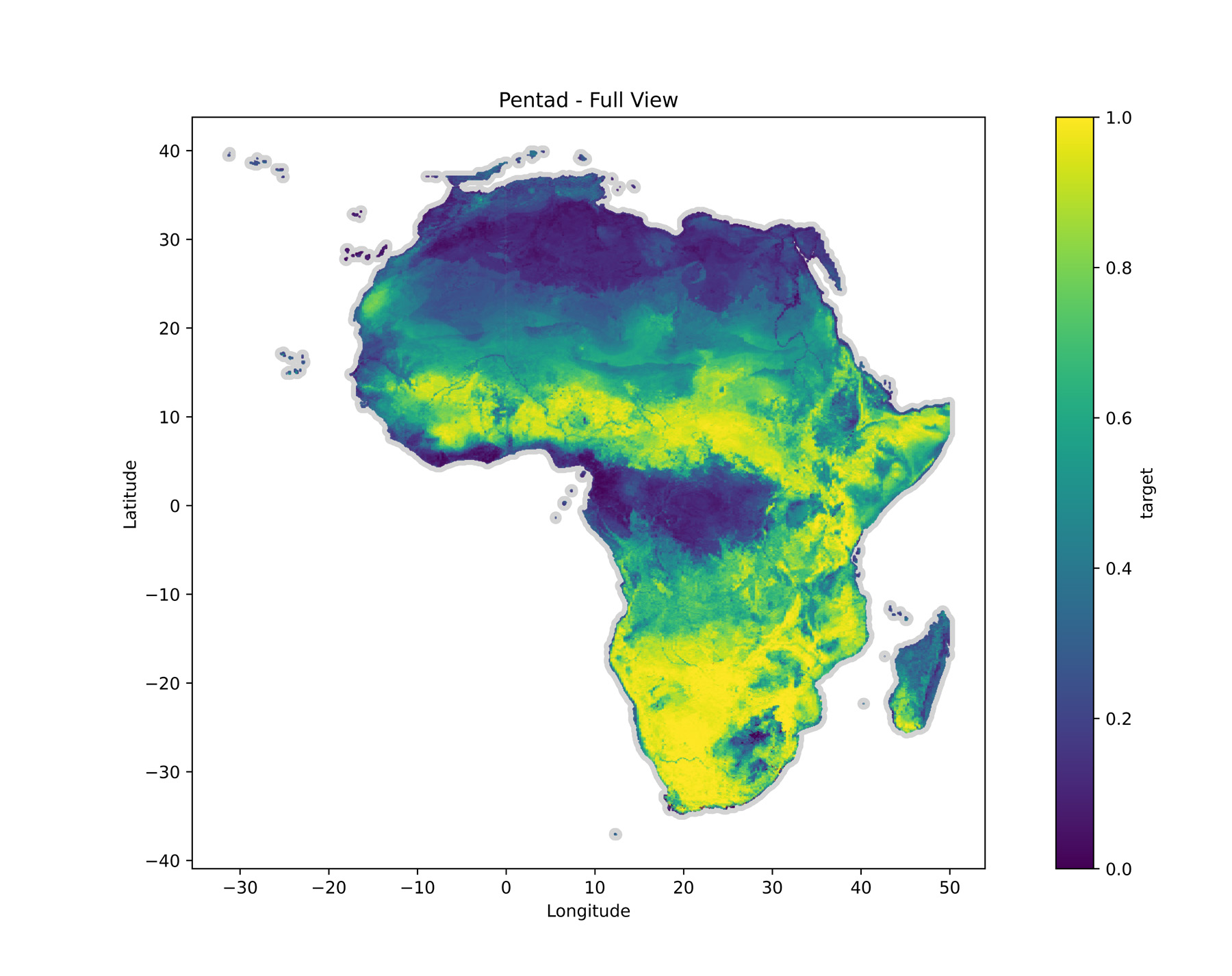

Figure 2: Africa distribution maps produced from ABAP, iNaturalist and eBird data using a Random Forest model and various predictor variables. Colour gradient is predicted probability of occurrence, with a 0.5% threshold applied. Brighter colours = higher probability of occurrence. Pentad scale (top) and pentad scale p>0.5 (bottom) (from Lee 2024).
With the exception of Lesotho, the species is widespread in the region but is more commonly encountered in protected areas such as in the Lowveld and Kalahari (Barnes 2000, Figure 3). Two conservation areas, the Kruger National Park and the Kgalagadi Transfrontier Park, together hold a substantial proportion of the region’s population. In the Kruger National Park, territory holding adults display home ranges averaging c. 108 km2 (Van Eeden et al. 2017). Within the Karoo pylon nesting Martial Eagles, territory holding adults move within home ranges averaging c. 360 km2 and juveniles display vast dispersal range sizes averaging c. 14 660 km2 (Tate et al. In prep). Interestingly, adult home ranges in the Karoo population were found to be over three times the size reported for the species in the Kruger National Park population (Van Eeden et al. 2017).
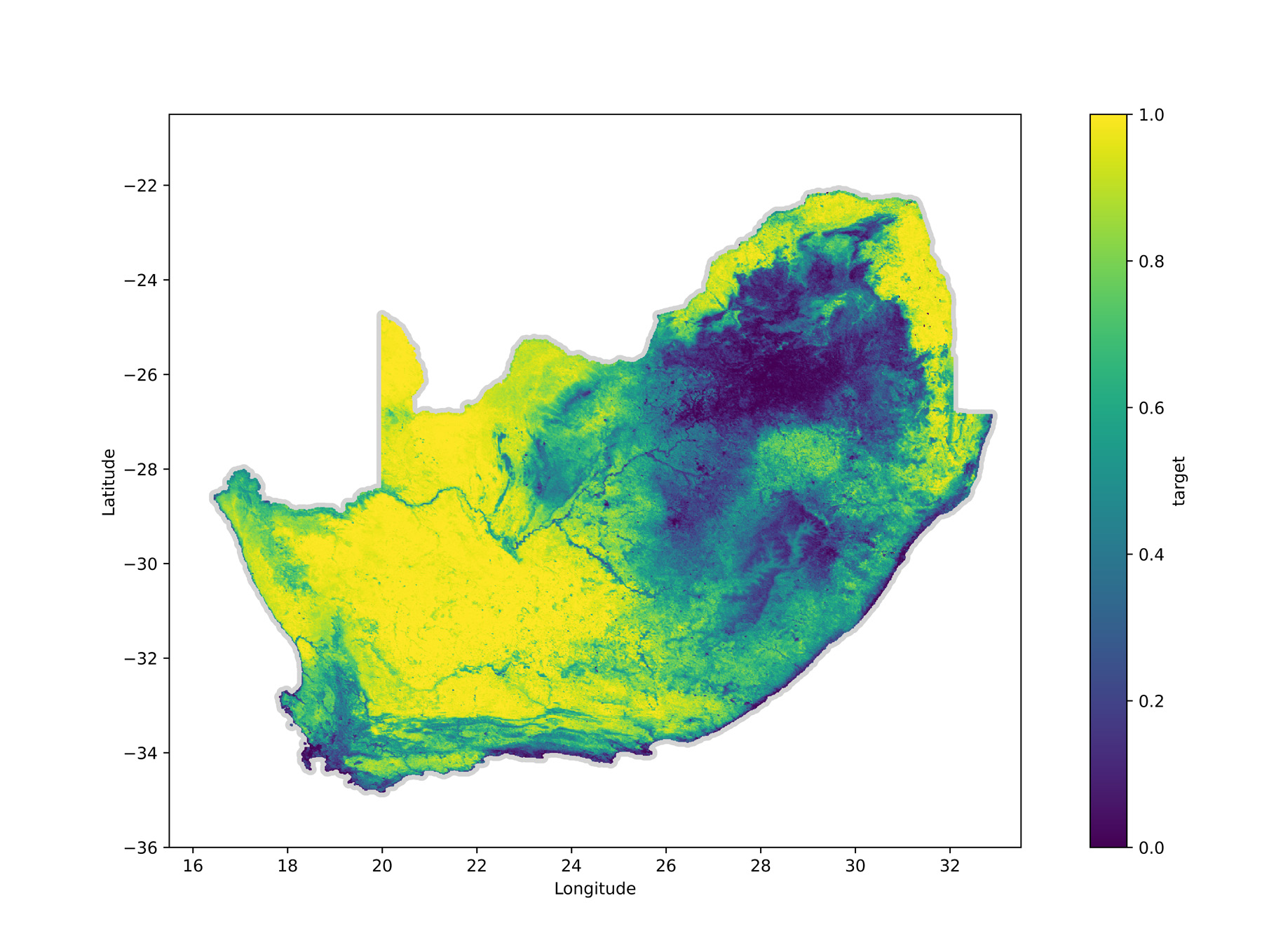
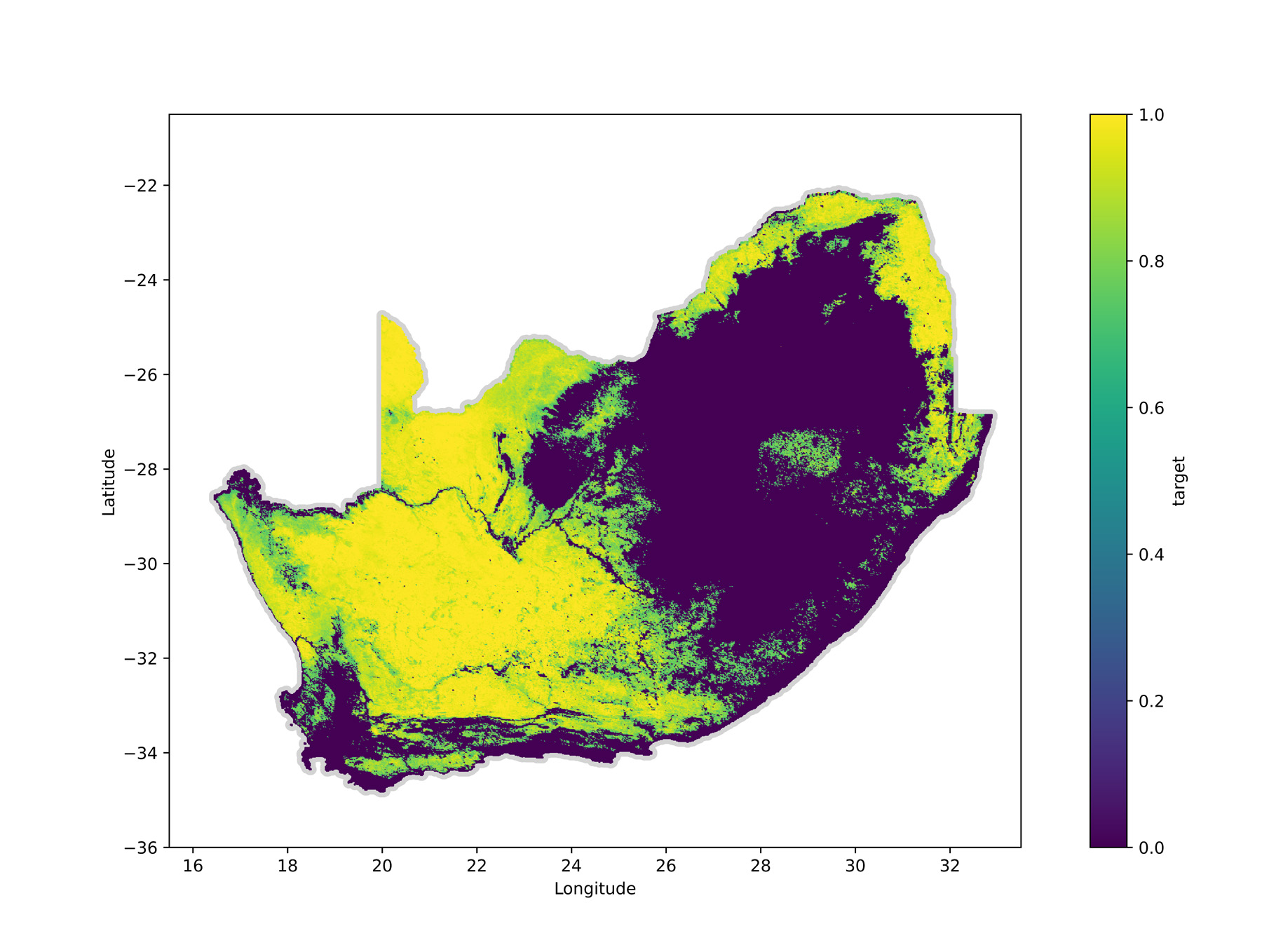
Figure 3: South Africa Martial Eagle probability distribution map, produced from BirdLasser location data at 2x2km grid scale, using iNaturalist and eBird as absence data only. This represents the predicted range for the 2016-2023 period, pentad scale (top) and pentad scale p>0.5 (bottom) (from Lee 2024).
Across their range, particularly within the more arid regions, Martial Eagles require an exceptionally large home range, more than 100 km2. Densities in areas stocked with indigenous game are higher than in areas supporting only domestic stock, and the species is virtually absent from cultivated areas (Machange, Jenkins and Navarro 2005). Breeding, territory holding adults have been shown to be largely sedentary (Tate et al. In prep); floaters (in raptor biology population floaters often move in a way that can be described as nomadic (Bunnefeld et al. 2011), juveniles and immature birds, however, wander widely from their natal areas (Tate et al. In prep, Simmons 2005, Van Eeden et al. 2017).
The recent SABAP2 synthesis and modeling outputs estimate the Extent of Occurrence (EOO) to be 1 533 117 km2 and the Area of Occupancy (AOO) to be 824 792 km2 (Lee 2024).
Ecology
Martial Eagles occur in a variety of habitats but seem to prefer arid and mesic savannah but are also commonly found at forest edges and in open shrubland (Simmons 2005). The Martial Eagle primarily preys on vertebrates weighing 1–5 kg, with its diet varying significantly across different habitats (Ferguson-Lees and Christie 2001, Hatfield et al. 2024). Large birds such as gamebirds and waterfowl, monitor lizards, and mammals including hares, hyraxes, mongooses, monkeys, and small antelopes are common prey. The eagle also occasionally takes small livestock and poultry. Martial Eagles hunt for long periods on the wing, soaring high overhead to search for prey before striking with a long, shallow dive, sometimes concealing their approach behind cover (Tate et al. In prep, Hatfield et al. 2024). They may also strike from a prominent perch. Occasionally, Martial Eagles prey on other raptors such as the Spotted Eagle-owl Bubo africanus and White-headed Vulture Trigonoceps occipitalis, as well as Ostrich Struthio camelus chicks. This diverse diet reflects the Martial Eagle’s adaptability and the range of prey available in its environment.
This species will occupy most habitats provided there are adequate tall trees or pylons for nesting and perching (Machange et al. 2005, Berndt 2015, Tate 2022). It rarely occurs in mountainous areas. It is known to nest on human-made structures, such as pylons, cellphone towers and windpumps, and in alien trees (Tarboton and Allan 1984). The ability to nest on such structures may have increased densities in naturally treeless parts of the Karoo, grasslands, Namaqualand and Kalahari (Machange et al. 2005). The provision of artificial nesting sites in the form of transmission and distribution line towers, as well as nesting opportunities in stands of exotic trees, is suspected to have facilitated a range expansion of the species, challenging the belief that Martial Eagles are increasingly confined to large, protected areas. This has significant implications for the conservation management of this threatened species.
The species has a highly variable nesting season, from Mar–Jan (especially May–Jun) in South Africa (Ferguson-Lees and Christie 2001). Builds large structure (1·2–1·5 m across, 60 cm deep (Ferguson-Lees and Christie 2001) ) of sticks in main fork of emergent tree, or even on a power pylon, cliff or boulder in open areas, 5–70 m above ground (Ferguson-Lees and Christie 2001). Nest often visible from far off, and well lined with green leaves when active. Single egg (rarely two); incubation 47–53 days; chick has down dark grey above and white below; fledging 96–104 days; may remain dependent on parents for 8–12 months after fledging. Breeds annually in some areas (South Africa), biennially in others (Zimbabwe). From 53 breeding attempts on 16 territories in the Kalahari region of South Africa monitored from 1988-1994, the breeding success estimate was 0.43 young fledged per pair per year (Herholdt and Kemp 1997), whereas more recent research in the Kruger National Park revealed that from the outcomes of 45 attempts, the breeding success estimate was 0.39 (± 0.10) young fledged per attempt (Murgatroyd et al. 2023).
In vast areas of suitable natural habitat, such as the Kruger National Park (Kemp and Kemp 1974), immatures are uncommon while adults and juveniles are seen regularly (Kemp and Begg 2001), suggesting that breeding pairs dominate the best habitats and immatures disperse elsewhere to mature. Declining sightings in the Kruger National Park suggests that adult recruitment may be falling because dispersal areas for immatures have become population sinks with reduced survival and therefore falling recruitment. The generation length of 11.1 years was calculated based on a published estimate of mean age at first breeding and extrapolated maximum longevity in the wild (BirdLife International 2020).
Threats & Conservation
Threats
The Martial Eagle faces numerous threats, including direct persecution (shooting and trapping) by farmers, indirect poisoning, drowning in sheer-walled reservoirs, electrocution on power lines, habitat alteration and degradation, and nest disturbance (BirdLife International 2020). Among these, direct persecution and indirect poisoning are significant causes of losses. Poisoning, primarily carried out by large-scale commercial farmers, is also prevalent in tribal small-stock farming communities. Incidences of targeted poisoning in retaliation for predation on domestic livestock have been recorded in Kenya (R. Hatfield pers comm 2020). The slow breeding rate and low breeding success makes the species particularly prone to extinction in the presence of significant anthropogenic threats.
Deforestation impacts Martial Eagles less than other large eagles, as they can utilize man-made structures for nesting. However, in West Africa, the species is threatened by a decline in suitable prey due to over-hunting (JM Thiollay pers comm 2020). A reduction in natural prey may increase predation on domestic animals, leading to greater persecution by farmers. In some areas, Martial Eagles are taken for use in belief-based medicine, with parts found in muthi markets in Johannesburg (R. Coetzee pers comm 2013). While Martial Eagles may nest in protected areas their large home range requirements mean that they may still need to forage outside of these areas exposing them to the threats outlined above. For example, the majority of protected areas in Kenya are too small to support a single pair of Martial Eagles (S. Thomsett pers comm 2013).
In South Africa, the highest declines have been observed in areas with significant temperature increases and high densities of power lines, likely due to collisions and electrocutions. Records show that Martial Eagles are amongst the most impacted South African raptor species (excluding vultures) in terms of power line related fatalities. Between 1996 and 2021, 84 Martial Eagle fatalities were reported on Eskom lines (eight collisions, 74 electrocutions, two unknown), highlighting the significant impact of energy infrastructure on the species. The species’ use of power pylons as nesting sites can lead to power outages and human-wildlife conflict (Jenkins et al. 2013).
Outside protected areas in Eswatini, eaglets are suspected of being removed from nests and sold to traditional healers for belief-based use (Monadjem and Rasmussen 2008).
Rangeland modification and degradation, primarily due to overgrazing, indirectly affect eagle populations by influencing the distribution, abundance, and accessibility of prey (Machange et al. 2005). Habitat transformation is likely to increase, potentially restricting the species further to large, protected areas.
Larger ranges displayed by nomadic and juvenile birds increase mortality risk in the Karoo population, with non-natural mortalities (poisoning and electrocution) recorded in dispersing juveniles (Tate et al. In prep). This is expected as larger ranges expose individuals to greater threats, particularly from livestock farmers who persecute large eagles believed to prey on lambs. Increased mortality was also observed in tracked floaters in Kruger National Park, with a higher proportion of non-natural deaths when birds left protected areas (van Eeden et al. 2017).
An emerging threat to Martial Eagles in South Africa is their susceptibility to collisions with wind turbines. Over the past five years, there has been an increase in mortalities at wind farms, particularly in the Northern, Western, and Eastern Cape. The overlap between the Martial Eagle range, especially the powerline nesting population, and both operational and proposed wind energy facilities (WEFs) raises concerns about the cumulative impact of WEFs on the population. This concern is heightened by the recent gazetting and fast-tracking of new Renewable Energy Development Zones (REDZ), which is likely to increase collision risks. Given that Martial Eagles are long-lived and reproduce slowly, even small increases in mortality rates, such as those associated with WEFs, can significantly impact local populations. Further, another rising threat is the persecution of eagles in response to proposed wind energy development – whereby landowners intentionally kill birds or remove and disturb nests. This is suspected to occur when resident eagles are perceived to hinder development that benefits the landowners.
Conservation Measures Underway
The Martial Eagle is a key focus of several projects and initiatives under the EWT’s Birds of Prey Programme. The EWT Karoo Martial Eagle Project, launched in 2018, aims to understand the status and dynamics of the Karoo population. In collaboration with the FitzPatrick Institute, a Population Viability Analysis (PVA) has been conducted for this population, with findings currently being prepared for publication to inform vital conservation strategies.
The current phase of the Karoo project involves maintaining annual monitoring and raising awareness among farmers to reduce persecution of eagles, particularly in response to human-wildlife conflict where eagles prey on livestock. The EWT’s Arid Raptors and Savanna Raptors projects have highlighted the Martial Eagle as a flagship species, promoting the conservation of this and other raptors in the Lowveld, southern Kalahari, and Karoo for nearly 25 years.
Additionally, the EWT Birds of Prey Programme has recently launched a project aimed at mitigating the impacts of proposed wind farms in the mesic highland grassland region of South Africa. This initiative seeks to address the significant threats posed by wind energy development to the Martial Eagle and ensure the species’ long-term survival.
The Northern Cape Raptor Conservation Forum acknowledges landowners who have active nests of this species on their property and provides information on how to conserve such sites to the benefit of the birds. Regular surveys are undertaken of pairs nesting on infrastructure associated with transmission powerlines and cell-phone towers in the Karoo. Data of nesting sites throughout the species’ range is used to advise Eskom concerning the routing of powerlines via the EWT’s Wildlife and Energy Programme.
In 2022, the FitzPatrick Institute of African Ornithology, University of Cape Town, and the EWT launched a project to develop a Martial Eagle Risk Assessment Tool (MERA). Using GPS-tracking data from over 35 individually tracked eagles across their range, the aim is to model space-use and collision risk of the species to develop a national collision risk map tool, that will allow for the rapid identification of areas that are predicted to be heavily utilised by breeding Martial Eagles at proposed wind energy developments, and thus guide wind development to avoid these collision sensitive areas.
The Martial Eagle is listed under Schedule 2: Specially Protected Wild Animal under the Limpopo Environmental Management Act No 7 of 2003. The Martial Eagle is listed as Vulnerable under the National Environmental Management: Biodiversity Act (Act 10 of 2004) and under the Swaziland Game Act of 1991.
Conservation Measures Proposed
Across the region, outside of protected areas, Martial Eagles face significant persecution from both communal and private small stock farmers due to intolerance and human-wildlife conflict. It is vital that education and awareness programs tailored to these groups are strongly promoted. Implementing an awareness program involving landowners and local communities to highlight the threats facing this species is recommended.
A regional Population and Habitat Viability Assessment (PHVA) and a Biodiversity Management Plan should be developed, culminating in a National Species Recovery Plan. Conservation interventions required include the stringent protection of breeding sites outside the protected area network through land-use agreements. Regular monitoring of the species is essential to accurately determine regional population trends and conservation status.
Although reports and monitoring indicate the presence and persistence of populations outside protected areas, the Martial Eagle is significantly dependent on protected areas. This underscores the importance of expanding conservation areas to cover 30% of land by 2030, a key target agreed upon at the UN Convention on Biological Diversity COP15. Ensuring the protection and expansion of these areas is crucial for the long-term survival of the Martial Eagle.
Of the large eagle species that occur in South Africa, Martial Eagles are the most commonly recorded species killed on South Africa’s electrical infrastructure. Power line electrocutions are one of the most significant causes of mortality for the Martial Eagle, with far fewer power line collisions occurring across their range. Regular outages are needed to mitigate these electrocutions, and this results in direct impacts on electricity supply. Unsafe lines that overlap with core eagle distributions need to be prioritized for mitigation.
Research Priorities and Questions
- The current energy crisis is likely to escalate wind farm development in the region given its considerable wind resources. It is crucial to monitor the impact of turbines on the species and to improve regulations that reduce fatalities (such as locations that avoid breeding and flight paths, and adequate buffer zones. A wind turbine collision risk map for Martial Eagles is currently being developed in a similar manner to the Verreaux’s Eagle Risk Assessment tool by Murgatroyd, Bouten and Amar (2021)
- A continued investigation into the potential causes of declines within protected areas, with a focus on understanding low breeding performance, post-fledging dispersal, survival and foraging range of immature birds, should be undertaken.
- Ongoing monitoring and research projects are vital to monitor population trends, understand current and emerging threats and to adapt/improve conservation interventions for the species; Research to determine the current status and size of flagship/stronghold populations is vital. This includes an extension of surveys along powerlines beyond the current focus of the EWT Karoo Martial Eagle project into the Eastern Cape and Kalahari; and surveys to understand population sizes in the Kgalagadi Transfrontier Park, Hluhluwe iMfolozi Park and Greater Kruger region.
- What is the impact of Martial Eagles on prey species, and competitors (i.e. Tawny Aquila rapax and Verreaux’s Eagle A. verreauxii), in areas where the species did not occur historically in their current breeding densities? i.e. in the Karoo and grasslands?
- Should we include a focus on the protection of Martial Eagle prey base in order to ensure that the species is able to persist?
Contributors & References
Assessor/s
Gareth Tate
Reviewer/s
Arjun Amar, Megan Murgatroyd
References
Amar A, Cloete D. 2017. Quantifying the decline of the Martial Eagle Polemaetus bellicosus in South Africa. Bird Conservation International 1–12. DOI: 10.1017/S0959270917000314.
Berndt J. 2015. Martial Eagles and the national power grid in South Africa: the implications of pylon-nesting for conservation management. MSc thesis, University of Cape Town, South Africa.
BirdLife International. 2020. Polemaetus bellicosus. Available: https://dx.doi.org/10.2305/IUCN.UK.2020-3.RLTS.T22696116A172287822.en. [Accessed on 5 June 2024].
Bunnefeld N, Borger L, van Moorter B, Rolandsen CM, Dettki H, Solberg H. 2011. A model-driven approach to quantify migration patterns: individual, regional and yearly differences. Journal of Animal Ecology 80(2): 466–476. DOI: https://doi.org/10.1111/j.1365-2656.2010.01776.x PMID: 21105872.
van Eeden R. 2016. Understanding the decline of Martial Eagles Polemaetus bellicosus in the Kruger National Park. PhD, University of Cape Town, South Africa.
Van Eeden R, Whitfield DP, Botha A, Amar A. 2017. Ranging behaviour and habitat preferences of the Martial Eagle: Implications for the conservation of a declining apex predator. PLoS ONE 12(3):1–22. DOI: 10.1371/journal.pone.0173956.
Ferguson-Lees J, Christie DA. 2001. Raptors of the World. London: Christopher Helm.
Hatfield RS, Davis AG, Buij R, Cox JJ, Kapila S, Parmuntoro L, Thomsett S, Virani MZ. et al. 2024. Africa’s overlooked top predator: Towards a better understanding of martial eagle feeding ecology in the Maasai Mara, Kenya. Wildlife Biology 1–13. DOI: 10.1002/wlb3.01223.
Herholdt JJ, Kemp AC. 1997. Breeding status and ecology of the Martial Eagle in the Kalahari Gemsbok National Park, South Africa. Ostrich 68 (2–4): 80–85.
Lee ATK. 2024. Regional Red Data Book of the Birds of South Africa, Lesotho and Eswatini: SABAP2 synthesis and supporting information and graphics for Martial Eagle. Unpublished report. Johannesburg, South Africa: BirdLife South Africa.
Machange RW, Jenkins AR, Navarro RA. 2005. Eagles as indicators of ecosystem health: Is the distribution of Martial Eagle nests in the Karoo, South Africa, influenced by variations in land-use and rangeland quality? Journal of Arid Environments 63(1):223–243. DOI: 10.1016/j.jaridenv.2005.03.031.
Murgatroyd M, Bouten W, Amar A. 2021. A predictive model for improving placement of wind turbines to minimise collision risk potential for a large soaring raptor. Journal of Applied Ecology 58(4):857–868. DOI: 10.1111/1365-2664.13799.
Murgatroyd M, Tate G, Amar A. 2023. Using GPS tracking to monitor the breeding performance of a low-density raptor improves accuracy, and reduces long-term financial and carbon costs. Royal Society Open Science 10(8). DOI: 10.1098/rsos.221447.
Shaw P, Ogada D, Dunn L, Buij R, Amar A, Garbett R, Herremans M, Virani MZ, Kendall CJ, Croes BM, Odino M, Kapila S, Wairasho P, Rutz C, Botha A, Gallo-Orsi U, Murn C, Maude G, Thomsett S. 2024. African savanna raptors show evidence of widespread population collapse and a growing dependence on protected areas. Nature Ecology & Evolution 8: 45–56. DOI: 10.1038/s41559-023-02236-0.
Simmons R. 2005. Martial Eagle. In: Hockey PAR, Dean WRJ, Ryan PG (eds), Roberts Birds of Southern Africa 7th Edn. Cape Town: John Voelcker Bird Book Fund. 538–539.
Tate GJ, Murgatroyd M, Davies JP. Pretorius M. The ranging behaviour of Martial Eagles in the Central Karoo, South Africa; Implications for the conservation of an Endangered African Eagle. In prep.
Tate GJ. 2022. Distribution, status and population dynamics of the pylon nesting Martial Eagle. Report prepared for Eskom Research, Testing and Development.
Taylor MR. 2015. Martial Egale Polemaetus bellicosus. In: Taylor RM, Peacock F, Wanless RM (eds), The 2015 Eskom Red Data Book of Birds of South Africa, Lesotho and Swaziland. Johannesburg, South Africa: BirdLife South Africa. pp 113–115.
Citation
Tate G 2025. Martial Eagle. In: Lee ATK, Rose S, Banda S, Bezeng SB, Maphalala MI, Maphisa DH, Smit-Robinson H (eds), The 2025 Red Data Book of Birds of South Africa, Lesotho and Eswatini. Johannesburg, South Africa: BirdLife South Africa. Available at: https://www.birdlife.org.za/red-list/martial-eagle/
Our generous sponsors


