


Marsh Owl
Asio capensis

Number Of Mature
Individuals (Regional)
Unknown

Regional
Population Trend
Decreasing
2025
Regional Category
Near Threatened
Search by species
CONTENTSOverview
Names
|
IOC English Name: |
Marsh Owl |
|
SA & IOC Scientific Name: |
Asio capensis |
|
BirdLife International Taxonomy (scientific name): |
Asio capensis |
|
Order: |
STRIGIFORMES |
|
Family: |
Strigidae |
|
Species name author: |
Smith A 1834 |
|
Afrikaans: |
Vlei-uil |
|
Sesotho (South Africa): |
sephooko-sa-mehlaka |
|
Sesotho (Lesotho): |
sephooko-sa-mehlaka |
|
Siswati: |
Ingovazana |
|
Zulu: |
sexhaphozi |
Current Assessment Status
|
2025 Regional Category [Criteria] |
NT [A2bc+3bc+4bc] |
|
2024 Global Category [Criteria] |
LC (BirdLife International 2021) |
|
Population size (Regional) |
Unknown |
|
Population size (Global) |
Unknown, but reported to be locally common (BirdLife International 2021) |
|
Distribution size (EOO) (Regional) km2 |
968 667 (Lee 2024) |
|
Distribution size (EOO) (Global) km2 |
31 000 000 (BirdLife International 2021) |
|
Distribution size (AOO) (Regional) km2 |
221 956 (Lee 2024) 261 000 (BIRDIE 2024) |
|
Generation time |
5.92 years (BirdLife International 2021) |
|
Status change reason |
Genuine Change in Status |
|
Migrant (in the region) |
No |
|
Regional endemic |
No |
Historic Listing Information
|
2000 Regional Status |
Not Evaluated |
|
2015 Regional Status |
Not Evaluated |
|
Status change reason (if applicable) |
No change |
|
2015 Population size (Regional) |
Unknown |
|
2015 Global Status |
LC |
Reason for Inclusion
Reason for Inclusion in the Assessment
This species has not been included previously in Regional Red Data Books for South Africa, Lesotho and Eswatini. The species was identified for assessment through analysis of Southern African Bird Atlas (SABAP2) data, which suggested a significant decline in the probability of reporting the species.
Category Justification
Category Justification
The Marsh Owl Asio capensis is assessed as regionally Near Threatened under Criteria A2bc+3bc+4bc. Regionally there is evidence that the population is in decline. The drivers of decline are not well understood but are almost certainly linked to habitat loss and degradation.
The SABAP2 trend analysis indicates a significantly lower probability of reporting the species, with high confidence in this trend (Lee 2024). The predicted range change suggests a 20.70% decline over 10 years or three generations, which approaches but does not meet the threshold for Vulnerable under Criterion A2 (Table 1). Establishing accurate rates of decline is challenging for this species as it appears to be more active during daylight hours in autumn and winter so survey season may affect the probability of detection.
The Area of Occupancy (AOO) (221 956 km²) and Extent of Occurrence (EOO) (968 667 km²) do not meet the thresholds for a threatened category under Criterion B. However, the observed decline in reporting rates, combined with the projected decline in AOO and EOO, warrant the Near Threatened status. The rest of its southern African range appears fragmented, with South Africa representing an important stronghold for the species. Hence, a rescue effect is not considered.
It is not known whether the regional population exceeds 10 000. It is important that this be prioritised and ascertained soon to determine whether Criterion C can be invoked.
Table 1: Prediction models of the number of pentads Marsh Owl occurred in for the period up to 2015, and then until the end of 2023, invoking Criteria A2c.
|
Information |
|
|
Pentads 2015 |
1910 |
|
Pentads 2023 |
1524 |
|
Annual rate of change |
0.972 |
|
Percent change (10 years or 3 generations) |
-20.70% |
|
Category (A2) |
NT |
Population Justification
Globally, the Marsh Owl is reported to be locally common (del Hoyo et al. 1999, König and Weick 2008) although no population estimate exists. Regionally, estimates are either outdated or localised. Consequently, the size of the regional Marsh Owl population is unknown.
In 1961during a rodent plague at Boshoek in the present day North West province, Malherbe (1963) recorded eight Marsh Owls in approximately 600 ha (1/75 ha). Mendelsohn (1989) counted 160 in 6900 ha on the Springbok Flats in Limpopo province (1/35 ha or 1/10 ha of suitable habitat) in the late 1970s and noted the local abundance of suitable prey. Neither site appears to have been surveyed for Marsh Owls again. In Gauteng province during 14 rope surveys at Suikerbosrand Nature Reserve (2009-2024) and five at Marievale Bird Sanctuary (2011-2015), 18-61 Marsh Owls were flushed from 4600 ha (1/256 – 1/75 ha) (and 7–14 from 220 ha (1/31 – 1/16 ha) respectively (Whittington-Jones, unpubl data). High variability among counts at a site are not unique to Highveld grasslands and have also been observed in response to seasonal rainfall and associated habitat changes elsewhere in the range of this species (Kemp and Calburn 1987, Tarboton et al. 1987, Chittenden and Whyte 2009).
It is not known whether the population size exceeds 10 000 mature individuals. Confidence in the population estimates are low and obtaining a reliable estimate should be prioritised.
Trend Justification
The global population is considered to be stable despite significant localised declines in North Africa (BirdLife International 2021).
The regional population appears to be in decline (Figures 1 and 2). Evidence for decline is present in comparisons of reporting rate change between SABAP1 (1986-1997) and SABAP2 (2007-2015) (Figure 1), as well as within SABAP2 (comparing annual rate of change between the early, 2007-2015, and late, 2016-2023, periods (Figure 2). Over three generations the rate of change from SABAP2 is 20%, meeting the threshold for Near Threatened.
Confidence in this trend estimate is high.
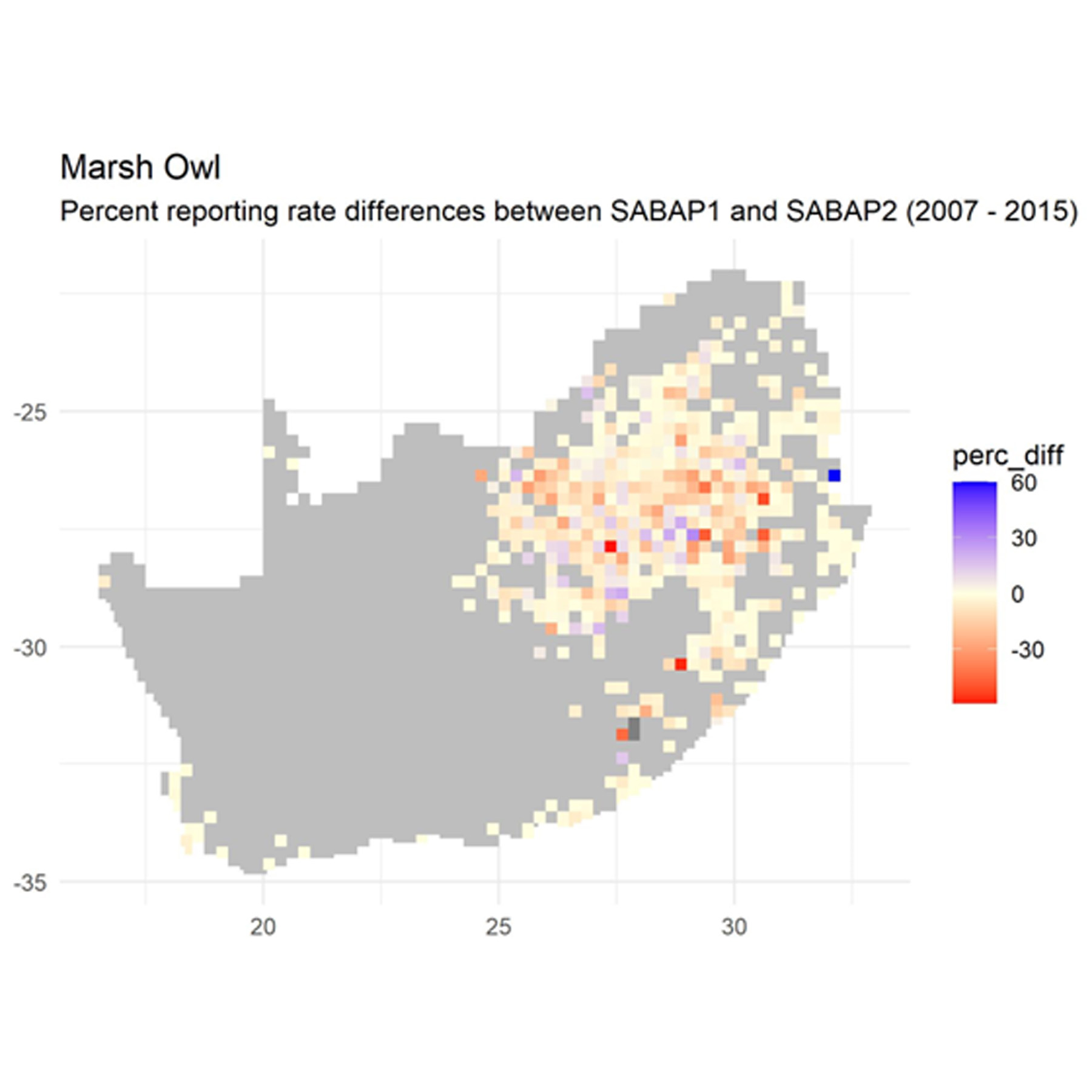
Figure 1: Quarter Degree Grid Cell level change between SABAP1 (1986-1997) and the SABAP2 period 2007-2015, showing large scale decline in range (Lee 2024).
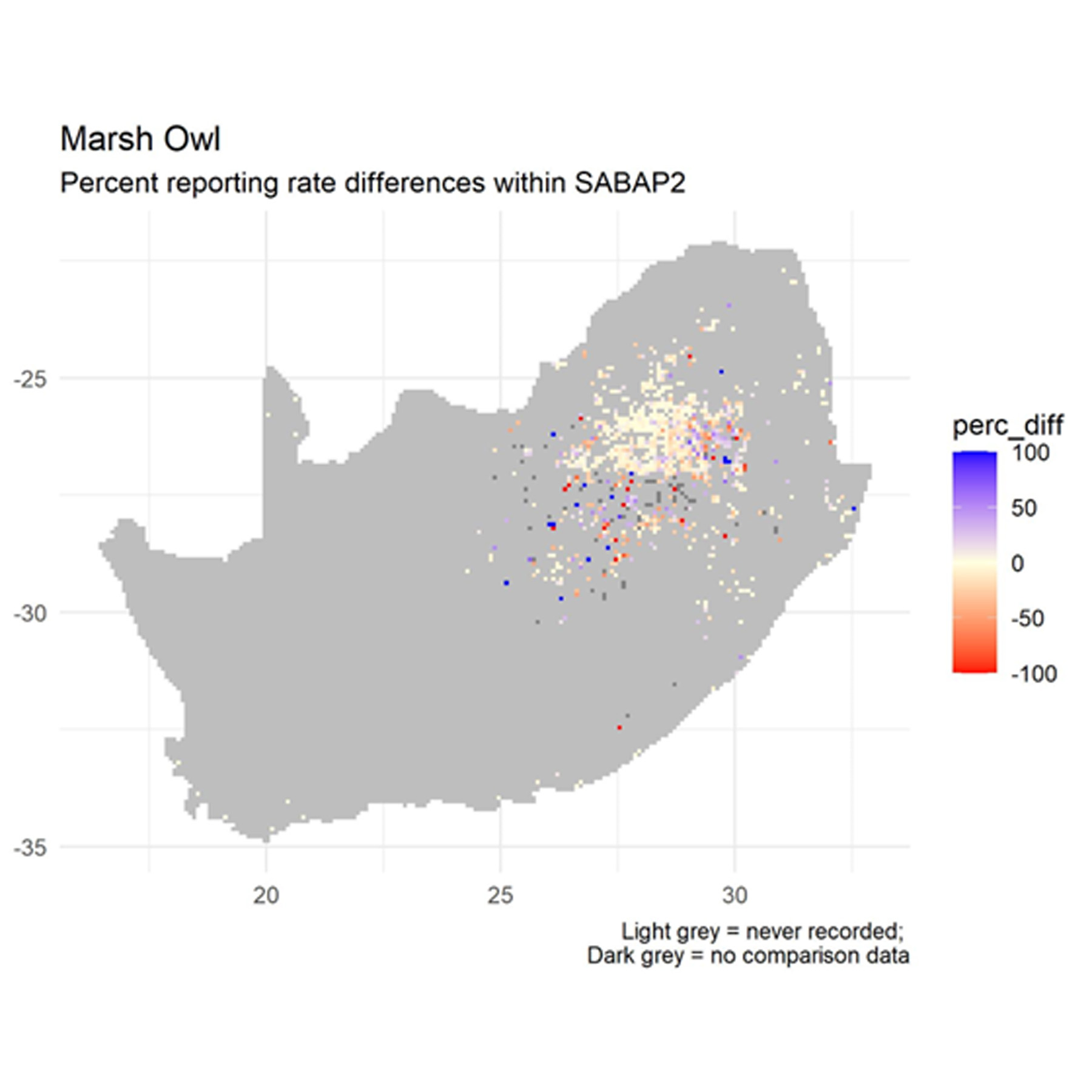
Figure 2: Regional distribution map of Marsh Owl also showing pentad level change between SABAP2 periods 2007-2015 and 2016-2023 (from Lee 2024).
Biology & Ecology
Taxonomy
The taxonomy follows the IOC World Bird List and BirdLife International. No recent taxonomic changes have been noted for this species; the species is monotypic.
Identification
The Marsh Owl is a medium-sized owl with a rounded head and ear tufts that are rarely visible (Tarboton and Erasmus 1998). It has a pale facial disc with a dark border, brown eyes that may appear black, and a dark bill. In flight the upperparts are brown with a distinct buffy patch in the outer wing and a white trailing edge. The body appears dark below and this contrasts with the pale underwings. There is considerable overlap in the habitat used by Grass Tyto capensis and Marsh Owls, and this does lead to identification errors.
Distribution
The Marsh Owl has a wide distribution across sub-Saharan Africa, with an isolated population in Morocco. Within the assessment region, the Marsh Owl is mainly found in the grassland of central and eastern South Africa with scattered records along the coast as far south as Cape Town (Figure 3). There are few records for western South Africa and the arid interior. Most of the SABAP2 records for Lesotho and Eswatini are for pentads close their borders.
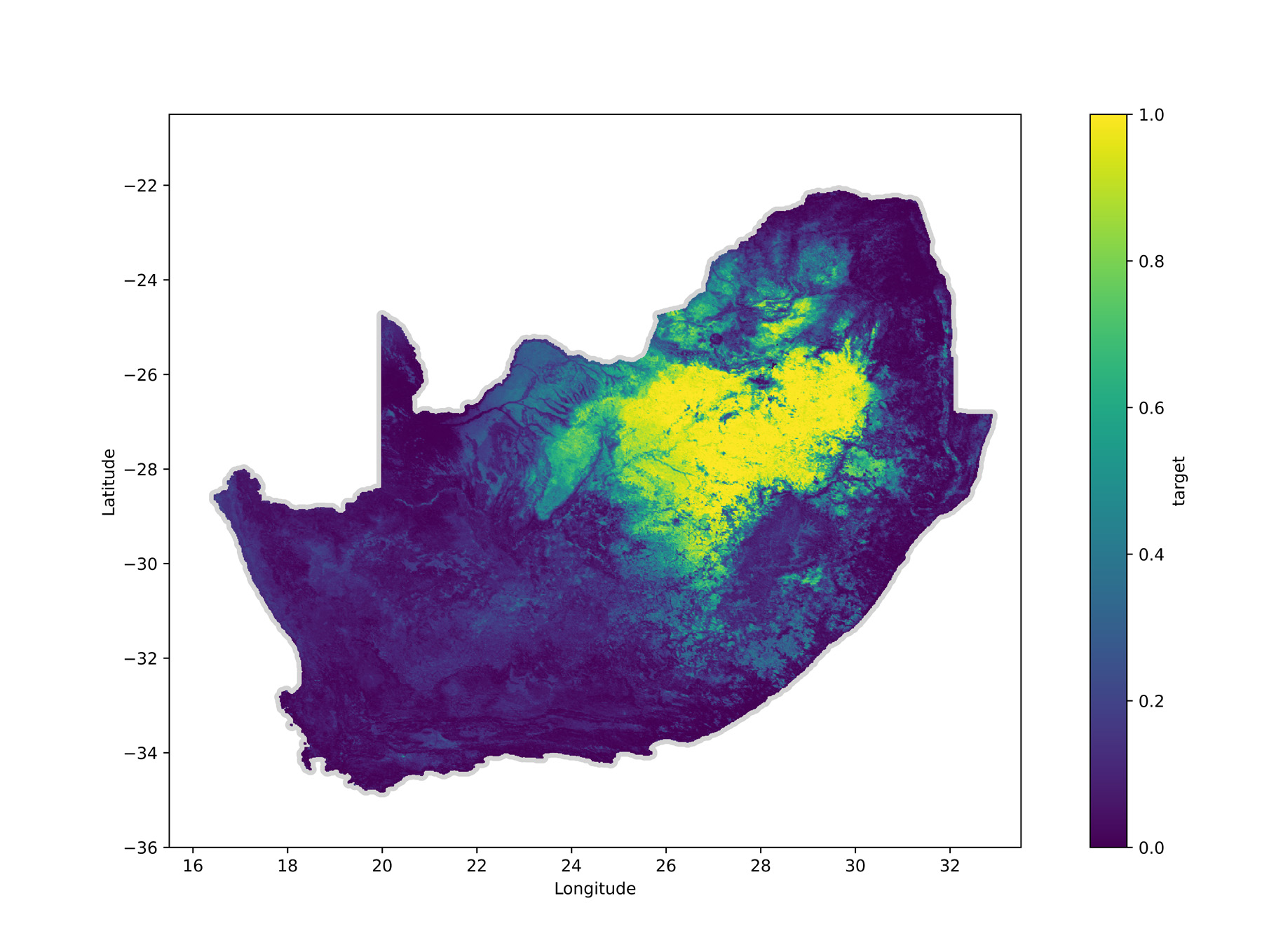
Figure 3: Distribution map produced by BirdLasser location data at 2×2 km grid scale, using iNaturalist and eBird as absence data only. This represents the predicted range for the 2016-2023 period. Map from Lee 2024.
Ecology
The Marsh Owl is nomadic, moving in response to prey availability and ground cover (Kemp and Calburn 1987, Mendelsohn 1997). It is highly mobile, capable of extensive local movements, tolerant of a range of habitat conditions and well adapted to exploit ephemeral and patchy habitats (Kemp and Calburn 1987, Tarboton et al. 1987). While it is often associated with rank grassland, wetlands and water courses it is not restricted to such habitats and may also be found in drier grasslands and open savannas with sparser cover (Malherbe 1963, Tarboton et al. 1987, Mendelsohn 1989, Tarboton and Erasmus 1998).
The Marsh Owl is typically crepuscular but becomes more diurnal in autumn and winter, perhaps in response to longer foraging times required to provision chicks during the breeding season (Kemp and Calburn 1987, Mendelsohn 1997, Tarboton and Erasmus 1998). Outside of the breeding season, Marsh Owl may roost communally (Steyn 1982, Kemp and Calburn 1987, Tarboton et al. 1987). The Marsh Owl appears to be an opportunistic feeder with a variable diet that may depend on what is commonly available (Kemp and Calburn 1987). At times invertebrate remains predominate and pellets are friable and at other times rodents are most common and pellets resemble small, grey cylinders. A ground nester, in areas of tall grass or weeds (Tarboton 2001).
Threats & Conservation
Threats
The Marsh Owl is well adapted to respond to temporary changes in habitat quality (Kemp and Calburn 1987, Tarboton and Erasmus 1998), but it is vulnerable to habitat alterations that permanently affect its prey base or the availability of roosting and nesting sites. These include agricultural expansion and intensification, afforestation, wetland draining (Mendelsohn 1997), urbanisation and mining. Additional threats include overgrazing, fires during the breeding season, collisions with vehicles and entanglement in barbed wire fences, as well as potential secondary poisoning from pesticides used in agricultural areas (Kemp and Calburn 1987, Mendelsohn 1997, Tarboton and Erasmus 1998, Kemp 2005). Of the 554 owl carcasses recovered from sections of two roads in southeastern Gauteng (October 2001 to September 2003), 37.5% were those of Marsh Owls (Ansara 2004). During subsequent ad hoc surveys of one of these roads (January 2005 to May 2024), 33% of 54 carcasses found were Marsh Owls. Across the province, 16 Marsh Owls were recorded snagged on fences and 94 dead on roads over the same period (Whittington-Jones, unpubl data).
Conservation Measures Underway
The Marsh Owl has been recorded in 69 pentads within national parks or nature reserves and an additional 85 pentads in other protected areas (Lee 2024). However, the ratio of the species’ range in protected areas to unprotected areas is only 0.23, indicating that most of its range falls outside of formal protection. Furthermore, as a nomadic species, the level of protection afforded by protected areas will not be constant. The species is listed on CITES Appendix II and in category 3 of the Raptors MoU.
Conservation Measures Proposed
- Conduct comprehensive surveys to obtain more accurate population estimates and distribution data for the region, including adding the species to the Coordinated Avifaunal Road Counts (CAR) protocol.
- Promote incorporation of Marsh Owl and their habitat into bioregional plans.
- Implement habitat conservation measures, particularly in key grassland and wetland areas outside of protected areas.
- Promote sustainable land-use practices that maintain suitable habitat for the Marsh Owl and its prey species, including developing guidelines for management of fire and grazing in Marsh Owl habitat, and encouraging landowners to adopt management regimes that are compatible with the requirements of Marsh Owls.
- Monitor the impacts of climate change on the species’ habitat and distribution, and develop appropriate adaptation strategies, with specific reference to maintaining and restoring habitat connectivity.
- Raise awareness among landowners and the public about the conservation needs of the Marsh Owl and its ecological importance.
Research Priorities and Questions
- Determine current population size and trends through targeted surveys across the species’ range in the region. This is critical as updated regional population size estimate could afford this species a higher threat status.
- Investigate the factors driving the observed decline in reporting rates and predicted range contraction.
- Study the species’ movement patterns and habitat use to inform conservation planning and land management decisions.
- Assess the impacts of different land-use practices on Marsh Owl populations and develop best management practices for conservation.
- Evaluate the effectiveness of current protected areas in conserving Marsh Owl populations and identify priority areas for additional protection or management.
Contributors & References
Assessor/s
David Ehlers Smith, Craig Whittington-Jones
Reviewer/s
Kevin Shaw, Sanjo Rose
References
Ansara T. 2004. Determining the ecological status and possible anthropogenic impacts on the Grass Owl (Tyto capensis) population in the East Rand Highveld. MSc thesis, Rand Afrikaans University, South Africa.
BIRDIE. 2024. An online platform for African wetland and waterbird data. Available: https://biodiversityadvisor.sanbi.org/contentmanagement/index?guid=42305260-12b0-4a92-912e-7d801d15fdac
BirdLife International. 2021. Asio capensis. The IUCN Red List of Threatened Species 2021: e.T22689535A202174205. https://dx.doi.org/10.2305/IUCN.UK.2021-3.RLTS.T22689535A202174205.en. [Accessed on 22 January 2025].
Chittenden H, Whyte I. 2009. Roberts Bird Guide Kruger National Park and Adjacent Lowveld. Cape Town: John Voelcker Bird Book Fund.
del Hoyo J, Elliott A, Sargatal J. 1999. Handbook of the Birds of the World, vol. 5: Barn-owls to Hummingbirds. Barcelona, Spain: Lynx Edicions.
Kemp AC. 2005. Marsh Owl Asio capensis. In: Hockey PAR, Dean WRJ, Ryan PG (eds), Roberts – Birds of Southern Africa, 7th Edn. Cape Town, South Africa: Trustees of the John Voelcker Bird Book Fund. pp 263–264.
Kemp AC, Calburn S. 1987. The Owls of Southern Africa. Winchester: Struik.
König C, Weick F. 2008. Owls of the World. London: Christopher Helm.
Lee ATK. 2024. Regional Red Data Book of the Birds of South Africa, Lesotho and Eswatini: SABAP2 synthesis and supporting information and graphics for Marsh Owl. Unpublished report. Johannesburg: BirdLife South Africa.
Malherbe, AP. 1963. Notes on birds of prey and some others at Boshoek, north of Rustenburg during a rodent plague. Ostrich 34(2): 95–96. https://doi.org/10.1080/00306525.1963.9633818
Mendelsohn JM. 1989. Habitat preferences, population size, food and breeding of six owl species on the Springbok Flats, South Africa. Ostrich 60(4): 183–190. https://doi.org/10.1080/00306525.1989.9633755
Mendelsohn JM. 1997. Marsh Owl Asio capensis. In: Harrison JA, Underhill LG, Herremans M, Tree AJ, Parker V, Brown CJ (eds), The atlas of southern African birds Vol I: Non-passerines. Johannesburg, South Africa: BirdLife South Africa. pp 580–581.
Steyn P. 1982. Birds of Prey of Southern Africa. Cape Town & Johannesburg: David Philip.
Tarboton W. 2001. A Guide to the Nests & Eggs of Southern African Birds. Cape Town: Struik.
Tarboton W, Erasmus R. 1998. Sasol Owls & Owling in Southern Africa. Cape Town: Struik Publishers.
Tarboton WR, Kemp MI, Kemp AC. 1987. Birds of the Transvaal. Pretoria: Transvaal Museum.
Citation
Ehlers Smith DA, Whittington–Jones C 2025. Marsh Owl. In: Lee ATK, Rose S, Banda S, Bezeng SB, Maphalala MI, Maphisa DH, Smit-Robinson H (eds), The 2025 Red Data Book of Birds of South Africa, Lesotho and Eswatini. Johannesburg, South Africa: BirdLife South Africa. Available at: https://www.birdlife.org.za/red-list/marsh-owl/
Our generous sponsors


