


Ludwig’s Bustard
Neotis ludwigii

Number Of Mature
Individuals (Regional)
58 290 – 99 160

Regional
Population Trend
Decreasing
2025
Regional Category
Endangered
Search by species
CONTENTSOverview
Names
|
IOC English Name: |
Ludwig’s Bustard |
|
SA & IOC Scientific Name: |
Neotis ludwigii |
|
BirdLife International Taxonomy (scientific name): |
Neotis ludwigii |
|
Order: |
OTIDIFORMES |
|
Family: |
Otididae |
|
Species name author: |
Rüppell 1837 |
|
Afrikaans: |
Ludwigpou |
|
Sesotho (South Africa): |
kgupa-ya-bophirima |
|
Sesotho (Lesotho): |
khupa-ea-bophirima |
|
Siswati: |
|
|
Zulu: |
iseme lasehlane |
Current Assessment Status
|
2025 Regional Category [Criteria] |
EN [A3b] |
|
2024 Global Category [Criteria] |
EN [A4cd] (BirdLife International 2018) |
|
Population size (Regional) |
c. 58 290 – 99 160 (Shaw et al. 2016) |
|
Population size (Global) |
c. 67 000 – 334 999 (BirdLife International 2018) |
|
Distribution size (EOO) (Regional) km2 |
760 592 (Lee 2024) |
|
Distribution size (EOO) (Global) km2 |
1 630 000 (BirdLife International 2018) |
|
Distribution size (AOO) (Regional) km2 |
356 812 (Lee 2024) |
|
Generation time |
10.3 years (BirdLife International 2018) |
|
Status change reason |
No Change |
|
Migrant (in the region) |
Partial migrant |
|
Regional endemic |
No |
Historic Listing Information
|
2000 Regional Status |
VU [A1a+2b] |
|
2015 Regional Status |
EN [A4cd] |
|
Status change reason (if applicable) |
Improved Knowledge: New information about power line collision rates, and their projected impacts, necessitated a change based on the precautionary principle. |
|
2015 Population size (Regional) |
>10 000 mature individuals |
|
2015 Global Status |
EN [A4cd] |
Reason for Inclusion
Reason for Inclusion in the Assessment
Ludwig’s Bustard Neotis ludwigii was previously assessed as Vulnerable in 2000 (Anderson 2000). In 2015, it was reclassified as both regionally and globally Endangered (Shaw 2015, BirdLife International 2018) due to a projected population decline of more than 50% within 30 years, primarily driven by high power line collision mortality rates (Shaw et al. 2016).
Category Justification
Category Justification
The regional population of Ludwig’s Bustard is assessed as Endangered (EN) under Criterion A3b, primarily due to projected declines exceeding 50% within the next three generations, driven by power line collisions. Large confidence intervals for population estimates make it difficult to detect population-level impacts until they become severe. However, given the very high observed collision rates, the precautionary principle should be applied. The species should therefore remain listed as EN until sufficient data prove otherwise (Shaw 2018), particularly in light of the current lack of effective mitigation (Shaw et al. 2021, Silva et al. 2023).
Sub-criteria A4, which applied in previous assessments, no longer qualifies because recent analyses show no evidence of significant declines in either the Extent of Occurrence (EOO) or the Area of Occupancy (AOO). Moreover, the species’ core habitat appears to be stable (Evans 2023, Lee 2024). Current estimates from the Coordinated Avifaunal Roadcounts (CAR) dataset indicate a decline of at least 30% over the past three generations (see ‘Trend Justification’ below for more details). Because CAR represents only about 30% of the species’ range—excluding much of its northern Western Cape core range and more remote parts of the Northern Cape—actual declines could be considerably higher if these unsurveyed areas are significantly affected. Furthermore, because the majority of the population resides in South Africa, a rescue effect from neighbouring countries (e.g., Namibia) is unlikely to warrant downlisting.
Population Justification
The global population is inferred to fall within the range of 100 000 – 499 999 individuals (approximately 67 000 – 334 999 mature individuals) (BirdLife International 2018). Allan (1994) estimated the historic global population size to be 56 000 to 81 000 individuals in the 1980s. However, this estimate was considered to be a significant underestimate of the true population size (BirdLife International 2018).
The regional population is estimated to be between 87 000 to 148 000 total individuals (approximately c. 58 290 – 99 160 mature individuals, based on distance sampling from road and aerial counts (Shaw et al. 2016). The species is difficult to survey due to its large regional EOO and AOO, as well as apparent partial seasonal migrations and nomadism (Shaw 2013, Colyn et al. 2020).
Trend Justification
The global population trend is decreasing (BirdLife International 2018).
Ludwig’s Bustard is in apparent decline regionally too. The key threat is power line collisions. Recently published estimates of collision rates are 1.12 (95% CI 0.40 – 2.58) and 0.86 (95% CI 0.30 – 1.96) bustards/km/yr for transmission (400kV) and distribution lines (22kV) and are the highest recorded for a South African species (Shaw et al. 2018). Bustard collisions with power lines are a global problem, and current mitigation measures are ineffective (Silva et al. 2023). Potential population declines factoring in power line collision rates are yet to be modelled by means of a population viability analysis, due to incomplete demographic data, however, current evidence suggests that future declines have the potential to be severe.
The CAR surveys also indicate that the regional population is declining. Given an annual decline rate of 1.3% in the probability of encountering Ludwig’s Bustard on a transect from a logistic regression model accounting for season, route length, numbers of observers as well as route and precinct (Lee 2024), with a generation length of 10.3 years, the projected decline over 3 generations (30.9 years) can be calculated using an exponential decline model. Applying this rate, the population is estimated to decrease by approximately 33.3% over 3 generations. While this result tentatively supports a downlisting to Vulnerable, CAR routes only cover approximately a third of the range of the species. It is therefore possible that the 33% represents a lower bound estimate of decline. A recent, unpublished roadcount dataset covering similar regions as CAR, estimated a much greater rate of decline (>80%, Zuluaga and Visagie unpubl data 2024).
Modelled change in AOO from the Southern African Bird Atlas (SABAP2) showed a small (4.5%) range decline over three generations (Lee 2024). There was no significant change recorded in reporting rates between SABAP1 (1987-1997) and SABAP2 (2007-2025) (Lee 2024). Inferring population level change from reporting rates for a partially migrant and nomadic species using atlas data is challenging.
Given that energy infrastructure is predicted to increase significantly within the region with no effective mitigation at present, the precautionary approach is taken in this assessment to recommend no change in the status of Ludwig’s Bustard until there is more complete demographic and population data, and/or reliable updated collision rate information.
Biology & Ecology
Taxonomy
There are no changes since the previous assessment; the species remains Neotis ludwigii (del Hoyo et al.2014). There is a pending change within the genus Neotis, although this will not affect Ludwig’s Bustard (Collar and Kirwin 2023).
Identification
Ludwig’s Bustard is a large, sexually dimorphic bustard. Adult males are considerably larger than females and have slightly bolder coloration. The head and fore-neck is dark brown (more speckled in females), while the hind-neck and upper mantle is orange with a white nape. Flight feathers are dark brown with white patches on the inner primaries. Legs are pale and greenish to greyish-brown.
It may be confused with Denham’s Bustard Neotis denhami, although the latter is larger, has a greyer face and fore-neck, and a black (not brown) crown with a white supercilium and median crown stripe (Allan 2005).
Distribution
Ludwig’s Bustard is a southern African near-endemic that is largely restricted to semi-arid shrublands. Its range marginally extends north of southern Africa into southwest Angola (Allan 2005). The regional distribution is largely restricted to South Africa, although non-breeding birds occasionally visit Lesotho (Bonde 1993). Its distribution mostly overlaps with the Nama Karoo and Succulent Karoo Biomes (Mucina and Rutherford 2006, Evans 2023). It occasionally visits other areas south of its core range, including parts of the Western Cape and the southern parts of the Eastern Cape, where it marginally overlaps with Denham’s Bustard.
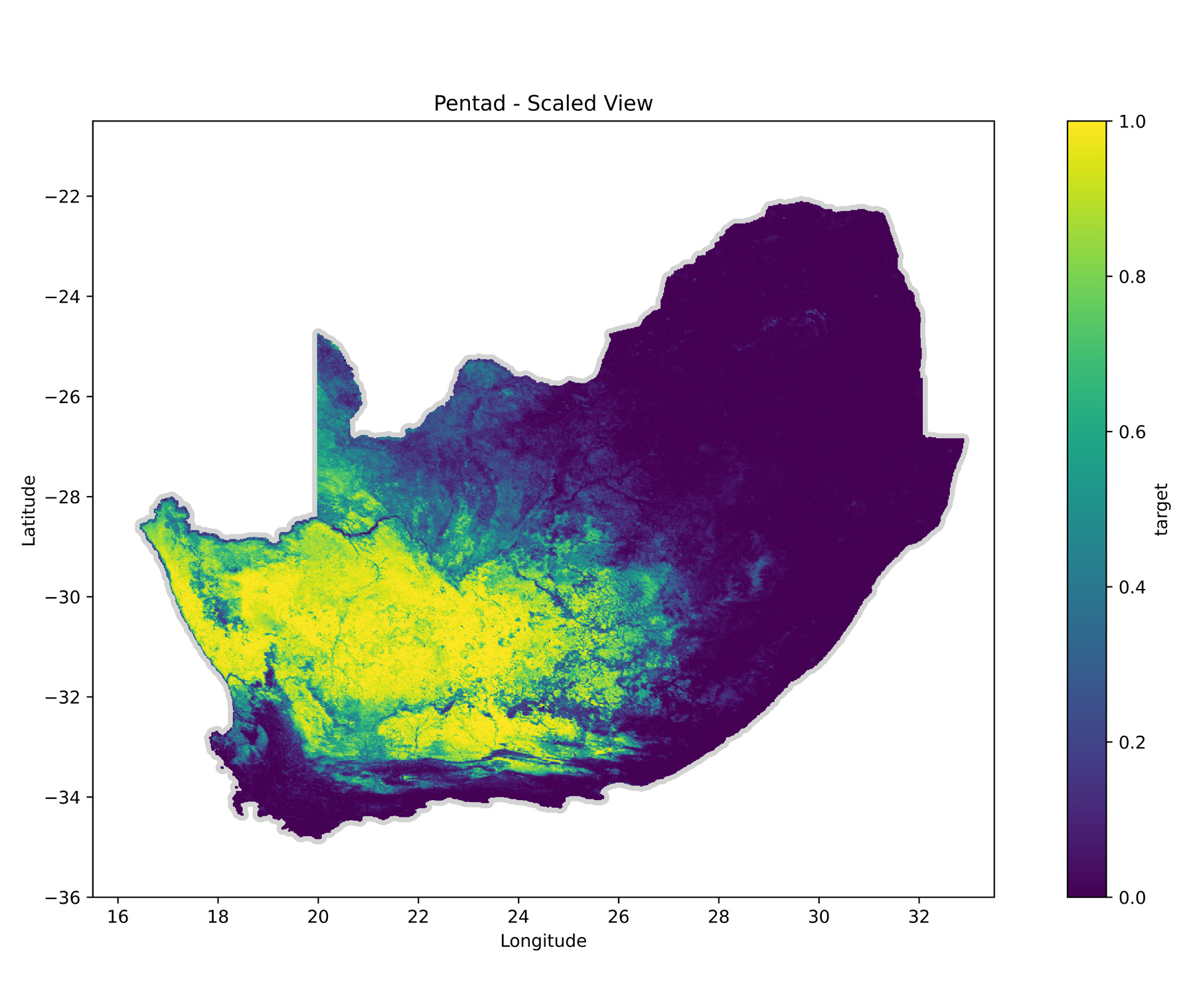
Figure 1: Probability distribution map for Ludwig’s Bustard at the 2×2 km scale, with high probability of presence as yellow (from Lee 2024).
Ecology
Ludwig’s Bustard is mostly found in open plains with dwarf shrublands, where it feeds on a mixed diet of arthropods, small vertebrates and plant matter (Allan 1994, Allan 2005). It displays nomadic as well as partial migratory movement patterns within the region, with some of the population occupying winter rainfall areas (including the Succulent Karoo and western Nama Karoo) from June to October, returning to the eastern Karoo during summer (Shaw and Ryan 2015, Colyn et al. 2020). Some long-distance flights are conducted at night, dawn and dusk, making them vulnerable to collisions with overhead power lines in the dark (Shaw 2013, Pretorius et al. 2022). They also have a very narrow binocular visual field overlap, which is thought to inhibit their ability to perceive and avoid obstacles during flight (Martin and Shaw 2010).
Like other bustards, Ludwig’s Bustard has a lek-based courtship system, where males display on open vantage points (Allan 2004). Leks may include several displaying males concentrated in one location, or they can be aggregated in ‘exploded leks’ within a larger area. Congregations of over 150 individuals have been seen at one location during the lekking period (Pretorius et al. 2022).
Threats & Conservation
Threats
Threats include collisions with overhead power line cables, hunting, poisoning, fence entanglement and road collisions (Anderson 2000, Allan 2005). There are few observations of natural predation, barring remains found under Martial Eagle nests on electricity transmission line pylons in the Karoo. Power line collisions are thought to be the most severe and important threat; with recently published estimates being the highest recorded for a South African species (Shaw et al. 2018). Bustard collisions with power lines is a global problem, and effective mitigation measures are yet to be found (Silva et al. 2023). Collisions with wind turbines is an emerging threat; there are some records from operational windfarms, particularly at sites on the west coast, although collisions with reticulation power lines leading from these sites remain more frequent than wind turbine collisions. With plans for increased renewable energy development and the expansion of the national electricity transmission grid, collisions with energy infrastructure are set to increase within the coming five to 10 years.
Conservation Measures Underway
- Power line collision mitigation measures are currently being researched by the Endangered Wildlife Trust and Eskom, in the form of a long-term experiment testing the effectiveness of novel bird flight diverters. This follows a previous experiment by Shaw et al. (2021), that proved that existing bird flight diverters were ineffective in reducing power line collision rates of Ludwig’s Bustard, and bustards in general.
- Two studies have fitted GPS tracking devices to Ludwig’s Bustard in order to research and better understand their movement ecology (Shaw 2013, Pretorius et al. 2022). The latter is still underway and hopes to add further evidence to the choice of bird flight diverters installed on power lines within the Ludwig’s Bustard’s range, as well as to inform renewable energy development avifaunal impact studies.
- Most of the Ludwig’s Bustard range falls outside protected areas (Evans 2023, Lee 2024), however the species persists on large livestock farms and frequently makes use of fallow cropland. According to Evans (2023), implementation of the national protected area expansion strategy could increase the availability of suitable habitat within protected areas from 9% to 24%.
- In 2024, the NGO Bustards Without Borders initiated a collaboration between bustard experts that aims to complete a multi-species action plan for bustards globally. This will include a conservation action plan for southern African species, with a strong focus on threatened species such as the Ludwig’s Bustard.
Conservation Measures Proposed
- Uncertainties pertaining to the impact of power line collisions on the Ludwig’s Bustard population should be addressed by means of a population viability assessment. This will first require research into unknown demographic parameters.
- If proven effective, novel bird flight diverters should be adopted and installed by Eskom and other energy utilities.
- Proactive power line mitigation, as opposed to reactive mitigation following reports of incidents, should then be undertaken in priority areas identified by Ludwig’s Bustard power line collision risk models. Bustards are currently excluded from proactive marking plans due to the lack of an effective mitigation measure.
- Lek sites where large numbers of Ludwig’s Bustards congregate should be identified, mapped and protected. Power lines in close proximity to these sites should preferably be buried (e.g. Raab et al. 2012).
Research Priorities and Questions
- Population size and trends, as well as location of leks, should be determined and monitored by means of a regular census.
- Other demographic parameters should be established in order to inform a population viability analysis.
- If possible, effective bird flight diverters should be identified through robust power line marking experiments, and alternative mitigation measures should be investigated concurrently.
- The impact of wind turbine collisions should be researched formally to add to current evidence from post-construction avifaunal monitoring activities.
Contributors & References
Assessor/s
Mattheus Pretorius, Sanjo Rose
Reviewer/s
Jess Shaw
References
Allan DG. 1994. The abundance and movements of Ludwig’s Bustard Neotis ludwigii. Ostrich 65: 95–105.
Allan DG. 2004. Display of Ludwig’s Bustard (Gruiformes: Otididae). Durban Museum Novitates 29(1): 14–20.
Allan DG. 2005. Ludwig’s Bustard Neotis ludwigii. In: Hockey PAR, Dean WRJ, Ryan PG (eds), Roberts Birds of Southern Africa, 7th edn. Cape Town, South Africa: Trustees of the John Voelcker Bird Book Fund. pp 301–302.
Anderson MD. 2000. Ludwig’s Bustard. In: Barnes KN (ed), The Eskom Red Data Book of Birds of South Africa, Lesotho and Swaziland. Johannesburg, South Africa: BirdLife South Africa. pp 105-107.
BirdLife International. 2018. Neotis ludwigii (amended version of 2016 assessment). The IUCN Red List of Threatened Species 2018: e.T22691910A129456278. https://dx.doi.org/10.2305/IUCN.UK.2016-3.RLTS.T22691910A129456278.en.
Bonde K. 1993. Birds of Lesotho: a guide to distribution past and present. Pietermaritzburg, South Africa: University of Natal Press.
Collar NJ, Kirwan GM. 2023. The generic position of the Nubian Bustard Neotis nuba (Cretzschmar, 1826) (Aves: Otididae). Zootaxa 5315(2): 122–130.
Colyn R, Whitecross M, Smit-Robinson H, Chetty K. 2020. Species research on Ludwig’s Bustard. Research report no. RES/RR/20/1958525, Johannesburg, South Africa: Eskom Holdings SOC Ltd.
del Hoyo J, Collar NJ, Christie DA, Elliott A, Fishpool LDC. 2014. HBW and BirdLife International Illustrated Checklist of the Birds of the World. Volume 1: Non-passerines. Barcelona, Spain and Cambridge, UK: Lynx Edicions BirdLife International.
Evans SW. 2023. The effects of habitat loss and fragmentation on the relative abundance and conservation of Ludwig’s Bustard Neotis ludwigii in South Africa. Ostrich 94(3): 186–203.
Lee ATK. 2024. Regional Red Data Book of the Birds of South Africa, Lesotho and Eswatini: SABAP2 synthesis and supporting information and graphics for Ludwig’s Bustard. Unpublished report: BirdLife South Africa, Johannesburg.
Martin GR, Shaw JM. 2010. Bird collisions with power lines: failing to see the way ahead? Biological Conservation 143(11): 2695–2702.
Mucina L, Rutherford MC (eds). 2006. The vegetation of South Africa, Lesotho and Swaziland. Strelitzia 19. Pretoria, South Africa: South African National Biodiversity Institute.
Pretorius MD, Galloway-Griesel T, Mohale O. 2022. Karoo Ludwig’s Bustard Project. Research report no. RES/RR/21/1961737, Johannesburg, South Africa: Eskom Holdings SOC Ltd.
Raab R, Schuetz C, Spakovszky P, Julius E, Schulze CH. 2012. Underground cabling and marking of power lines: conservation measures rapidly reduced mortality of West-Pannonian Great Bustards Otis tarda. Bird Conservation International 22(3): 299–306.
Shaw JM. 2013. Power line collisions in the Karoo: Conserving Ludwig’s Bustard. PhD thesis: University of Cape Town, Cape Town, South Africa.
Shaw JM. 2015. Ludwig’s Bustard Neotis ludwigii. In: Taylor MR, Peacock F, Wanless RM (eds), The Eskom Red Data Book of Birds of South Africa, Lesotho and Swaziland. Johannesburg, South Africa: BirdLife South Africa. pp 95–96.
Shaw JM, Ryan PG. 2015. Stable isotopes reveal regional movement patterns in an Endangered bustard. Austral Ecology 40: 198–205.
Shaw JM, Jenkins AR, Allan DG, Ryan PG. 2016. Population size and trends of Ludwig’s Bustard Neotis ludwigii and other large terrestrial birds in the Karoo, South Africa. Bird Conservation International 26(1): 69–86.
Shaw JM, Reid TA, Schutgens M, Jenkins AR, Ryan, PG. 2018. High power line collision mortality of threatened bustards at a regional scale in the Karoo, South Africa. Ibis 160(2): 431–446.
Shaw JM, Reid TA, Gibbons BK, Pretorius M, Jenkins AR, Visagie R, Michael MD, Ryan PG. 2021. A large-scale experiment demonstrates that line marking reduces power line collision mortality for large terrestrial birds, but not bustards, in the Karoo, South Africa. The Condor 123(1): duaa067.
Silva JP, Marques AT, Bernardino J, Allinson T, Andryushchenko Y, Dutta S, Kessler M, Martins RC, Moreira F, Pallett J, Pretorius MD. 2023. The effects of powerlines on bustards: how best to mitigate, how best to monitor? Bird Conservation International 33: e30.
Citation
Pretorius M, Rose S 2025. Ludwig’s Bustard. In: Lee ATK, Rose S, Banda S, Bezeng SB, Maphalala MI, Maphisa DH, Smit-Robinson H (eds), The 2025 Red Data Book of Birds of South Africa, Lesotho and Eswatini. Johannesburg, South Africa: BirdLife South Africa. Available at: https://www.birdlife.org.za/red-list/ludwigs-bustard/
Our generous sponsors


