


Kittlitz’s Plover
Anarhynchus pecuarius

Number Of Mature
Individuals (Regional)
17 500 – 21 250

Regional
Population Trend
Decreasing
2025
Regional Category
Near Threatened
Search by species
CONTENTSOverview
Names
|
IOC English Name: |
Kittlitz’s Plover |
|
SA & IOC Scientific Name: |
Anarhynchus pecuarius |
|
BirdLife International Taxonomy (scientific name): |
Charadrius pecuarius |
|
Order: |
CHARADRIIFORMES |
|
Family: |
Charadriidae |
|
Species name author: |
Temminck 1823 |
|
Afrikaans: |
Geelborsstrandkiewiet |
|
Sesotho (South Africa): |
patapeta-nyenyane |
|
Sesotho (Lesotho): |
patapeta-nyenyane |
|
Zulu: |
umatatazela |
Current Assessment Status
|
2025 Regional Category [Criteria] |
NT [A2ac] |
|
2025 Global Status [Criteria] |
LC (BirdLife International 2016) |
|
Population size (Global): |
151 000 – 325 000 (Wetlands International 2024) |
|
Population size (Regional): |
17 500 – 21 250 |
|
Distribution size (EOO) (Regional) km2 |
1 421 125 (Lee 2024) |
|
Distribution size (EOO) (Global) km2 |
33 400 000 (BirdLife International 2016) |
|
Distribution size (AOO) (Regional) km2 |
596 212 (Lee 2024) |
|
Generation time |
5 years (BirdLife International 2016) |
|
Status change reason |
Genuine change in status |
|
Migrant (in the region) |
Resident and migratory |
|
Regional endemic |
No |
Historic Listing Information
|
2000 Regional Status |
Not Evaluated |
|
2015 Regional Status |
Not Evaluated |
|
Status change reason (if applicable) |
Not Evaluated |
|
2015 Population size (Regional) |
Unknown |
|
2015 Global Status |
LC |
Reason for Inclusion
Reason for Inclusion in the Assessment
The region holds >5% of the world population, represented by both a resident population and an overwintering ground for intra-African migrant populations. Preliminary Coordinated Waterbird Counts (CWAC) analyses indicated that the species could be declining (Lee 2024). Kittlitz’s Plover Anarhynchus pecuarius was not previously assessed in the region.
Category Justification
Category Justification
Based on CWAC count data, there is support for a decline of resident birds, albeit a probable stable trend for migrating birds. There are seasonal and regional differences in the Kittlitz’s Plover trends. If only considering the winter count data, which likely predominantly consists of resident non-migrants, there is indication for a -33% decrease in population. Populations in the west of the country, which most likely do not have any migrant birds present anymore during the winter (July/August) counts, show similar decreases. In the Western Cape: -27%, in the Eastern Cape: -52%, in the Northern Cape: -72% (Nebel unpubl CWAC analysis). In those three provinces, the population remained stable during the summer counts, suggesting a stable migratory population.
This indicates that the South African population, at least in the western part of the country, is in decline, but the true scale is difficult to accurately quantify for the region due to presence of migrants during different times of the year (arrival and departure times can differ quite strongly between years and regions due to nomadic behaviour of this species). As migrants very likely do not contribute to production of young, they do not count towards “mature individuals”. The limited decline in range (as seen e.g. in the second Southern African Bird Atlas Project (SABAP2) range or 18.5% from modelling based on presence/absence data) can potentially be explained by migrants masking any declining range trends.
The decline in breeding population size approaches or even exceeds the Vulnerable category by Criterion A2ac, warranting a listening as Near Threatened. Extra-regional populations have experienced declines, with the entire Southern, Central and Eastern African population likely having declined by as much as 31% in the past three generations (non-significant trend, Nagy and Langendoen 2020) and population projections indicate that the population might decrease by 65% in three generations compared to population levels in 2008. Local trends from Eastern Africa support this negative trend, e.g. in Uganda (Akankwasah et al. 2020). Kittlitz’s Plover is therefore not a good candidate for a rescue effect.
Population Justification
There are four populations recognised: The population in West Africa was estimated to be 20 000 – 50 000 birds (Dodman 2002), in Madagascar 10 000 – 20 000 (Delany et al. 2009) and 1000 – 5000 in the Nile Valley (Delany et al. 2009). The population in Eastern, Central and Southern Africa is estimated at 120 000 – 250 000 birds (Dodman 2009). For the region there are no estimates, but Underhill et al. (1999) preliminarily estimated the population in Southern Africa to be 50 000 birds. The total world population was estimated at 151 000 – 325 000, but some authors indicate a larger range in population estimate of 130 000 – 480 000 (Colwell 2010).
The global population size is listed as Unknown (BirdLife International 2016). In Southern Africa, the population was estimated at around 50 000 birds (Underhill et al. 1999), but there are no estimates for the population of South Africa, Lesotho and Eswatini. In the Barberspan Bird Sanctuary, there are estimates of 40 – 161 adults at Goose Point and 48 – 380 at Sandy beach, with high counts likely explained by mixture populations of residents and migrants, which were present between March and April (Lipshutz et al. 2011), but can also occur during summer, autumn and winter (Tree 2001 and references therein). Remisiewicz and Avni (2011) estimated the population at Barberspan to be at least 100 breeding pairs. In the Western Cape, at multiple sites across the Western Cape coastline, there were 116 birds counted in 2010 (Ryan 2013) and for the entire Western Cape region there are estimates of 441 birds (296 – 657) between 2005-2009 (Barshep et al. 2017).
Although there are no data on the entire population size available for the region, the Southern African population is assumed to exceed the limit for the small population size criterion for Vulnerable (>10 000). If we assume the 50 000 Underhill et al. (1999) estimate was valid for Southern Africa, and that South Africa had half this population at the time, being 25 000, and that this has declined by 30%, then a potential lower population size is 17 500. However, assuming half the Western Cape is resident and declining, and half is migratory and stable (based on SABAP2 reporting rates of c. 25% in summer and half that in winter for the Western Cape), then the population would be 21 250 at the upper end. There is low confidence in this estimate.
Trend Justification
Kittlitz’s Plover is poorly studied throughout its large global distribution. The global trend is unknown (BirdLife International 2016). The Ugandan, Southern, Central and Eastern African population has experienced severe declines in population size in recent decades (Akankwasah et al. 2020, Nagy and Langendoen 2020). Historically, range and abundance in Southern Africa have increased due to proliferation of artificial water bodies (Tree 1997). Recent data from the bi-yearly waterbird counts indicate a widespread decline in winter count data of -33% (-43%, -21%) over three generations (Nebel, unpubl data). Intra-African migrants from outside the region are present during different times of the year in various regions (with considerable variation in arrival and departure times between years, Tree 2001), masking population declines when not considered: estimated percent change from Year = 2008 to 2023 is 19% (-20%, 76%) for summer. A model accounting for province, season and year suggested the total population declined by -21.21% in the last three generations. Confidence in this declining trend estimate is high.
Biology & Ecology
Taxonomy
The Charadrius genus is currently considered to be split into Charadrius and Anarhynchus, due to Charadrius not being a monophyletic clade within the Charadriidae. Until the new nomenclature is widely accepted, the Kittlitz’s Plover might be found both under its old name Charadrius pecuarius and its new name Anarhynchus pecuarius.
Four subspecies were proposed, but variation between them is clinal (del Hoyo et al. 1996) and the species is considered monotypic by most (del Hoyo et al. 1996; Hayman et al. 1986; Urban et al. 1986). Equatorial populations are slightly smaller than those in the north and south of the range (Hayman et al. 1986).
Identification
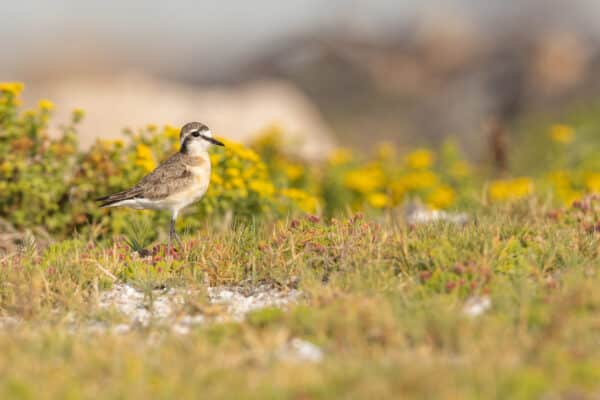
12–14 cm (Snow and Perrins 1998). Breeding male adult: the bird has a white patch on the forehead that forms a white band by extending into a supercilium and collar (Hockey et al. 2005). A black band runs beneath this white band and reaches from the black bill to the eye and hind neck (Hockey et al. 2005). The crown is dark brown, the throat is white (Hockey et al. 2005). The upperparts are sooty-brown with pale sandy-brown feather edges, whereas the breast, belly and vent is buffy (Hockey et al. 2005). The central tail feathers are blackish and become progressively lighter towards the tail’s sides, with the outer one or two pairs being completely white (Hockey et al. 2005). The bill is black, the eyes are dark brown, and the legs and feet are greenish-black. (Hockey et al. 2005). Breeding female adult: similar to breeding male but frontal bar is narrower (Hockey et al. 2005). Non-breeding male less pronounced head markings and the underparts are much paler buff (Hockey et al. 2005). Immature: similar to non-breeding but with duller head markings (Hockey et al. 2005).
Confusing species: the Kittlitz’s Plover can be confused with other species of the Charadrius genus, particularly the White-fronted Plover A. marginatus. However, it can be distinguished by its unique combination of greenish-black legs and a pale nuchal collar. Unlike the Kittlitz’s Plover, White-fronted Plover lack the striking black-and-white head markings characteristic of Kittlitz’s Plover (Hockey et al. 2005).
Distribution
The Kittlitz’s Plover occurs widely in Africa from the Nile Valley, across the length of the Sahel belt and south to the Cape, as well as in Madagascar (Urban et al. 1986). It is only absent from very arid areas, such as the Horn of Africa and the Kalahari, and the main tropical forest belt.
It is widely distributed across South Africa, Lesotho and Eswatini (Figure 1). Within the region, Kittlitz’s Plover is mainly distributed throughout coastal regions and inland wetlands of sub-Saharan Africa. It is scarce in the southern lowveld of northeast South Africa and has a patchy distribution in the interior of KwaZulu-Natal and the eastern Eastern Cape but avoids mountains (incl. Lesotho) or densely wooded areas as well as drier areas such as Northern Cape (Hockey et al. 2005).
Important sites within the region that can support high numbers are the Berg River wetlands and West Coast National Park (including the Langebaan Lagoon) in the Western Cape (Taylor 1999) and Barberspan Bird Sanctuary in the North West (Lipshutz et al. 2011, Remisiewicz and Avni 2011), which likely provides a stopover site for intra-African migrants both on their southbound and northbound journey (Tree 2001). However, none of those sites support > 1% of the world’s population.
SABAP2 atlas data suggest that the distribution has contracted in some areas and increased in others, indicating a range shift. Range declines predominantly occurred in drier parts of the country (e.g. inland habitats of the Northern Cape, North West and Free State Provinces and the Karoo of the Western and Eastern Cape Provinces), and range shifted eastwards towards areas that are known for higher annual rainfall. Beside declines in range in the Northern Cape, there are some increases in the Orange River estuary and various pans around Rietfontein. In the Western Cape, the range declined in the Northern area of the West Coast and the Breede River but shows increases in the Southern part of West Coast, and coastal parts of the Overberg. In the Eastern Cape, the species experienced declines south of the Great Escarpment. In KwaZulu-Natal, coastal populations show decreases in range size. In Limpopo, the range has declined, primarily along the tributaries of the Limpopo River, but shows increases along the Limpopo river and the general northern Kruger area. In Mpumalanga, the population increased in the east of the province and the southern Kruger area but declined in its central parts. In Eswatini, the population has gained in range. Likely much of the changes in range are due to natural fluctuations and it is unclear how much of this range change is driven by migrants that show highly nomadic behaviours following rain and food availability (Hockey et al. 2005).
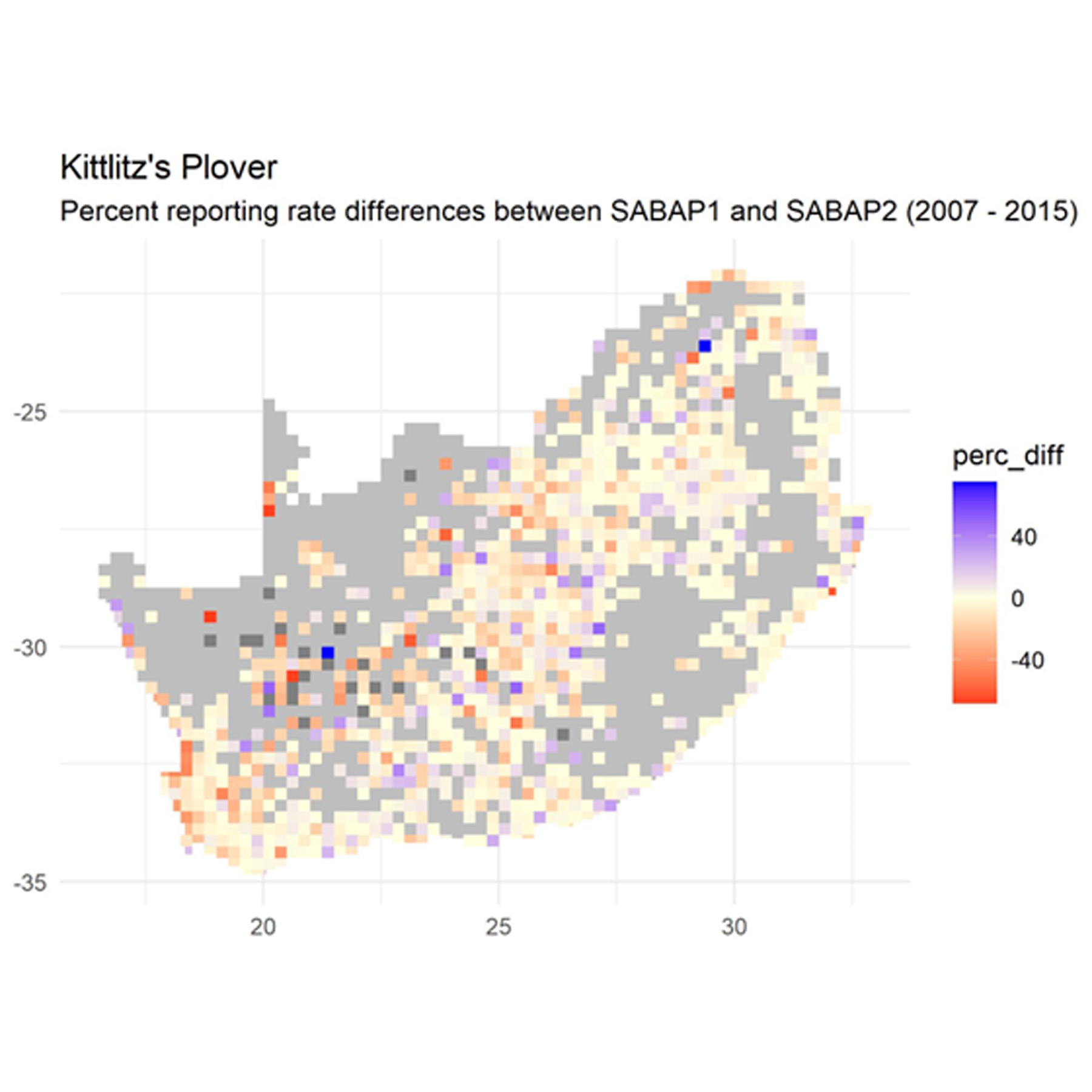
Figure 1a: SABAP distribution map showing percent reporting rate change between SABAP1 (1987-1991) and SABAP2 (2007-2015), illustrating the extensive former range for Kittlitz’s Plover.
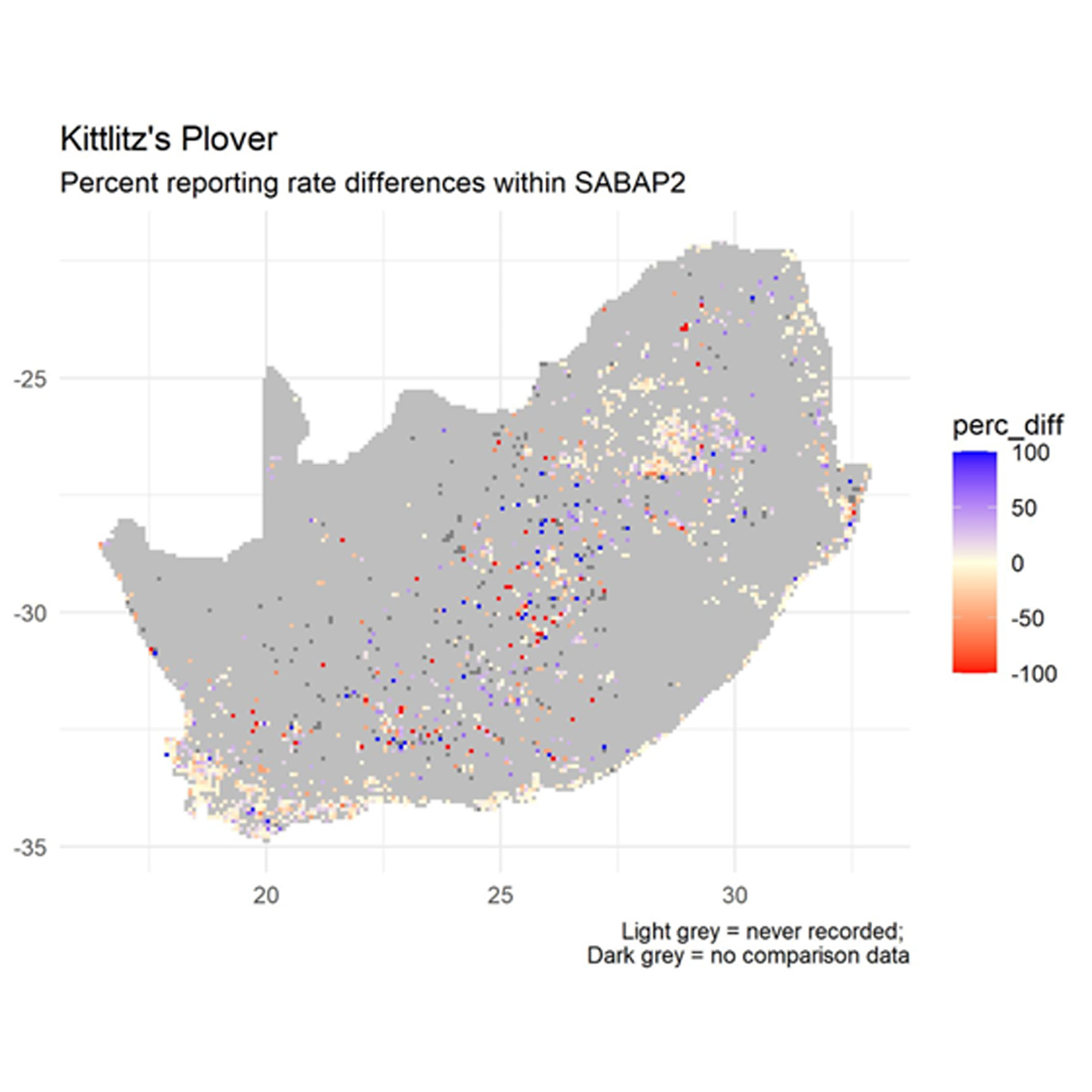
Figure 1b: Change in the percentage reporting rate for Kittlitz’s Plover between early (2007-2015) and late (2016-2023) SABAP2.
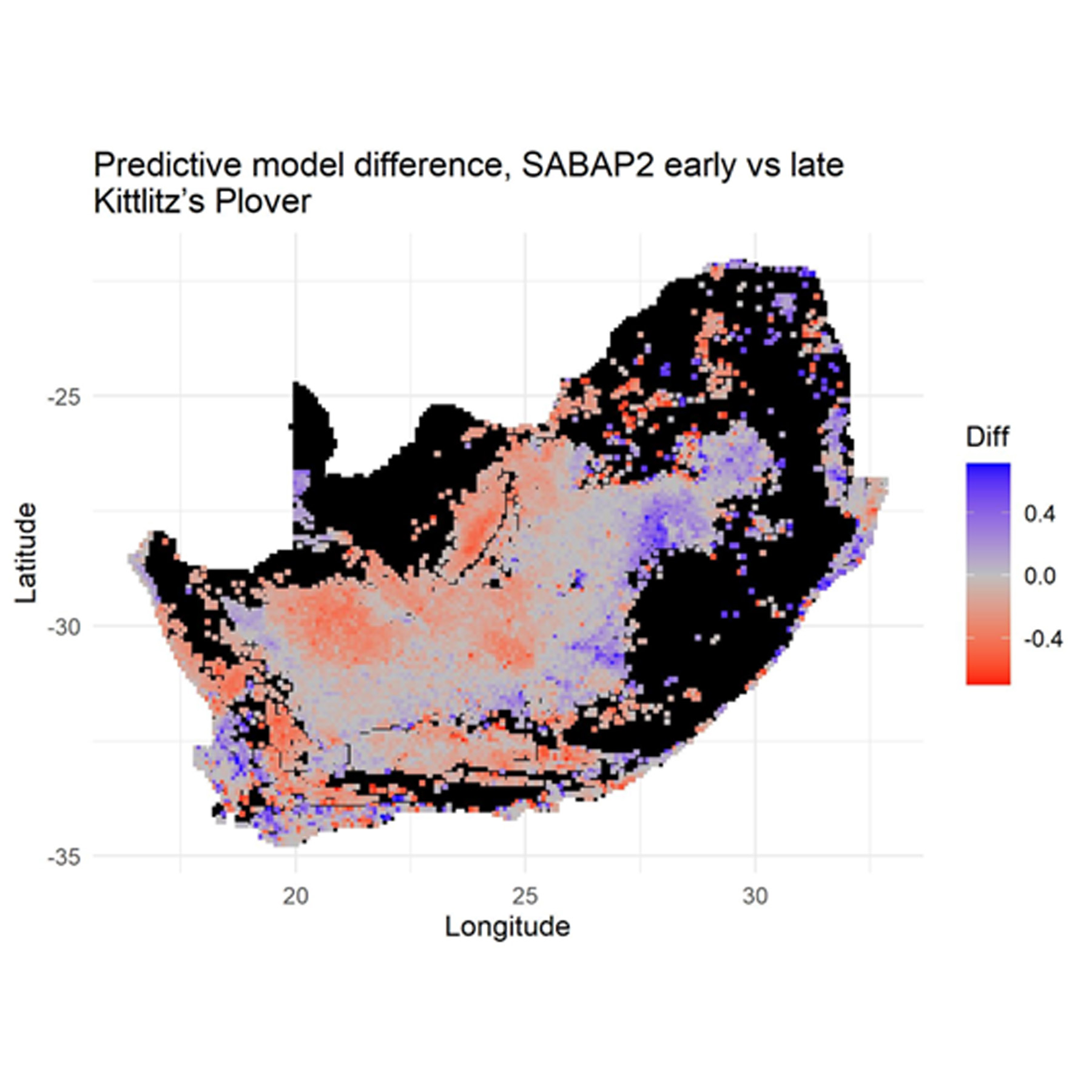
Figure 1c: Predictive modelled range change for Kittlitz’s Plover over three generations between early (2007-2015) and late (2016-2023) SABAP2 with predicted range contraction especially in the interior regions. Red indicating regions of decline.
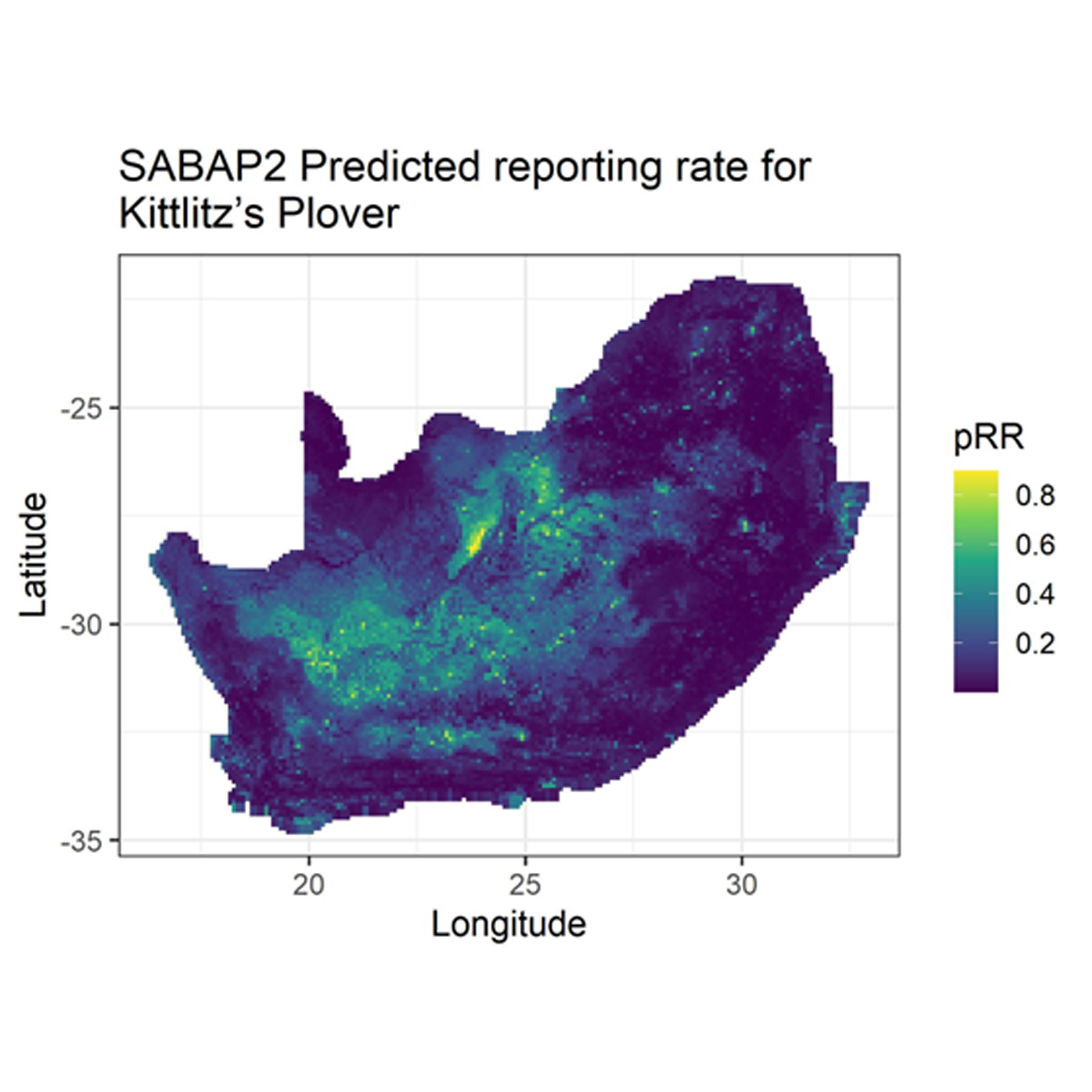
Figure 1d: The SABAP2 reporting rate prediction model indicates the species is still relatively widespread throughout the region (from Lee 2024).
Ecology
The Kittlitz’s Plover is a versatile bird found across both inland and coastal areas, thriving in open habitats at low elevations. This bird has a preference for dry terrains such as open mudflats with short grass that are in or near water bodies (Hockey et al. 2005). Its breeding sites are diverse, ranging from lakes and rivers to alkaline grasslands, lagoons, tidal mudflats, inland saltmarshes, including artificial water bodies (Urban et al.1985, Hockey et al. 2005, Zefania and Székely 2013). However, it tends to steer clear of sandy or rocky beaches as well as tall, dense closed vegetation and steep terrain. Unlike many other species, the Kittlitz’s Plover remains strictly terrestrial, engaging in all its daily activities like feeding, nesting, preening, and roosting on the ground (Zefania and Székely 2013).
The movements of the Kittlitz’s Plover are complex and not very well understood however, data suggests that this bird is a partial migrant in coastal areas (Figure 2, Delany et al. 2009). While some populations are sedentary others undertake seasonal migrations. The migratory behaviour varies depending on factors like habitat, food availability, and environmental conditions, with marked differences in reporting rates between provinces through the year.
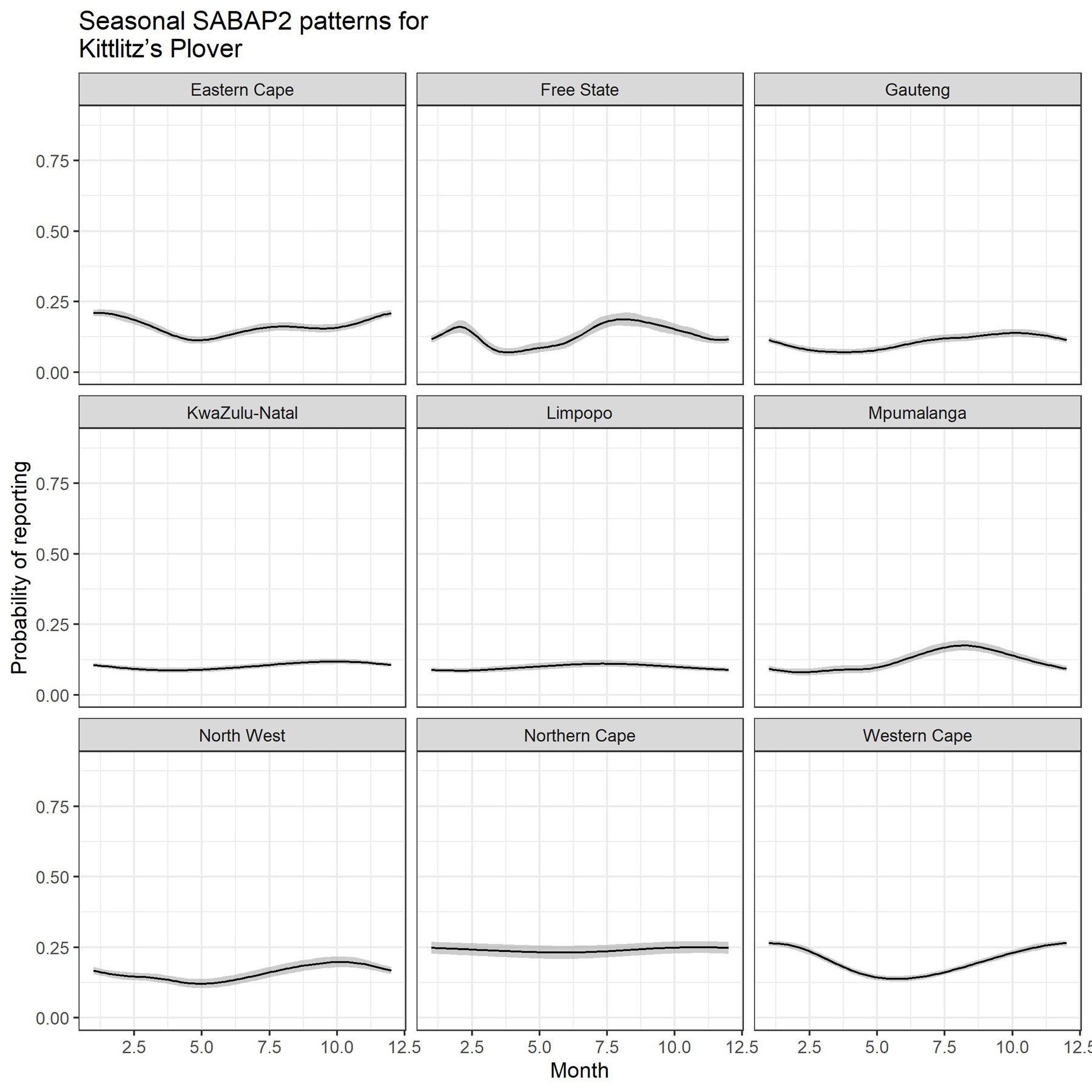
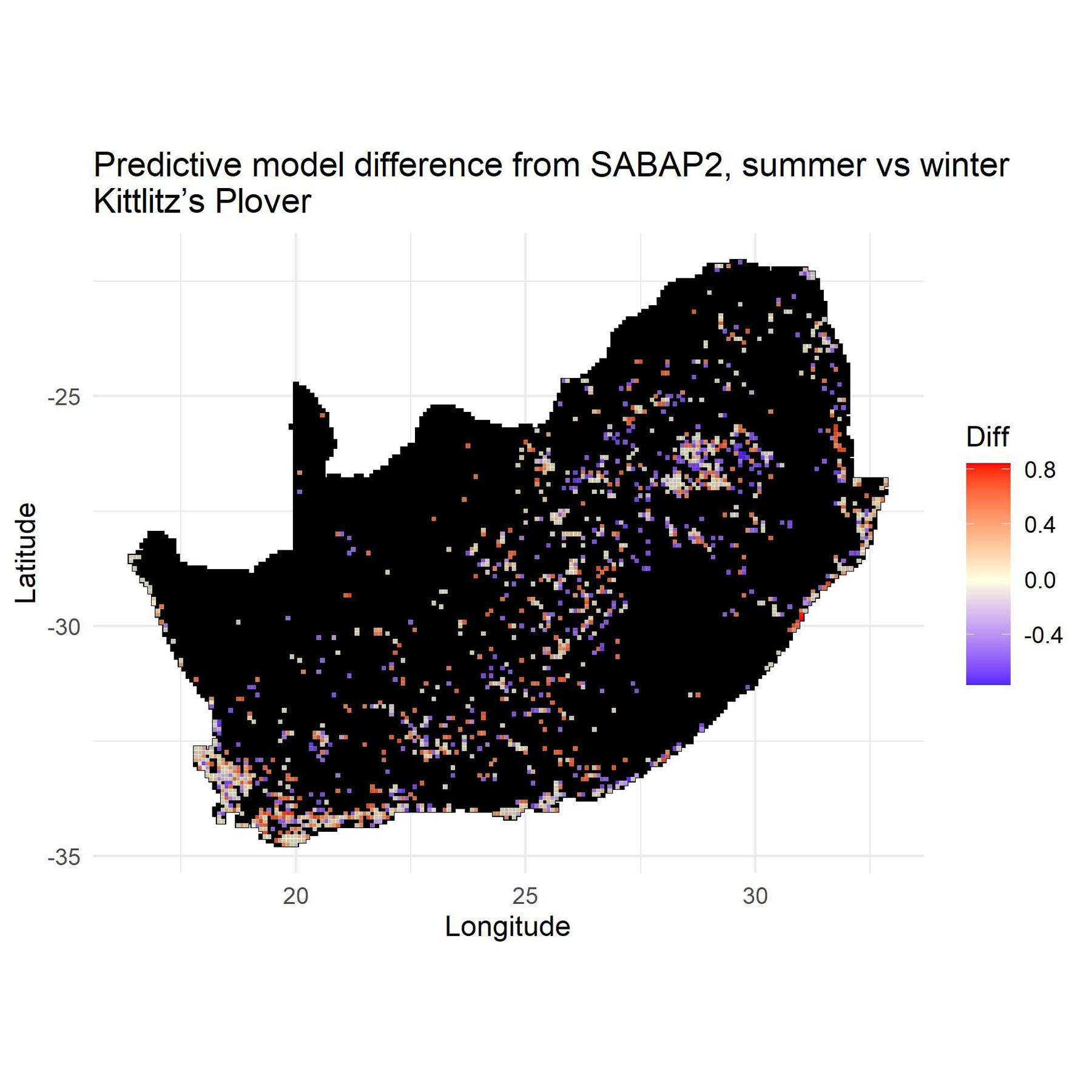
Figure 2: Seasonal patterns of reporting and occurrence from SABAP2, indicating seasonal trends by province (top), and spatial patterns of reporting and occurrence (lower) (from Lee 2024).
Populations in South Africa and Eswatini are predominantly sedentary but may move related to seasonal rainfall (Tree 1997, Parker 1994, Parker 1999). South African count data indicates local summer peaks in the south-west and winter peaks in the north and central region (Taylor 1999). Likely, migrants arrive from higher rainfall areas of the Democratic Republic of Congo, Zambia, Zimbabwe and northern Botswana that move south and west to Namibia, Botswana and South Africa from November to July. These birds are highly nomadic (Hockey et al. 2005) and the species’ complex migration behaviour remains poorly understood. In the Berg River Estuary, an important wetland within the region, winters hold around 200 breeding birds (Taylor 1999), whereas summer counts can triple the numbers of birds present, occasionally even reaching the thousands (e.g. see historic records of over 3600 birds in Winterbottom 1960; Summers et al. 1977; Ryan et al. 1988). Densities at Yzerfontein Pan, Western Cape, between December and July: 9.1 ± 0.3/ ha, from August to November 4.5 ± 0.2/ ha (Turpie JK, unpubl data in Hockey et al. 2005).
Breeding occurs year-round, with peaks varying by geographic location. Age of first breeding is 8–22 months (Tree 1974). Nests are exposed shallow ground scrapes, positioned 50–100 meters from water on open dry terrain such as in sand or in dry mud (Hall 1958, Tree 1974). These scrapes are lined with materials like shells, pebbles, and vegetation fragments (Tree 1974, Urban et al. 1986). Both parents contribute in building the nest and are highly territorial of this space until their chicks hatch. The plovers lay 1–3 eggs, at intervals of 1–5 days (Tree 1974, Urban et al. 1986, Safford and Hawkins 2013). Incubation, shared between both parents, lasts 22-28 days, with males predominantly incubating at night and females during the day (Tree 1974, Urban et al. 1986, Safford and Hawkins 2013). Parental care, usually by both parents, includes brooding and protection until the chicks fledge at 26–32 days and the chicks are independent soon after (Safford and Hawkins 2013). Breeding success: in captivity, the species has been observed initiating a second clutch while still brooding the first, though double-brooding has not been recorded in the wild (Conway and Bell 1968). In KwaZulu-Natal, 33% of eggs hatched from six nests (Hockey and Douie 1995), while in the Western Cape, the hatching rate was 52% (Blaker 1966). Breeding failure is primarily attributed to flooding, as well as vehicle disturbances and predation (Urban et al. 1986).
Kittlitz’s Plovers is carnivorous and primarily feeds on a variety of small invertebrates, including insects, such as beetles, larvae, spiders and worms, as well as small crustaceans and molluscs found in their wetland habitats (Wiersma et al. 2023).
Threats & Conservation
Threats
Kittlitz’s Plover is mainly threatened by habitat loss due to wetland degradation (Ntiamoa-Baidu 1991, Wearne and Underhill 2005). Climate change might result in a loss of breeding habitat, especially in the drier inland habitats. The role of loss of habitat might also negatively affect intra-African migrant populations, e.g. by reducing the amounts of stopover sites for refuelling during migration or their non-breeding habitat in the region. Moreover, Kittlitz’s Plover are also vulnerable to avian malaria and avian botulism which would have considerable impact if an outbreak occurred (Blaker 1967).
Conservation Measures Underway
No species-specific conservation actions are currently in place. The Kittlitz’s Plover does not have key sites in the region but breeding birds occur in relatively low numbers across large parts of the country, making the general protection of wetlands likely the most effective conservation measure.
Conservation Measures Proposed
Important breeding and non-breeding sites for resident Kittlitz’s Plover and stopover sites and wintering grounds for migratory conspecifics should be identified and protected, either through formal legislation or collaboration with private or commercial land-owners. Disturbance, habitat degradation or detrimental habitat modification of wetlands should be prevented. Ongoing population monitoring should be undertaken. It might be necessary to conduct those more regularly than twice a year to give a clearer assessment of presence of migrants that could mask any declining trends of the breeding population. Investigations into the movements of this species should also be conducted.
Research Priorities and Questions
- Population surveys will help in identifying key sites of conservation important to the species. These include breeding and non-breeding grounds and stop over sites during migration.
- The actual or potential threats to the species and its habitats should be assessed.
- The movement behaviour, both of resident birds and intra-African migrants, remains poorly understood and various aspects of this behaviour should be a focus of future research projects.
Contributors & References
Assessor/s
Carina Nebel, Maria Paul
Reviewer/s
Alan Lee
References
Akankwasah B, Mugabe M, Candia L, Byaruhanga A. 2020. Reports on the population status of AEWA-listed (native) and non-native waterbird species in the Agreement area for the period 2013–2018: Uganda.
Barshep Y, Erni B, Underhill LG, Altwegg R. 2017. Identifying ecological and life-history drivers of population dynamics of wetland birds in South Africa. Global Ecology and Conservation 12: 96–107.
Blaker D. 1966. Notes on the sandplovers Charadrius in southern Africa. Ostrich 37: 95–102.
Blaker D. 1967. An outbreak of botulinus poisoning among waterbirds. Ostrich 38(2): 144–147.
BirdLife International. 2016. Charadrius pecuarius. The IUCN Red List of Threatened Species 2016: e.T22693793A93423518. https://dx.doi.org/10.2305/IUCN.UK.2016-3.RLTS.T22693793A93423518.en. [Accessed on 05 May 2024].
Colwell MA. 2010. Shorebird Ecology, Conservation, and Management. Berkeley and Los Angeles (CA): University of California Press. p 312.
Conway WG, Bell J. 1968. Observations on the behaviour of Kittlitz Sandplovers at the New York Zoological Park. Living Bird 7: 57–70. In: Hockey PAR, Dean WRJ, Ryan PG (eds). Roberts – Birds of Southern Africa (7th Edn). Cape Town, South Africa: The Trustees of the John Voelcker Bird Book Fund.
Delany S, Scott D, Dodman T, Stroud D (eds). 2009. An Atlas of Wader Populations in Africa and Western Eurasia. Wetlands International, Wageningen, The Netherlands.
Dodman T. 2002. Waterbird population estimates in Africa. Dakar: Unpublished report to Wetlands International.
Dodman T. 2009. Status, estimates and trends of waterbird populations in Africa. Unpublished manuscript.
Hall KRL. 1958. Observations on the nesting sites and nesting behaviour of the Kittlitz’s Sandplover Charadrius pecuarius. Ostrich 29: 113–125.
Hayman P, Marchant J, Prater T. 1986. Shorebirds: An Identification Guide to the Waders of the World. London and Sydney: Croom Helm. p 412.
Hockey P, Douie C. 1995. Waders of Southern Africa. Struik Winchester. Cape Town.
Hockey PAR, Dean WRJ, Ryan PG (eds). 2005. Roberts – Birds of Southern Africa (7th Edn). The Trustees of the John Voelcker Bird Book Fund, Cape Town.
Lee ATK. 2024. Regional Red Data Book of the Birds of South Africa, Lesotho and Eswatini: SABAP2 synthesis and supporting information and graphics for Kittlitz’s Plover. Unpublished report. Johannesburg: BirdLife South Africa.
Lipshutz S, Remisiewicz M, Underhill LG, Avni J. 2011. Seasonal fluctuations in population size and habitat segregation of Kittlitz’s Plover Charadrius pecuarius at Barberspan Bird Sanctuary, North West Province, South Africa. Ostrich 82: 207–215.
Nagy S, Langendoen T. 2020. Flyway trend analyses based on data from the African-Eurasian Waterbird Census from the period of 1967–2018. Online publication. Wageningen: Wetlands International. URL: http://iwc.wetlands.org/index.php/aewatrends8.
Ntiamoa-Baidu Y. 1991. Seasonal changes in the importance of coastal wetlands in Ghana for wading birds. Biological Conservation 57: 139–158.
Parker V. 1994. Swaziland Bird Atlas 1985–91. Mbabane: Websters.
Parker V. 1999. The Atlas of the Birds of Sul do Save, Southern Mozambique. Cape Town and Johannesburg: Avian Demography Unit and Endangered Wildlife Trust.
Remisiewicz M, Avni J. 2011. Status of migrant and resident waders, and moult strategies of migrant waders using African inland wetland habitats, at Barberspan Bird Sanctuary in South Africa. Ibis 153: 433–437.
Ryan PG. 2013. Medium‐term changes in coastal bird communities in the Western Cape, South Africa. Austral Ecology 38: 251–259.
Ryan PG, Underhill LG, Cooper J, Waltner M. 1988. Waders (Charadrii) and other waterbirds on the coast, adjacent wetlands and offshore islands of the south-western Cape Province, South Africa. Bontebok 6: 1–79.
Safford RJ, Hawkins AF. 2013. The Birds of Africa. Volume VIII: Birds of the Malagasy Region: Madagascar, Seychelles, Comoros, Mascarenes. London, UK: Bloomsbury Publishing.
Snow DW, Perrins CM. 1998. The Birds of the Western Palearctic, Concise Edition. Vol. 1. Oxford University Press, Oxford.
Summers RW, Cooper J, Pringle JS. 1977. Distribution and numbers of coastal waders (Charadrii) in the southwestern Cape, South Africa, summer 1975–76. Ostrich 48: 85–97.
Taylor PB. 1999. TOTAL CWAC Report: Coordinated Waterbird Counts in South Africa, 1992–1997. Cape Town: Avian Demography Unit.
Tree AJ. 1974. A comparative ecological study of the Kittlitz Plover and Treble-banded Plover at Lake McIlwaine. Unpubl. MSc Thesis, Univ. Rhodesia.
Tree AJ. 1997. Kittlitz’s Plover. In: Harrison JA et al. (eds). The Atlas of Southern African Birds. Vol. 1: 382–383. Johannesburg, BirdLife South Africa.
Tree AJ. 2001. Kittlitz’s Plover as an intra-African migrant. Honeyguide 47: 10–16.
Underhill LG, Tree AJ, Oschadleus HD, Parker V. 1999. Review of ring recoveries of waterbirds in southern Africa. Cape Town: Avian Demography Unit. p 119.
Urban EK, Fry CH, Keith S. 1986. The Birds of Africa, Vol. II. Academic Press, London.
Wearne K, Underhill LG. 2005. Walvis Bay, Namibia: a key wetland for waders and other coastal birds in southern Africa. Wader Study Group Bulletin 107: 24–30.
Wiersma P, Kirwan GM, Boesman PFD. 2023. Kittlitz’s Plover (Anarhynchus pecuarius), version 1.1. In: del Hoyo J, Elliott A, Sargatal J, Christie DA, de Juana E (eds), Birds of the World Cornell Lab of Ornithology. Ithaca, NY, USA. https://doi.org/10.2173/bow.kitplo1.01.1
Winterbottom JM. 1960. Report of the Cape Bird Club vlei counts 1952–58. Ostrich 31: 135–168.
Zefania S, Székely T. 2013. Charadrius spp. In: Safford RJ, Hawkins AF (eds). The Birds of Africa, Volume VIII: Birds of the Malagasy Region: Madagascar, Seychelles, Comoros, Mascarenes. London, UK: Bloomsbury Publishing. pp 395–403.
Citation
Nebel C, Paul M 2025. Kittlitz’s Plover. In: Lee ATK, Rose S, Banda S, Bezeng SB, Maphalala MI, Maphisa DH, Smit-Robinson H (eds), The 2025 Red Data Book of Birds of South Africa, Lesotho and Eswatini. Johannesburg, South Africa: BirdLife South Africa. Available at: https://www.birdlife.org.za/red-list/kittlitzs-plover/
Our generous sponsors


