


Hooded Vulture
Necrosyrtes monachus

Number Of Mature
Individuals (Regional)
100 – 200

Regional
Population Trend
Decreasing
2025
Regional Category
Critically Endangered
Search by species
CONTENTSOverview
Names
|
IOC English Name: |
Hooded Vulture |
|
SA & IOC Scientific Name: |
Necrosyrtes monachus |
|
BirdLife International Taxonomy (scientific name): |
Necrosyrtes monachus |
|
Order: |
ACCIPITRIFORMES |
|
Family: |
Accipitridae |
|
Species name author: |
Temminck 1823 |
|
Afrikaans: |
Monnikaasvoël |
|
Sesotho (South Africa): |
kgonyaito |
|
Sesotho (Lesotho): |
khonyaito |
|
Siswati: |
Lingce |
|
Zulu: |
inqelincane |
Current Assessment Status
|
2025 Regional Category [Criteria] |
CR [Follows Global Status] |
|
2024 Global Category [Criteria] |
CR [A3cd+4acd] (BirdLife International 2022) |
|
Population size (Regional) |
100 – 200 mature individuals (Allan 2015) |
|
Population size (Global) |
131 000 mature individuals (BirdLife International 2022) |
|
Distribution size (EOO) (Regional) km2 |
97 854 (Lee 2024) |
|
Distribution size (EOO) (Global) km2 |
22 500 000 (BirdLife International 2022) |
|
Distribution size (AOO) (Regional) km2 |
37 572 (Lee 2024) |
|
Generation time |
9 years (Bird et al. 2020) |
|
Status change reason |
Criteria revision |
|
Migrant (in the region) |
No |
|
Regional endemic |
No |
Historic Listing Information
|
2000 Regional Status |
VU [C1] |
|
2015 Regional Status |
CR [C1] |
|
Status change reason (if applicable) |
Application of criteria |
|
2015 Population size (Regional) |
100 – 200 mature individuals |
|
2015 Global Status |
CR [A2acd+3cd+4acd] |
Reason for Inclusion
Reason for Inclusion in the Assessment
The Hooded Vulture Necrosyrtes monachus was first formally recognised as threatened in the region in the second South African Red Data Book, which categorised the species as ‘Rare’ (Brooke 1984), a ranking comparable to ‘Near Threatened’ in the current IUCN Red List Categories (Allan 2015). In the third regional Red Data Book this status was uplisted to ‘Vulnerable’ (Barnes 2000), and in the fourth regional assessment, Hooded Vultures were regionally assessed as ‘Critically Endangered’ (Allan 2015).
Category Justification
Category Justification
The regional population of Hooded Vulture is estimated at 100 – 200 mature individuals which is less than 1% of the global estimate (BirdLife International 2022). The regional Extent of Occurrence is 0.4% of the global extent of occurrence. Evidence from historical distribution records indicate that the regional population was not significantly more widespread throughout the region. Application of the 5% regional population filter thus means that the regional status is Not Applicable. However, given the considerable conservation efforts dedicated to conserving this species in the region (see Conservation Measures Underway below), the global status of Critically Endangered (BirdLife International 2022) is adopted for this species.
Population Justification
The current global population is estimated at 131 000 mature individuals (BirdLife International 2022). Historically, within South Africa, the Hooded Vulture’s breeding range may have covered a much wider area, but we lack historical breeding records to confirm this (Boshoff et al. 1983, Tarboton and Allan 1984, Allan 2015). The breeding range is now mostly restricted to riparian forests in the Kruger National Park and the Greater Kruger (Tarboton and Allan 1984, Mundy 1997a, Roche 2006), although annual river surveys conducted from 2015 to 2023 have recorded Hooded Vulture nests west of the R40 tar road (outside of the Greater Kruger) along the Olifants and Mohlatse Rivers (JPD and LJT, unpubl data).
In the late 1970s, this population was estimated at fewer than 50 pairs (Tarboton and Allan 1984), but Benson (1997) regarded this as an underestimate, and it was revised to 50 – 100 pairs in the late 1990s (Barnes and Tarboton 1998, Allan 2015). Kemp et al. (2001) estimated a minimum of 32 breeding pairs of Hooded Vultures in the Kruger National Park. However, this species’ nests, unlike those of other African vulture species, are usually well concealed within the canopies of densely-foliated trees (Mundy et al. 1992), which makes them challenging to locate and count, and so surveying breeding pairs is difficult. The number of occupied Hooded Vulture nests recorded during annual nest monitoring efforts along the Mohlatse and Olifants Rivers in north-eastern South Africa from 2015-2023 peaked at 57 (in 2019), which means there were at least 57 breeding pairs in that year, excluding known nests along the Sabie, Crocodile and other rivers, which were not included in this count (LJT and JPD, unpubl data). The total regional population estimate therefore remains the same as the previous assessment (Allan 2015), i.e. 50 – 100 breeding pairs (i.e. 100 – 200 mature individuals). Confidence in this regional population estimate is high.
Trend Justification
The global population is thought to have suffered a large-scale, and in some cases seemingly rapid, decline across its African range over the past 50 years and in some areas in <20 years (Ogada and Buij 2011, Ogada et al. 2016, Mullié et al. 2017, Nosazeogie et al. 2018, Deikumah 2020, Owolabi et al. 2020, Buechley et al. 2022, Asso et al. 2024, Daboné et al. 2023a, 2024a, 2024b).
The regional population of Hooded Vultures is estimated to be 100 – 200 mature individuals with an estimated continuing decline of at least 25% within one generation (satisfying Criterion C1 for Critically Endangered). The species’ presence as a breeding bird in this region is almost wholly reliant on these protected areas (Allan 2015). This is based on records that show that, on average, 0.55 Hooded Vultures have been killed on transmission and distribution powerlines (through collisions or electrocutions) in South Africa each year from 1 Jan 2014 to 1 Dec 2024 (Eskom-Endangered Wildlife Trust (EWT) database on wildlife mortalities on electrical infrastructure, accessed on 2024-12-10). In addition, six birds are killed by baboons at a small-scale piggery in Limpopo, and six at a captive predator facility in Limpopo, and so at least 12 individuals are killed each year in this region from anthropogenic causes (LJT and JPD unpubl data). In addition, an average of 1.5 Hooded Vultures are known to be killed by poisoning in South Africa each year over the last 10 years (the EWT and the Peregrine Fund 2024). This total of 14.05 birds killed annually in South Africa represents 7.025% of the regional population if there are 200 mature individuals (the upper population estimate), and 14.05% of the regional population if there are 100 mature individuals (the lower population estimate). The generation period for Hooded Vultures, according to Bird et al. (2020), is nine years. If we start with 100 individuals (the lower regional population estimate), then an annual decline of 14.05% equates to a 74% decline in the population over nine years (i.e., over one generation). Alternatively, if we start with 200 individuals (the upper regional population estimate), then an annual decline of 7.025% equates to a 48% decline in the population over nine years (i.e. over one generation).
Biology & Ecology
Taxonomy
The suggestion of two subspecies, the nominate in West Africa and N. m. pileatus in southern and East Africa, was accepted by some authorities (Ferguson-Lees and Christie 2001) but not others (Mundy et al. 1992, Barlow et al. 2020, Mundy 2020). A recent study of the species’ phylogeographic structure used microsatellite markers from 42 samples from six African countries (Le Roux 2023). The authors found no evidence to support the current subspecies classification, instead concluding that the genetic differentiation observed was caused by ‘isolation-by-distance’ (Le Roux 2023). This genetic evidence supports the suggestion by Mundy (2020) that geographical differences in behaviour, morphology, and ecology, are not due to speciation, but rather caused by adaptation to local environments (Le Roux 2023). Additional analyses are currently underway to confirm this finding.
A comparison of genetic diversity in Hooded Vultures from South Africa and Ghana showed that the peripheral population in South Africa had higher heterozygosity than the population in Ghana which is part of the core of this species distribution (Le Roux et al., 2024a). Worryingly, this study also found that relatedness and inbreeding were high in the populations from both countries. Le Roux et al. (2024a) further revealed that Hooded Vultures have undergone bottleneck events. However, an evaluation of genetic diversity using microsatellite markers revealed that Hooded Vultures in South Africa still had higher heterozygosity than Cape Vultures Gyps coprotheres in South Africa (Kleinhans and Willows-Munro 2019).
Identification
Sexes alike, 70 cm, 1.8–2.6 kg (Allan 2015). The Hooded Vulture has a smaller size and head, and a finer bill, than most other African vulture species. The face and foreneck are mostly bare, although juveniles’ faces may have dark-brown feathering. Crown and hindneck covered in woolly down of a pale-cream colour in adults, and dark-brown in juveniles, with the colour lightening as the birds age. Upperparts, underparts and short, rounded tail dark brown. Crop patch white, bordered by V-shaped patch of white down. In adults, feathering on the legs is white, typically with some white on the abdomen too. Bill black with cere pinkish in adults, and pale blue in juveniles. Eyes black, eye-ring pale blue. Relatively large ear opening. Legs and feet white. Juveniles and immatures are darker than adults, with dark leggings and abdomen. May be confused with the similarly-coloured (but much larger) Lappet-faced Vulture Torgos tracheliotus (Kemp et al. 2020). The juvenile plumages of Hooded and Egyptian Vultures Neophron percnopterus (which are vagrants in South Africa) are also very similar, but the bill and legs are blackish in juvenile Hooded Vultures and yellowish in juvenile Egyptian Vultures (Bannerman 1953). When relaxed, adults’ faces are usually white or pale pink, and juveniles’ faces are usually a pale blue colour (Kemp et al. 2020). Both subadults’ and adults’ faces flush to a deep pink colour when the birds are ‘excited’ or when individuals are dominant, such as at food sources, in aggressive encounters, and when they see their mates (LJT pers. obs, Negro et al. 2006). This ‘blushing’ makes the caruncles, which remain a white colour during blushing, more obvious (LJT pers obs).
Distribution
Hooded Vultures are an Afrotropical species, found in sub-Saharan Africa. Their distribution occurs from The Gambia and Senegal in West Africa, eastwards to southern Ethiopia and Sudan, and then southwards through East Africa to northern Namibia and Botswana, and across Zimbabwe to the Lowveld area of South Africa, Mozambique and eastern Eswatini (Ferguson-Lees and Christie 2001, Boshoff 2008).
Regionally, South African Bird Atlas (SABAP2, Figure 1) data shows that Hooded Vultures are now is reported only in three of South Africa’s provinces: with reports coming most often from Mpumalanga, then from Limpopo, and finally from KwaZulu-Natal (Lee 2024). Hooded Vultures are occasional vagrants elsewhere in the region, e.g. Eswatini (Monadjem 2004), and Zululand (Rushworth and Piper 2004). There are rare reports of vagrant birds in the Eastern Cape Province (Boshoff 2008), and Cape Town (Hardaker 2018). The distribution in South Africa is greatly reduced from earlier times (Mundy 1997). The restricted distribution in the region, however, appears similar between SABAP1 and SABAP2 (Allan 2015, Lee 2024).
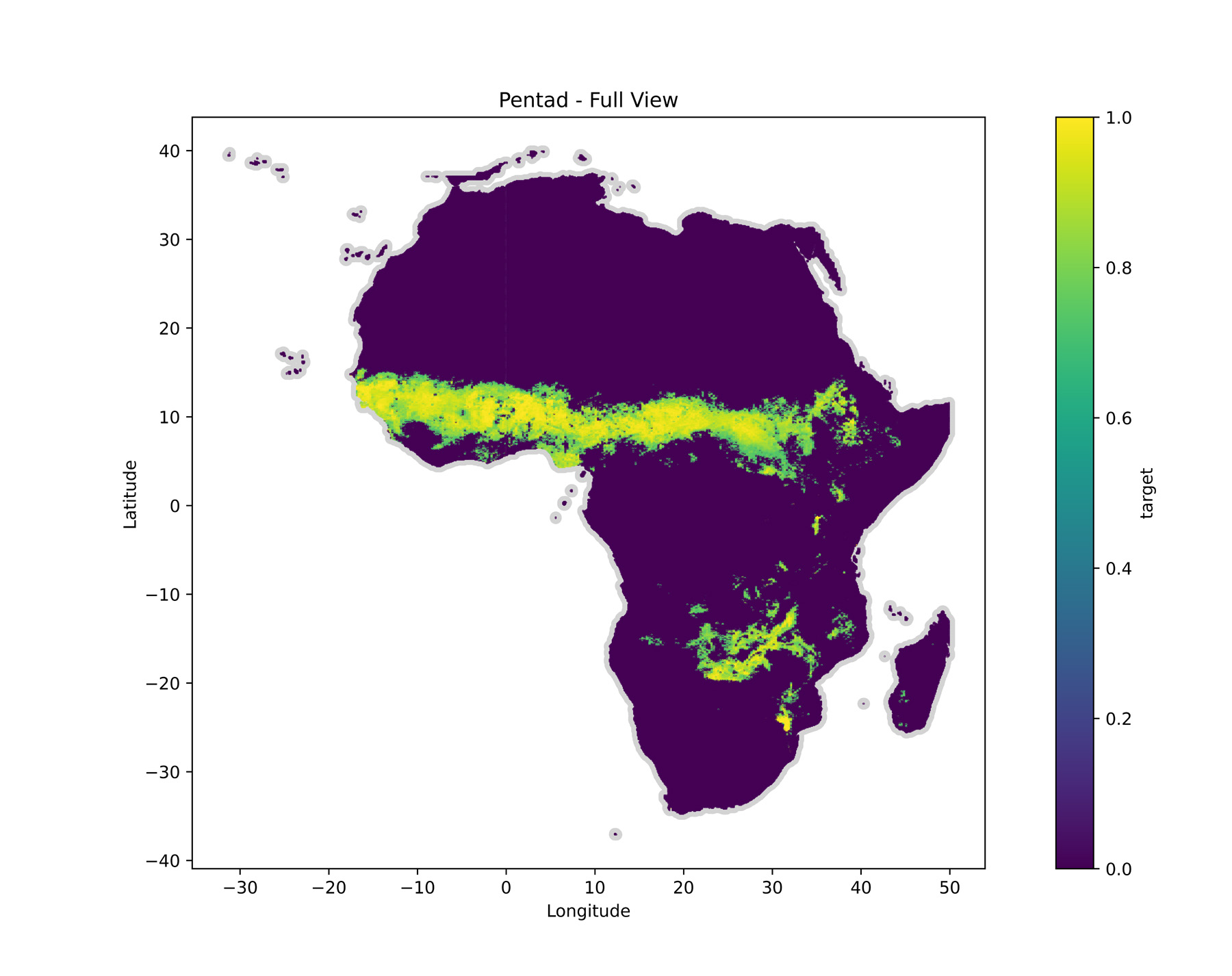
Figure 1: Hooded Vulture modelled distribution across Africa at the pentad scale using a random forest model and data from the African Bird Atlas Project, eBird and iNaturalist.
Ecology
Their relatively large wingspans, compared with those of other bird species, make them vulnerable to collisions with powerlines. The generation length is nine years (Bird et al. 2020), and the age of first breeding is 4–5 years (BirdLife International 2022). In this region, they are only recorded as breeding in Limpopo and Mpumalanga provinces (Monadjem 2004, Rushworth and Piper 2004, Monadjem et al. 2016, Thompson et al. 2017a, Fern et al. 2022).
Hooded Vulture nests are typically located in densely-foliated tall trees, and as such they are usually well-concealed (Roche 2000, Fern et al. 2022). Nests are almost always along watercourses, and they are usually high up, and securely placed in a large fork (Thompson et al. 2017a, Fern et al. 2022). They are composed mostly of non-thorny sticks, and in this region, they are usually lined with green Jackalberry Diospyros mespiliformis leaves or clumps of dry grass, and they sometimes contain herbivore dung and baling twine (Thompson et al. 2017b, Fern et al. 2022). In north-eastern South Africa, nest monitoring efforts from 2015-2023 recorded a total of 179 Hooded Vulture nests in the following tree species: Jackalberry (n = 134), Matumi Breonadia salicina (n = 26), Sycamore fig Ficus sycomorus (n = 7), Nyala berry Xanthocercis zambesiaca (n = 6), Weeping Boer-bean Schotia brachypetala (n = 3), Mopane Colophospermum mopane (n = 1), Riverthorn Faidherbia albida (n = 1), and Cape ash Ekebergia capensis (n = 1) (LJT, unpubl data). The same monitoring project, centred along the Olifants and Mohlatse Rivers, recorded a maximum of 57 Hooded Vulture nests that were occupied in north-eastern South Africa in any one year (in 2019), with a mean (±SD) of 33 (±13) occupied Hooded Vulture nests per year. However, these are most likely underestimates, and this number may well increase with a greater monitoring effort and larger study area.
Nest success along the Olifants River is estimated at 0.44–0.89 offspring per pair per year, with an average distance of 0.76 km between nests (Monadjem et al. 2016). There is usually only one Hooded Vulture nest per tree, but it is also not unusual to find an occupied White-backed Vulture nest in the same tree (LJT pers obs). There was one instance of a tree containing one occupied Hooded Vulture nest and three occupied White-backed Vulture nests at the same time (LJT and F. Fern, pers obs). Interestingly, and contrary to expectations, a genetics study found no evidence of nests in South Africa being reused by the same individuals in subsequent years (although nests are used by Hooded Vultures in consecutive years (Le Roux et al. 2024b). In addition, Hooded Vultures that were more closely related were more likely to breed further apart (Le Roux et al. 2024b).
The main egg-laying period spans June-July, with eggs laid in September assumed to be re-lays after early failures. The clutch comprises a single egg. Incubation is by both sexes and spans 50–51 days. The nestling period is 100–120 (90–130) days. The post-fledging dependence period is 3–4 months. The species is single brooded, and chicks may feign death when disturbed at the nest (Fern et al. 2022). In this region, known nest predators of Hooded Vulture eggs and nestling (confirmed by camera trap photos) include the Chacma Baboon Papio ursinus, and the Martial Eagle Polemaetus bellicosus (Thompson et al. 2017a).
Recent behavioural studies on Hooded Vultures in the region have described nest material theft (Thompson et al. 2017b), altercations between Hooded Vultures and Egyptian Geese Alopochen aegyptiaca at a Hooded Vulture nest (Thompson et al. 2019), and cartwheeling and intra-specific talon-grappling (Murn 2019). Pairs of adults are often seen flying with a subadult, presumably the most recent offspring. There is no evidence to suggest the species is not monogamous.
Hooded Vultures feed on the small scraps of food that they find on and around carcasses (Linde-Medina et al. 2021), and they have a very catholic diet compared to other African vulture species (Barlow 2020, Thompson et al. 2021). Across their range, they have been recorded feeding on food as diverse as carrion, invertebrates, and Oil Palm Elaeis guineensis fruit, as well as on the remains of slaughtered livestock at abattoirs, and at dumpsites, in markets, pig farms, and at captive predator facilities (Bannerman 1953, Ferguson-Lees and Christie 2001, Nosazeogie et al. 2018, Thompson et al. 2023). They are also recorded to feed on the faeces of humans (in West Africa) (Mundy and Cook 1975, 2023), Lions Panthera leo in East Africa (Stronach 2022), African Wild Dogs Lycaon pictus in southern Africa (Reading et al. 2017, van der Meer et al. 2022) and other animals (Mundy 1982). This coprophagic behaviour may make them more vulnerable to ingestion of veterinary pharmaceuticals (Whitehouse-Tedd et al. 2024) and pathogens (Dunbar et al. 2024). However, the non-commensal Hooded Vultures in southern Africa have not been recorded feeding on human faeces, nor displaying the beachcombing behaviour seen in birds in West Africa (Barlow et al. 2021, Thompson et al. 2021). Yet birds in southern Africa do feed at vulture restaurants which are supplied with the remains from butcheries and piggeries, as well as on mammal carcasses in protected areas. In areas where they occur, Hooded Vultures (along with Tawny Eagles Aquila rapax) are often the first species to land and feed at carcasses, but then they are quickly outcompeted by the larger Gyps vultures (LJT and John Davies, pers. obs.). Nevertheless, the fact that Hooded Vultures may congregate in large numbers at carcasses makes them vulnerable to poisoning (Roche 2006).
In terms of their movements, Hooded Vultures in southern Africa spend far less time (<0.5%) in urban areas than conspecifics in The Gambia (16%) and Ethiopia (20%) (Thompson et al. 2020a). This may be due to flexibility in the degree of commensalism in different regions in Africa, which likely arises in response to different levels of persecution and resource availability between regions (Daboné et al. 2019, Thompson et al. 2020a). The monthly home-ranges (95% Kernel Density Estimates) of adult birds from southern Africa were the largest (12 453 km2), followed by birds from eastern Africa (3735 km2), and then Western Africa (121 km2) (Thompson et al. 2020a). Immature birds range more widely than adults (Thompson et al. 2020a). Reading et al. (2019) found that four adults ranged more widely in the non-breeding season than in the breeding season in northern Botswana. Hooded Vultures’ comparatively large home-range sizes, particularly in southern Africa, could expose them to more threats, such as poisoned carcasses (Reading et al. 2019, Thompson et al. 2020a).
Threats & Conservation
Threats
The previous Red Data Book assessment described how Hooded Vultures’ breeding range outside of large protected areas has largely been lost, and highlighted a severe lack of knowledge of the species’ threats (Allan 2015). Since then, studies have shown that poisoning is an important threat to Hooded Vultures in the region (Gore et al. 2020, Moholoholo Wildlife Rehabilitation Centre, unpubl data). This includes intentional poisoning, to obtain body parts for belief-based use (Gore et al. 2020), and unintentional poisoning, possibly targeting crop-raiding animals (Thompson et al. 2023). Intentional poisoning for body parts has the potential to significantly impact vulture populations (Henriques et al. 2020, Williams et al. 2021). Overall, poisoning likely impacts fewer Hooded Vultures than it does other vulture species in the region, simply because they are less common than most of the other vulture species in this region (Thompson and Blackmore 2020), however, given their small regional population size, this threat is still important.
The demand for vulture body parts may not be as strong in southern Africa as it is in West Africa (Barlow and Kimbo 2023), but certainly in parts of South Africa there are traditional healers who use Hooded Vulture parts (McKean et al. 2013, Mashele et al. 2021). Traditional healers in the Bushbuckridge area stated they pay ZAR300 to ZAR1000 for each whole Hooded Vulture (Mashele et al. 2021). Although most studies do not distinguish which vulture species are being poached, sold, bought and used (Manqele et al. 2023), these studies generally conclude that levels of use of vultures in belief-based use are unsustainable (Mander et al. 2007, McKean et al. 2013, Mashele et al. 2021).
Another significant threat to Hooded Vultures in this region is collision with, and electrocution on, powerlines (Mashele et al. 2022, Thompson et al. 2023). Records show that on average, at least 0.55 Hooded Vultures were killed on transmission and distribution powerlines (through collisions or electrocutions) in South Africa, from 1 Jan 2014 to 1 Dec 2024 (Eskom-EWT database on wildlife mortalities on electrical infrastructure, accessed on 2024-12-10).
Disturbance of breeding Hooded Vultures by a range of human activities, such as tourism, nature guiding, homeowners, fishing, research, filming, photography, and building in close proximity to breeding sites may cause birds to abandon their nests.
Habitat loss is a threat to this species. This includes the loss of both foraging habitat and breeding habitat. Despite the fact that most Hooded Vulture nesting tree species are protected, these are sometimes illegally felled and sold for furniture (Thompson and Blackmore 2020). Loss of foraging habitat is a more insidious threat, with suitable land in north-eastern South Africa increasingly being converted into housing estates and citrus orchards. Often, even when the requirement for environmental impact assessments (EIAs) is triggered, landowners opt to risk paying fines if they are caught, or claim ignorance of these provisions.
Elsewhere in Africa, increased sanitation at abattoirs is a threat (Odino et al. 2014, Nosazeogie et al. 2018). However, in this region, increased sanitation could reduce the risks for Hooded Vultures, since there are some dumps at abattoirs and some ‘vulture feeding sites’ in north-eastern South Africa that are situated very close (30–400 m) to powerlines, and where the attraction of food has resulted in the deaths of multiple individuals. Better management of sites that attract Hooded Vultures would result in fewer fatalities, for example several Hooded Vultures have been killed by baboons at a small scale piggery in Phalaborwa, where multiple species are attracted by the food that is put out for the pigs (LT pers obs). Similarly, one particular property in Limpopo, South Africa, which has a well-attended vulture feeding site and captive predators, is a sink for this species, since Hooded Vultures are regularly killed by captive big cats when the birds land in their enclosures to bathe in their drinking water, or to feed on faeces or scraps of food (Thompson et al. 2020b). Certainly, this facility, where Hooded Vultures are killed by captive predators on a regular sustained basis, could pose the greatest risk to the species in this region.
Hooded Vultures’ large home-range sizes, particularly in immature birds (Thompson et al. 2020a), means that individuals from the region could succumb to poisoning, electrocution and other threats in neighbouring states (Allan 2015, Solly 2019).
Conservation Measures Underway
In South Africa’s Lowveld area, there is a strong collaboration of individuals and organisations who respond to wildlife poisoning events, and the EWT’s ‘Eye in the Sky’ system of tracked vultures assists with the early identification of these scenes. This network of partners includes various wildlife veterinarians, provincial nature conservation authorities, police, conservation NGOs, and wildlife rehabilitation organisations. In the Lowveld, poisoned vultures (including Hooded Vultures) are treated in the field, and then usually taken directly to the nearest registered wildlife rehabilitation centre which is experienced in rehabilitating vultures, which is Moholoholo Wildlife Rehabilitation Centre, where the clinic team is highly experienced in treating and rehabilitating vultures. Most of the rehabilitated vultures are released at Moholoholo’s vulture feeding site.
The longstanding ‘Eskom-EWT strategic partnership’ has resulted in the mitigation of many kilometres of powerlines, and the alteration of dangerous structures to ‘bird-friendly structures. In accordance with this partnership, everyone (including members of the public) is encouraged to report dead/injured Hooded Vultures (or other wildlife) found below powerlines to the EWT or Eskom. Representatives from both Eskom and the EWT will then do a joint-site inspection, to determine how best to mitigate the cause of the threat. Sections of line in Balule Nature Reserve (Parsons, Grietjie and Olifants River East Conservancy) have received bird diverters after Hooded Vultures were killed through electrocutions or collisions with the line.
Hooded Vultures benefit from supplementary feeding sites (‘vulture restaurants’). Thirty-four individuals were recorded in 2016 at the feeding site (which is no longer in operation) in Selati Nature Reserve, and the species also frequents the feeding sites at Moholoholo, Hoedspruit Endangered Species Centre, and a crocodile farm north of Hoedspruit (EWT unpubl data). Related to this, South Africa’s Lead Task Team and others are working to encourage the use of non-lead ammunition, since lead from ammunition has been shown to negatively affect other vulture species in the region (Van den Heever et al. 2019, 2023, 2024).
The best legal protection for vultures in the region is South Africa’s provincial ordinances, and in the two provinces in which Hooded Vultures breed in South Africa, the penalties for unlawful killing or capture of these birds are severe (Thompson and Blackmore 2020). In Limpopo province, the Hooded Vulture is listed as a ‘specially protected wild animal’, and contravening the provisions of the Limpopo Environmental Management Act can result in fine of up to ZAR250 000 and 15 years imprisonment (Limpopo Province 2003). In Mpumalanga province, Hooded Vultures are regarded as ‘protected game’, and contravening the provisions of the Mpumalanga Nature Conservation Act can incur an unspecified maximum fine and imprisonment of up to five years (Mpumalanga Province 1998). Hooded Vultures are included in South African National Parks’ ‘species of special concern’, which is a biodiversity objective aimed at conserving protected, rare and threatened species within parks (McGeogh et al. 2011).
Conservation Measures Proposed
Various conservation organisations around southern Africa are collaborating on the implementation of Vulture Safe Zones. The vast majority of known Hooded Vulture nests in South Africa’s Lowveld area occur in protected areas. Nevertheless, there is still a need for more fieldworkers in this area, whose roles are devoted to (i) building good working relationships with landowners, ecologists and wardens, and engaging with them to reduce threats to Hooded Vultures, (ii) responding to emergencies such as powerline collisions, poisonings, and grounded birds, and (iii) helping to raise awareness about vultures and the threats they face with belief-based use, and with the general public and particularly school-age learners, throughout the Hooded Vulture’s range.
One challenge is that management actions in protected areas often do not consider avian species, and legislation protecting Hooded Vultures and their breeding and foraging habitats is often ignored (Allan 2015, Thompson and Blackmore 2020). This can stem from the fact that wardens of privately-owned nature reserves are employed by boards whose members’ business interests may be in direct conflict with the conservation goals of the property. Furthermore, EIA processes are sometimes ignored by landowners, and not enforced by wardens whose continued employment is at the discretion of the landowners these wardens are meant to be overseeing. Thus, greater autonomy for wardens and reserve managers, and more transparent, objective and obligatory implementation of EIA processes and penalties for non-compliance, would benefit Hooded Vultures, by minimizing disturbance to breeding birds, and preventing the illegal destruction of their nesting and foraging habitat.
Awareness activities should target reserves where these birds breed, particularly to educate property owners and managers of the risks of nest abandonment caused by the disturbance of building activities. Hooded Vultures often breed in large trees, along rivers, at picturesque sites, which guides and landowners use as ‘picnic sites’. Human activities at these sites during the breeding season should be prohibited. FGASA and other professional guiding associations can and should help to raise awareness of this with their members, so that guides, tourists and landowners avoid Hooded Vulture nesting areas during their breeding period, when they are sensitive to disturbance. In addition, in the Lowveld, protected trees (particularly Matumis, which Hooded Vultures use for nesting) are illegally felled and sold as furniture (Thompson and Blackmore 2020). The national government needs to increase capacity so that it can enforce penalties for prohibited activities.
Due to the threat from powerlines in the Lowveld, those responsible for these lines are encouraged to fit bird diverters to powerlines in hotspot areas, as a preventative measure, rather than waiting for birds to first be killed on lines before fitting these devices. These hotspot areas include Balule Nature Reserve (where there have been numerous electrocutions and collisions involving Hooded Vultures), and where powerlines cross the Olifants, Mohlatse, and other rivers within this species’ breeding range, since mortalities on lines that cross rivers are unlikely to be found, and will therefore not trigger mitigation work, despite these lines often being close to occupied nests, and along the flightpaths of these birds.
Hooded Vultures are currently listed under CITES Appendix II, which is for species that are ‘not necessarily now threatened with extinction, but they could become so unless trade is closely controlled’ (CITES 1973). In southern Africa, the international illegal trade in live vultures for belief-based use may be inconsequential (Thompson and Blackmore 2020, Mashele et al. 2022). However, vulture parts are traded in South Africa and Lesotho (Beilis and Esterhuizen 2005, Mashele et al. 2021, Manqele et al. 2023, Whiting et al. 2013), and given the extensive international trade in whole Hooded Vultures and their parts in West Africa (Atuo and Connell 2015, Buij et al. 2016, Deikumah 2020, Daboné et al. 2023a, 2024b, Williams et al. 2021), Hooded Vultures should be uplisted to CITES Appendix I (Saidu and Buij 2013).
It is vital that governments and NGOs engage with Traditional Health Practitioners’ associations, to form strong working relationships, to tackle the illegal trade in vulture body parts for Belief-based Use is unsustainable (Mashele et al. 2021). Ideally, these stakeholders should work together on vulture conservation activities, and help to raise awareness of the threats to vultures, and how we can conserve them. Hunters, traders, Traditional Health Practitioners and consumers who sell, handle and consume vulture body parts (e.g. at muthi markets) should be informed of the potential health risks from pesticides and other toxic substances, and from zoonotic pathogens such as Highly Pathogenic Avian Influenza viruses (Buij et al. 2021, Ducatez et al. 2007a, 2007b). Police and Provincial Nature Conservation Authorities should better monitor these markets and enforce legislation that protects vultures (Thompson et al. 2020b). Furthermore, given the threat of Highly Pathogenic Avian Influenza to Hooded Vultures, conservation organisations, nature conservation authorities, rehabilitation centres that handle vultures, and facilities with captive birds, should collaborate with the South African Veterinary Council and South Africa’s Department of Agriculture, Land Report and Rural Development (DALRRD) to discuss the possible implementation of an avian influenza vaccination programme for wild and captive Hooded Vultures.
Vulture feeding sites should not be placed anywhere near powerlines, nor near captive predator enclosures (Thompson et al. 2020b), and only food that is confirmed to be safe for vultures should be placed at feeding sites. A recent study highlighted the threats posed to Hooded Vultures at captive predator facilities (Thompson et al. 2020b). Conservation officials should conduct regular interviews with staff and visitors at these facilities, and do regular site inspections, to determine whether vultures are being killed by captive animals. These officials should force facilities to mitigate these threats, and impose penalties for non-compliance. Captive predator facilities can prevent their big cats killing Hooded Vultures by using a small feeding enclosure within each larger enclosure (Thompson et al. 2020b). These small feeding enclosures should have doors and a roof, so that the big cats can feed inside without the vultures having access to the food (Thompson et al. 2020b). All food scraps and predator faeces should be removed from the larger (open-topped) enclosure while the big cats are feeding in the small, covered feeding enclosure, to reduce the temptation for Hooded Vultures to enter the enclosure (Thompson et al. 2020b). Ideally the entire predator camp should be covered with a roof (to prevent Hooded Vultures from landing to feed on faeces), or the captive predators should be removed.
Conservation interventions focused mainly on the more widespread and abundant White-backed Vulture G. africanus would also likely be beneficial for the rarer Hooded Vulture (Allan 2015, Thompson et al. 2021). The home-ranges of Hooded Vultures have been shown to cross international borders (Thompson et al. 2020a), and so there should be strong collaborations between governments and NGOs from across the region. Hooded Vulture range states that have not yet developed and enacted national action plans for vultures, with specific management interventions aimed at addressing local threats (e.g., Republic of South Africa 2022) and cross-border cooperation are encouraged to do so (Botha et al. 2017).
Research Priorities and Questions
Continued monitoring of the species (using road counts and nest monitoring) is a high priority to monitor the population’s stability and size (Allan 2015). Nest activity can be monitored by road and on foot, and/or with camera traps (Monadjem et al. 2016, Thompson et al. 2017a, 2017b, Fern et al. 2022, Daboné et al. 2016, 2023b, Mundy and Cook 2023). The concealment is this species’ nests in densely-foliated canopies renders aerial surveys of nests ineffective. Whichever nest monitoring methods are used, animal ethics approvals and appropriate permits (e.g. provincial research permits if in South Africa) should first be obtained, and great care should be taken to avoid disturbance to breeding birds, particularly during the time of nest repair, egg laying, and incubation, because excessive noise, movements, building activities and human presence may cause breeding pairs to abandon their nests (LJT pers. obs.).
Various authors mention Hooded Vultures’ ‘preferred’ or ‘selected’ nesting trees, without having compared species of nesting trees with species of randomly-selected trees in the same area. It is likely that preferred nesting tree species may vary according to the available tree species in each region, however we still need studies to determine this, and until then, authors should avoid using the words ‘favoured’, ‘preferred’ and ‘selected’ in relation to nest sites.
Little is known about the age at first breeding, or of how to age these birds based on plumage. Those managing captive collections are encouraged to keep records on their observations, and to share these widely.
Le Roux et al. (2024a) highlighted high levels of inbreeding in Hooded Vultures from South Africa and Ghana. Further work should be done to confirm whether the Ghanaian population is representative of Hooded vulture populations in other West African countries, since that region is the stronghold for this species (Jallow et al. 2022). If so, then this inbreeding may be of conservation concern (Le Roux et al. 2024a).
With regards to the use of vultures in belief based use in southern Africa, Mashele et al. (2021) found that Hooded Vultures sell for ZAR300 to ZARR1000 each in the Kruger to Canyons Biosphere Region of South Africa. Further research is required, in other areas across the region, to determine levels of use of Hooded Vultures in particular.
There is still no knowledge of how lead affects Hooded Vultures anywhere in their range, and so there is a need to investigate lead levels of Hooded Vultures in the region.
Highly Pathogenic Avian Influenza (subtype H5N1) was confirmed in three wild adult Hooded Vultures in Ouagadougou, Burkina Faso, in Mar-Apr 2006 (Ducatez et al. 2007a, 2007b). Influenza was confirmed by rapid tests in a further 17 Hooded Vultures that were found sick or dead in Ouagadougou in Feb-June 2006 (Ducatez et al. 2007b). Thus, wild and captive Hooded Vultures should be routinely screened for avian influenza throughout the species’ distribution. Furthermore, their role as hosts, potential sentinels and vectors of this disease to other animals (especially other wild scavengers, poultry and mammals, including people) should be established (Ducatez et al. 2007b).
A Population Viability Analysis (PVA) still needs to be conducted for Hooded Vultures in this region. Species Distribution Modelling, similar to that done by Lawer (2024), should also be done for Hooded Vultures in each country within the species’ range, to anticipate the possible impacts of accelerated climate change on the population. Furthermore, tracking data can be used to determine the species’ reliance on vulture supplementary feeding sites, and researchers should continue to use satellite tracking devices coupled with ground-truthing to monitor causes of mortality across the region (Allan 2015, Thompson et al. 2020a, Serratosa et al. 2024).
Contributors & References
Assessor/s
Lindy J. Thompson, John P. Davies
Reviewer/s
Andre Botha
References
Allan DG. 2015. Hooded Vulture Necrosyrtes monachus. In: Taylor MR, Peacock F, Wanless RM (eds), The Eskom Red Data Book of Birds of South Africa, Lesotho and Swaziland. Johannesburg, South Africa: BirdLife South Africa. pp 58–60.
Asso AA, Koné NGA, Salewski V. 2024. Cultural attitudes and human pressure towards vultures around the Comoé National Park, Côte d’Ivoire (West Africa). Journal of Ethnobiology and Ethnomedicine 20(1): 30.
Atuo FA, O’Connell TJ. 2015. An assessment of socio-economic drivers of avian body parts trade in West African rainforests. Biological Conservation 191: 614622.
Bannerman DA. 1953. The birds of West and Equatorial Africa. Volume I. Edinburgh, United Kingdom: Oliver and Boyd.
Barlow CR. 2020. Further observations and implications of Oil Palm Elaeis guineensis fruit consumption by Hooded Vultures Necrosyrtes monachus in coastal Gambia. Vulture News 79: 32–37.
Barlow CR, Reading RP, Shema S, Maude G. 2020. Homogeneity in cranial biometrics and bill morphology is verified by measurements from The Gambia, Botswana and Kenya in the case of the putative sub-species of the highly commensal Hooded Vulture Necrosyrtes monachus monachus and non-commensal Necrosyrtes monachus pileatus. Vulture News 78: 1–10.
Barlow CR, Mendy F, Cryer R, Dobbs GE. 2021. Marine carrion is an important food source for Hooded Vultures Necrosyrtes monachus on south Gambian beaches: a photographic report with a list of food items. Vulture News 80: 1–11.
Barlow CR, Kimbo M. 2023. An extreme weather event in Sierra Leone precipitates a mass slaughter of Hooded Vultures Necrosyrtes monachus used for human consumption and the loss of a national icon. Afrotropical Bird Biology 3: 1–5.
Barnes KN. 2000. The Eskom Red Data Book of Birds of South Africa, Lesotho and Swaziland. Johannesburg, South Africa: BirdLife South Africa.
Barnes KN, Tarboton WR. 1998. The Important Bird Areas of the Northern Province. In: Barnes KN (ed), The Important Bird Areas of southern Africa. Johannesburg, South Africa: BirdLife South Africa. pp 47–63.
Beilis N, Esterhuizen J. 2005. The potential impact on Cape Griffon Gyps coprotheres populations due to the trade in traditional medicine in Maseru, Lesotho. Vulture News 53: 15–19.
Benson PC. 1997. Status of vultures in the Northern Province, South Africa. In: Boshoff AF, Anderson MD, Borello WD (eds), Vultures in the 21st century: Proceedings of a workshop on vulture research and conservation in southern Africa. Johannesburg, South Africa: Vulture Study Group. pp 21–29.
Bird JP, Martin R, Akçakaya HR, Gilroy J, Burfield IJ, Garnett ST, Symes A, Taylor, J, Şekercioğlu ÇH, Butchart SH. 2020. Generation lengths of the world’s birds and their implications for extinction risk. Conservation Biology 34(5): 1252–1261.
BirdLife International. 2022. Necrosyrtes monachus. The IUCN Red List of Threatened Species 2022: e.T22695185A204974761. https://dx.doi.org/10.2305/IUCN.UK.2022-1.RLTS.T22695185A204974761.en. [Accessed on 30 January 2025].
Boshoff AF. 2008. Hooded Vulture Necrosyrtes monachus in the Eastern Cape Province, South Africa. Vulture News 59: 25–28.
Boshoff AF, Vernon CJ, Brooke RK. 1983. Historical atlas of the diurnal raptors of the Cape Province (Aves: Falconiformes). Annals of the Cape Provincial Museums, Natural History 14: 173–297.
Botha AJ, Andevski J, Bowden CGR, Gudka M, Safford RJ, Tavares J, Williams NP. 2017. Multi-Species Action Plan to conserve African-Eurasian vultures. CMS Raptors MOU Technical Publication no. 5. CMS Technical Series No. 4. Coordinating unit of the CMS raptors MOU. Abu Dhabi, United Arab Emirates.
Brooke RK. 1984. South African Red Data Book–Birds. Pretoria, South Africa: Foundation for Research Development: CSIR.
Buechley ER, Murgatroyd M, Ruffo AD, Bishop RC, Christensen T, Marra PP, Sillett TS, Şekercioğlu ÇH. 2022. Declines in scavenging by endangered vultures in the Horn of Africa. The Journal of Wildlife Management 86(3): e22194.
Buij R, Nikolaus G, Whytock R, Ingram DJ, Ogada D. 2016. Trade of threatened vultures and other raptors for fetish and bushmeat in West and Central Africa. Oryx 50(4): 606–616.
Buij R, McClure CJ, Hassell JM, Awoyemi S, Richards NL, Virani MZ, Ottinger MA. 2021. Exposure to pesticides and zoonoses during procurement, trade, and consumption of vulture parts: an unexplored threat to human health. Vulture News 81: 25–33.
CITES 1973. Convention on International Trade in Endangered Species of Wild Fauna and Flora, 1973. Available from: https://www.cites.org/sites/default/files/eng/disc/CITES-Convention-EN.pdf. [Accessed 27 July 2024].
Daboné C, Oueda A, Adjakpa JB, Buij R, Ouédraogo I, Guenda W, Weesie P. 2016. Phénologie de la reproduction du Vautour charognard Necrosyrtes monachus en zone soudano sahélienne (Garango, Burkina Faso), 2013–2015. Malimbus 38: 38–49.
Daboné C, Buij R, Oueda A, Adjakpa JB, Guenda W, Weesie PD. 2019. Impact of human activities on the reproduction of Hooded Vultures Necrosyrtes monachus in Burkina Faso. Ostrich 90(1): 53–61.
Daboné C, Ouéda A, Thompson LJ, Adjakpa JB, Weesie PD. 2023a. Trade in vulture parts in West Africa: Burkina Faso may be one of the main sources of vulture carcasses. Bird Conservation International 33: e8.
Daboné C, Ouéda A, Adjakpa JB, Weesie PD. 2023b. Breeding Behavior of the Hooded Vulture (Necrosyrtes monachus) in the Sudano-Sahelian Area (Garango, Burkina Faso). Journal of Raptor Research 57(1): 30–43.
Daboné C, Ouédraogo I, Ouéda A, Thompson LJ, Weesie PD. 2024a. Hooded Vultures Necrosyrtes monachus are still declining in West Africa: a nearly 50-year assessment study (1969–2019). Ostrich 95(1): 21–31.
Daboné C, Adjakpa JB, Dansi MF, Thompson LJ, Dissou FE, Weesie PD. 2024b. Hooded Vultures Necrosyrtes monachus are at risk of extinction in Benin: A result of poaching for belief‐based use and decreasing food availability. Ecology and Evolution 14(4): e11184.
Deikumah JP. 2020. Vulture declines, threats and conservation: the attitude of the indigenous Ghanaian. Bird Conservation International 30(1): 103–116.
Ducatez MF, Olinger CM, Owoade AA, Tarnagda Z, Tahita MC, Sow A, De Landtsheer S, Ammerlaan W, Ouedraogo JB, Osterhaus ADME, Fouchier RAM. 2007a. Molecular and antigenic evolution and geographical spread of H5N1 highly pathogenic avian influenza viruses in western Africa. Journal of General Virology 88(8): 2297–2306.
Ducatez MF, Tarnagda Z, Tahita MC, Sow A, De Landtsheer S, Londt BZ, Brown IH, Osterhaus AD, Fouchier RA, Ouedraogo JBB, Muller CP. 2007b. Genetic characterization of HPAI (H5N1) viruses from poultry and wild vultures, Burkina Faso. Emerging Infectious Diseases 13(4): 611–613.
Dunbar A, Drigo B, Djordjevic SP, Donner E, Hoye BJ. 2024. Impacts of coprophagic foraging behaviour on the avian gut microbiome. Biological Reviews 99(2): 582–597.
Ferguson-Lees J, Christie DA. 2001. Hooded Vulture Necrosyrtes monachus (Temminck, 1823). In: Raptors of the World. Boston, USA: Houghton Mifflin Co. pp 421–422.
Fern FK, Thompson LJ, Downs CT. 2022. An ethogram for the nesting and breeding behaviour of the Hooded Vulture Necrosyrtes monachus. Ostrich 93(2): 129–140.
Gore ML, Hübschle A, Botha AJ, Coverdale BM, Garbett R, Harrell RM, Krüger S, Mullinax JM, Olson LJ, Ottinger MA, Smit-Robinson H, Shaffer LJ, Thompson LJ, Van den Heever L, Bowerman WW. 2020. A conservation criminology-based desk assessment of vulture poisoning in the Great Limpopo Transfrontier Conservation Area. Global Ecology and Conservation 23: e01076.
Hardaker T. 2018. Southern African Rare Bird News Report – 14 June 2018. [online]. Available from: https://groups.google.com/g/sa-rarebirdnews/c/twceObZzn8c/m/Eg4JG9KlBgAJ?pli=1 [Accessed 26 July 2024].
Henriques M, Buij R, Monteiro H, Sá J, Wambar F, Tavares JP, Botha A, Citegetse G, Lecoq M, Catry P, Ogada D. 2020. Deliberate poisoning of Africa’s vultures. Science 370(6514): 304–304.
Jallow M, Dibba ML, Camara F, Barber DR, Bildstein KL, Thompson LJ. 2022. Road counts reveal The Gambia’s West Coast region still has the densest population of Hooded Vultures Necrosyrtes monachus in Africa. Ostrich 93(4): 248–256.
Kemp AC, Herholdt JJ, Whyte I, Harrison J. 2001. Birds of the two largest national parks in South Africa: a method to generate estimates of population size for all species and assess their conservation ecology. South African Journal of Science 97: 393–403.
Kemp AC, Christie DA, Marks JS, Sharpe CJ. 2020. Hooded Vulture (Necrosyrtes monachus). In: Del Hoyo J, Elliott A, Sargatal J, Christie DA, De Juana E (eds), Birds of the World version 1.0. Ithaca, NY, USA: Cornell Lab of Ornithology. Available: https://doi.org/10.2173/bow.hoovul1.01. [Accessed 20 July 2024].
Kleinhans C, Willows-Munro S. 2019. Low genetic diversity and shallow population structure in the endangered vulture, Gyps coprotheres. Scientific Reports 9(1): 5536.
Lawer EA. 2024. Predicting the impact of climate change on the potential distribution of a critically endangered avian scavenger, Hooded Vulture Necrosyrtes monachus, in Ghana. Global Ecology and Conservation 49: e02804.
Le Roux R. 2023. Conservation genetics of Hooded Vulture Necrosyrtes monachus. MSc thesis. University of KwaZulu-Natal, Pietermaritzburg, South Africa.
Le Roux R, Deikumah JP, Thompson LJ, Colmonero-Costeira I, Russo I-RM, Jansen van Vuuren B, Willows-Munro S. 2024a. High conservation importance of range-edge populations of Hooded Vultures (Necrosyrtes monachus). Scientific Reports 14: 18040.
Le Roux R, Thompson LJ, Jansen van Vuuren B, Willows-Munro, S. 2024b. Family associations in a breeding colony of Critically Endangered Hooded Vulture (Necrosyrtes monachus) in the Lowveld of South Africa. Ecology and Evolution 14(11): e70606.
Lee ATK. 2024. Regional Red Data Book of the Birds of South Africa, Lesotho and Eswatini: SABAP2 synthesis and supporting information and graphics for Hooded Vulture. Unpublished report. BirdLife South Africa, Johannesburg.
Limpopo Province. 2003. Limpopo Environmental Management Act (Act No. 7 of 2003). Available from: https://cer.org.za/wp-content/uploads/2016/03/7-of-2003-Limpopo-Environmental-Management-Act.pdf [Accessed 27 July 2024].
Linde-Medina M, Guerra C, Alcover JA. 2021. A revision of vulture feeding classification. Zoology 148: 125946.
Manqele NS, Selier SJ, Downs CT. 2023. The ethnomedicinal use of vultures by traditional health practitioners in KwaZulu-Natal, South Africa. Journal of Ornithology 164(4): 777– 788.
Mashele NM, Thompson LJ, Downs CT. 2021. Uses of vultures in traditional medicines in the Kruger to Canyons Biosphere Region, South Africa. Journal of Raptor Research 55(3): 328–339.
Mashele NM, Thompson LJ, Downs CT. 2022. Trends in the admission of raptors to the Moholoholo Wildlife Rehabilitation Centre, Limpopo province, South Africa. African Zoology 57(1): 56–63.
McGeoch MA, Dopolo M, Novellie P, Hendriks H, Freitag S, Ferreira S, Grant R, Kruger J, Bezuidenhout H, Randall RM, Vermeulen W. 2011. A strategic framework for biodiversity monitoring in South African National Parks. Koedoe 53(2): 1–10.
McKean S, Mander M, Diederichs N, Ntuli L, Mavundla K, Williams V, Wakelin J. 2013. The impact of traditional use on vultures in South Africa. Vulture News 65: 15–36.
Monadjem A. 2004. Conservation status of vultures in Swaziland. In: Monadjem A, Anderson MD, Piper SE, Boshoff AF (eds), The vultures of southern Africa – Quo Vadis? Proceedings of a workshop on vulture research and conservation in southern Africa. Johannesburg, South Africa: Birds of Prey Working Group. pp 132–136.
Monadjem A, Wolter K, Neser W, Bildstein K. 2016. Hooded Vulture Necrosyrtes monachus and African White-backed Vulture Gyps africanus nesting at the Olifants River Private Nature Reserve, Limpopo province, South Africa. Ostrich 87(2): 113–117.
Mpumalanga Province. 1998. Mpumalanga Nature Conservation Act (Act No. 10 of 1998). Available from: https://cer.org.za/wp-content/uploads/2016/03/10-of-1998-Mpumalanga-Nature-Conservation-Act.pdf [Accessed 27 July 2024].
Mullié WC, Couzi FX, Diop MS, Piot B, Peters T, Reynaud PA, Thiollay JM. 2017. The decline of an urban Hooded Vulture Necrosyrtes monachus population in Dakar, Senegal, over 50 years. Ostrich 88(2): 131–138.
Mundy PJ. 1982. The Comparative Biology of Southern African Vultures. Johannesburg: Vulture Study Group.
Mundy PJ. 1997. Hooded Vulture Necrosyrtes monachus. In: Harrison JA, Allan DG, Underhill LG, Herremans M, Tree AJ, Parker V, Brown CJ (eds), The atlas of southern African birds Vol I: Non-passerines. Johannesburg, South Africa: BirdLife South Africa. pp 156– 157.
Mundy PJ. 2020. Size cline not subspeciation in the Hooded Vulture. Vulture News 79: 1– 10.
Mundy P, Butchart D, Ledger J, Piper S. 1992. The vultures of Africa. London, United Kingdom: Academic Press.
Mundy PJ, Cook AW. 1975. Hatching and rearing of two chicks by the Hooded Vulture. Ostrich 46(1): 45–50.
Mundy PJ, Cook AW. 2023. The lifestyle and biology of the Hooded Vulture at Sokoto, northern Nigeria, 1970 to 1973.084(1): 12–48.
Murn C. 2019. Talon-grappling and cartwheeling of hooded vultures in South Africa. Journal of Raptor Research 53(3): 353–354.
Negro JJ, Sarasola JH, Fariñas F, Zorrilla. 2006. Function and occurrence of facial flushing in birds. Comparative Biochemistry and Physiology A 143(1): 78–84.
Nosazeogie E, Tende T, Monadjem A. 2018. Hooded Vultures Necrosyrtes monachus nearly extirpated from Edo State, Nigeria: a report on the avian scavenger community. Ostrich 89(3): 265–273.
Odino M, Imboma T, Ogada DL. 2014. Assessment of the occurrence and threats to Hooded Vultures Necrosyrtes monachus in western Kenyan towns. Vulture News 67(2): 3– 20.
Ogada DL, Buij R. 2011. Large declines of the Hooded Vulture Necrosyrtes monachus across its African range. Ostrich 82(2): 101–113.
Ogada D, Shaw P, Beyers RL, Buij R, Murn C, Thiollay JM, Beale CM, Holdo RM, Pomeroy D, Baker N, Krüger SC. 2016. Another continental vulture crisis: Africa’s vultures collapsing toward extinction. Conservation Letters 9(2): 89–97.
Owolabi BA, Odewumi SO, Agbelusi EA. 2020. Perceptions on population decline and ethno-cultural knowledge of Hooded Vulture (Necrosyrtes monachus) in southwest States of Nigeria. Vulture News 78: 11–19.
Reading R, Tshimologo B, Maude G. 2017. Coprophagy of African Wild Dog faeces by Hooded Vultures in Botswana. Vulture News 72: 34–37.
Reading RP, Bradley J, Hancock P, Garbett R, Selebatso M, Maude G. 2019. Home-range size and movement patterns of Hooded Vultures Necrosyrtes monachus in southern Africa. Ostrich 90(1): 73–77.
Republic of South Africa. 2022. Multi-Species Biodiversity Management Plan for Vultures in South Africa. Government Gazette Vol. 690. 2 December 2022. No. 47632. Available from: https://www.dffe.gov.za/sites/default/files/sites/default/files/docs/publications/nemba_multispecies.bmp_southafricanvultures_g47632gon2817.pdf [Accessed 27 July 2024].
Roche C. 2000. Birds of prey survey at Ngala. CA Ecological Journal 2: 142–146.
Roche C. 2006. Breeding records and nest site preference of Hooded Vultures in the greater Kruger National Park. Ostrich 77: 99–101.
Rushworth IA, Piper SE. 2004. Status and conservation of vultures in KwaZulu-Natal, South Africa. In: Monadjem A, Anderson MD, Piper SE, Boshoff AF (eds), The vultures of southern Africa – Quo Vadis? Proceedings of a workshop on vulture research and conservation in southern Africa. Johannesburg, South Africa: Birds of Prey Working Group. pp 87–95.
Saidu Y, Buij R. 2013. Traditional medicine trade in vulture parts in northern Nigeria. Vulture News 65: 4–14.
Serratosa J, Oppel S, Rotics S, Santangeli A, Butchart SHM, Cano-Alonso LS, Tellería JL, Kemp R, Nicholas A, Kalvāns A, et al. 2024. Tracking data highlight the importance of human-induced mortality for large migratory birds at a flyway scale. Biological Conservation 293: 110525.
Solly M. 2019. Poachers’ poison kills 530 endangered vultures in Botswana. Smithsonian Magazine [online] https://www.smithsonianmag.com/smart-news/poachers-poison-kills-530-endangered-vulturesbotswana-180972477/. [Accessed 26 October 2024].
Stronach N. 2022. Coprophagy of Lion Panthera leo faeces by Hooded Vultures Necrosyrtes monachus: a case study in Serengeti National Park, Tanzania. Vulture News 83: 43–47.
Tarboton WR, Allan DG. 1984. The status and conservation of birds of prey in the Transvaal. Pretoria, South Africa: Transvaal Museum.
The Endangered Wildlife Trust and the Peregrine Fund. 2024. The African Wildlife Poisoning Database. Available from: https://www.africanwildlifepoisoning.org/ [Accessed 4 November 2024].
Thompson LJ, Davies JP, Gudehus M, Botha AJ, Bildstein KL, Murn C, Downs CT. 2017a. Visitors to nests of Hooded Vultures Necrosyrtes monachus in northeastern South Africa. Ostrich 88(2): 155–162.
Thompson LJ, Davies JP, Bildstein KL, Downs CT. 2017b. Removal (and attempted removal) of material from a Hooded Vulture Necrosyrtes monachus nest by a starling and a Hooded Vulture. Ostrich 88(2): 183–187.
Thompson LJ, Hickman CJ, Davies JP, Fern F, Downs CT. 2019. A review of the use of birds’ nests by Egyptian Geese, including a breeding attempt in a Hooded Vulture nest. African Zoology 54(3): 169–173.
Thompson LJ, Barber DR, Bechard MJ, Botha AJ, Wolter K, Neser W, Buechley ER, Reading R, Garbett RA, Hancock P, Maude G. 2020a. Variation in monthly sizes of home‐ranges of Hooded Vultures Necrosyrtes monachus in western, eastern and southern Africa. Ibis 162(4): 1324–1338.
Thompson LJ, Davies JP, Downs CT, Tate G. 2020b. Captive large predators killing vultures: Exposing captive facilities as an additional source of mortality to highly threatened birds. Bothalia 50(1): 1–5.
Thompson LJ, Blackmore AC. 2020. A brief review of the legal protection of vultures in South Africa. Ostrich 91(1): 1–12.
Thompson LJ, Krüger SC, Coverdale BM, Shaffer LJ, Ottinger MA, Davies JP, Daboné C, Kibuule M, Cherkaoui SI, Garbett RA, Phipps WL, Buechley ER, Godino Ruiz E, Lecoq M, Carneiro C, Harrell RM, Gore ML, Bowerman WW. 2021. Assessing African vultures as biomonitors and umbrella species. Frontiers in Conservation Science 2: 729025.
Thompson LJ, Davies JP, Daboné C, Tate GJ, Therrien JF. 2023. A new record of a chick falling from a nest in Limpopo province, South Africa, adds to the known causes of Hooded Vulture Necrosyrtes monachus mortality. African Zoology 58(3–4): 120–128.
Van den Heever L, Smit-Robinson H, Naidoo V, McKechnie AE. 2019. Blood and bone lead levels in South Africa’s Gyps vultures: Risk to nest-bound chicks and comparison with other avian taxa. Science of the Total Environment 669: 471–480.
Van den Heever L, Elburg MA, Iaccheri L, Naidoo V, Ueckermann H, Bybee G, Smit-Robinson HA, Whitecross MA, McKechnie AE. 2023. Identifying the origin of lead poisoning in white-backed vulture (Gyps africanus) chicks at an important South African breeding colony: a stable lead isotope approach. Environmental Science and Pollution Research 30(6): 15059–15069.
Van den Heever L, Naidoo V, Coetzer T, Eyssen L, Hewlett J, Smit-Robinson HA, McKechnie AE. 2024. Sub-lethal impacts of lead poisoning on blood biochemistry, immune function and delta-aminolevulinic acid dehydratase (δ-ALAD) activity in Cape (Gyps coprotheres) and White-backed (G. africanus) Vulture chicks. Environmental Research 245: 117926.
Van der Meer E, Mutonhori T, Ngwenya N, Madzikanda H. 2022. Coprophagy of African wild dog faeces by spotted hyaenas and hooded vultures in Mana Pools National Park, Zimbabwe. African Journal of Ecology 60(1): 87.
Whitehouse-Tedd K, Thomas J, Duckenfield M, Richards NL, Upton S, Whitehouse-Tedd G, Phipps L, Cale H, Hall S. 2024. First assessment of coprophagic feeding behaviour in captive Egyptian Vultures Neophron percnopterus and Hooded Vultures Necrosyrtes monachus: implications for wild vulture health in agricultural landscapes. Sandgrouse 46: 30–52.
Whiting MJ, Williams VL, Hibbitts TJ. 2013. Animals traded for traditional medicine at the Faraday market in South Africa: species diversity and conservation implications. In: Alves RRN, Rosa IL (eds), Animals in traditional folk medicine. Heidelberg: Springer Berlin. pp. 421–473.
Williams MM, Ottosson U, Tende T, Deikumah JP. 2021. Traditional belief systems and trade in vulture parts are leading to the eradication of vultures in Nigeria: An ethno-ornithological study of north-central Nigeria. Ostrich 92(3): 194–202.
Citation
Thompson LJ, Davies JP 2025. Hooded Vulture. In: Lee ATK, Rose S, Banda S, Bezeng SB, Maphalala MI, Maphisa DH, Smit-Robinson H (eds), The 2025 Red Data Book of Birds of South Africa, Lesotho and Eswatini. Johannesburg, South Africa: BirdLife South Africa. Available at: https://www.birdlife.org.za/red-list/hooded-vulture/
Our generous sponsors


