


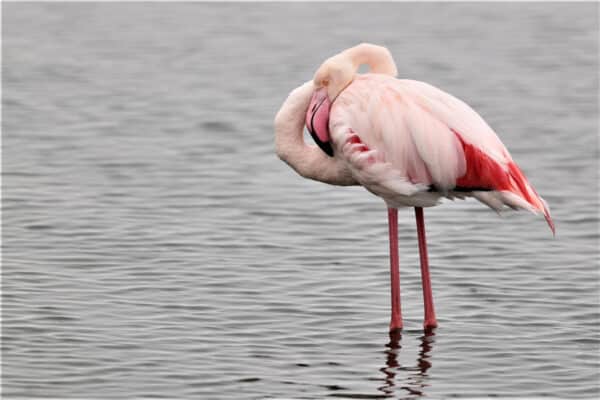
Greater Flamingo
Phoenicopterus roseus

Number Of Mature
Individuals (Regional)
8 000 – 35 000

Regional
Population Trend
Decreasing
2025
Regional Category
Near Threatened
Search by species
CONTENTSOverview
Names
|
IOC English Name: |
Greater Flamingo |
|
SA & IOC Scientific Name: |
Phoenicopterus roseus |
|
BirdLife International Taxonomy (scientific name): |
Phoenicopterus roseus |
|
Order: |
PHOENICOPTERIFORMES |
|
Family: |
Phoenicopteridae |
|
Species name author: |
Pallas 1811 |
|
Afrikaans: |
Grootflamink |
|
Sesotho (South Africa): |
mmamolalana-lomofubedu |
|
Sesotho (Lesotho): |
mmamolalana-lomofubedu |
|
Siswati: |
|
|
Zulu: |
ukholwasomkhulu |
Current Assessment Status
|
2025 Regional Category [Criteria] |
NT [A2bc+3c+4c; B2b(iii)+c(iv)] |
|
2024 Global Category [Criteria] |
LC (BirdLife International 2019) |
|
Population size (Regional) |
8000 – 35 000 (CWAC data from 2005 to 2020) |
|
Population size (Global) |
690 000 – 910 000 (Salvador et al. 2024) |
|
Distribution size (EOO) (Regional) km2 |
1 331 515 (Lee 2024) |
|
Distribution size (EOO) (Global) km2 |
61 400 000 (BirdLife International 2019) |
|
Distribution size (AOO) (Regional) km2 |
c. 2300 (Anderson unpubl data 2024) |
|
Generation time |
16.3 years (BirdLife International 2019) |
|
Status change reason |
No change |
|
Migrant (in the region) |
Nomad and partial migrant |
|
Regional endemic |
No |
Historic Listing Information
|
2000 Regional Status |
NT |
|
2015 Regional Status |
NT [A2bd] |
|
Status change reason (if applicable) |
No change |
|
2015 Population size (Regional) |
Unknown |
|
2015 Global Status |
LC |
Reason for Inclusion
Reason for Inclusion in the Assessment
Greater Flamingo Phoenicopterus roseus was assessed as Near Threatened in the previous regional assessment (Anderson 2015).
Category Justification
Category Justification
The regional population of Greater Flamingo is assessed as Near Threatened under Criteria A2bc+3c+4c and B2b(iii)+c(iv). Regionally, the species has a small Area of Occupancy (AOO) (Anderson unpubl data 2024) and there is no evidence of recent improvement in population status or reduction of threats (since 2015).
Analyses of the most recent Coordinated Waterbird Counts (CWAC) data indicates that the regional population is declining, with a decline of 23% over three generations (CWAC data, Anderson unpubl data 2024). The drivers of the decline are not well understood but are suspected to be due to habitat degradation and loss. It is uncertain whether the low recruitment rate of the Southern African population (Simmons 2015) can replenish the regional population. There is low confidence in the possibility of frequent mass influxes of individuals from extra-regional populations to rescue the regional population.
Establishing a single-value AOO estimate for Greater Flamingo is difficult as there are regular fluctuations in the AOO in response to site hydrological conditions and food abundance. Various AOO estimates exist for this species but vary greatly in their order of magnitude. Using the 2×2 km grid cell approach (IUCN guidelines), the updated minimum AOO is c. 2300 km2 (Anderson unpubl data 2024). This AOO is expected to continue to decline with habitat quality, leading to extreme fluctuations in the numbers of mature individuals. This AOO value considers the few known breeding sites and other critical wetlands used for nesting in the past, stopover sites and key feeding sites that support the largest subpopulations (Figure 1). These are assumed to form the smallest essential network of sites to support the regional population.
Other estimates for AOO are much greater (342 064 km2 Lee 2024) and (183 888 km2 BIRDIE 2024). Estimating AOO from citizen science data is difficult for this species given its saline wetland and specific breeding requirements. The CWAC datasets are incomplete; some key sites have not been counted since 2018.
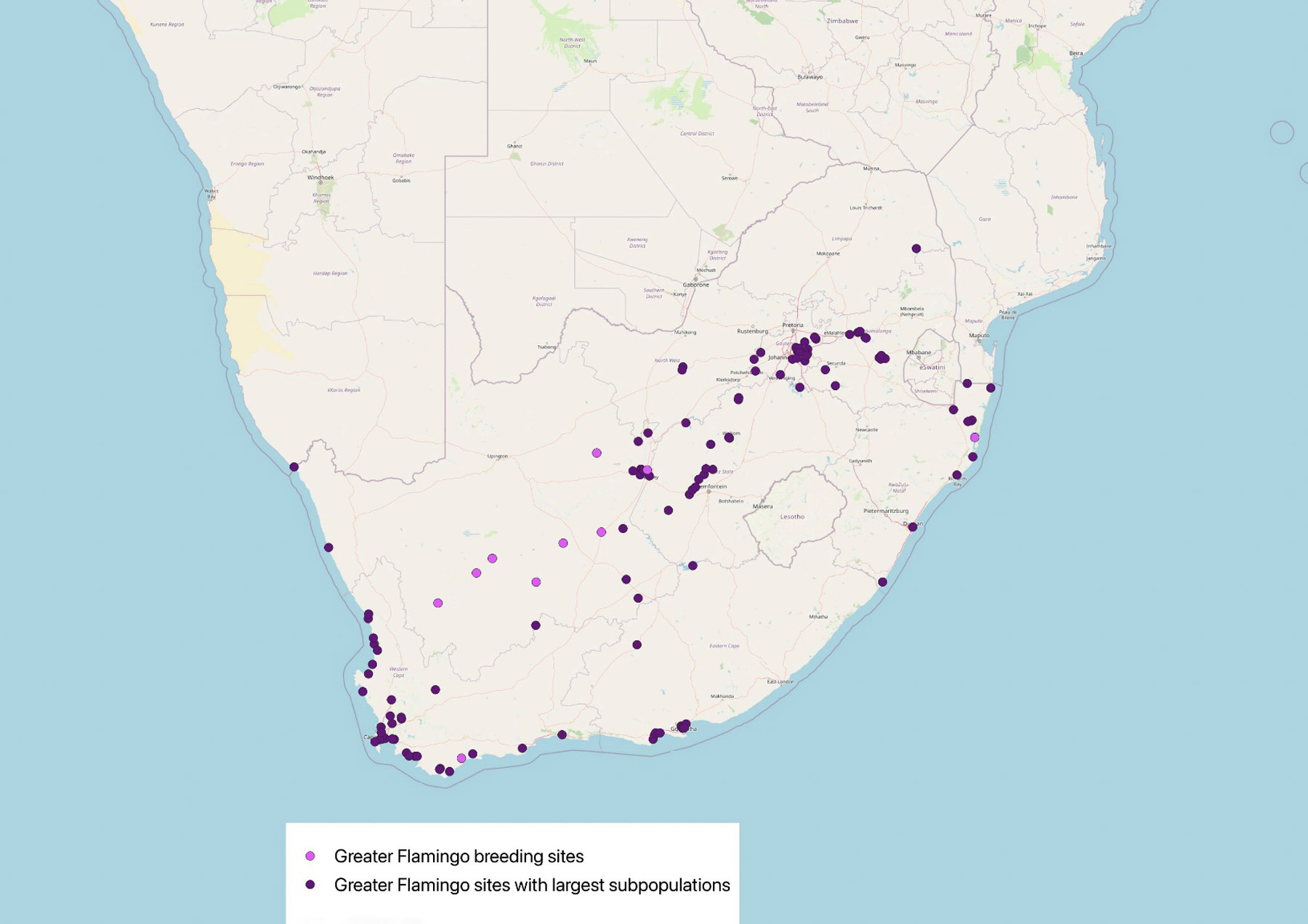
Figure 1: The locations of the known breeding sites and other critical wetlands used for nesting in the past, stopover sites and key feeding sites that support the largest subpopulations (Anderson unpubl data 2024).
As suggested by the IUCN guidelines, this assessment takes the low risk and precautionary approach and uses the smallest AOO essential for the survival of the regional population which for this species pertains to the critical nesting areas (IUCN Standards and Petitions Committee 2024, Guidelines for Using the IUCN Red List Categories and Criteria, v15.1). Greater Flamingos are mass colonial nesters with potentially irreplaceable nesting sites suitable for large breeding events. The smallest AOO considered essential for the survival of the regional population was therefore used for this assessment (Anderson unpubl data 2024). The species is considered Near Threatened due to its small AOO which is close to the <2000 km2 threshold for Vulnerable under Criterion B2.
Population Justification
The global population was recently estimated at 690 000 – 910 000 (Salvador et al. 2024). The African populations are suspected to be decreasing; in contrast to the increasing populations in Europe (BirdLife International 2019). Recent population estimates for Southern Africa are 100 000 – 160 000 (Dodman 2014, Nagy and Langendoen 2020).
The regional population is estimated at between 8 000 – 35 000 individuals based on CWAC data for a 16-year period between 2005-2020 when 220 sites were regularly counted (Anderson unpubl data 2024). It must be noted that no distinction is made in the counts between mature and immature individuals. Confidence in this estimate is therefore low.
The species experiences large fluctuations in both breeding events and non-breeding distribution and movements. An analysis of CWAC data indicates sporadic, extreme fluctuations in population sizes (Anderson unpubl data 2024). Dense concentrations at sites make counts for population estimates very challenging. The maximum number of individuals estimated at one site in South Africa was 29 068 at iSimangliso Wetland Park (in 2012); and the most recent total count at all sites was 8102 in 2024 (CWAC data).
Trend Justification
The global population is suspected to be increasing (BirdLife International 2019).
The population is suspected to be declining. The rate of the regional decline is suspected to be 23% over three generations; with a low confidence (Anderson unpubl data 2024). The rate of decline was calculated using a polynomial regression of the total CWAC counts for several years at 22 sites with the largest subpopulations. CWAC sites account for 28% of the sites where the species has been recorded according to BirdLasser data (Lee 2024). Thus, the rate of decline is based on counts at only a portion of sites they use but includes many sites known to support the largest subpopulations. The suspected decline, along with the continued decline in regional wetland habitat quality outside of formally protected areas with little chance of improvement in quality in the foreseeable future, indicates a suspected future decline in the regional population.
Trend analysis based on Southern African Bird Atlas Project (SABAP2) data revealed a significant increase in reporting rate in the last eight years; with a good confidence level (Lee 2024). The modelled predicted pentad range change over three generations (proxy for population size) indicates a moderate decline of 12.4% (Lee 2024). Confidence in these estimates is medium.
Biology & Ecology
Taxonomy
There are no notable issues (del Hoyo et al. 2014).
Identification
A very large, pale flamingo with a diagnostic dark bill tip. Plumage pale pink, upper wing coverts bright crimson, under wing coverts pink, and flight feathers black. Bill pale mauve, tipped black. Immature similar but with greyer body plumage and lower mandible. Juveniles are dark grey-brown (BirdLife International 2024a). It is difficult to distinguish between Greater and Lesser Flamingo chicks without examining their bill structure.
Distribution
The global extent of the species ranges from West Africa eastward throughout the Mediterranean to south-west and South Asia, and throughout sub-Saharan Africa (del Hoyo et al. 2014, BirdLife International 2019). The African core populations occur in Mauritania and Senegal (Johnson and Arengo 2001), East Africa (Nasirwa 1997) and Southern Africa (Simmons 2015, Figure 2).
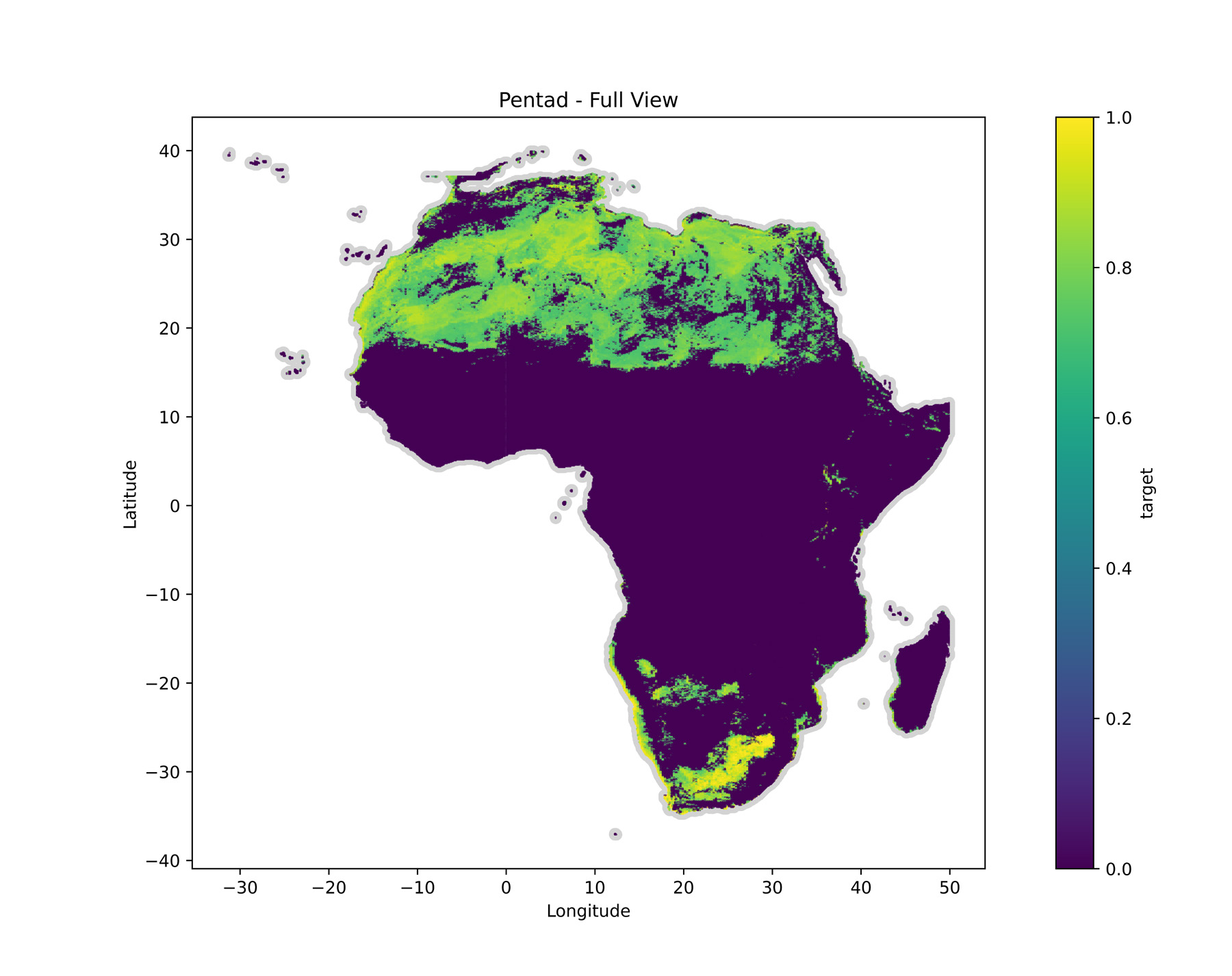
Figure 2: Africa Greater Flamingo probability distribution map, produced from BirdLasser location data at 2x2km grid scale, using iNaturalist and eBird as absence data only. This represents the predicted range for the 2016-2023 period. Map from Lee 2024.
The Greater Flamingo is fairly widespread in Southern Africa on the central plateau and along the west coast where it is frequently recorded at estuaries and other coastal wetlands, but rarer on the east coast (Williams and Velásquez 1997). Preferential flyways from Sua Pan (Botswana) are eastward towards Walvis Bay (Namibia) and southward to South Africa with occasional movements to Mozambique (McCulloch et al. 2003). It is suspected to be a partial migrant in southern Africa because they are known to be migratory in the northern extent of their distribution and are partial migrants in Europe (Béchet 2017). It is also suspected, but not yet proven, that there may be at least a limited interchange of individuals between the East and southern African populations which is evident in the Lesser Flamingo (Zaccara et al. 2011).
The species requires a network of saline wetlands, including recently flooded salt pans, river mouths, coastal bays, sewage works and impoundments during the non-breeding season (Anderson 2015, Simmons 2015). Significant numbers have been recorded at iSimangaliso Wetland Park (KBA44662, Ramsar site no. 345), the Berg River Estuary (KBA7158 Ramsar site no. 2466), West Coast National Park and Saldanha Bay islands (KBA7159, Ramsar site no. 398), Barberspan and Leeupan (KBA7094 Ramsar site no 35), Kamfers Dam (KBA7099) and Strandfontein Sewage Works (Anderson 2015, Marnewick et al. 2015, Figure 3). It is a vagrant to Eswatini and a potential vagrant to Lesotho (Anderson 2015).
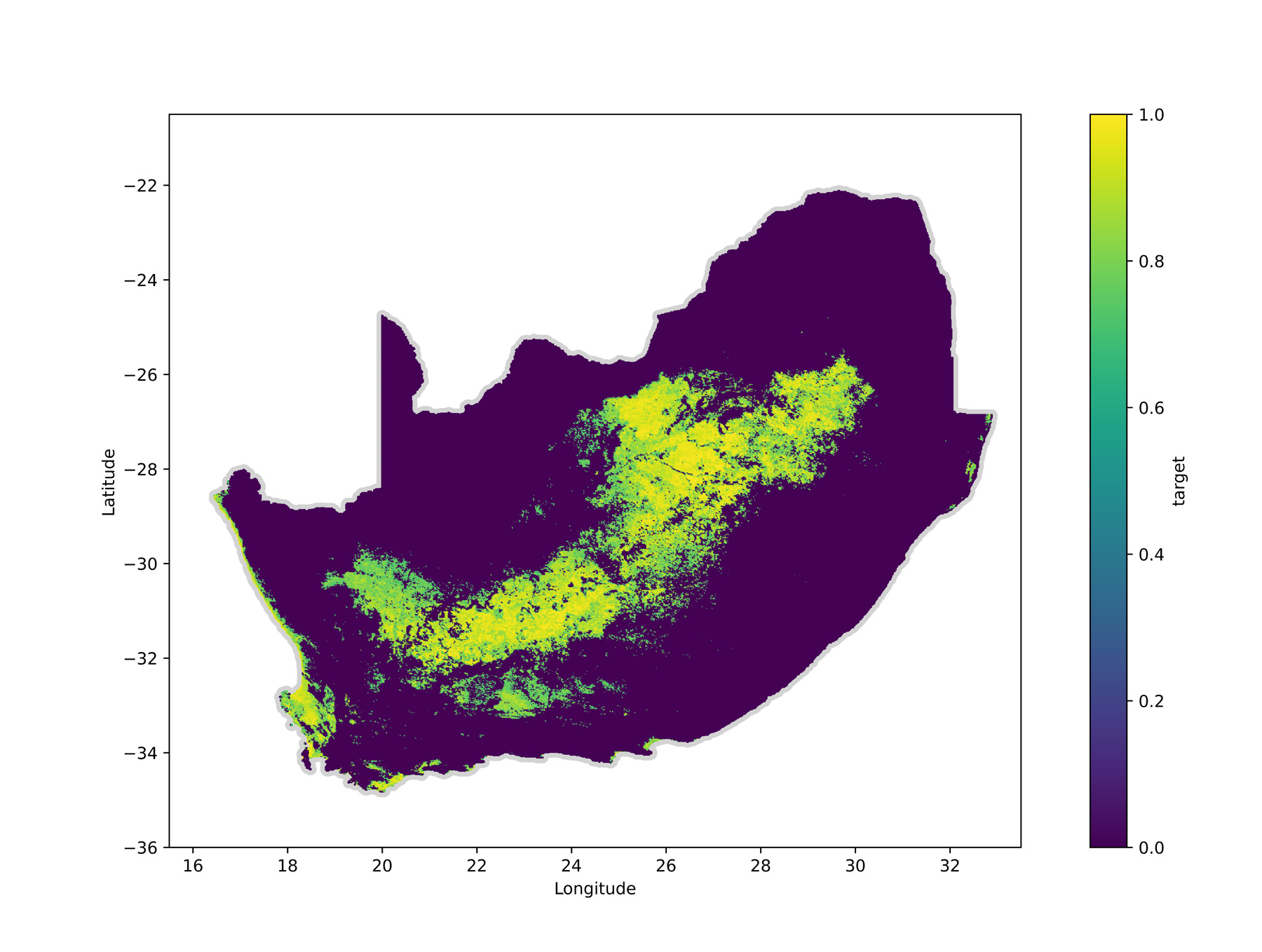
Figure 3: South Africa Greater Flamingo probability distribution map, produced from BirdLasser location data at 2x2km grid scale, using iNaturalist and eBird as absence data only. This represents the predicted range for the 2016-2023 period. Map from Lee 2024.
There is an observed decline in the habitat quality over four years at Kamfers Dam (Roos 2021), which at times supports close to 5000 Greater Flamingos (CWAC data). This site is no longer suitable for breeding events and is not likely to be restored in the foreseeable future.
Ecology
The species occurs on open, saline wetlands, such as salt pans, coastal lagoons and estuaries (Brown et al. 1982, BirdLife International 2024a). It occurs in large flocks, often with Lesser Flamingo Phoeniconaias minor (Anderson 2017). There are regular and seasonal, nocturnal movements in the region in response to resource fluxes and wetland hydrology; mainly by juveniles and to a lesser extent adults (McCulloch et al. 2003, Béchet 2017).
Greater Flamingos are bottom feeders, walking and filtering food from the mud, and forages both by day and night (Brown et al. 1982). It also swims and up-ends to reach the bottom, and stamp-feeds (Beauchamp 2017). It mainly takes crustaceans such as fairy shrimps (e.g. Artemia spp. and Branchinella spp.), brine flies (Ephydra spp.) and marine benthic organisms such as molluscs and diatoms. It also feeds on annelid worms, aquatic insect larvae and algae, and nibbles on seeds and stolons of marsh grasses and decaying leaves (del Hoyo et al. 2014). Survival rates and annual mortality have not yet been estimated for the regional population.
The species is a colonial nester, often mixed with Lesser Flamingo (Simmons 2005, Anderson 2015). Breeding is reliant on inaccessibility to predators, an abundance of food and freshwater (Krienitz et al. 2016). Egg-laying is induced by extensive flooding in summer and rainfall exceeding 440 mm; and sustained high water levels increase chances of fledgling survival (Cezilly et al. 1995, Simmons 1996, McCulloch et al. 2010). Therefore, breeding success is highly variable and breeding events sporadic. Nest turrets of varying height are constructed on mud and salt islands in flooded pans (Berry 1972). Chicks leave the nest at c. 6–10 days old and join in large crèches which often include Lesser Flamingo chicks (del Hoyo et al. 2014).
Sexual maturity is reached between 4–8 years old (Salvador et al. 2024). In Southern Africa, the largest breeding site is Sua Pan (McCulloch and Irvine 2004, McCulloch et al. 2010); providing most of the recruitment to the region (Anderson 2015). The other regular breeding site is Etosha Pan (Simmons 2015). Regional breeding sites include iSimangaliso Wetland Park, De Hoop Vlei (Salvador et al. 2024) and Kamfers Dam, where it successfully bred alongside Lesser Flamingos on an island at Kamfers Dam producing c. 800 chicks between 2009 and 2011 (Anderson et al. 2011, Anderson 2012, Anderson and Anderson 2023). At least 19 breeding attempts at other sites in South Africa have been unsuccessful (Brooke 1984, Anderson 2000, Anderson and Anderson 2010). The most recent breeding events occurred near Brandvlei in 2022 and 2023 but only produced several hundred chicks (E. van der Westhuizen-Coetzer pers comm).
It is suspected that if there are few large breeding events in the region in future, the regional population may become a sink for the Southern African population. If the recruitment rates of the Namibian and Botswana populations remain too low, the Southern African population will also decline further and may not be able to rescue the regional population. There may be movements from other extra-regional populations in Africa, but these are large distances away and suitable stopover sites would be required. Therefore, there may be the potential for very infrequent rescues from an extra-regional population. However, there remains uncertainty and low confidence in the feasibility of timeous rescue effects.
Threats & Conservation
Threats
The primary concern for the continued survival of the species is the loss or degradation of its breeding and feeding habitats through altered hydrology, wetland pollution, extraction of salt, the disruption of its breeding colonies by human activities, disturbance by low-flying aircraft, collisions with fences and utility lines, and climate change (Brooke 1984, Simmons 1996, Anderson and Anderson 2017, van Deventer et al. 2019).
Only an estimated 13% of Greater Flamingo are recorded in formally protected areas, with 8% in partially protected areas and 79% in unprotected areas (Lee 2024). The majority (68%) of South Africa’s inland wetlands in South Africa are in a poor ecological condition (van Deventer et al. 2019). Nearly 80% of South Africa’s inland wetlands (such as Kamfers Dam) are threatened and unprotected; with increasing anthropogenic pressures (van Deventer et al. 2019, Roos 2021). Small, shallow inland wetlands are expected to have little resilience against both climate change and current pressures, such as water abstraction, water pollution and sedimentation (van Deventer et al. 2019). These include many of the Greater Flamingo feeding grounds.
Wetland loss or degradation can have a significant impact on partial migrants, driving alterations in migratory routes, stopover locations and the duration of migration, or encouraging populations to become more resident (Kipperman et al. 2024). There may be a reduction in resources and associated negative impacts on their health. Fewer wetlands with resources result in increased density and competition for resources, and increased direct contact, which in turn can increase risks of disease (Kipperman et al. 2024).
Anthropogenic disturbance leads to abandonment of nesting sites. Depredation by stray domestic dogs and hunting are continuous threats at Kamfers Dam (Anderson and Anderson 2017), and intrusions by dogs into breeding colonies cause breeding abandonment. Continual proposals for housing developments on adjacent properties to Kamfers Dam are a potential threat to the dam’s flamingos. Flamingo collisions with powerlines and telephone lines near wetlands continues across the region (Jenkins et al. 2010).
Drones are being used more recently for aerial photography and filming, and these could cause significant disturbance at breeding sites if they are used frequently at low levels. Such disturbance has been observed at Kamfers Dam (Anderson and Anderson 2017). The potential impact of solar facilities perceived as wetlands by flamingos is yet to be determined.
Climate change is an increasing concern (BirdLife International 2024b). Dramatic changes in distribution are expected over the next few decades, with a higher impact of climate change on wetlands along the borders of their distribution (Delfino 2023). The predictions for Sua Pan and Etosha Pan are that increased drought intensity or frequency will reduce the breeding window periods for the species and likely in the region too (McCulloch et al. 2010, Simmons et al. 2004, Anderson and Anderson 2017). Climate change will undoubtedly affect prey density and therefore flamingo foraging performance and health. Severe cold spells caused the death of juvenile flamingos at Kamfers Dam in July 2020, likely from starvation due to lower prey resources and higher energetic requirements (E. van der Westhuizen-Coetzer pers obs). The same cause of mortalities has been reported for this species in France (Deville et al. 2014).
The avian pox virus (subclade A3) was documented in Lesser Flamingos at Kamfers Dam (Zimmermann et al. 2011), and its spread could be exacerbated by deteriorating water quality and proliferation of biting insects at wetlands frequented by flamingos. It is not known whether the more virulent subclade B2 of the avian pox virus, previously only recorded in captive birds and rescued Lesser Flamingo chicks in a few rehabilitation centres, was introduced into the flamingo population at Kamfers Dam through repatriated immatures in 2019.
Highly pathogenic avian influenza (HPAI) has been detected in this species in eastern Europe and Egypt (Karamendin et al. 2020, Salvador et al. 2024) and it is not known whether it is present in flamingos in the region.
Avian botulism Clostridium botulinum killed hundreds of flamingos and other waterbirds at Kamfers Dam in 2013 (Diamond Fields Advertiser 2013a, 2013b). Aeromonas hydrophila bacteria caused the death of many sympatric waterbirds, but not flamingos, at Kamfers Dam in 2021 (E. van der Westhuizen-Coetzer pers comm). High levels of iron lead to immunosuppression and malnutrition which likely made them more susceptible to bacteria. There is the potential that this bacterium could also affect flamingos should they be immunocompromised.
Chemical toxicants, biological toxins, and pollutants are considered a highly important health issue for 62% of avian species groups (Kipperman et al. 2024). Persistent Organic Pollutants (POPs) may be affecting flamingo health and breeding, but not much is known about sensitivity levels of flamingos, and the intensity of pollution of many of their habitats. A study at Kamfers Dam has found DDT and its metabolite 2,4′-DDE and Polychlorinated Biphenyls in Lesser Flamingos, and it is therefore also likely to be in Greater Flamingo individuals (Hill et al. 2013). The effects of a chronic low dose exposure on such long-lived birds, let alone a mixture of POPs, are unknown. At higher levels DDT can cause eggshell thinning which could be very detrimental to the flamingos since they breed so infrequently. The possible negative effects of the ingestion of heavy metals, such as lead, copper and zinc present in wetlands on the region’s flamingos are not known. Possible impacts from pharmaceutical pollution are unknown.
Fatal flamingo collisions with the railway overhead electric lines at Kamfers Dam have been recorded since 2010. The first bird flight diverters were fitted in 2012, which were ineffective. OWL devices with led lights and solar units, which are more effective at preventing collisions at night, were fitted to a section of powerlines in 2020 (Anderson and Anderson 2023). Their efficacy is yet to be determined.
Conservation Measures Underway
The South Africa Flamingo Research and Conservation Group (SAFRCG) was established by BirdLife South Africa in 2021, replacing the Save the Flamingo Association which achieved some success in conserving Kamfers Dam between 2007 and 2020. The SAFRCG is currently monitoring the water quality and algal concentration of Kamfers Dam and working with the African-Eurasian Migratory Waterbirds (AEWA) and UN Environment Programme’s Convention on Migratory Species (CMS) partners. A web cam was installed by Africam (2021) near the shoreline breeding site at Kamfers Dam in September 2021 to live stream flamingo activities and raise awareness.
Outside of the region, the breeding area at Sua Pan was listed as a Flamingo sanctuary in 2009, and a management plan for this site has been developed (Kootsositse 2012).
Conservation Measures Proposed
South Africa needs to implement the AEWA (2018) Plan for Action for Africa 2019-2027. The AEWA conservation brief (AEWA 2022) which provides actions to conserve Lesser Flamingo will also benefit the Greater Flamingo. These actions include:
- Ensuring that all breeding sites and key non-breeding sites are restored or maintained in good ecological condition;
- Ensuring that key sites are not disturbed by human activity;
- Reducing the effects on regional populations of toxicological and/or infectious diseases;
- Minimising collisions with man-made structures;
- Systematically collect data on breeding and feeding habitat requirements including the role of rainfall;
- Regular monitoring of numbers at key sites to determine fluctuations and trends;
- Help local communities to develop alternative livelihood practices to reduce disturbance; and
- Filling knowledge gaps of population, ecology and impacts of threats.
The AEWA Resolution 8.15 addressing causes of waterbird mortality requires the South African government to work with stakeholders to establish HPAI contingency plans nationally and at sites of significant importance to waterbirds, and to implement these, giving priority to surveillance and rapid testing for HPAI of dead birds to inform site-related management and biosecurity measures (CMS FAO 2023).
The Kamfers Dam breeding island should be reconstructed and expanded, and this wetland should be formally protected. A comprehensive management plan for Kamfers Dam must still be developed, especially to ensure that water quality and human disturbance issues are addressed, as well as securing long-term landowner tenure and commitment to the protection of flamingos.
All the overhead cables at wetlands should be marked with suitable devices. Disturbance by low-flying aircraft and drones must be prevented through legislation, zoning and enforcement. Pollution guidelines are needed and enforced for all pollutants.
Research Priorities and Questions
The following research priorities and questions are recommended:
- Accurate estimates of the population size in South Africa. This can be enhanced through the use of machine learning methods to determine flamingo numbers, such as the method used by Colyn et al. (2024).
- Determine more accurate population sizes and trends by developing a monitoring strategy and protocols.
- Determine survival probability estimates in the regional population.
- Simultaneous population counts/estimates, at least every five years, across all African populations need to be undertaken for more accurate population numbers and to better understand fluctuations.
- Perform further satellite tracking to assess recent movements between southern and East Africa and get a better estimate of frequency and possibly migration numbers.
- Conduct a PVA once more accurate demographic data is available.
- Model long term effects of climate change and diseases.
- Investigate whether regional Greater Flamingo populations have HPAI and avian poxvirus.
- Investigate the effects of chemical toxicants, POPs, pharmaceutical pollutants, biological toxins and heavy metals on flamingos in the region.
Contributors & References
Assessor/s
Tania A. Anderson
Reviewer/s
Douglas M. Harebottle
References
Africam. 2021. Livestream flamingo activities at Kamfers Dam. Available: www.africam.com/wildlife/stream/flamingos. [Accessed on May 2024].
Agreement on the Conservation of African-Eurasian Migratory Waterbirds (AEWA). 2018. AEWA Plan of Action for Africa 2019-2027. UNEP/AEWA Secretariat. Available: www.unep-aewa.org/sites/default/files/uploads/PoAA%202019_2027_web_en_200618 _fin.pdf. [Accessed May 2024].
AEWA. 2022. Agreement on the Conservation of African-Eurasian Migratory Waterbirds (AEWA) – Agreement text and annexes. As amended at the 8th Session of the Meeting of the Parties to AEWA, 26–30 September 2022, Budapest, Hungary. UNEP/AEWA Secretariat.
Anderson MD. 2000. The status of flamingos in the Northern Cape Province, South Africa. Ostrich 71: 430–434.
Anderson MD. 2012. Kimberley’s pink gems. Lanioturdus 45(5): 8.
Anderson M. 2015. Greater Flamingo. In: Taylor MR, Peacock F, Wanless RM (eds), The 2015 Eskom red data book of birds of South Africa, Lesotho and Swaziland. Johannesburg, South Africa: BirdLife South Africa. pp 302–304.
Anderson MD, Anderson TA. 2010. A breeding island for Lesser Flamingos Phoeniconaias minor at Kamfers Dam, Kimberley, South Africa. Bulletin of the African Bird Club 17: 225– 228.
Anderson MD, Anderson TA, McCulloch GP. 2011. Breeding and ringing reports: Greater Flamingo and Lesser Flamingo. Flamingo, Bulletin of the Flamingo Specialist Group 18: 1 & 3.
Anderson TA, Anderson MD. 2017. Man’s impacts on flamingos. In: Anderson MJ (ed), Flamingos: Behaviour, Biology and Relationship with Humans. Nova Publishers. pp 199–226.
Anderson TA, Anderson MD. 2023. An Annotated Checklist of the Birds of the Kimberley Region. Available: www.sabap2.birdmap.africa/docs/2023_Annotated_Checklist
_Kimberley.pdf.
Beauchamp G. 2017. Diet and foraging behaviour. In: Anderson MJ (ed), Flamingos: Behaviour, Biology and Relationship with Humans. Nova Publishers. pp 199–226.
Béchet A. 2017. Flight, navigation, dispersal, and migratory behavior. In: Anderson MJ (ed), Flamingos: Behaviour, Biology and Relationship with Humans. Nova Publishers. pp 199–226.
Berry HH. 1972. Flamingo breeding on the Etosha Pan, South West Africa, during 1971. Madoqua 5: 5–31.
BIRDIE vs 1.0.0. 2024. Greater Flamingo. Available: www.biodiversityadvisor.sanbi.org. [Accessed May 2024].
BirdLife International. 2019. Phoenicopterus roseus (amended version of 2018 assessment). The IUCN Red List of Threatened Species 2019: e.T22697360A155527405. http://dx.doi.org/10.2305/IUCN.UK.2018-2.RLTS.T22697360A155527405.en
BirdLife International. 2024a. Species factsheet: Phoenicopterus roseus. Available: www.datazone.birdlife.org/species/factsheet/greater-flamingo-phoenicopterus-roseus. [Accessed May 2024]
BirdLife International. 2024b. Climate change. Available: www.birdlife.org/climate-change. [Accessed May 2024]
Brooke RK 1984. The South African red data book – birds. South African Scientific Programme Report 97. Pretoria, South Africa: CSIR.
Brown LH, Urban EK, Newman K. 1982. The Birds of Africa, Volume I. London: Academic Press.
Cezilly F, Boy V, Green RE, Hirons GJM, Johnson AR. 1995. Inter-annual variation in Greater Flamingo breeding success in relation to water levels. Ecology 76: 20–26.
CMS FAO Co-convened Scientific Task Force on Avian Influenza and Wild Birds. 2023. Scientific Task Force on Avian Influenza and Wild Birds statement on H5N1 high pathogenicity avian influenza in wild birds – Unprecedented conservation impacts and urgent needs. Available at www.cms.int/en/workinggroup/scientific-task-force-avian-influenza-and-wild-birds. [Accessed on May 2024]
Colyn R, Anderson T, Anderson M, Retief E, Van der Westhuizen-Coetzer E, Smit-Robinson H. 2024. The use of image classification to estimate flamingo abundance from aerial, drone and satellite imagery. Ostrich 1–12.
Delfino HC. 2023. A fragile future for pink birds: habitat suitability models predict a high impact of climate change on the future distribution of flamingos. Emu – Austral Ornithology 123(4): 310–324.
del Hoyo J, Collar N, Garcia EFJ. 2014. Greater Flamingo (Phoenicopterus roseus). In: del Hoyo J, Elliott A, Sargatal J, Christie DA, de Juan E (eds), Handbook of the Birds of the World Alive. Barcelona: Lynx Edicions. Available: www.hbw.com/node/467129. [Accessed May 2024].
Deville AS, Labaude A, Robin J, Béchet A, Gauthier-Clerc M, Porter W, Fitzpatrick M, Mathewson P, Grémillet D. 2014. Impacts of extreme climatic events on the energetics of long-lived vertebrates: the case of the greater flamingo facing cold spells in the Camargue. Journal of Experimental Biology 217: 3700–3707.
Diamond Fields Advertiser. 2013a. Outbreak – Botulism is one of the most dangerous toxins known to man. Diamond Fields Advertiser 4 December: 1–3.
Diamond Fields Advertiser. 2013b. Expert confirms Kamfers Dam birds’ cause of death. Diamond Fields Advertiser 13 December 2013: 11.
Dodman T. 2014. Status, estimates and trends of waterbird populations in Africa: AEWA-listed African populations (CSR6 African populations). Wetlands International.
Hill LM, Bowerman WW, Roos JC, Bridges WC, Anderson MD. 2013. Effects of water quality changes on phytoplankton and lesser flamingo Phoeniconaias minor populations at Kamfers Dam, a saline wetland near Kimberley, South Africa. African Journal of Aquatic Science 38: 287–294.
IUCN Standards and Petitions Committee. 2024. Guidelines for Using the IUCN Red List Categories and Criteria. Version 16. Prepared by the Standards and Petitions Committee. Available: https://www.iucnredlist.org/documents/RedListGuidelines.pdf. [Accessed on May 2024].
Jenkins AR, Smallie JJ, Diamond M. 2010. Avian collisions with power lines: a global review of causes and mitigation with a South African perspective. Bird Conservation International 20(3): 263–278.
Johnson AR, Arengo F (eds). 2001. Flamingo Specialist Group Newsletter 10. Camargue, France: Tour du Valat.
Karamendin K, Kydyrmanov A, Kasymbekov Y, Daulbayeva K, Khan E, Seidalina A, Sayatova M. 2020. A Highly Pathogenic H5N1 Influenza A Virus Isolated from a Flamingo on the Caspian Sea Shore. Microbiology Resource Announcements 9(39). Available: www.doi.org/10.1128/MRA.00508-20. [Accessed May 2024].
Kipperman MJ, Beckmann KM, Anderson NE, Meredith AL, Cromie RL. 2024. Migratory Species and Health: a review of migration and wildlife disease dynamics, and health of migratory species, within the context of One Health. University of Edinburgh report to the Secretariat of the Convention on the Conservation of Migratory Species of Wild Animals. Available: www.cms.int/sites/default/files/document/cms_cop14_inf.30.4.3_e_0.pdf. [Accessed May 2024].
Kootsositse MV. 2012. Restoring a disappearing site in Botswana. BirdLife Africa Newsletter 13(5): 30.
Krienitz L, Krienitz D, Dadheech P, Hübener T, Kotut K, Luo W, Teubner K, Versfeld W. 2016. Food algae for Lesser Flamingos: a stocktaking. Hydrobiologia. 775: 21–50. Available: www.link.springer.com/article/10.1007/s10750-016-2706-x. [Accessed May 2024].
Lee ATK. 2024. Regional Red Data Book of the Birds of South Africa, Lesotho and Eswatini: SABAP2 synthesis and supporting information and graphics for Greater Flamingo. Unpublished data report. Johannesburg: BirdLife South Africa.
Marnewick MD, Retief EF, Theron NT, Wright DR, Anderson TA. 2015. Important Bird and Biodiversity Areas of South Africa. Johannesburg: BirdLife South Africa.
McCulloch GP, Aebischer A, Irvine K. 2003. Satellite tracking of flamingos in southern Africa: the importance of small wetlands for management and conservation. Oryx 37: 480– 483.
McCulloch GP, Hancock P, Soopu J, Rutina L. 2010. Makgadikgadi Pans Important Bird Area monitoring report 2009. Babbler Special Supplement No.3.
McCulloch GP, Irvine K. 2004. Breeding of Greater and Lesser Flamingos at Sua Pan, Botswana, 1998-2001. Ostrich 75: 236–242.
Nagy S, Langendoen T. 2020. Flyway trend analyses based on data from the African-Eurasian Waterbird Census from the period of 1967-2018. Wageningen, The Netherlands: Wetlands International, Available: www.iwc.test.wetlands.org/ index.php/aewatrends8. [Accessed May 2024].
Nasirwa O. 1997. The status of Lesser Flamingos in Kenya. In: Howard G (ed), Conservation of the Lesser Flamingo in Eastern Africa and beyond. Nairobi, Kenya: IUCN. pp 22–23.
Roos JC. 2021. Kamfers Dam water quality summary report 2019-2021. Unpublished report.
Salvador A, Rendón MA, Amat JA, Rendón-Martos M. 2024. Greater Flamingo (Phoenicopterus roseus). In: Billerman SM, Keeney BK (eds), Birds of the World version 3.0. Ithaca, NY, USA: Cornell Lab of Ornithology. Available: https://doi.org/10.2173/ bow.grefla3.03. [Accessed June 2024].
Simmons RE. 1996. Population declines, viable breeding areas, and management options for flamingos in southern Africa. Conservation Biology 10: 504–514.
Simmons RE. 2005. Greater Flamingo. In: Hockey PAR, Dean WRJ, Ryan PG (eds), Roberts – Birds of Southern Africa, 7th edn. Cape Town, South Africa: The Trustees of the John Voelcker Bird Book Fund. pp 605–606.
Simmons RE. 2015. Greater Flamingo Phoenicopterus roseus. In: Simmons RE, Brown CJ, Kemper J (eds), Birds to watch in Namibia: red, rare and endemic species. Ministry of Environment and Tourism and Namibia Nature Foundation, Windhoek. pp 167–169.
Simmons RE, Barnard PE, Dean WRJ, Midgley GF, Thuiller W, Hughes G. 2004. Climate change and birds: perspectives and prospects from southern Africa. Ostrich 75: 295–308.
van Deventer H, Smith-Adao L, Collins NB, Grenfell M, Grundling A, Grundling PL, Impson D, Job N, Lötter M, Ollis D, Petersen C, Scherman P, Sieben E, Snaddon K, Tererai F, Van der Colff D. 2019. South African National Biodiversity Assessment 2018: Technical Report. Volume 2b: Inland Aquatic (Freshwater) Realm. Pretoria: CSIR report number CSIR/NRE/ECOS/IR/2019/0004/A. South African National Biodiversity Institute.
Williams AJ, Velásquez C. 1997. Greater Flamingo Phoenicopterus ruber. In: Harrison JA, Allan DG, Underhill LG, Herremans M, Tree AJ, Parker V, Brown CJ (eds), The atlas of southern African birds Vol I: Non-passerines. Johannesburg, South Africa. pp 112–113.
Zaccara S, Crosa G, Vanetti I, Binelli G, Brooks C, McCulloch GP, Harper DM. 2011. Lesser flamingo (Phoeniconaias minor) as a nomadic species in African shallow alkaline lakes and pans: genetic structure and future perspectives. Ostrich 82: 95–100.
Zimmermann D, Anderson MD, Lane E, Van Wilpe E, Carulei O, Douglass N, Williamson AL, Kotze A. 2011. Avian poxvirus epizootic in a breeding population of Lesser Flamingos (Phoenicopterus minor) at Kamfers Dam, Kimberley, South Africa. Journal of Wildlife Diseases 47: 989–993.
Citation
Anderson TA 2025. Greater Flamingo. In: Lee ATK, Rose S, Banda S, Bezeng SB, Maphalala MI, Maphisa DH, Smit-Robinson H (eds), The 2025 Red Data Book of Birds of South Africa, Lesotho and Eswatini. Johannesburg, South Africa: BirdLife South Africa. Available at: https://www.birdlife.org.za/red-list/greater-flamingo/
Our generous sponsors


