


Great Egret
Ardea alba

Number Of Mature
Individuals (Regional)
<10 000

Regional
Population Trend
Decreasing
2025
Regional Category
Near Threatened
Search by species
CONTENTSOverview
Names
|
IOC English Name: |
Great Egret |
|
SA & IOC Scientific Name: |
Ardea alba |
|
BirdLife International Taxonomy (scientific name): |
Ardea alba |
|
Order: |
PELECANIFORMES |
|
Family: |
Ardeidae |
|
Species name author: |
Linnaeus 1758 |
|
Afrikaans: |
Grootwitreier |
|
Sesotho (South Africa): |
Leholotsiane le leholo |
|
Sesotho (Lesotho): |
|
|
Siswati: |
|
|
Zulu: |
ingeklenkulu |
Current Assessment Status
|
2025 Regional Category [Criteria] |
NT [A2c] |
|
2024 Global Category [Criteria] |
LC (BirdLife International 2019) |
|
Population size (Regional) |
Unknown |
|
Population size (Global) |
590 000 – 2 200 000 (BirdLife International 2019) |
|
Distribution size (EOO) (Regional) km2 |
148 962 (Lee 2024) |
|
Distribution size (EOO) (Global) km2 |
346 000 000 (BirdLife International 2019) |
|
Distribution size (AOO) (Regional) km2 |
4167 (Lee 2024) |
|
Generation time |
9.1 years (BirdLife International 2019) |
|
Status change reason |
Genuine change in status |
|
Migrant (in the region) |
Nomadic resident population and migratory non-breeding population |
|
Regional endemic |
No |
Historic Listing Information
|
2000 Regional Status |
Not Evaluated |
|
2015 Regional Status |
Not Evaluated |
|
Status change reason (if applicable) |
Not applicable |
|
2015 Population size (Regional) |
Unknown |
|
2015 Global Status |
LC |
Reason for Inclusion
Reason for Inclusion in the Assessment
Great Egret Ardea alba melanorhynchos was not previously assessed and presumed to be Least Concern. Although the regional population is likely 5% of the subspecies A. a. melanorhynchos occur in the region. Preliminary screening of Southern African Bird Atlas Project (SABAP2) and Coordinated Waterbird Counts (CWAC) data indicated a significant decline in Great Egret per year (Lee 2024).
Category Justification
Category Justification
All available evidence suggests that the regional Great Egret population is undergoing a significant decline, meeting the threshold for Vulnerable under Criterion A2. Furthermore, current data indicate that the regional population may number <10 000 mature individuals, potentially meeting the threshold for Vulnerable under Criterion C1 as well. No other IUCN criteria (B, D, E) apply. However, a proportion of this population is composed of migratory, non-breeding birds that move into the region from East and Central Africa, where larger populations still occur. This likely facilitates an ongoing “rescue effect,” whereby individuals from outside the region can bolster local numbers. In accordance with IUCN Regional Red List Guidelines, this potential rescue effect merits a downlisting from Vulnerable to Near Threatened [A2c].
Population Justification
The global population of the Great Egret is estimated to be 590 000 – 2 200 000 mature individuals (BirdLife International 2019). The large difference between the lower and upper estimates is indicative of the poor quality of the population data. Most of the data is classified as ‘Best Guess’ by Wetland International (2024). Wetlands International (2024) estimate the sub-Saharan African and Madagascar population of Great Egret to be 100 000 – 500 000 individuals (c. 66 000 – 330 000 mature individuals).
Within the region Great Egret are poorly studied. Data from the CWAC indicate that the species was counted at 339 sites, although counts were carried out at irregular frequencies (CWAC unpubl data). An analysis of CWAC records (n = 8828) highlights marked seasonal variation. Overall, mean counts across all sites and seasons total 1717 individuals, with a maximum count of 6633. However, winter data show a mean of 1002 individuals (max 3226), whereas summer counts average 1582 individuals (max 5239). The higher summer figures likely reflect an influx of non-breeding migrants from further north, leading to a larger seasonal population. Consequently, the core resident population in winter may be relatively small. Owing to sparse data and the confounding effects of seasonal movements, the regional population of Great Egret remains unknown, but it may <10 000 individuals.
Trend Justification
Globally, the population trend for Great Egret remains uncertain (BirdLife International 2019, Wetlands International 2024), likely due to limited data at the subpopulation and regional levels. Wetlands International (2024), using data collected between 2008 and 2017, states with reasonable certainty that the global population is decreasing. In contrast, Nagy and Langendoen (2020) report that the sub-Saharan African and Madagascar population shows a moderate decrease over 10 years, but stabilises when measured across three generations (2008-2017).
At a regional scale, three main datasets were used to determine population trends. Firstly, reporting rates from SABAP2 served as a proxy for population size on the assumption that greater abundance leads to higher reporting rates. A model controlling for season, BirdLasser effects, completeness of habitat surveys, sampling hours, and random effects (pentad or observer) showed a significant decrease in the probability of reporting with high confidence (Lee 2024). Secondly, predicted changes in the Area of Occupancy (AOO) derived from SABAP2 data over the past three generations indicated a 21.4% decline when comparing the ‘early’ period (2007-2015) with the ‘late’ period (2016-2023) (Lee 2024). This change in AOO is used as a proxy for population trend. Additional modelling that incorporated annual habitat availability between 2008 and 2022 (BIRDIE 2024) estimated a 42.6% decline in AOO.
A third line of evidence comes from state-space models applied to population counts at 41 wetlands for which sufficient data were available, predicting a 1.3% decline over 26 years. Although this is a much smaller decline than indicated by the AOO analyses, it reflects only 41 of the 333 wetlands where Great Egrets have been recorded. As a highly mobile species, the Great Egret may be present at sites not included in these models, and some important wetlands, such as Allemanskraal Dam (likely holding the second-largest population based on unpubl CWAC data), did not meet data requirements and were thus excluded. St Lucia, which regularly supports the largest regional population, was, however, included (BIRDIE 2024). An analysis including these sites suggests estimated percent change from 1998 to 2023 as -36% (CI: -61%, 6.2%).
Overall, all evidence indicates that the regional population has declined, although estimates of the magnitude of decline range widely from 1.3% to 42.6%. Discrepancies arise from differences in sample sizes, the extent of coverage, and the inclusion or exclusion of high-importance sites. Determining population trends is further complicated because the regional population consists of both a resident breeding population and a migratory, non-breeding component from East and Central Africa (Martin 1997, Taylor et al. 1999). Inter-annual fluctuations in numbers at various wetlands may be due to shifting local conditions and to favourable conditions in areas north of the region for the migratory portion of the population. The dynamic models did not account for factors outside the region, so the 42.6% figure may be inflated. Meanwhile, the static model compared two periods of nine years each, potentially smoothing out some of this annual variability, and thus a 21.4% decline in AOO may provide a more representative snapshot of the overall regional trend.
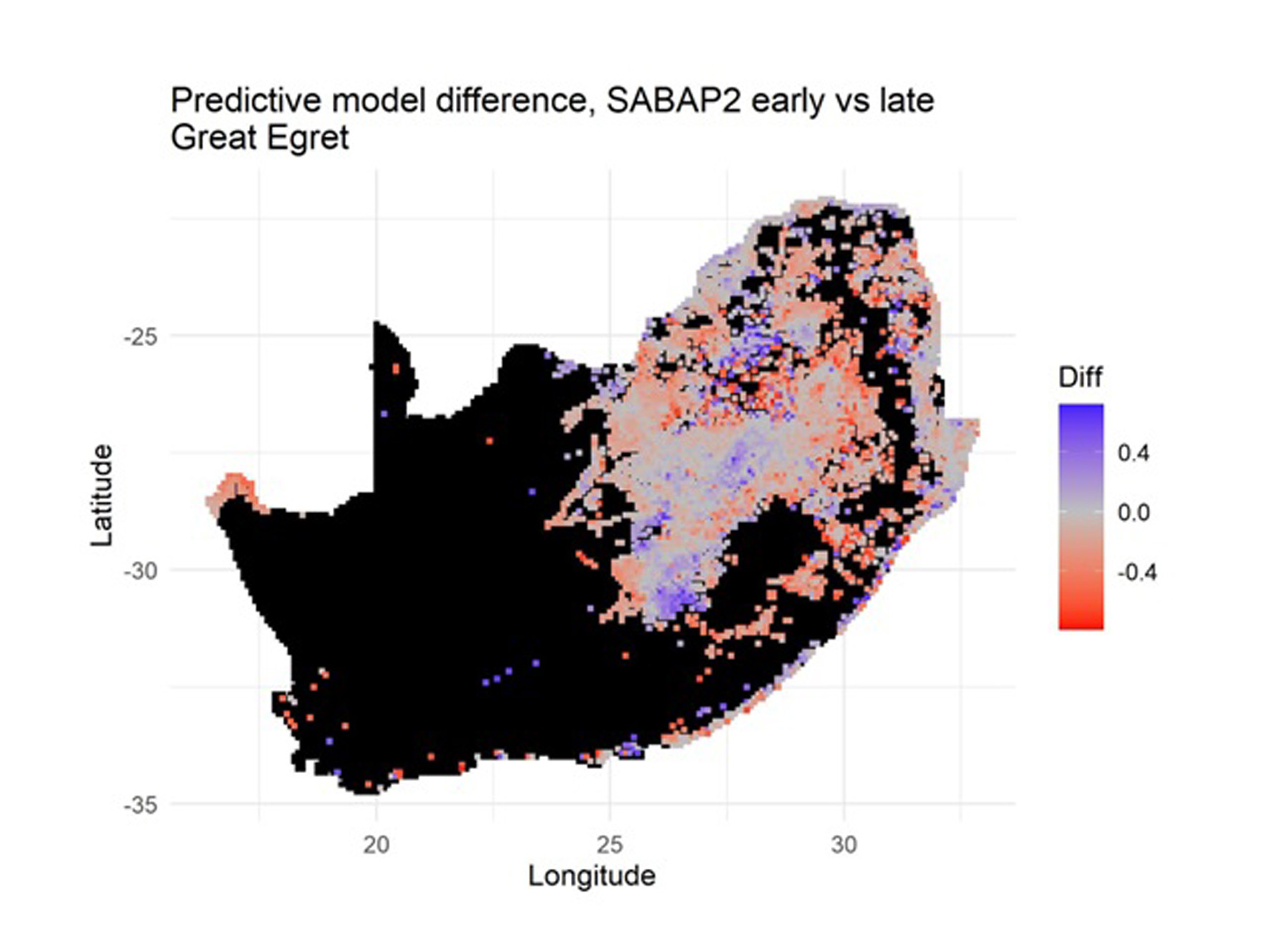
Figure 1: Predictive occurrence model results comparing data from 2007-2015 and 2016-2023. Red indicates a lower probability of recording for the latter period while Blue indicates a higher recording (from Lee 2024).
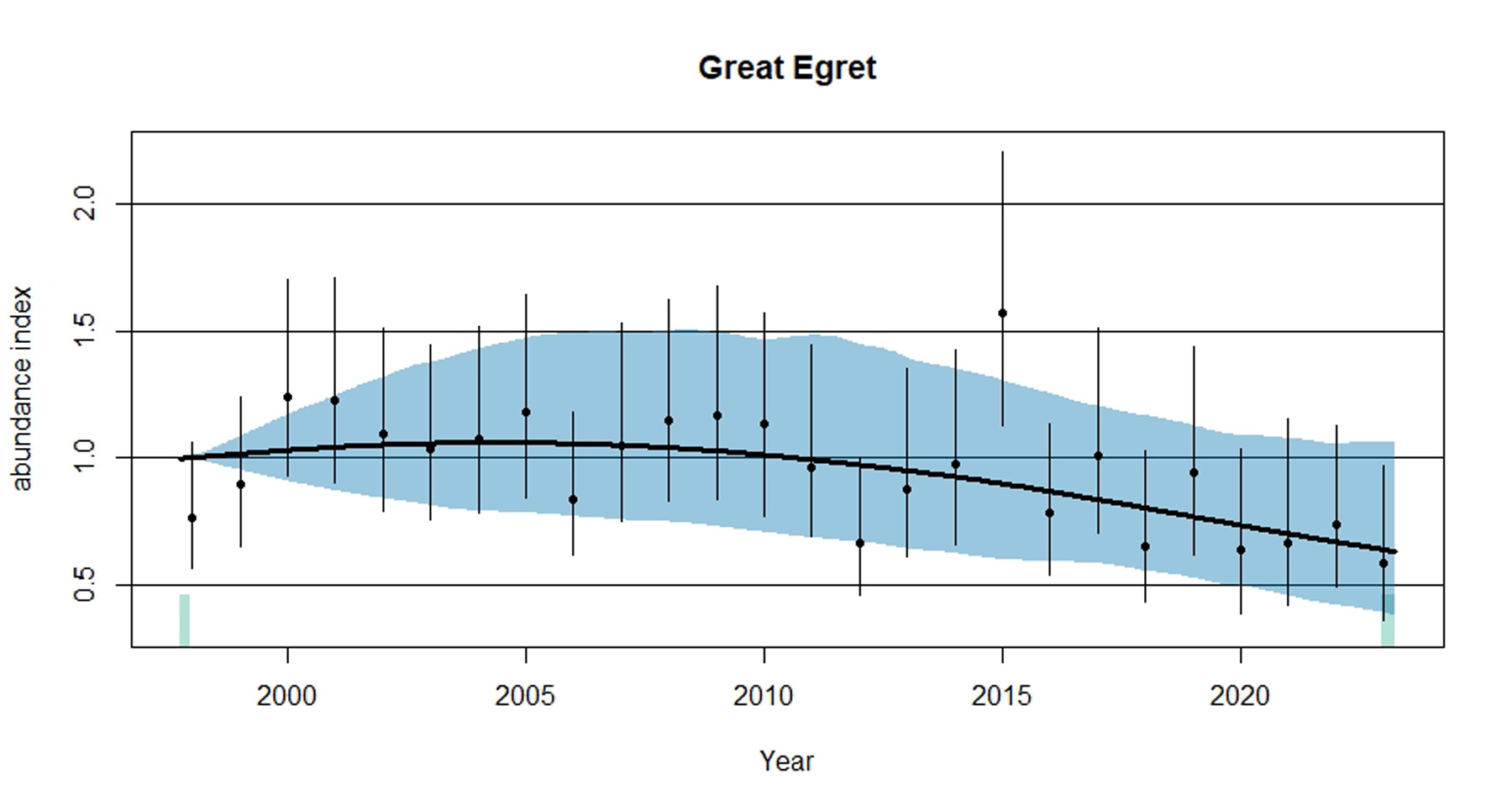
Figure 2: Poptrend (Knape 2016) GAM model for trends in Great Egret counts (excluding counts >200) from CWAC data. The overall trend for three generations is uncertain: Estimated percent change from Year = 1997.75 to 2023: -36% (-61%, 6.2%).
Biology & Ecology
Taxonomy
McCrimmon et al. (2020) and Wetlands International (2024) recognises four subspecies of Great Egret A. alba:
A.a. alba – Three distinct subpopulations based on regional non-breeding/breeding distribution are indicated by Wetlands International (2024):
- Western, Central & southeastern Europe/Black Sea & Mediterranean breeding – partial migration to Southern & Western Europe & Northern Africa during non-breeding season.
- Western Asia/southwest Asia – breeding and non-breeding.
- Eastern Asia – Breeding sutheastern Russia, Mongolia, Northern China; Non-breeding Eastern Asia, Southern China & Southern Tibet.
A.a. egretta – Five distinct subpopulations based on regional non-breeding/breeding distribution are indicated by Wetlands International (2024):
- North America – breeding; partial migration South of range
- Mexico – breeding
- Caribbean – breeding
- Central America – breeding
- South America – breeding
A.a. modesta – Five distinct subpopulations based on regional non-breeding/breeding distribution are indicated by Wetlands International (2024):
- South Asia – non-breeding
- East Asia – non-breeding
- East & southeastern Asia – Breeding and non-breeding
- Australia & Southern New Guinea – Breeding East & southeastern Asia; Non-breeding Australia & Southern New Guinea
- New Zealand – Breeding East & southeastern Asia; Non-breeding New Zealand
A.a. melanorhynchos – Sub-Saharan Africa and Madagascar
Sometimes placed in the genus Casmerodius with Yellow-billed Egret Ardea brachyrhyncha (del Hoyo et al. 1992) and Egretta but is now almost universally placed in the genus Ardea on strength of genetic and morphological analyses (McCrimmon et al. 2020).
Identification
95 cm, c. 1.1 kg. Sexes are alike. The species is completely white with black legs and feet. In the breeding season birds have long plumes on lower neck and breast, with long feathers extending beyond tail. The bill is black with variable amount of yellow at the base, and the eyes are bright red with an emerald green eye ring and lores. During the non-breeding season the eyes are pale yellow, the eye ring and lores olive green and the bill yellow. Juvenile birds are the same as the non-breeding adults (Louw 2005).
The species can be confused with the Yellow-billed Egret, which have a shorter bill, the gape of which does not extend past the eye and the legs are yellow above the tarsus joint and black below (Louw 2005).
Distribution
Generally, the species occurs south of 50 °N in North and South America, in Europe and Asia, southwards into Africa and Australasia (Louw 2005, McCrimmon et al. 2020). In Africa, it occurs along the Mediterranean and then sub-Saharan Africa (McCrimmon et al. 2020). Within the region (Figure 3) the Great Egret is concentrated in the moist north-eastern regions, with sightings attenuating westwards along the southern coast of the Eastern and Western Cape Provinces (Martin 1997, Taylor and Navarro 1999).
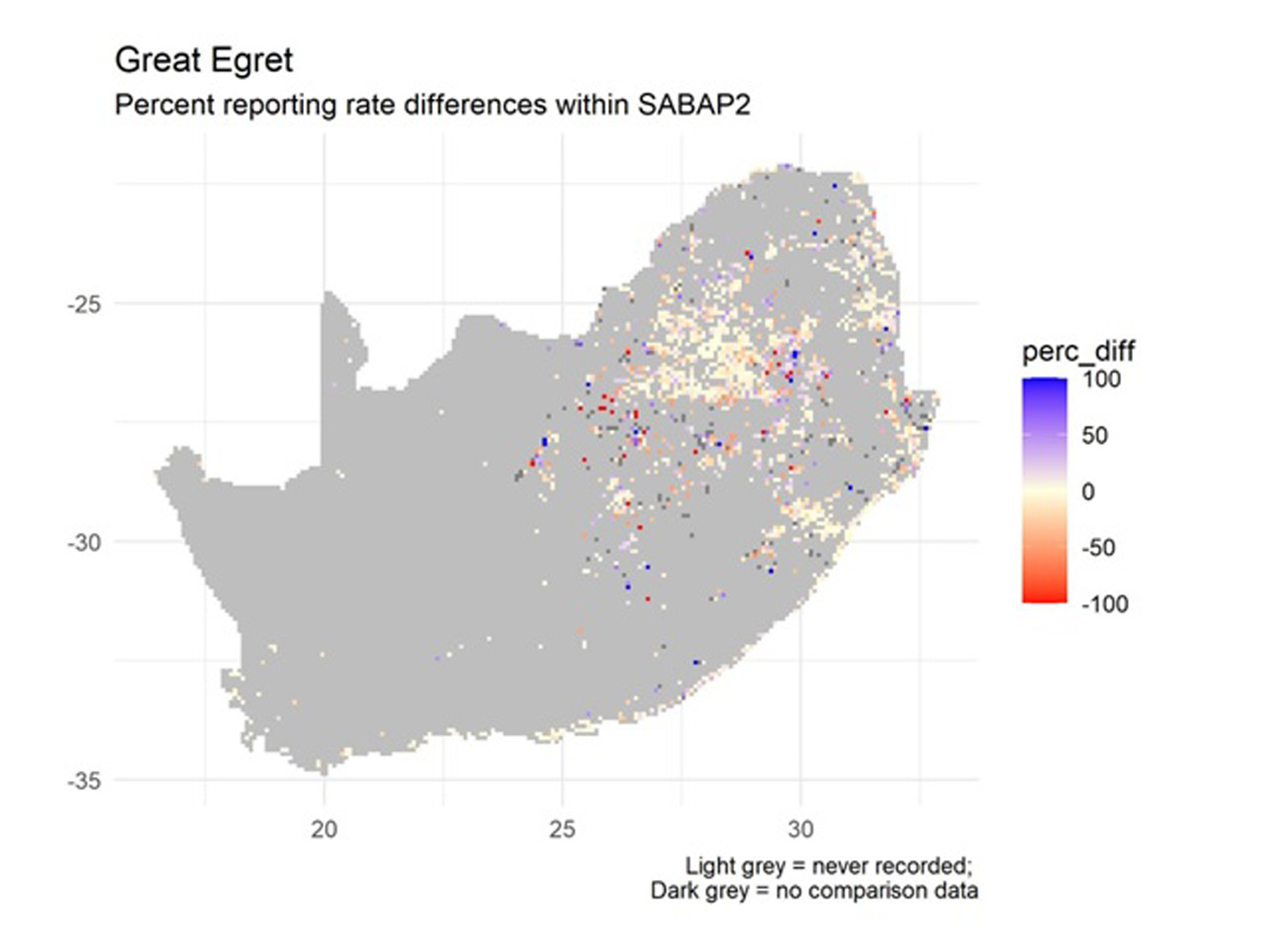
Figure 3: Distribution map of Great Egret also showing pentad level change between SABAP2 periods 2007-2015 and 2016-2023 (from Lee 2024).
Ecology
Habitat:
The Great Egret is usually found in shallow, open waters such as rivers, lakes, marshes, flooded grasslands, floodplains, saltpans, and estuaries (Martin 1997, Taylor et al. 1999). It can also be seen at sewage works and dams but rarely found in marine habitats (Maclean 1993).
Migration:
Martin (1997) describes the species as resident, but dispersive and nomadic movement within the regional distribution range depending on environmental conditions. Peaks in observation and numbers from mid-winter to early summer in the eastern part of the region indicate possible influx of non-breeding birds from East and Central Africa (Taylor and Navarro 1999, Louw 2005). Peak reporting rates would coincide with post-breeding movements from these northerly regions Martin (1997).
Breeding:
Nests colonially with other waterbirds, mostly in reedbeds (Tarboton 2001). Breeding times variable according to location (Louw 2005) but breed mainly from December to February (Tarboton 2021). Nest is built by the females using materials provided by the males and is saucer shaped platform loosely made with sticks and reeds (Tarboton 2001). Clutch size is usually 3–4, with incubation shared by both sexes, lasting 24–27 days (Tarboton 2001). Chicks are brooded and cared for by both parents (Louw 2005), fledging at around 40 days (Tarboton 2001).
Diet:
The diet of the Great Egret is mostly fish and amphibians, but insects, birds, and small mammals are also consumed (Broadley 1974, Maclean 1993). They forage either by standing motionless waiting for prey, walking (often stamping or shuffling feet to disturb prey) or running through shallow water, or hovering over open water snatching prey from surface.
Threats & Conservation
Threats
The species is threatened by wetland loss and degradation, although it has the ability to adapt to artificial waterbodies as evidenced by the response to the construction of the artificial Manyame Lakes in Zimbabwe (Martin 1997). The plume trade during the 19th and early 20th centuries did not impact the Southern African populations of Great Egret to the same extent as the European and American populations (Martin 1997).
Conservation Measures Underway
No specific conservation actions targeting the species are currently in place. CWAC indicates that Lake St Lucia in KwaZulu-Natal holds high, possibly the highest, numbers (min = 23, max = 1833, median = 108) of Great Egrets in the region. Lake St Lucia is part of the Isimangaliso Wetland Park and is also a UNESCO World Heritage Site and declared Ramsar Site, affording protection to a valuable ecosystem for this species.
The Great Egret is also a listed species under the African-Eurasian Migratory Waterbird Agreement (AEWA). The Sub-Saharan Africa and Madagascar population is listed in Column B Category 2e (Populations numbering more than around 100,000 individuals, which do not fulfil the conditions in respect of Column A, and considered to be in need of special attention as a result of showing rapid short-term decline). The Ramsar Convention and the AEWA are intergovernmental treaties dedicated to the conservation of migratory waterbirds and their habitats, and place an obligation on signatory countries, of which South Africa is one, to conserve these species and their habitats.
Conservation Measures Proposed
- It is speculated that not all sites containing this species are surveyed and sites that were counted in the past are not surveyed anymore. Resuming surveys of previously surveyed sites, especially important sites for this species (e.g. Allemanskraal Dam in the Free State), and expansion of monitoring to cover all important wetlands for this species is recommended. This would provide the necessary data to enable an estimate of the regional population and a better understanding of population trends.
- Improve adoption of the 1% criterion to identify key sites for conservation action.
Research Priorities and Questions
- The regional population size needs to be established, including both resident and non-breeding migratory visitors.
- Evidence of non-breeding migratory birds from Central and East Africa is supported only by reporting rate peaks that correspond with post-breeding movement of birds in the breeding grounds. More conclusive evidence of this through ringing/satellite tracking is required.
- Determine the cause/s for the decline as little mention of threats within the region is indicated in the literature.
Contributors & References
Assessor/s
Kevin Shaw, Maria Paul
Reviewer/s
Sanjo Rose
References
BIRDIE. 2024. Great Egret data. Available at https://birdieapp.sanbi.org.za/birdie/swagger-ui/ [Accessed on 19 March 2024].
BirdLife International. 2019. Ardea alba (amended version of 2016 assessment). The IUCN Red List of Threatened Species 2019: e.T22697043A155465940. Available at https://dx.doi.org/10.2305/IUCN.UK.2019-3.RLTS.T22697043A155465940.en [Accessed on 8 August 2024].
BirdLife International. 2024. Species factsheet: Great White Egret Ardea alba. Available at https://datazone.birdlife.org/species/factsheet/great-white-egret-ardea-alba [Accessed on 8 August 2024].
Broadley DG. 1974. Predation by birds on reptiles and amphibians in south-eastern Africa. Honeyguide 78: 11–19.
del Hoyo J, Elliott A, Newman K (eds). 1992. The Birds of Africa, vol. 1. London: Academic Press.
Lee ATK. 2024. Regional Red Data Book of the Birds of South Africa, Lesotho and Eswatini: SABAP2 synthesis and supporting information and graphics for Great Egret. Unpublished report. Johannesburg: BirdLife South Africa.
Louw K. 2005. Great Egret Egretta alba. In: Hockey PAR, Dean WRJ, Ryan PG (eds), Roberts birds of southern Africa 7th Edn. Cape Town: Trustees of the John Voelcker Bird Book Fund.
Maclean GL. 1993. Roberts’ Birds of Southern Africa 6th Edn. Cape Town: John Voelcker Bird Book Fund.
Martin AP. 1997. Great White Heron Camerodius albus. In: Harrison JA, Allan DG, Underhill LG, Herremans M, Tree AJ, Parker V, Brown CJ (eds), The Atlas of Southern African Birds, vol. 1: Non-passerines. Johannesburg: BirdLife South Africa. pp 50–51.
McCrimmon Jr DA, Ogden JC, Bancroft GT, Martínez-Vilalta A, Motis A, Kirwan GM, Boesman PFD. 2020. Great Egret (Ardea alba), version 1.0. In: Billerman SM (ed), Birds of the World. Ithaca, NY: Cornell Lab of Ornithology. https://doi.org/10.2173/bow.greegr.01.
Nagy S, Langendoen T. 2020. Flyway Trend Analyses Based on Data from the African-Eurasian Waterbird Census from the Period of 1967–2018. Wageningen: Wetlands International.
Tarboton W. 2001. A Guide to the Nests & Eggs of Southern African Birds. Cape Town: Struik Publishers.
Taylor PB, Navarro RA. 1999. Great White Heron Egretta alba. In: Taylor PB, Navarro RA, Wren-Sargent M, Harrison JA, Kieswater SL, Total CWAC Report: Coordinated Waterbird Counts in South Africa, 1992–1997. Cape Town: Avian Demography Unit.
Taylor PB, Navarro RA, Wren-Sargent M, Harrison JA, Kieswater SL. 1999. Total CWAC Report: Coordinated Waterbird Counts in South Africa, 1992–1997. Cape Town: Avian Demography Unit.
Wetlands International. 2024. Waterbird Populations Portal. Available at https://wpp.wetlands.org/ [Accessed on 8 August 2024].
Citation
Shaw K, Paul M 2025. Great Egret. In: Lee ATK, Rose S, Banda S, Bezeng SB, Maphalala MI, Maphisa DH, Smit-Robinson H (eds), The 2025 Red Data Book of Birds of South Africa, Lesotho and Eswatini. Johannesburg, South Africa: BirdLife South Africa. Available at: https://www.birdlife.org.za/red-list/great-egret/
Our generous sponsors


