


Fulvous Whistling Duck
Dendrocygna bicolor

Number Of Mature
Individuals (Regional)
3 170 – 7 925

Regional
Population Trend
Decreasing
2025
Regional Category
Near Threatened
Search by species
CONTENTSOverview
Names
|
IOC English Name: |
Fulvous Whistling Duck |
|
SA & IOC Scientific Name: |
Dendrocygna bicolor |
|
BirdLife International Taxonomy (scientific name): |
Dendrocygna bicolor |
|
Order: |
ANSERIFORMES |
|
Family: |
Anatidae |
|
Species name author: |
Vieillot 1816 |
|
Afrikaans: |
Fluiteend |
|
Sesotho (South Africa): |
letata-tswiditswidi |
|
Sesotho (Lesotho): |
letata-tsoilitsoili |
|
Siswati: |
|
|
Zulu: |
inzwinzwinzebomvu |
Current Assessment Status
|
2025 Regional Status [Criteria] |
NTo [A2c; C1] |
|
2025 Global Status [Criteria] |
LC (BirdLife International 2016) |
|
Population size (Global) |
871 000 – 1 005 000 (BirdLife International 2016) |
|
Population size (Regional) |
3170 – 7925 |
|
Distribution size (EOO) (Regional) km2 |
883 012 (Lee 2024) |
|
Distribution size (EOO) (Global) km2 |
148 000 000 (BirdLife International 2016) |
|
Distribution size (AOO) (Regional) km2 |
232 425 (BIRDIE 2024) |
|
Generation time |
5.3 years (BirdLife International 2016) |
|
Status change reason |
Improved knowledge |
|
Migrant (in the region) |
Resident |
|
Regional endemic |
No |
Historic Listing Information
|
2000 Regional Status |
Not Evaluated |
|
2015 Regional Status |
Not Evaluated |
|
Status change reason (if applicable) |
Not applicable |
|
2015 Population size (Regional) |
Unknown |
|
2015 Global Status |
LC (BirdLife International 2016) |
Reason for Inclusion
Reason for Inclusion in the Assessment
Fulvous Whistling Duck Dendrocygna bicolor was not previously formally assessed and thus assumed to be Least Concern. Preliminary screening of Coordinated Waterbird Counts (CWAC) data indicated a significant decline in number of Fulvous Whistling Duck counted per year (Lee 2024).
Category Justification
Category Justification
The Fulvous Whistling Duck is assessed as Near Threatened under Criterion A2c, based on multiple lines of evidence indicating a regional decline. This includes reductions in Area of Occupancy (AOO), Extent of Occurrence (EOO), and inferred population size reduction due to habitat degradation. As the population is likely <10 000 combined with declines, Criterion C1 applies too in this case.
Although regional population size remains unknown, a modelled reduction of 40% in AOO over three generations (Lee 2024) suggests the species is approaching the Vulnerable threshold under Criterion A2. Additional long-term Southern African Bird Atlas Project (SABAP1 to SABAP2) trends reinforce concerns of a declining population, while CWAC count analyses indicate a 44% decline, albeit with uncertainty due to natural population fluctuations.
Despite these declines, the species remains relatively widespread in southern Africa, and a regional rescue effect is likely. Given its high mobility and presence across a broad geographic range, the likelihood of immigration from neighbouring areas may help buffer against severe regional declines. Furthermore, fluctuations in numbers within the region suggest that local declines may not be entirely indicative of an irreversible population reduction. Thus, the potential for regional rescue and recolonization from more stable populations outside the region justifies an Near Threatened listing rather than Vulnerable at this stage.
Thresholds for Criterion B (geographic range-based assessment) are not met.
Population Justification
The global population is estimated to be 71 000 – 1 005 000 (BirdLife International 2016). Estimates for southern and east Africa range from 200 000 – 500 000 individuals (Scott and Rose 1996). There has been no recent regional population size estimate. However, 5.5% of the modelled Africa range occurs in the region (Lee 2024), suggesting a population range of 10 000 to 25 000 based on the Scott and Rose (1996) at least historically. Lee (2024) also presents an annual rate of decline of 4.2% (CI: -6.2, -2.3%) based on the top 20 most frequently counted CWAC sites for this species. Using an exponential rate of decline model with 4% annual decline projects population estimates of 3170 – 7925 for 2024 based on starting values of 10 000 and 25 000 in 1996. Summing the mean and maximum across CWAC sites results in values of 2002 and 5227 respectively, but these will be underestimated given not all sites where the species are present are counted. Nonetheless, they are supportive of a regional population <10 000 currently. Note, this includes regional and any visiting populations. Confidence in this estimate is low.
This species is highly nomadic, known to make sporadic movements to follow suitable habitats, so numbers can fluctuate widely within the region. Based on abundance estimates from outside the region it is possible that at times the regional population may at times exceed 10 000 total individuals but that this number is likely to fluctuate with changing conditions. In Mozambique for example, 12 000 individuals were observed at a single lake (Milstein 1984). Given that unusual historic record outside of the region coupled with recent declines, taken together, it is highly likely the regional breeding population is <10 000.
Trend Justification
The global population is decreasing (BirdLife International 2016). Regionally, all analyses indicate a declining population although the magnitude of decline varies. Modelled probability of reporting from SABAP2 suggests a significantly lower probability of reporting with high confidence (Lee 2024). Modelled predicted change in AOO over the past three generations is high, with a 40% predicted decline (Lee 2024, Table 1, Figure 1). Importantly, this rate of decline seems particularly influenced by declines at the Barberspan lake (Figure 1), yet the predicted reported rates show that this is an important future site for Fulvous Whistling Duck. Reasons for decline at this site should be investigated. Longer term trends (SABAP1 to SABAP2) also point towards a declining population (Figure 1).
Poptrend analyses from CWAC counts also indicates a declining population of -44% (95% CI, -73%, 0.11%) but note large confidence intervals (Figure 2). Restricting the analysis to just the winter counts (resident regional populations) indicates severe declines for this segment of the population: Estimated percent change from Year = 2007 to 2023: -78% (-94%, -18%).
As a waterbird, a continued decline in AOO, EOO and habitat quality is expected. However, only long-term regular monitoring of abundance will illustrate with declines represent a decline in population size or range shifts. Given that all the data analyses shows that Fulvous Whistling Duck is in decline, confidence in the trend is high.
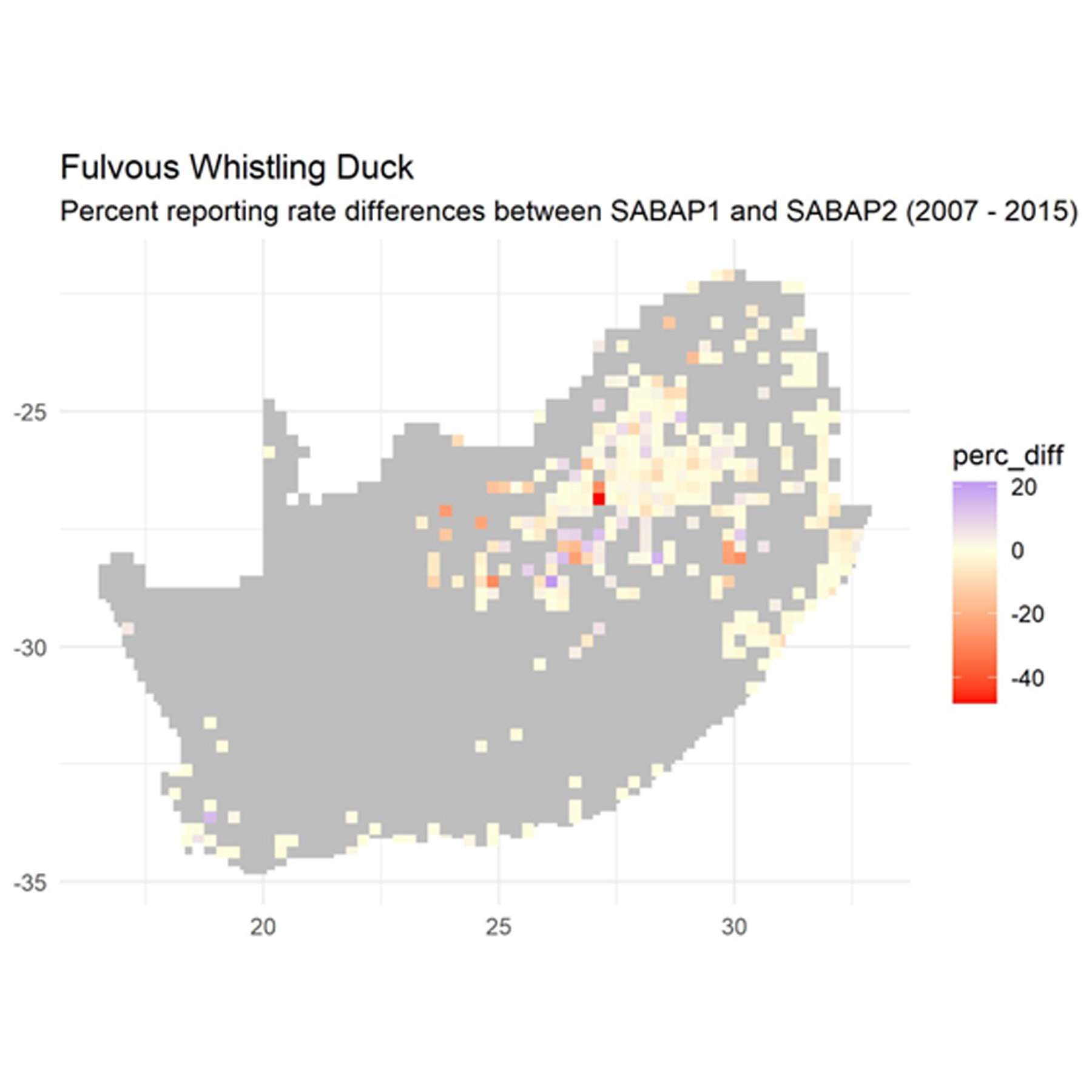
Figure 1a: SABAP distribution map showing percent reporting rate change between SABAP1 (1987-1991) and SABAP2 (2007-2015).
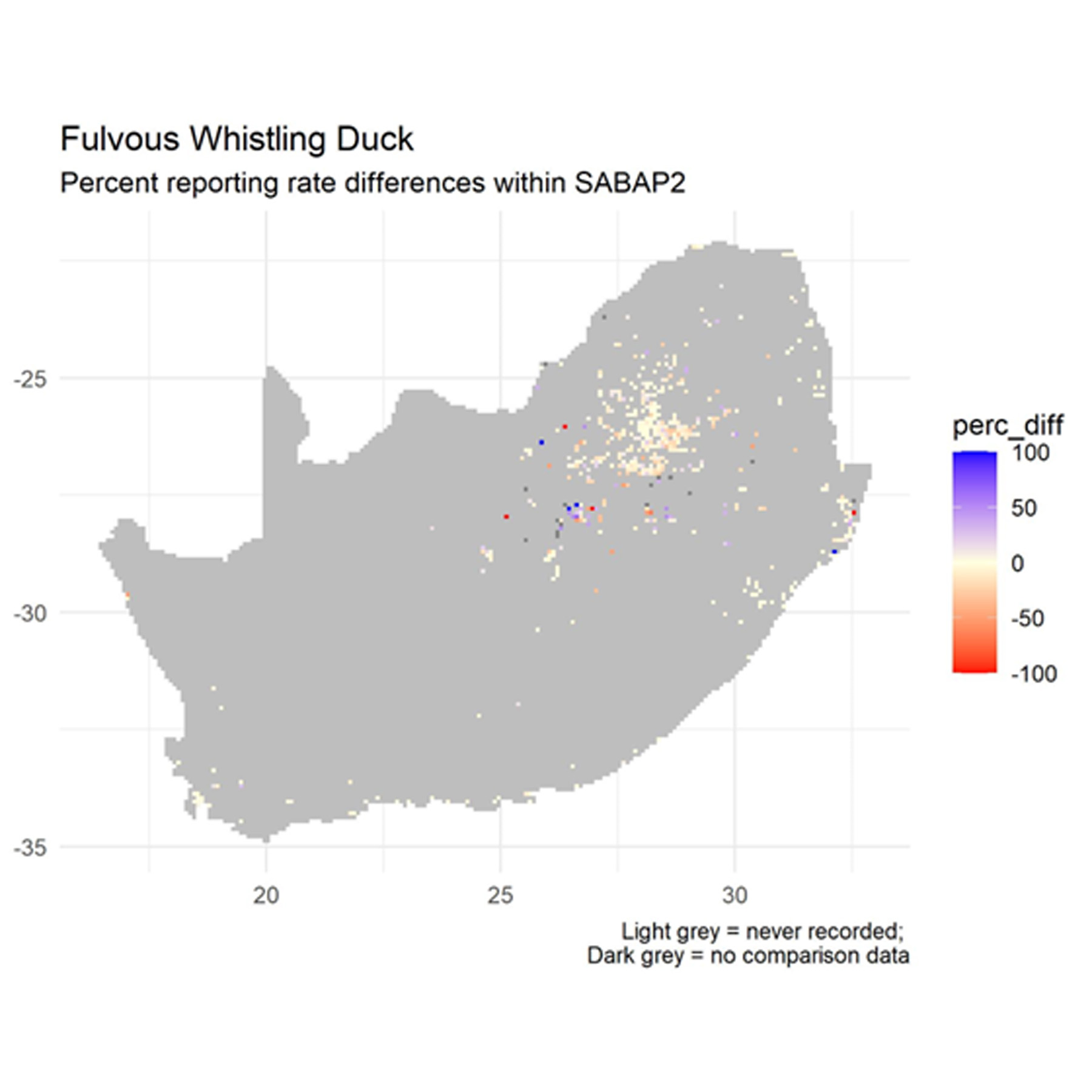
Figure 1b: Change in the percentage reporting rate for Fulvous Whistling Duck between early (2007-2015) and late (2016-2023) SABAP2.
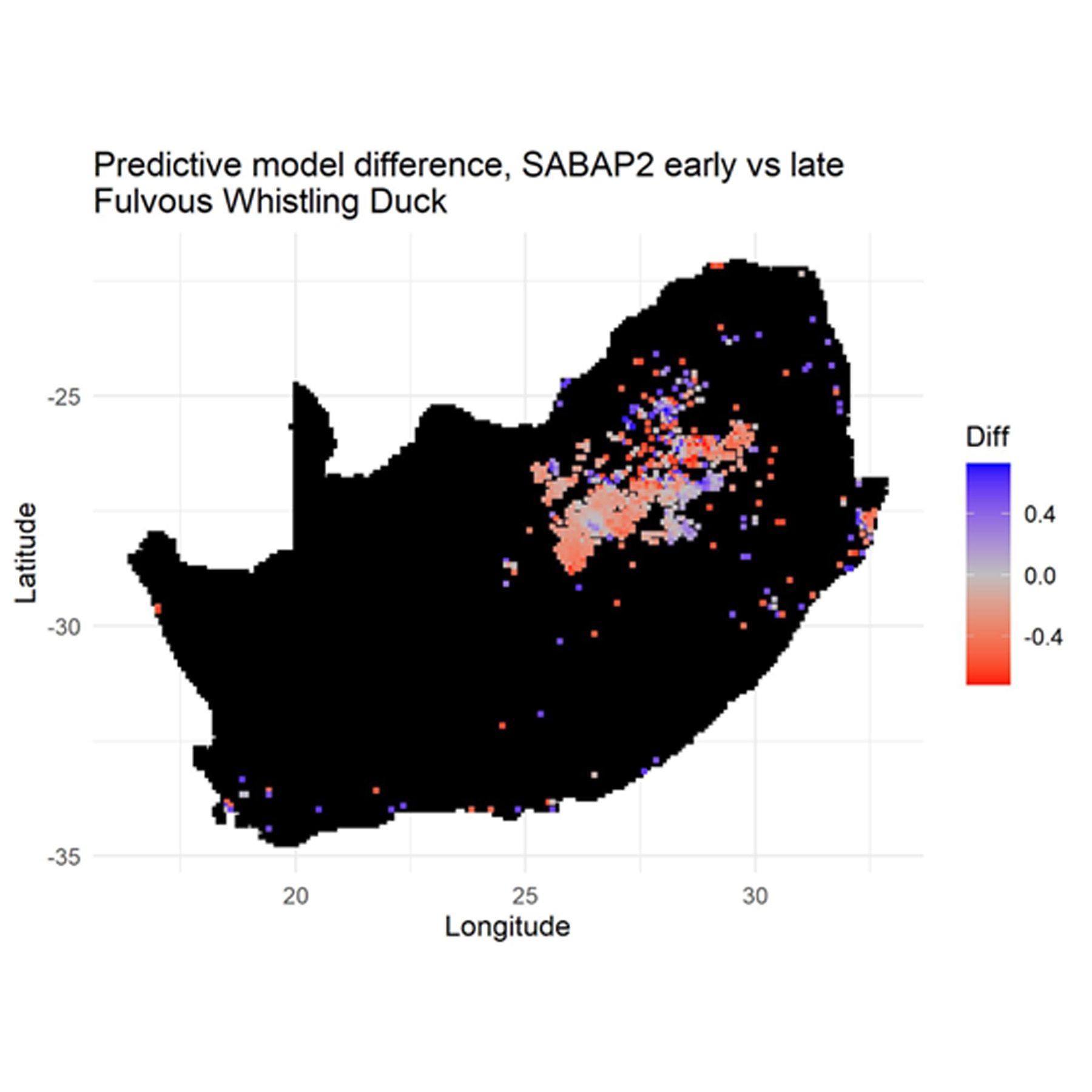
Figure 1c: Predictive modelled range change for Fulvous Whistling Duck over three generations between early (2007-2015) and late (2016-2023) SABAP2 with predicted range contraction especially around Barberspan.
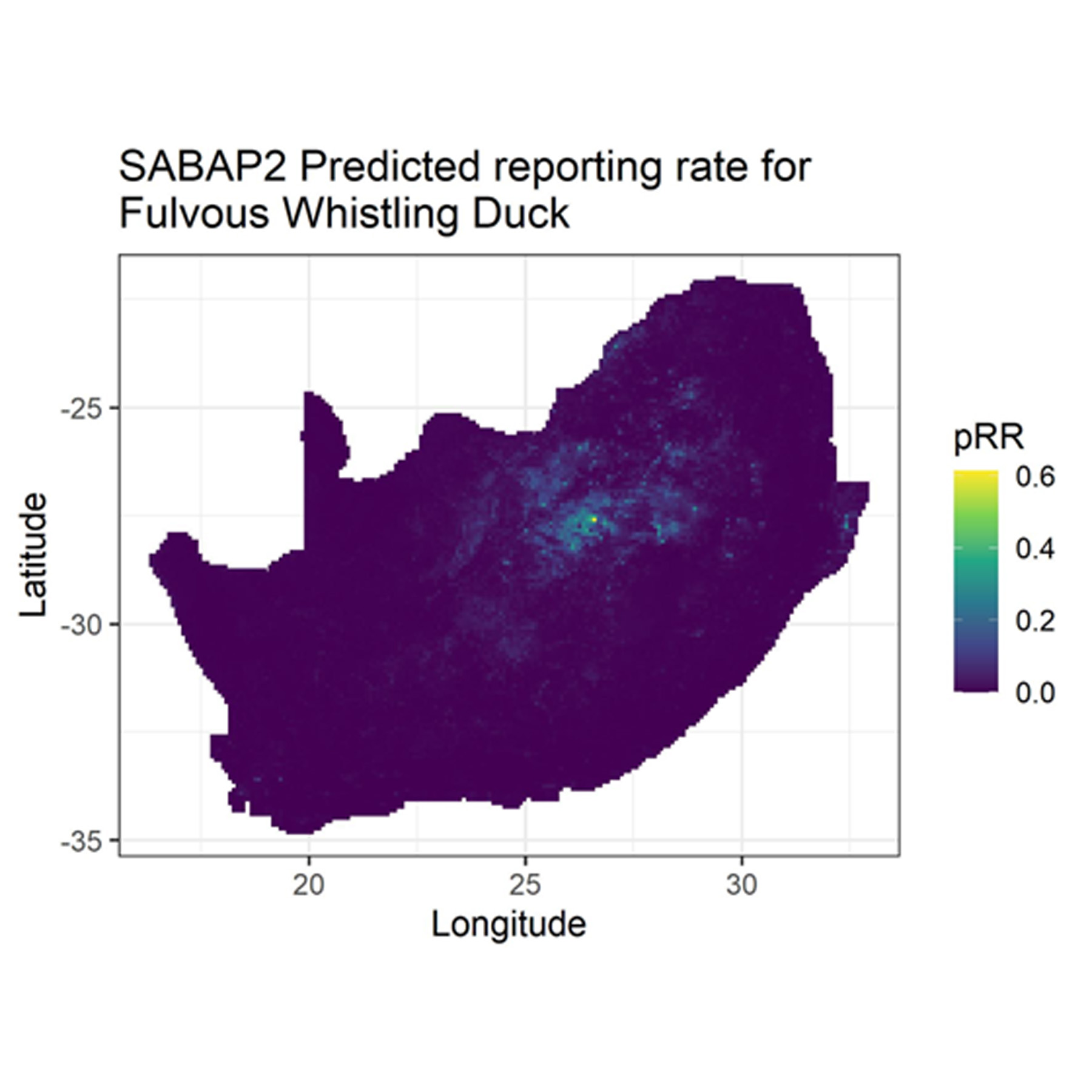
Figure 1d: The SABAP2 reporting rate prediction model indicates the species is very reliant on the Barberspan site, despite the declines (from Lee 2024).
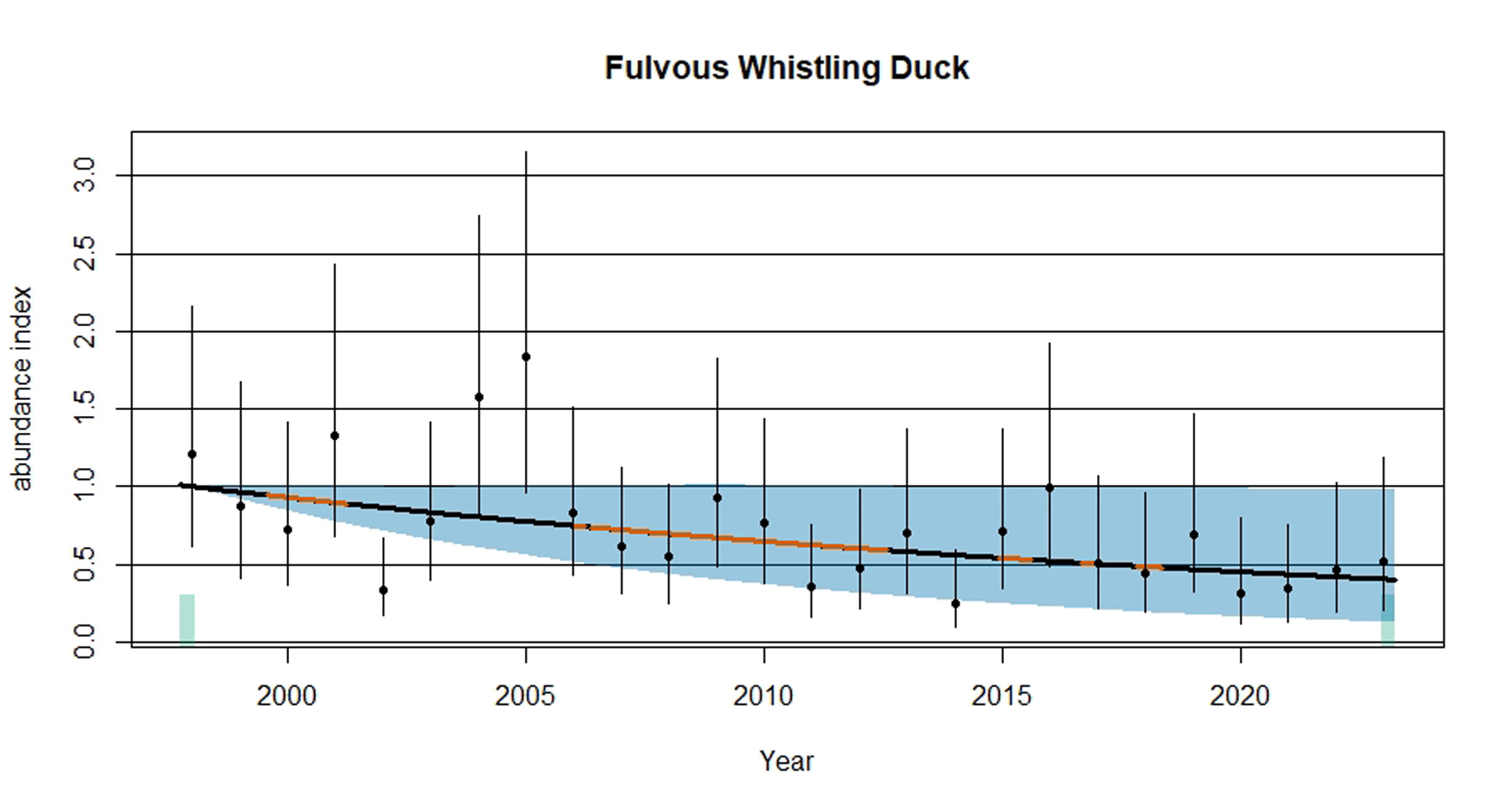
Figure 2: The poptrend modelled plot for Fulvous Whistling Duck, an implementation of Generalized Additive Models to CWAC data, excluding counts >200 (5 of 5222 counts). The magnitude of decline over three generations is -44% (-73%, 0.11%) (from Lee 2024).
Table 1. Percentage predicted range change based on the number of pentads that Fulvous Whistling Duck could occur in, for the period of 2007-2015, and 2016-2023. These values are used to calculate an annual rate of change and the percentage change over the longer of 10 years or three generations (Criterion A) (from Lee 2024).
|
Information |
|
|
Pentads 2015 |
698 |
|
Pentads 2023 |
421 |
|
Annual rate of change |
0.939 |
|
Percent change (10 years or 3 generations) |
-40.10% |
|
Category (A2) |
VU |
Biology & Ecology
Taxonomy
Despite being widely distributed across three continents, the species is considered monotypic.
Identification
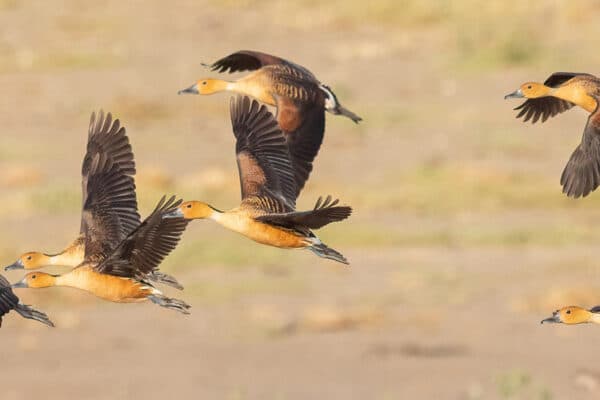
46 cm (Colahan 2005). Plumage colouration is slightly different between the sexes (McCartney 1963, Bell 1997). It has long legs, neck with a distinctive coloration of various shades of brown (Colahan 2005). Adult male: The head, neck, and breast are rich buff (fulvous), contrasting with a darker back and mantle that has buff-tipped feathers (Colahan 2005, Hohman and Lee 2020). A dark brown to black stripe runs from the crown down the back of the neck to the base of the mantle. Whitish stripes adorn the flanks, complementing the long grey bill and grey legs (Colahan 2005, Hohman and Lee 2020). In flight, the wings are brown above and black below, with a notable absence of white markings, while a white crescent on the rump stands out against the black tail (Colahan 2005, Hohman and Lee 2020). Adult female: similar to adult male but plumage is duller and they are also smaller in size (Hohman and Lee 2020). Juveniles: appear paler overall, especially on the underparts (Colahan 2005, Hohman and Lee 2020).
Confusing species: at all ages this duck could be confused with White-faced Whistling Duck but the latter has a paler neck than hind neck (Colahan 2005).
Distribution
Extensive global distribution across tropical South America, southern North America, Africa including Madagascar, and southern Asia (Colahan 2005). In Africa, its range spans from Senegal to Chad in the west, and from Ethiopia southwards through eastern Africa, across central Africa to Angola, and into northern and eastern southern Africa (Colahan 2005) (Figure 3). Regionally, the distribution is centered around the North West and Gauteng provinces (Figure 4) with scattered fragmented records throughout (Figure 3). Very rare in Lesotho and Eswatini (Figure 1, Figure 4).
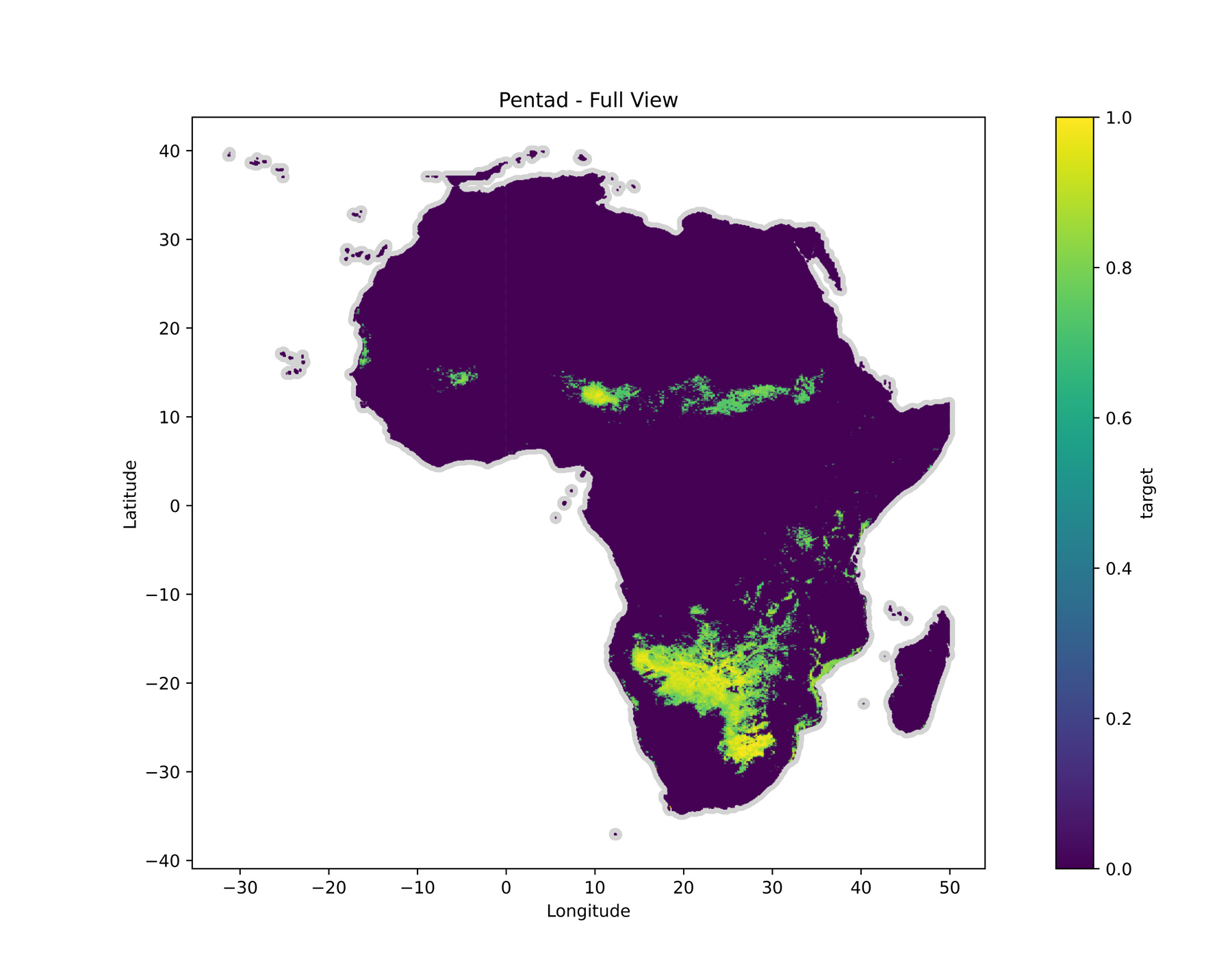
Figure 3: Fulvous Whistling Duck probability distribution map across Africa based on BirdLasser, iNaturalist and eBird data (from Lee 2024).
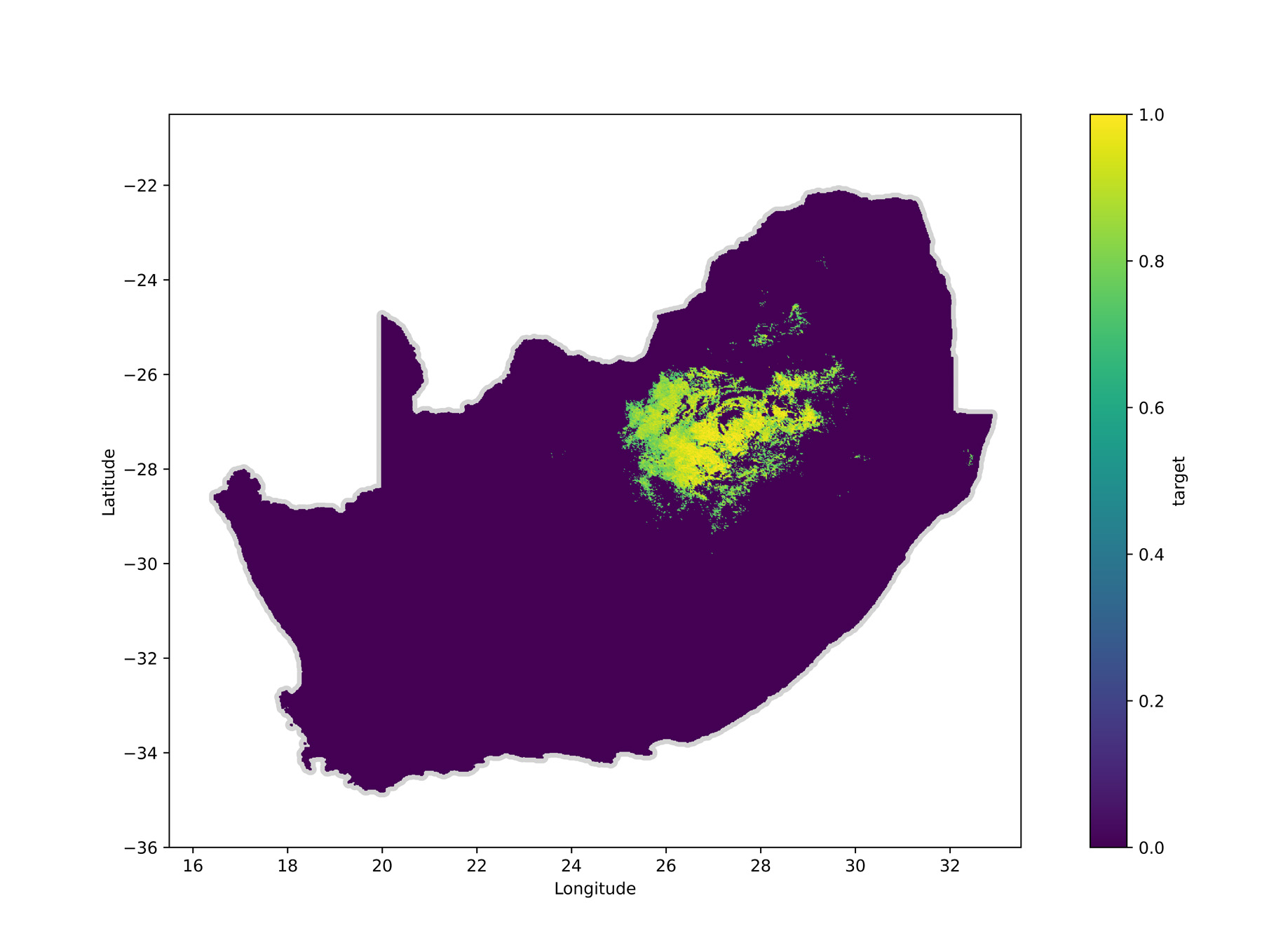
Figure 4: Fulvous Whistling Duck probability distribution across South Africa based on BirdLasser, iNat and eBird data indicating the fairly small regional range in the central eastern parts of the region. Note the absence from Lesotho and Eswatini (from Lee 2024).
Ecology
Habitat:
The Fulvous Whistling Duck typically inhabits shallow freshwater or brackish wetlands characterized by tall grasses (Johnsgard 1978, Brown et al. 1982). These habitats include freshwater lakes, seasonal pools, slow-flowing streams, marshy areas, swamps in open flat terrain, and flooded grasslands (Johnsgard 1978, Brown et al. 1982, Kear 2005). The species is notably found in areas of wet rice cultivation as well (Johnsgard 1978, Brown et al. 1982, Kear 2005). During periods of molting, when it is flightless and vulnerable, the Fulvous Whistling Duck seeks refuge in densely vegetated wetlands (Kear 2005).
Migration:
Across its range, this species is considered mostly sedentary but can move locally according to availability of water and food (Hohman and Lee 2020). Within the region, it was considered a summer visitor to the Witwatersrand region in South Africa (Tarboton et al. 1987). Probability of SABAP2 reporting is higher for SABAP2 during summer months (Lee 2024) and reporting rates for most provinces are higher in summer (Western Cape a notable exception with high reporting rate also in winter). The sum of maximum CWAC counts is nearly twice as high in summer compared to winter (mean total counts: Summer – 1766, Winter – 1081; sum maximum counts: Summer – 3343, Winter – 1896).
Breeding:
The timing of the breeding season is largely determined by water availability (del Hoyo et al. 1992). Nests are typically shallow scrapes in the ground, concealed within tall grass near water or occasionally elevated in clumps of reeds or bulrushes at water’s edge (Newman 1964, Clark 1976, Zaloumis 1987, Tarboton 2001). They lay clutches of 6–13 eggs, and incubation lasts approximately 24–32 days, shared by both male and female (Clark 1976, Hines 1989, Skinner 1997). The ducklings fledge around 52 days after hatching, during which both parents care for them (Schulten 1974). Single brooded (Clark 1976, Ginn et al. 1989).
Diet:
Primarily consumes a vegetarian diet, including aquatic seeds, fruits, bulbs, leaf shoots, buds, and various structural parts of aquatic plants like grasses such as knotweeds and rushes. While its diet mainly consists of plant material, it occasionally supplements this with small aquatic insects especially by females who are preparing for egg-laying (Johnsgard 1978, Brown et al. 1982, Colahan 2005).
Threats & Conservation
Threats
This species faces multiple threats globally (Hohman and Lee 2020). Outside of the region, known threats include exposure to pesticides, lead poisoning, and mortalities from collisions with powerlines (Johnsgard 1978, Brown et al. 1982). Damming rivers can reduce habitat quality in an area, potentially impacting local populations (Triplett and Yesou 2000). Wetland degradation from siltation, invasive plant species, increased aquaculture, and eutrophication threaten the species that utilize the region (Nayak 2006). The species is also susceptible to avian botulism (van Heerden 1974). Additionally, it is hunted for consumption and is traded in traditional medicine markets in Nigeria (Bhima 2006, Nikolaus 2001). Many of these threats are assumed to be present in the region.
For other waterfowl, trampling of wetland edges and non-native predators (e.g. dogs) are of particular concern during the breeding season. Again, it is likely that these will be important threats to Fulvous Whistling Duck too.
Conservation Measures Underway
No species-specific measures in place.
Conservation Measures Proposed
Population appears to fluctuate depending on habitat suitability. Therefore, wetland conservation should be prioritised to conserve this species, as well as other waterfowl more broadly.
Research Priorities and Questions
- The threats facing the species should be evaluated before targeted conservation actions are put in place. Of special concern are threats during the breeding season and moulting periods.
- Establishing population estimates for the region and determining the extent to which the population fluctuates.
- Regular monitoring of the regional population is recommended.
- Whether or not regular migration is taking place should be established as this will inform conservation actions and monitoring programs.
Contributors & References
Assessor/s
Joel Radue, Sanjo Rose, Maria Paul
Reviewer/s
Graeme Cumming
References
Bell CGV. 1997. Field sexing of some monomorphic Zimbabwean ducks. Honeyguide 43: 76–79.
BIRDIE. 2024. An online platform for African wetland and waterbird data. Available at: https://biodiversityadvisor.sanbi.org/contentmanagement/index?guid=42305260-12b0-4a92-912e-7d801d15fdac [Accessed on 12 September 2024].
BirdLife International. 2016. Dendrocygna bicolor. The IUCN Red List of Threatened Species 2016: e.T22679746A92827620. Available at https://dx.doi.org/10.2305/IUCN.UK.2016-3.RLTS.T22679746A92827620.en [Accessed on 8 April 2024].
BirdLife International. 2024. Species factsheet: Dendrocygna bicolor. Available at https://datazone.birdlife.org/species/factsheet/fulvous-whistling-duck-dendrocygna-bicolor [Accessed on 27 May 2024].
Bhima R. 2006. Subsistence use of waterbirds at Lake Chilwa, Malawi. In: Boere G, Galbraith C, Stroud D (eds), Waterbirds around the world. Edinburgh: The Stationery Office. pp 255–256.
Brown LH, Urban EK, Newman K. 1982. The Birds of Africa, vol. 1. London: Academic Press.
Clark A. 1976. Observations on the breeding of whistling ducks in Southern Africa. Ostrich 47: 59–64.
Colahan BD. 2005. Fulvous Duck. In: Hockey PAR, Dean WRJ, Ryan PG (eds), Roberts birds of southern Africa (7th Edn). Cape Town: Trustees of the John Voelcker Bird Book Fund. pp 84–85.Ginn PJ, McIlleron WG, Milstein P le S. 1989. The Complete Book of Southern African Birds. Cape Town: Struik Winchester.
Hohman WL, Lee SA. 2020. Fulvous Whistling-Duck (Dendrocygna bicolor), version 1.0. In: Billerman SM (ed), Birds of the World. Ithaca, NY: Cornell Lab of Ornithology. Available at https://doi.org/10.2173/bow.fuwduc.01.
Johnsgard PA. 1978. Ducks, Geese and Swans of the World. Lincoln and London: University of Nebraska Press.
Kear J. 2005. Ducks, Geese and Swans, vol. 1: General chapters; species accounts (Anhima to Salvadorina). Oxford: Oxford University Press.
Lee ATK. 2024. Regional Red Data Book of the Birds of South Africa, Lesotho and Eswatini: SABAP2 synthesis and supporting information and graphics for Fulvous Whistling Duck. Unpublished report. Johannesburg: BirdLife South Africa.
Maclean GL. 1997. Fulvous Duck. In: Harrison JA et al. (eds), The Atlas of Southern African Birds, vol. 1. Johannesburg: BirdLife South Africa. pp 118–119.
McCartney RB. 1963. The Fulvous Tree Duck in Louisiana. Unpublished MSc thesis. Baton Rouge: Louisiana State University.
Milstein P le S. 1984. A waterfowl survey in southern Mozambique, with conservation implications. In: Ledger J (ed), Proceedings of the Fifth Pan African Ornithological Congress. Johannesburg: Southern African Ornithological Society. pp 639–664.
Nayak AK. 2006. Status of migratory shorebirds at Bhitarkanika and Chilika wetlands on the east coast of India. In: Boere G, Galbraith C, Stroud D (eds), Waterbirds around the world. Edinburgh: The Stationery Office. pp 305–307.
Nikolaus G. 2001. Bird exploitation for traditional medicine in Nigeria. Malimbus 23: 45–55.
Newman KB. 1964. Whistling Duck (Dendrocygna bicolor (Vieillot)) nesting in Transvaal. Ostrich 35: 121.
Scott DA, Rose PM. 1996. Atlas of Anatidae Populations in Africa and Western Eurasia. Wageningen: Wetlands International (Publication No. 41).
Skinner NJ. 1997. The breeding seasons of birds in Botswana 3: non-passerine families (Ostrich to Skimmer). Babbler (Botswana) 32: 10–23.
Schulten GGM. 1974. The food of some duck species occurring at Lake Chilwa, Malawi. Ostrich 45: 224–226.
Tarboton WR, Kemp MI, Kemp AC. 1987. Birds of the Transvaal. Pretoria: Transvaal Museum.
Tarboton W. 2001. A Guide to the Nests and Eggs of Southern African Birds. Cape Town: Struik.
Triplett P, Yesou P. 2000. Controlling the flood in the Senegal Delta: do waterfowl populations adapt to their new environment? Ostrich 71(1–2): 106–111.
van Heerden J. 1974. Botulism in the Orange Free State goldfields. Ostrich 45(3): 182–184.
Zaloumis EA. 1987. The nesting requirements of southern African waterfowl. In: Milstein P le S, Middleton E (eds), Partial Proceedings of the Gamebird Symposium, 9–11 July 1984. Pretoria: South African Wildlife Management Association. pp 126–135.
Citation
Radue J, Rose S, Paul M 2025. Fulvous Whistling Duck. In: Lee ATK, Rose S, Banda S, Bezeng SB, Maphalala MI, Maphisa DH, Smit-Robinson H (eds), The 2025 Red Data Book of Birds of South Africa, Lesotho and Eswatini. Johannesburg, South Africa: BirdLife South Africa. Available at: https://www.birdlife.org.za/red-list/fulvous-whistling-duck/
Our generous sponsors


