


Eastern Bronze-naped Pigeon
Columba delegorguei

Number Of Mature
Individuals (Regional)
150 – 200

Regional
Population Trend
Decreasing
2025
Regional Category
Endangered
Search by species
CONTENTSOverview
Names
|
IOC English Name: |
Eastern Bronze-naped Pigeon |
|
SA & IOC Scientific Name: |
Columba delegorguei |
|
BirdLife International Taxonomy (scientific name): |
Columba delegorguei |
|
Order: |
COLUMBIFORMES |
|
Family: |
Columbidae |
|
Species name author: |
Delegorgue 1847 |
|
Afrikaans: |
Withalsbosduif |
|
Sesotho (South Africa): |
Leeba la molalasweu |
|
Sesotho (Lesotho): |
|
|
Siswati: |
|
|
Zulu: |
Ijubelintamemhlophe |
Current Assessment Status
|
2025 Regional Category [Criteria] |
EN [B2b(ii); D] |
|
2024 Global Category [Criteria] |
LC (BirdLife International 2018) |
|
Population size (Regional) |
150 – 200 (Taylor 2015) |
|
Population size (Global) |
Unknown |
|
Distribution size (EOO) (Regional) km2 |
Unknown |
|
Distribution size (EOO) (Global) km2 |
2 450 000 (BirdLife International 2018) |
|
Distribution size (AOO) (Regional) km2 |
89 (Taylor 2015) |
|
Generation time |
5.6 years (BirdLife International 2018) |
|
Status change reason |
No change |
|
Migrant (in the region) |
No |
|
Regional endemic |
No |
Historic Listing Information
|
2000 Regional Status |
VU [B1+2c] |
|
2015 Regional Status |
EN [B2c(i,ii); D] |
|
Status change reason (if applicable) |
Increased knowledge |
|
2015 Population size (Regional) |
150 – 200 |
|
2015 Global Status |
LC |
Reason for Inclusion
Reason for Inclusion in the Assessment
>5% of the global distribution of Eastern Bronze-naped Pigeon Columba delegorguei falls within the region. Additionally, the species was assessed as regionally Endangered in 2015 (Taylor 2015).
Category Justification
Category Justification
The previous regional assessment estimated the population of the Eastern Bronze-naped Pigeon to be 150 – 200 mature individuals, which satisfies the population size criterion of D1 for regionally Endangered (population size estimated to number <250 mature individuals). In addition, the species’ Extent of Occurrence (EOO) is <500 km2 and there is a continuing decline in the extent and quality of the habitat in which it occurs (Taylor 2015). In the absence of a new population estimate, the category for the species will be maintained as regionally Endangered.
Population Justification
The global population has not been quantified (BirdLife International 2018). Although it was described as common throughout its range (Gibbs 2001), Baptista et al. (1997) made mention that it is rare and possibly threatened in South Africa. Nuttall (2000) provided no regional estimate, but mentioned that the population estimate of 400 – 700 mature individuals derived from Johnson et al. (1998) was possibly too high and should be considered a maximum. The diagnostic calls of displaying males during summer may be suggestive of a greater number of birds than is actually present (Nuttall 2000). In addition, the species occurs at low densities within apparently suitable habitat, which is becoming increasingly limited. Based upon this, as well as anecdotal evidence (HN Chittenden pers comm), the regional population is estimated to be between 150 – 200 mature individuals. Confidence in this regional population estimate is low.
Trend Justification
Globally the population of the Eastern Bronze-naped Pigeon is believed to be declining due to continuing decline in the extent and quality of the habitat in which it occurs. Southern African Bird Atlas Project 2 (SABAP2) observers reported the species in 13 pentads between 2016 and 2023, compared to 15 pentads between 2007 and 2015, representing a 13% decline in the observed Area of Occupancy (AOO) over an eight-year period. Despite a stable probability of reporting, there was a decline in predicted range for the above periods (Lee 2024).
Biology & Ecology
Taxonomy
Two subspecies are recognised. The nominate delegorguei occurs within the region, from KwaZulu-Natal north to eastern Zimbabwe, Mozambique and Malawi. A second subspecies, sharpei, extends northwards to Kenya, Uganda and South Sudan (del Hoyo et al. 1996).
Identification
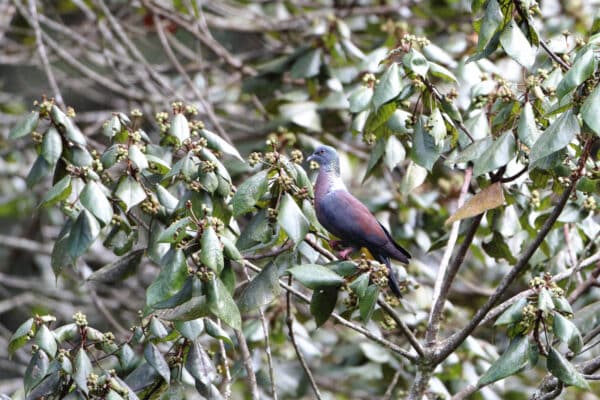
28–30 cm, 160 g. A large, dark, forest canopy pigeon. Sexes differ in colouration. Adult males have dark brown backs, with dark grey tails. Adult females are similar but lack the white collar and have less iridescent heads. This species is paler than the similar sized Lemon Dove Columba larvata (Dean 2005).
Distribution
The species has an extremely fragmented distribution throughout Africa, being restricted to remnant forest patches (Dean 2005). The nominate subspecies occurs to eastern Zimbabwe, central Mozambique and eastern South Africa. Within the region, it is restricted to Mistbelt and Coastal Scarp forests in KwaZulu-Natal and, historically, Eastern Cape. Coverage of the region of the Eastern Cape Province where the species was reported during the SABAP1 atlas survey has been particularly poor during the current survey. It is possible that the species persists there without being reported. Currently, breeding is thought to be restricted to Ngoye Forest Reserve, Dlinza Forest Nature Reserve, Entumeni Nature Reserve, Karkloof and Nkandla forests (Nuttall 2000). The combined area of these reserves is 89 km2. As is typical of frugivorous pigeons, the species is nomadic in response to food sources and is likely to move between these and other forests (Dean 2005). Records from Lusikisiki and Port St Johns in the Eastern Cape, and iSimangaliso Wetland Park and uMlalazi Nature Reserve in KwaZulu-Natal indicate that individuals do leave their core areas, possibly in search of food (Quickelberge 1989, Nuttall 2000). The species has undergone a considerable contraction in range over the past 70 years (Nuttall 2000). It no longer occurs at Pigeon Valley, Durban, the locality at which the type specimen was collected, nor in the Bulwer, Dargle and Richmond districts of KwaZulu-Natal where it was formerly considered common by Clancey (1964).
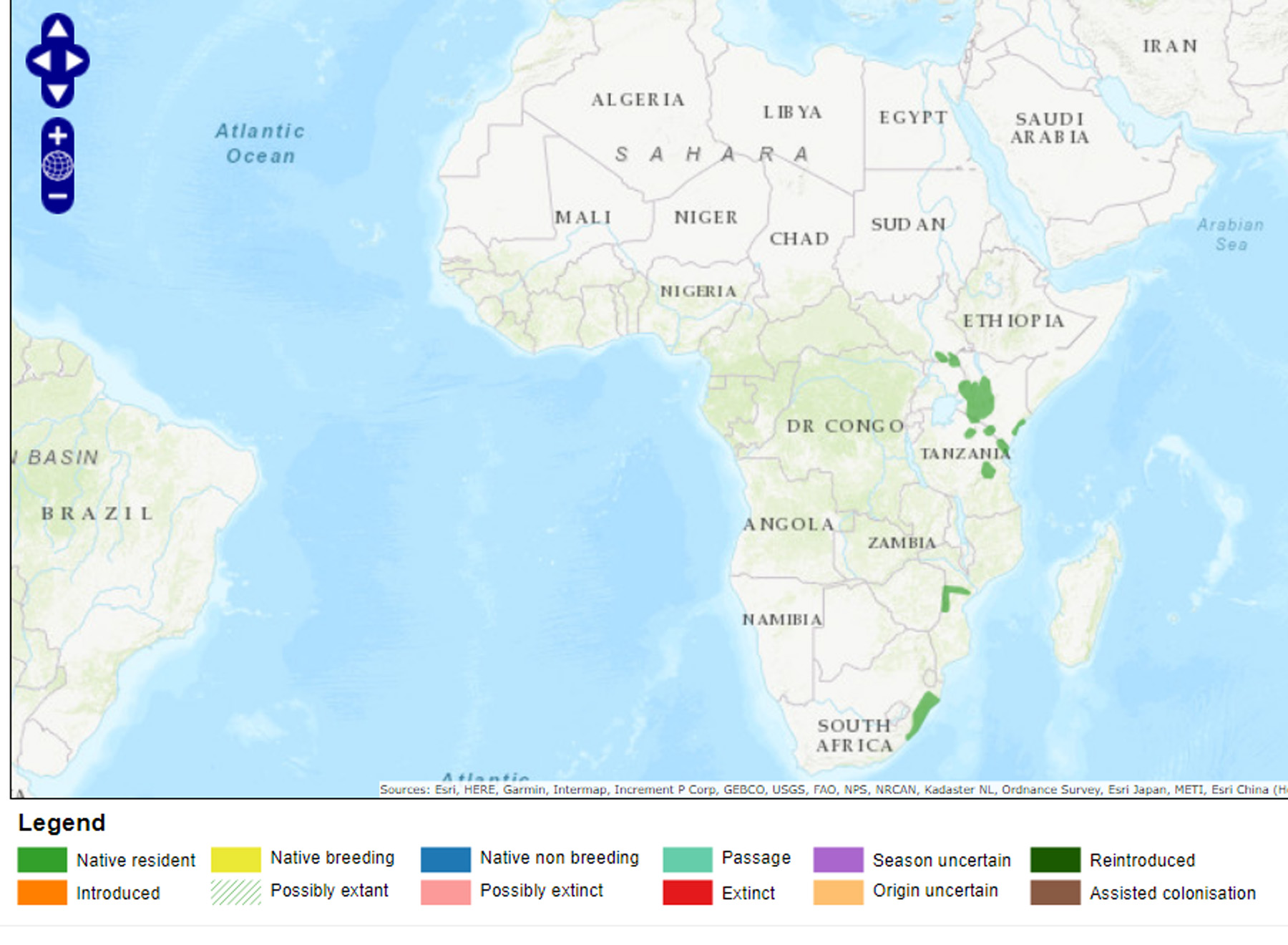
Figure 1. Africa wide distribution map of the Eastern Bronze-naped Pigeon. Source: Eastern Bronze-naped Pigeon (Columba delegorguei) – BirdLife species factsheet
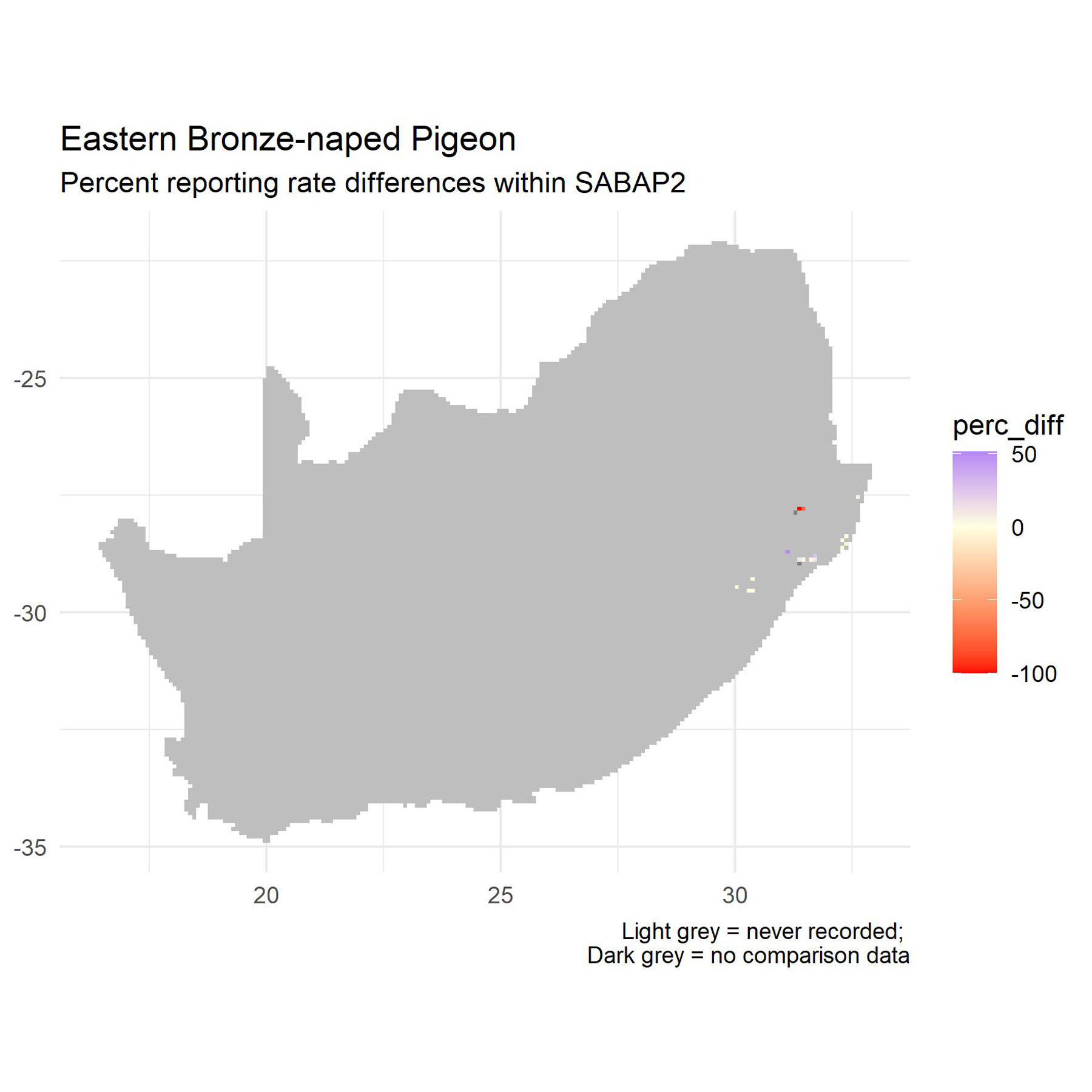
Figure 2. Distribution of Eastern Bronze-naped Pigeon at the pentad scale according to SABAP2 (from Lee 2024).
Ecology
The Eastern Bronze-naped Pigeon is a canopy species restricted to climax Coastal Scarp and Mistbelt forests. It is primarily a fruit eater, including fruits of various Ficus spp., Trema orientalis, Podocarpus latifolius, Macaranga capensis and Phialodiscus zambesias. The species is occasionally found in plantations (Pinus spp.) and gardens (Dean 2005).
Threats & Conservation
Threats
The primary threat facing the Eastern Bronze-naped Pigeon is loss of habitat, which has led to fragmentation of forests (Nuttall 2000). Destruction of forests since the 1700s for urban development, commercial plantations and agriculture (Geldenhuys and MacDevette 1989) has resulted in severe fragmentation, creating forest ‘islands’ which may threaten the viability of small populations of forest taxa, including forest birds such as Eastern Bronze-naped Pigeon. Increased demand for traditional medicines is also threatening forests, due to debarking and consequent death of certain tree species. Cattle grazing within forests, which ultimately changes the species composition of forests, is considered a threat (Nuttall 2000).
Conservation Measures Underway
No specific conservation measures are underway. Ngoye, Dlinza, Entumeni, Karkloof and Nkandla forests, the core of the species’ range in the region, are all listed as Provincial Nature Reserves under the administration of Ezemvelo KwaZulu-Natal Wildlife. However, inadequate resources are currently available for the reserves’ management.
Conservation Measures Proposed
A Population and Habitat Viability Assessment (PHVA) is recommended, as is a Biodiversity Management Plan, culminating in a National Species Recovery Plan. Annual monitoring of populations at key sites is required. Strict enforcement of conservation regulations in nature reserves needs to be maintained and forest management improved, including an immediate reduction in illegal forest utilisation.
Research Priorities and Questions
- Accurate estimates of population size and range, and further investigation of ecological requirements, seasonal and other movements and possible genetic variation, are urgently required.
- Given the highly fragmented nature of the species’ distribution, a detailed taxonomic investigation is recommended.
- A field survey of localities in the former Transkei region of the Eastern Cape Province where the species was recorded during the SABAP1 survey is needed to establish whether the species is currently present in that region.
Contributors & References
Assessor/s
Machawe Maphalala
Reviewer/s
Vincent Parker
References
Baptista LF, Trail PW, Horblit HM. 1997. Family Columbidae (Doves and Pigeons). In: del Hoyo J, Elliott A, Sargatal J (eds), Handbook of the birds of the world, vol. 4: Sandgrouse to Cuckoos. Barcelona, Spain: Lynx Edicions.
BirdLife International. 2018. Columba delegorguei. The IUCN Red List of Threatened Species 2018: e.T22690359A130171613. Available at: http://dx.doi.org/10.2305/IUCN.UK.2018-2.RLTS.T22690359A130171613.en
Clancey PA. 1964. The birds of Natal and Zululand. London: Oliver and Boyd.
Dean WRJ. 2005. Eastern Bronze-naped Pigeon Columba delegorguei. In: Hockey PAR, Dean WRJ, Ryan PG (eds), Roberts’ birds of southern Africa (7th Edn). Cape Town: Trustees of the John Voelcker Bird Book Fund. pp 279–280.
Geldenhuys CJ, MacDevette DR. 1989. Conservation status of coastal and montane evergreen forest. In: Huntley BJ (ed), Biotic diversity in southern Africa: Concepts and conservation. Oxford: Oxford University Press. pp 224–238.
Gibbs D. 2001. Pigeons and doves: A guide to the pigeons and doves of the world. London: A&C Black.
Hoyo J, Elliot A, Sargatal J. 1996. Handbook of the birds of the world, vol. 3: Hoatzin to Auks. Barcelona, Spain: Lynx Edicions.
Johnson DN, Barnes KN, Taylor B. 1998. The Important Bird Areas of KwaZulu-Natal. In: Barnes KN (ed), The Important Bird Areas of Southern Africa. Johannesburg: BirdLife South Africa. pp 141–196.
Lee ATK. 2024. Regional Red Data Book of the Birds of South Africa, Lesotho and Eswatini: SABAP2 synthesis and supporting information and graphics for Eastern Bronze-naped Pigeon. Unpublished report. Johannesburg: BirdLife South Africa.
Nuttall RJ. 2000. Columba delegorguei. In: Barnes KN (ed), Delegorgue’s pigeon. Johannesburg: BirdLife South Africa. pp 109–111.
Taylor MR. 2015. Eastern Bronze-naped Pigeon. In: Taylor MR, Peacock F, Wanless RM (eds), The Eskom Red Data Book of Birds of South Africa, Lesotho and Swaziland. BirdLife South Africa, Johannesburg, South Africa. pp 155–156.
Quickelberge CD. 1989. Birds of the Transkei. Durban: Durban Natural History Museum.
Citation
Maphalala M 2025. Eastern Bronze-naped Pigeon. In: Lee ATK, Rose S, Banda S, Bezeng SB, Maphalala MI, Maphisa DH, Smit-Robinson H (eds), The 2025 Red Data Book of Birds of South Africa, Lesotho and Eswatini. Johannesburg, South Africa: BirdLife South Africa. Available at: https://www.birdlife.org.za/red-list/eastern-bronze-naped-pigeon/
Our generous sponsors


