


Crowned Eagle
Stephanoaetus coronatus

Number Of Mature
Individuals (Regional)
900 – 1 000

Regional
Population Trend
Decreasing
2025
Regional Category
Vulnerable
Search by species
CONTENTSOverview
Names
|
IOC English Name: |
Crowned Eagle |
|
SA & IOC Scientific Name: |
Stephanoaetus coronatus |
|
BirdLife International Taxonomy (scientific name): |
Stephanoaetus coronatus |
|
Order: |
ACCIPITRIFORMES |
|
Family: |
Accipitridae |
|
Species name author: |
Linnaeus 1766 |
|
Afrikaans: |
Kroonarend |
|
Sesotho (South Africa): |
Makgwana |
|
Sesotho (Lesotho): |
Makhoana |
|
Siswati: |
Lusoti |
|
Zulu: |
Ukhoziqholwane, Isihuhwa |
Current Assessment Status
|
2025 Regional Category [Criteria] |
VU [C1; D1] |
|
2024 Global Category [Criteria] |
NT [A2cde+3cde+4cde] (BirdLife International 2018) |
|
Population size (Regional) |
900 – 1000 |
|
Population size (Global) |
5000 – 50 000 (BirdLife International 2018) |
|
Distribution size (EOO) (Regional) km2 |
727 681 (Lee 2024) |
|
Distribution size (EOO) (Global) km2 |
21 000 000 (BirdLife International 2018) |
|
Distribution size (AOO) (Regional) km2 |
136 484 (Lee 2024) |
|
Generation time |
18.5 years (BirdLife International 2018) |
|
Status change reason |
No Change |
|
Migrant (in the region) |
Not a migrant |
|
Regional endemic |
No |
Historic Listing Information
|
2000 Regional Status |
NT [A1c+2cd] |
|
2015 Regional Status |
VU [C1; D1] |
|
Status change reason (if applicable) |
Genuine (recent) |
|
2015 Population size (Regional) |
800 |
|
2015 Global Status |
NT [A2cde+3cde+4cde] |
Reason for Inclusion
Reason for Inclusion in the Assessment
The Crowned Eagle Stephanoaetus coronatus was assessed in 2015 as regionally Vulnerable and is currently listed as globally Near Threatened (Taylor 2015, BirdLife International 2018). It is thought that approximately 5% of the global population occurs in the region, or occurred here historically.
Category Justification
Category Justification
Crowned Eagle has a large but fragmented range regionally. The species is exposed to numerous ongoing threats. The regional population of Crowned Eagle is projected to undergo continuous declines because of widespread threats, especially considering their slow reproductive rate. From modelled change in Area of Occupancy (AOO) from Southern African Bird Atlas Project (SABAP2) data, Crowned Eagles appear to have declined by 13% over the past three generations (Lee 2024). In addition, the regional population is estimated at <1000 mature individuals.
This rate of decline and population estimate meets the criteria for regionally Vulnerable C1 and D1. A rescue effect is unlikely for this species.
Population Justification
Ferguson-Lees and Christie (2001) estimate that the global population could number in the upper thousands, although given its range this is perhaps likely to be an underestimate and they also state that, for this reason, an estimate of tens of thousands might be expected. On this basis, the global population is estimated at 5000 – 50 000 mature individuals until better information becomes available (BirdLife International 2018).
No complete census of the regional population has been completed. Parts of the range, notably the rural Eastern Cape are not well represented in the atlas data. Many of the estimates that do exist are likely outdated. Quickelberge (1989) mentioned that the species was common in forested localities along the coastal strip from Port St. Johns to Mbotyi, “being seen or heard on most days”. Boshoff et al.. (1994) estimated that there were 100 mature individuals within the borders of the old Eastern Cape Province up to the Fish River. Reeves and Boshoff’s (2016) study collected prey remains under 18 nests in the Eastern Cape between 1999 and 2000. Within the Garden Route, earlier surveys seem to indicate that they occur at relatively low densities (Boshoff 1988, Herd 2010) where their distribution reaches its southern-most limit. Current, ongoing monitoring of the population status of the species found three active nests and identified nine epicenters of sighting localities representing potential breeding pairs (de Morney et al. 2024).
No estimates exist for KwaZulu-Natal. Based upon the number of pentads occupied in the province, one could estimate the population to be in the region of 400 mature individuals. The province’s urban population has a higher breeding density with up to 120 breeding territories identified in southern KwaZulu-Natal between 2012 and 2017, which includes the metropolitan areas of Durban and Pietermaritzburg (McPherson et al. 2016a). Likewise, up to 80 mature individuals are thought to occur within a 70 km radius of Nelspruit in Mpumalanga (GR Batchelor pers. comm.). Parker (1994) estimated the Eswatini (formerly Swaziland) population at 60 mature individuals, but Monadjem and Rasmussen (2008) reported only four nests for the country but admitted that nests may have been overlooked in Malolotja Nature Reserve, Kobolondlo Mountain, as well as the Lubombo Hills, where pairs have been sighted. Nevertheless, it appears that this population has undergone a significant decline. Simmons (2005) concurred with Tarboton and Allan’s (1984) estimate of 200 mature individuals in the north-east of South Africa, which included the current Limpopo and Mpumalanga provinces. A conservative estimate of the regional population is set at c. 900 – 1000 mature individuals, which is slightly higher than the last assessment due to additional surveys, mentioned above, conducted over the recent assessment period. It does not therefore represent a population increase since 2015. Confidence in this regional population estimate is medium.
Trend Justification
Globally, the Crowned Eagle is in decline (BirdLife International 2018). Crowned Eagles faces a plethora of threats throughout its range; trapping, shooting and nest destruction, competition for prey from humans, and habitat loss through deforestation (Ferguson-Lees and Christie 2001, McPherson et al. 2021). Coupled with a slow reproductive rate this has resulted in a moderately rapid population decline throughout its range (Thomsett 2011).
Regionally, modelled predictive AOO indicates a decline of 13% in AOO over the past three generations (Figure 1, Lee 2024). Establishing a reliable estimate is difficult because many parts of the range are poorly surveyed. However, considering the decline in AOO and the threats faced by the species, the regional population is considered to be in decline.
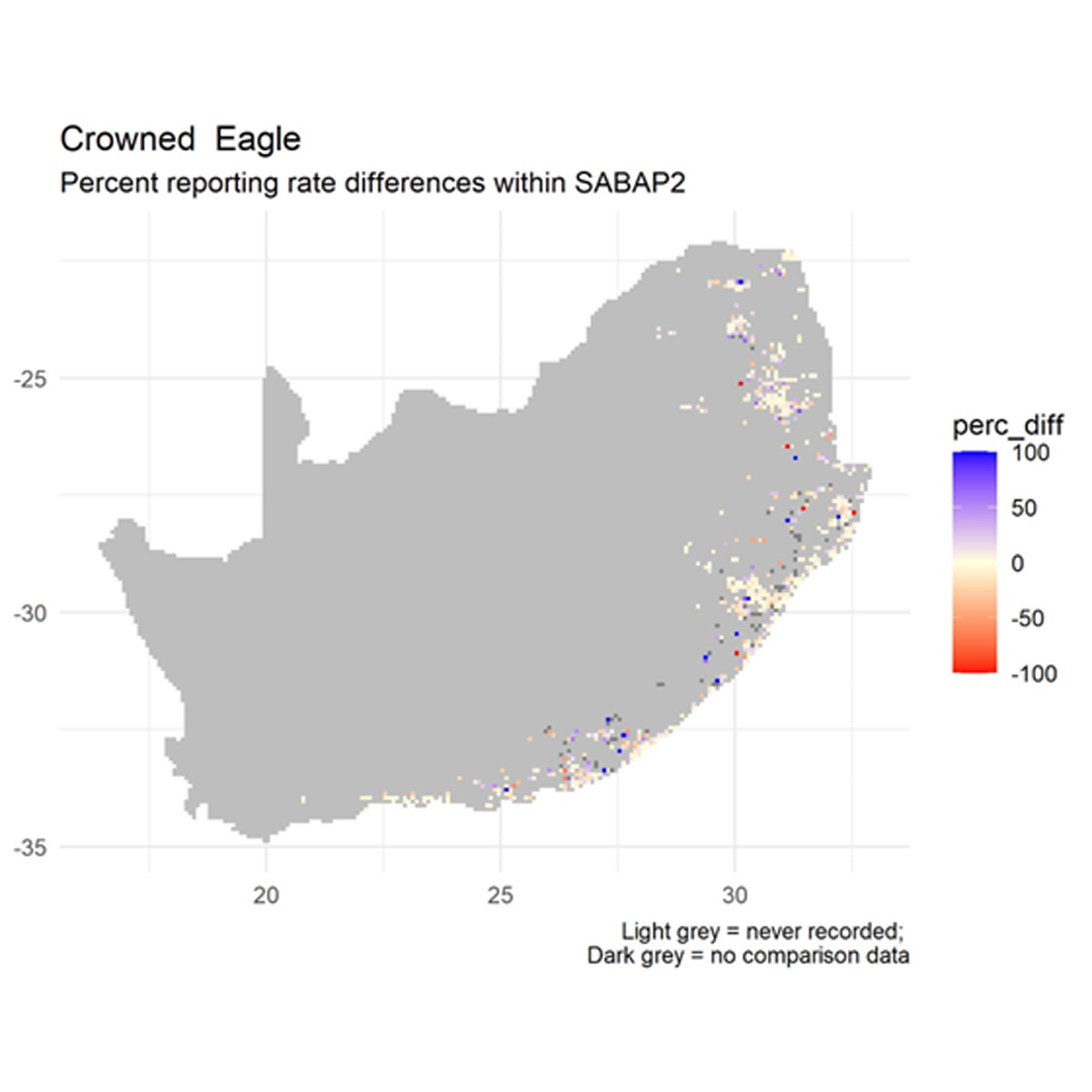
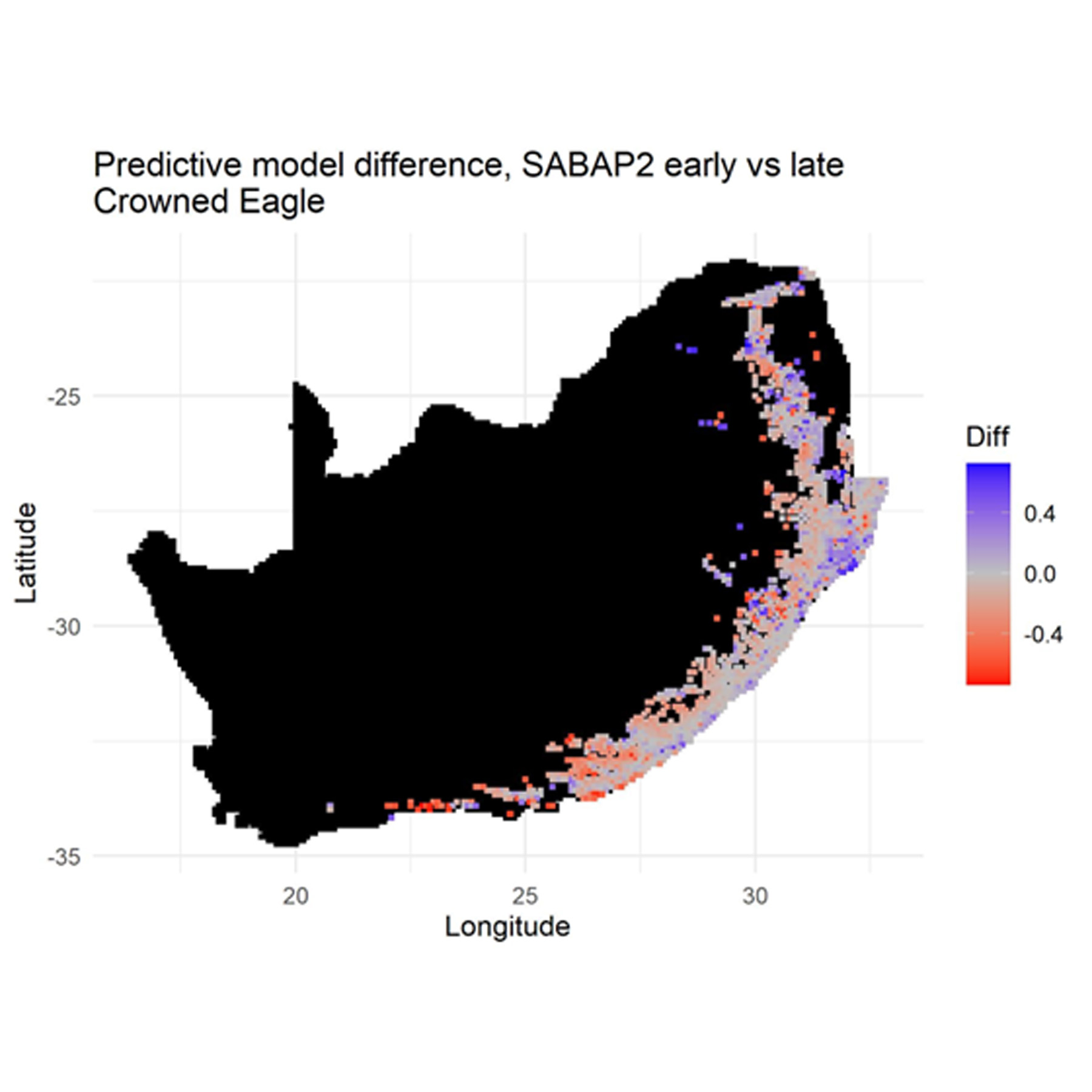
Figure 1: The percentage reporting rate between the ‘early’ (2007-2015) and ‘late’ (2016-2023) SABAP2 periods (top). Blue shows areas of increase, yellow no change and red areas of decrease. The predictive model occurrence (bottom) shows the change in AOO over the past three generations for the same time period. Note that red section in the Garden Route is probably an over-estimate of decline (from Lee 2024).
Biology & Ecology
Taxonomy
A monotypic species.
Identification
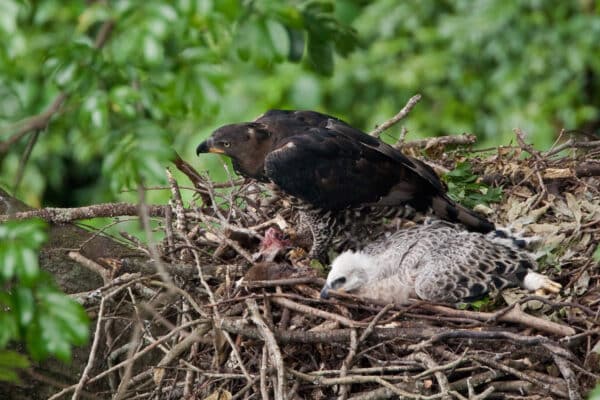
80-92 cm; wingspan 1.5-1.8 m; 2-4.3 kg. A large, extremely powerful eagle of forest habitats. Crowned Eagles have a prominent crested head and short, rounded wings (like a giant goshawk) and a long, barred tail. Adults have a mottled chest and legs, with yellow feet and large black claws. In flight, the underwing coverts are rufous, and remiges white with two (females) or three (males) black bars. Juveniles are much paler than adults, with a whitish head, nape and crown. Upper parts are dark grey, with prominent white feather edges. Underparts mostly white with brownish wash on breast. They resemble juvenile Martial Eagles but lack the half-collar and have more bars on longer tails (Simmons 2005, Cillié and Oberprieler 2012).
Distribution
Crowned Eagles are distributed throughout sub-Saharan Africa occurring from the lowland forests of West Africa, across central Africa to Ethiopia, and southwards to South Africa. In southern Africa, they are restricted to northern and eastern Zimbabwe, central Mozambique, Eswatini and north-eastern, eastern and south-eastern South Africa (Ferguson-Lees and Christie 2001, Figure 2), where they are strongly associated with indigenous forest and dense woodland including forested gorges and ravines of savanna and shrubland habitat as well as alien tree stands (Boshoff 1997). Their South African distribution extends through the forested areas from the Limpopo Province in the north-east, through Mpumalanga Province to KwaZulu-Natal in the east and Eastern Cape in the south-east (Figure 3). It reaches their southern-most distribution in the Garden Route in the Western Cape with an isolated population at Grootvadersbos further west. KwaZulu-Natal and Eastern Cape seem to be the regional strongholds of the species. In Eswatini, they occur in low numbers likely due to the patchy nature of forested habitats in the country. Though only four nesting sites are known, a few more breeding pairs have been sighted in Malolotja Nature Reserve, Kobolondlo Mountain and the Lubombos (Monadjem and Rasmussen 2008).
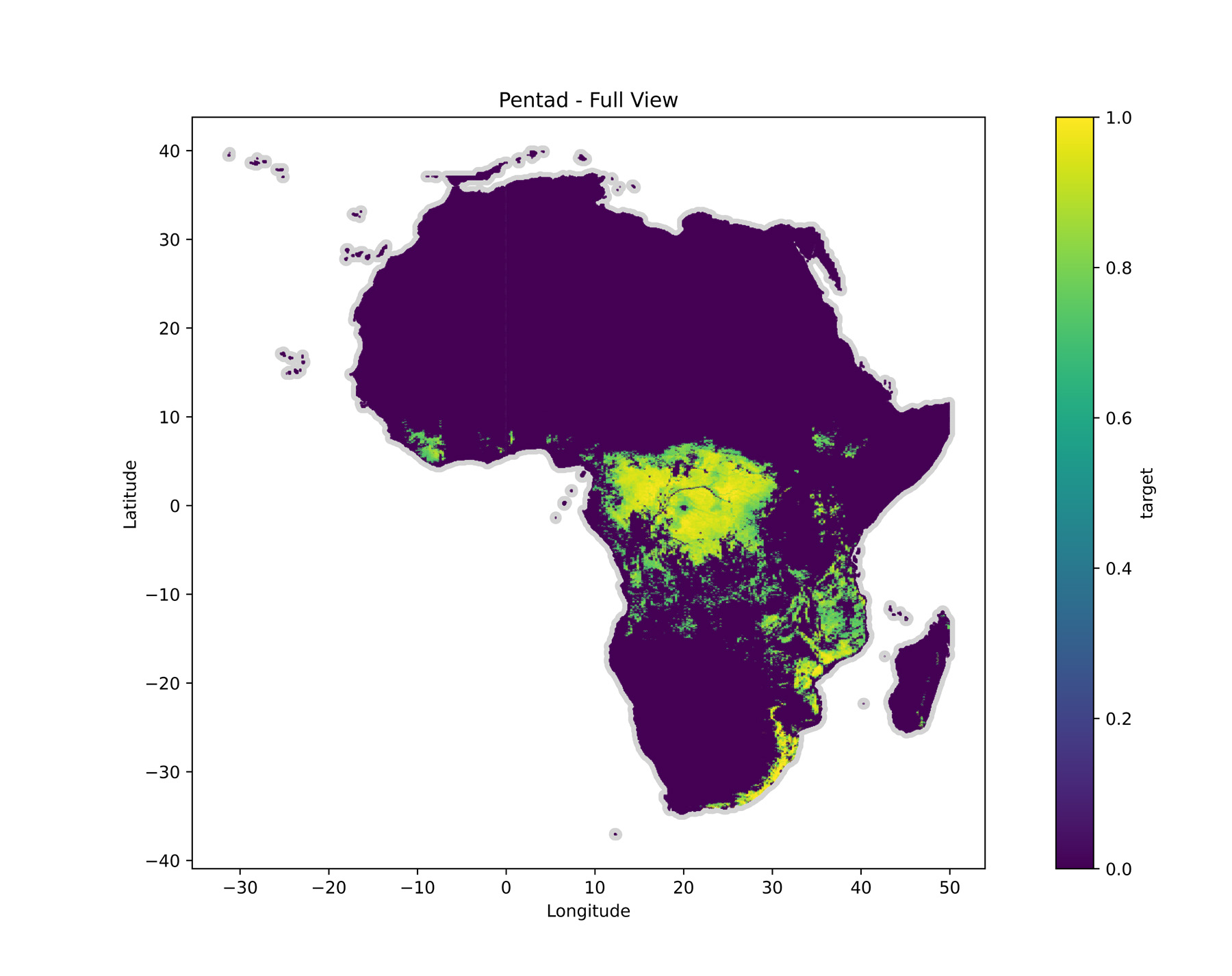
Figure 2: Africa distribution maps for Crowned Eagle produced from ABAP, iNaturalist and eBird data using a Random Forest model and various predictor variables. Colour gradient is predicted probability of occurrence, with a 0.5% threshold applied at a pentad scale p>0.5 (from Lee 2024).
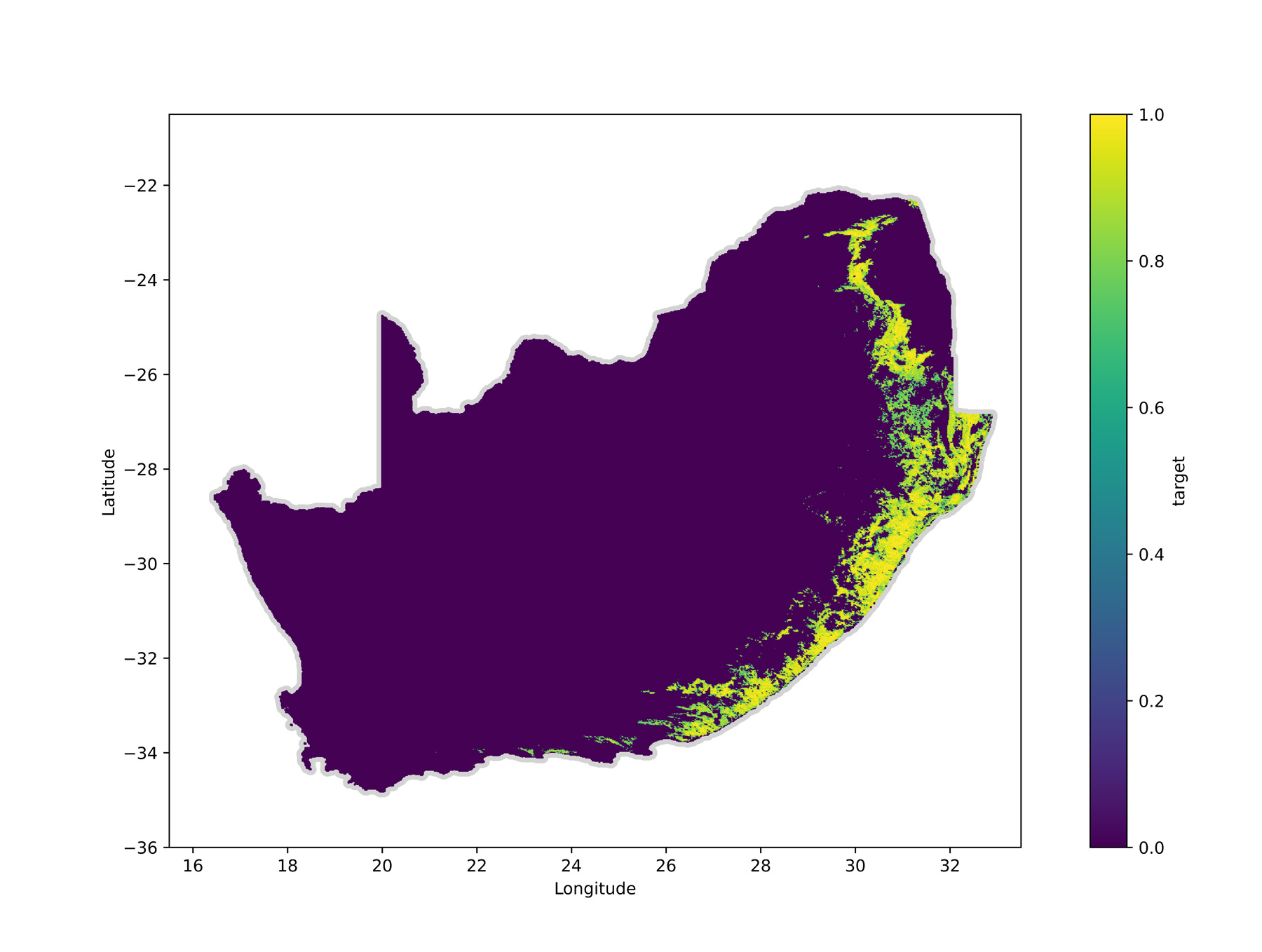
Figure 3: Regional probability distribution map for Crowned Eagle produced from BirdLasser location data at 2x2km grid scale, using iNaturalist and eBird as absence data only. This represents the predicted range for the 2016-2023 period, at a pentad scale p>0.5 (from Lee 2024).
Ecology
Important apex predators, Crowned Eagles’ preferred habitat is primary forest. They also inhabit woodland and forested gorges of savanna and shrubland, as well as modified habitats like exotic tree plantations. Being large birds, they require large trees to nest in and usually select the emergent trees as easy access into the nest is important. In most of their range, they breed biannually (i.e. once every two years) with a post-fledging period of up to 350 days (Shultz 2002, Malan 2005). In some urban habitats that are associated with natural forests (e.g. in Durban, KwaZulu-Natal), these populations appear to have a high tolerance to human activity and have shifted to breeding annually possibly in response to higher food availability (McPherson et al. 2016b, Muller et al. 2020). In KwaZulu-Natal, nest density is high, with nests being 2-3 km apart on average in the greater Durban area (McPherson et al. 2016b) with adult home ranges being 6.3-13 km2 (McPherson et al. 2019). However, some nests closer to urbanization have more breeding failures (Muller et al. 2020), yet Crowned Eagle are able to persist in these transformed habitats. Their diet is composed primarily of mammals, particularly hyraxes, primates and antelopes, and less frequently birds, and reptiles (Boshoff et al. 1994, McPherson et al. 2016a). Evidence of widespread threats suggests that their population is declining, especially considering their slow reproduction rate. A generation length of 18.5 years, based on a published estimate of mean age at first breeding and extrapolated maximum longevity in the wild, was provided by BirdLife International (2018).
Threats & Conservation
Threats
Most of the threats faced by Crowned Eagles are linked to anthropogenic activities. While habitat destruction and disturbance are considerable threats (e.g. McPherson et al. 2021, Maseko et al. 2023), within the region, this species does appear able to persist in degraded landscapes and has some flexibility to switch to alternative prey (e.g. Reeves and Boshoff 2016, McPherson et al. 2016a). However, this exposes Crowned Eagle to a suite of novel threats including direct persecution where human-wildlife conflict is experienced because of their occasional predation on domestic animals (McPherson et al. 2016a, Maseko et al. 2023), and collisions with infrastructure (i.e. buildings, power lines, vehicles) (McPherson et al. 2021).
Although they have adapted well to alien plantations in some areas, activities linked to commercial forestry (e.g. timber extraction, charcoal production) may impact breeding activities and prey availability. Exposure to weather extremes also influences their survival, which could be worsened by climate change.
Conservation Measures Underway
Most of South Africa’s forests are managed as conservation areas, with a government mandate in place protecting all forests on private, communal and state-owned land in line with the National Forest Act (no. 84 of 1998).
A significant amount of research investigating the ecology, diet and habitat requirements of the Crowned Eagle in KwaZulu-Natal has been undertaken, particularly on the urban populations. The Crowned Eagle Research group continues to monitor the population in and around the Durban Metropolitan Open Space System. Research is ongoing through the University of KwaZulu-Natal in collaboration with the FitzPatrick Institute of African Ornithology at the University of Cape Town and various other academic institutions, conservation agencies and raptor specialists with extensive community support.
In Mpumalanga, the Crowned Eagle Working Group, supported by BirdLife Lowveld, forestry companies, private landowners and interested citizens, monitor the breeding populations within this region.
In the Garden Route, large areas of forest habitat are protected in the National Park. Here, monitoring by SANParks of the population status, breeding success and dietary requirements of the species is ongoing. This involves various levels of stakeholder engagement and collaboration.
Conservation Measures Proposed
Ongoing monitoring or regular surveys of population trends should be conducted within their known range to ensure timeous intervention as and where needed. Counteracting the threats to forest habitats through sound management – this is crucial throughout the species’ range. Monitor rates of habitat loss and degradation across its range. Increased collaboration and engagement with stakeholders within their range is needed, including landowners such as forest companies and private individuals whose properties hold Crowned Eagle nests. A Species Management Plan may be appropriate considering that they are important apex predators of forest habitats. Although Crowned Eagles have adapted well to exotic tree plantations in some areas, efficient management measures need to be implemented, and research conducted about the use and sustainability of this artificial habitat.
Research Priorities and Questions
- Establish a more robust regional population estimate. This could be done by collaborating with various stakeholders, through direct observations, interviews with landowners, reporting programmes by bird watchers, as well as collaboration between conservation agencies managing the range.
- Gaining insight into the species’ demographics, the severity of threats and their response to disturbance, particularly in understudied areas, would further support the formulation of conservation measures for the species.
- Large tracts of apparently suitable habitat are uninhabited. Establishing why, and indeed whether these are uninhabited.
Contributors & References
Assessor/s
Melanie de Morney, Wessel Vermeulen
Reviewer/s
Sanjo Rose, Mark Brown
References
BirdLife International. 2018. Stephanoaetus coronatus. The IUCN Red List of Threatened Species 2018: e.T22696201A129914678. Available: https://dx.doi.org/10.2305/IUCN.UK.2018-2.RLTS.T22696201A129914678.en [Accessed on 2 October 2024].
Boshoff AF. 1988. The spacing and breeding periodicity of Crowned Eagles in the southern Cape Province. Bontebok 6: 34–36.
Boshoff AF. 1997. Crowned Eagle. In: Harrison JA, Allan DG, Underhill LG, Herremans M, Tree AJ, Parker V, Brown CJ (eds), The Atlas of Southern African Birds, vol. 1: Non-passerines. Johannesburg: BirdLife South Africa. pp 194–195.
Boshoff AF, Palmer NG, Vernon CJ, Avery G. 1994. Comparison of the diet of Crowned Eagles in Savanna and Forest Biomes of south-eastern South Africa. South African Journal of Wildlife Research 24: 26–31.
Cillié B, Oberprieler U. 2012. Pocket Guide to Birds of Southern Africa. 5th edn. Cape Town: Sunbird Publishers. pp 55.
de Morney MA, Vermeulen WJ, Kleyn JR, Moolman L. 2024. African Crowned Eagle (Stephanoaetus coronatus) monitoring in the Garden Route: a historic review, 1980s–2015. South African National Parks, Scientific Services. Internal report: 55/2024.
Ferguson-Lees J, Christie DA. 2001. Raptors of the World. New York: Houghton Mifflin Company.
Herd H. 2010. Crowned Eagle (Stephanoaetus coronatus) monitoring in the Garden Route National Park – a review of monitoring data (2000–2009). Unpublished internal report. Knysna: SANParks.
Lee ATK. 2024. Regional Red Data Book of the Birds of South Africa, Lesotho and Eswatini: SABAP2 synthesis and supporting information and graphics for Crowned Eagle. Unpublished report. Johannesburg: BirdLife South Africa.
Malan G. 2005. Reproductive success and nesting periodicity of a pair of African Crowned Eagles breeding in KwaZulu-Natal. Ostrich: Journal of African Ornithology 76(3–4): 215–218.
Maseko MS, Zungu MM, Gumede TS, Downs CT. 2023. Occupancy and detectability of African Crowned Eagles in an urban mosaic landscape: the importance of natural forest areas. Urban Forestry & Urban Greening 85: 127976.
McPherson SC, Brown M, Downs CT. 2016a. Diet of the Crowned Eagle (Stephanoaetus coronatus) in an urban landscape: potential for human-wildlife conflict? Urban Ecosystems 19: 383–396.
McPherson SC, Brown M, Downs CT. 2016b. Crowned Eagle nest sites in an urban landscape: requirements of a large eagle in the Durban Metropolitan Open Space System. Landscape and Urban Planning 146: 43–50.
McPherson SC, Brown M, Downs CT. 2019. Home range of a large forest eagle in a suburban landscape: Crowned Eagles in the Durban Metropolitan Greenspace System, South Africa. Journal of Raptor Research 53: 180–188.
McPherson SC, Sumasgutner P, Hoffman BH, Padbury BD, Brown M, Caine TP, Downs CT. 2021. Surviving the urban jungle: anthropogenic threats, wildlife conflicts, and management recommendations for African Crowned Eagles. Frontiers in Ecology and Evolution 9: 662623.
Monadjem A, Rasmussen MW. 2008. Nest distribution and conservation status of eagles, selected hawks and owls in Swaziland. Gabar 19: 1–22.
Muller R, Amar A, Sumasgutner P, McPherson SC, Downs CT. 2020. Urbanization is associated with increased breeding rate, but decreased breeding success, in an urban population of near-threatened African Crowned Eagles. The Condor: Ornithological Applications 122: 1–11.
Reeves B, Boshoff AF. 2016. Is diet adaptability a reason for the persistence of African Crowned Eagles Stephanoaetus coronatus in altered habitats? Ostrich 87(1): 29–36. https://doi.org/10.2989/00306525.2015.1108372.
Shultz S. 2002. Population density, breeding chronology and diet of Crowned Eagles Stephanoaetus coronatus in Taï National Park, Ivory Coast. Ibis 144: 135–138.
Simmons RE. 2005. African Crowned Eagle. In: Hockey PAR, Dean WRJ, Ryan PG (eds), Roberts birds of southern Africa (7th Edn). Cape Town: Trustees of the John Voelcker Bird Book Fund. pp 541–542.
Citation
de Morney M, Vermeulen W 2025. Crowned Eagle. In: Lee ATK, Rose S, Banda S, Bezeng SB, Maphalala MI, Maphisa DH, Smit-Robinson H (eds), The 2025 Red Data Book of Birds of South Africa, Lesotho and Eswatini. Johannesburg, South Africa: BirdLife South Africa. Available at: https://www.birdlife.org.za/red-list/crowned-eagle/
Our generous sponsors


