


Burchell’s Courser
Cursorius rufus

Number Of Mature
Individuals (Regional)
<10 000

Regional
Population Trend
Decreasing
2025
Regional Category
Vulnerable
Search by species
CONTENTSOverview
Names
|
IOC English Name: |
Burchell’s Courser |
|
SA & IOC Scientific Name: |
Cursorius rufus |
|
BirdLife International Taxonomy (scientific name): |
Cursorius rufus |
|
Order: |
CHARADRIIFORMES |
|
Family: |
Glareolidae |
|
Species name author: |
Gould 1837 |
|
Afrikaans: |
Bloukopdrawwertjie |
|
Sesotho (South Africa): |
mokopjwane-wa-bophirima |
|
Sesotho (Lesotho): |
mokopjoane-oa-bophirima |
|
Siswati: |
|
|
Zulu: |
unobulongwe wogwadule |
Current Assessment Status
|
2025 Regional Category [Criteria] |
VU [A2c; C1+2a(i)] |
|
2024 Global Category [Criteria] |
LC (BirdLife International 2016) |
|
Population size (Regional) |
Unknown, but likely <10 000 mature individuals |
|
Population size (Global) |
Unknown |
|
Distribution size (EOO) (Regional) km2 |
641 824 (Lee 2024) |
|
Distribution size (EOO) (Global) km2 |
2 020 000 (BirdLife International 2016) |
|
Distribution size (AOO) (Regional) km2 |
50 220 (Lee 2024) |
|
Generation time |
7.3 years (BirdLife International 2016) |
|
Status change reason |
No change |
|
Migrant (in the region) |
No |
|
Regional endemic |
Near endemic |
Historic Listing Information
|
2000 Regional Status |
LC |
|
2015 Regional Status |
VU [A2c+4c; C1+2a(i)] |
|
Status change reason (if applicable) |
Genuine |
|
2015 Population size (Regional) |
<10 000 |
|
2015 Global Status |
LC |
Reason for Inclusion
Reason for Inclusion in the Assessment
This species was previously assessed as Vulnerable in the region based on its small and declining population (Peacock 2015). The species is near endemic to Southern Africa, with c. 50% of its global distribution occurring within the region.
Category Justification
Category Justification
Burchell’s Courser remains poorly studied in the region with little new research since the regional assessment in 2015.
Burchell’s Courser is assessed as Vulnerable under Criterion A2c due to a predicted 36.7% decrease in Area of Occupancy (AOO) over 10 years or three generations (21.9 years), based on Southern African Bird Atlas Project (SABAP2) data (Figures 1 and 2, Lee 2024). This meets the threshold for Vulnerable under Criterion A2c (≥30% reduction). The Extent of Occurrence (641 824 km²) and AOO (50 220 km²) do not meet the thresholds for threatened categories under Criterion B (Lee 2024). While the population size is unknown, it is unlikely that it now exceeds 10 000 mature individuals (2015 estimate) hence still meets the threshold for Vulnerable under the Criterion C1 (Figure 1).
Burchell’s Courser occurs at low densities in fragmented subpopulations that are unlikely to support >1000 individuals per subpopulation, so Criterion C2a(i) remains supported (Peacock 2015).
Given that Burchell’s Courser is a near endemic to the region and is poorly studied in Namibia and Botswana there is insufficient evidence that a rescue effect can be relied upon for this species. As a precautionary approach, the assessment outcome of Vulnerable is not adjusted but is maintained.
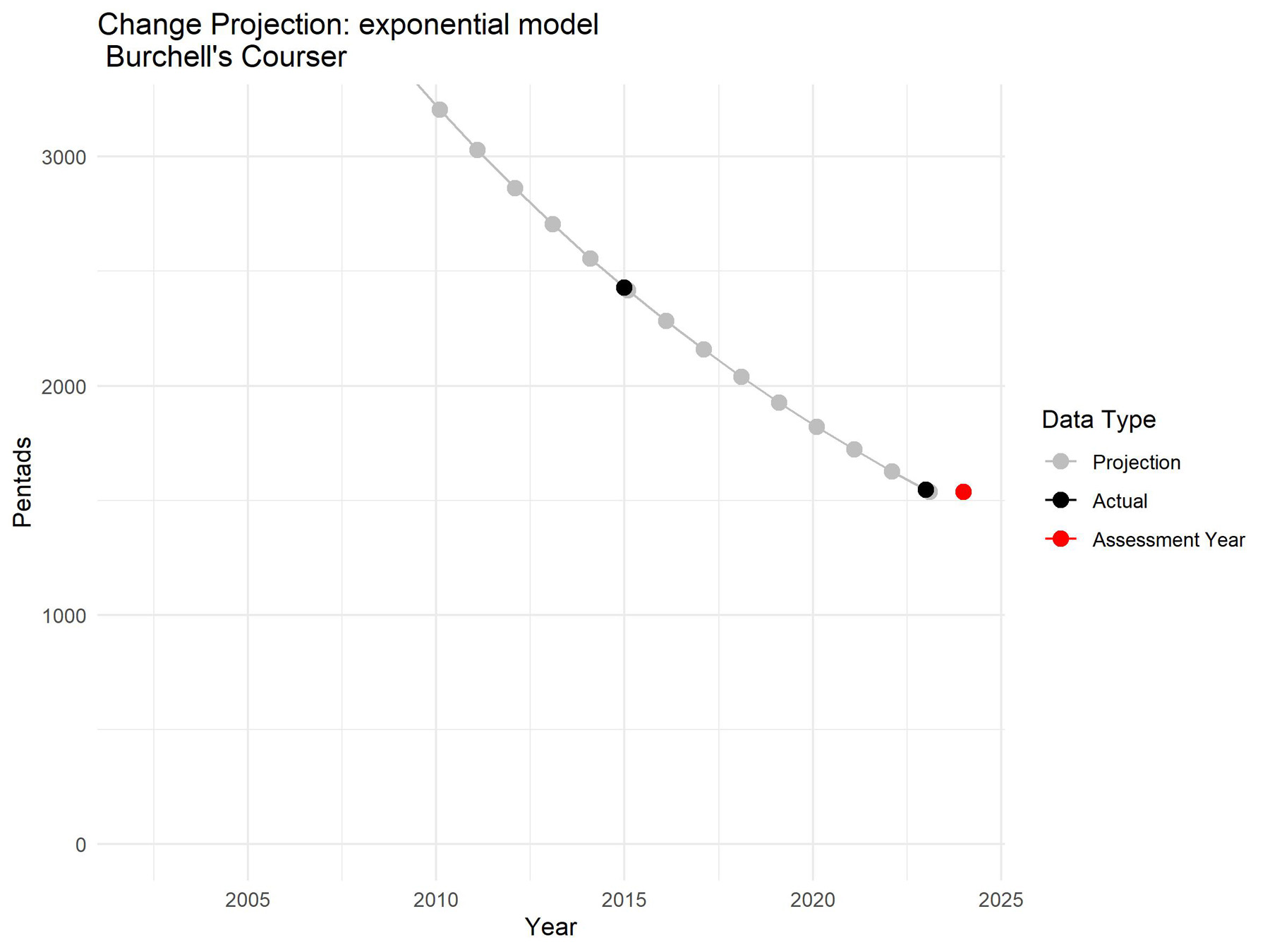
Figure 1: A visualisation of potential range change of Burchell’s Courser since 2010, applicable to Criteria A, with SABAP2 pentads a surrogate for Area of Occupancy, using generation length and an exponential model of change (from Lee 2024).
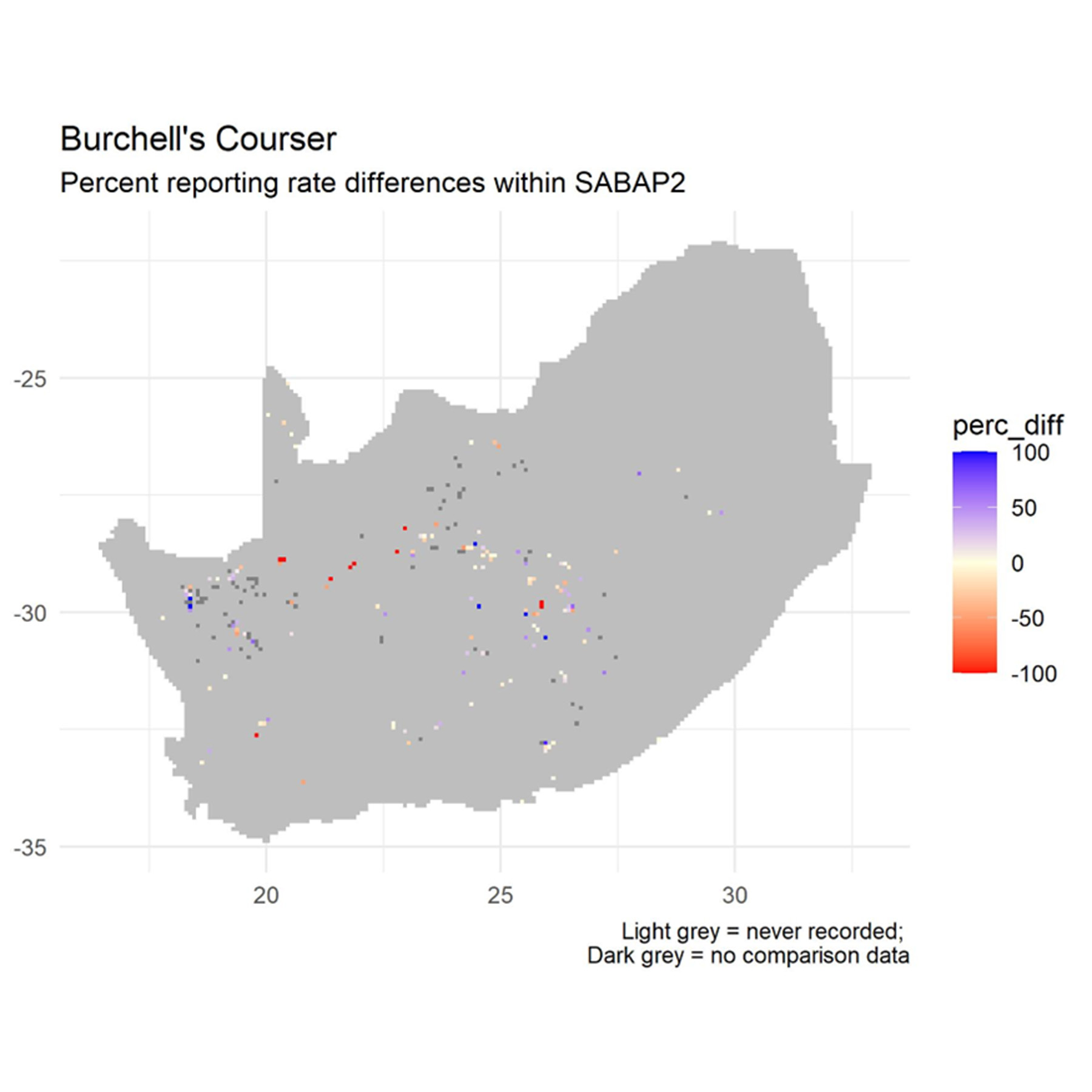
Figure 2: Change in reporting rate within the early (2007-2015) and late (2016-2023) periods of SABAP2 for Burchell’s Courser (from Lee 2024).
Population Justification
The global population has not been quantified (BirdLife International 2016). The regional population size remains unknown but there is no evidence to suggest that it has increased from the estimate in 2015 of <10 000 mature individuals (Peacock 2015). From the decline in AOO, it is inferred that the population continues to decline (Figure 1, Lee 2024). Obtaining accurate population estimates is challenging due to the species' nomadic behaviour and the vast, sparsely populated landscapes it inhabits. Confidence in this estimate is low (Lee 2024).
Trend Justification
SABAP2 data analysis shows a stable probability of reporting, but with low confidence (Lee 2024). However, the predicted range change suggests a 36.7% decrease over 10 years or three generations (Lee 2024; Table 1). The global population trend is also reported as decreasing (BirdLife International 2016). Given these trends, it appears that the population is declining, but more research is needed to confirm the magnitude of this decline. Confidence in this trend is medium.
Table 1: Prediction model of the number of pentads Burchell’s Courser occurred in for the period up to 2015, and then until the end of 2023, which indicates invoking VU for Criteria A2c (from Lee 2024).
|
Information |
|
|
Pentads 2015 |
2429 |
|
Pentads 2023 |
1546 |
|
Annual rate of change |
0.945 |
|
Percent change (10 years or 3 generations) |
-36.70% |
|
Category (A2) |
VU |
Biology & Ecology
Taxonomy
Two subspecies were once described; birds east of 21°E being ascribed to the nominate C. r. rufus, and birds from Bushmanland, Namibia and Angola to C. r. theresae. However, most authors now consider the species to be monotypic (Lloyd 2005).
Identification
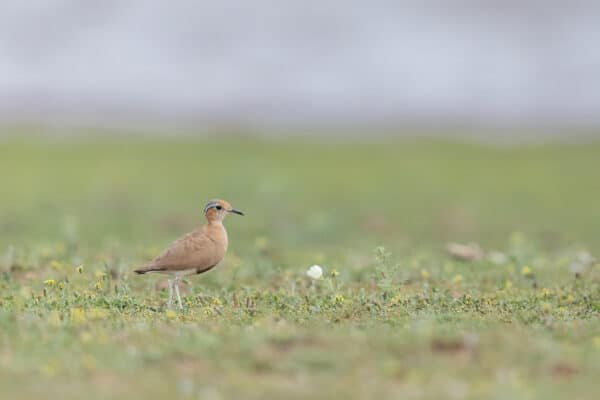
20–22 cm. A medium-sized, terrestrial wader usually encountered in pairs or family groups. Upper parts are sandy to rufous-brown, with a richer tawny-brown forehead. The hind-crown is blue-grey, the key diagnostic feature. The white eye-surround extends back behind the eye in a broad white line, meeting on the nape in a nuchal collar forming a V-shape, bordered above and below by narrow black bands. The throat is whitish. The fore-neck and upper breast is pinkish buff to sandy brown, sharply demarcated from a white belly by a transverse dark band. The bill is grey-black, longish and clearly decurved. The eyes are dark brown, and the legs are long and off-white.
Distribution
Burchell’s Courser is near-endemic to southern Africa (Figure 2). It occurs widely but erratically in a highly fragmented pattern over much of the arid interior of South Africa and higher parts of the inland plateau, excluding Lesotho. Outside of the region, it is reasonably numerous and widespread in southern and western Namibia, extending marginally into south-western Angola.
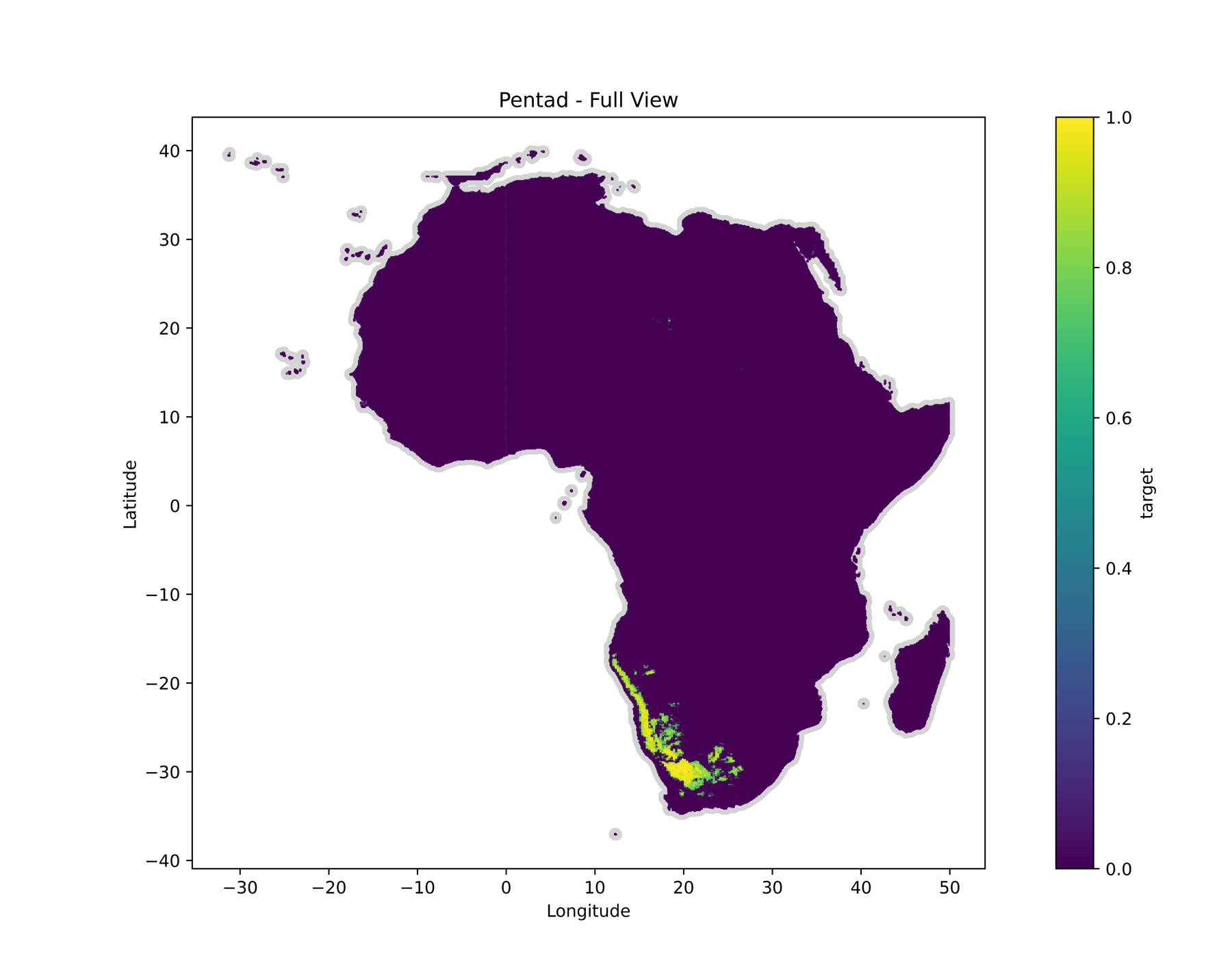
Figure 2: An Africa-wide probability distribution model of Burchell’s Courser at the pentad scale, trained by data from ABAP, iNaturalist and eBird data using a Random Forest model (from Lee 2024).
Ecology
Habitat:
Inhabits open, desert and semi-desert habitats, including heavily grazed or burnt grassland, stony or gravelly plains, stubbly sandveld, dry riverbeds, and edges of saline pans (Hockey and Douie 1995, Maclean and Herremans 1997).
Migration:
Considered locally nomadic, but few details are known about its movements (Urban et al. 1986, del Hoyo et al. 1996).
Breeding:
Nests in solitary pairs, with breeding peaking in the dry season just before the rains (between August and December). Eggs are laid directly onto bare ground (del Hoyo et al. 1996).
Diet:
Predominantly insects, including harvester termites, larval Lepidoptera, beetles, weevils, and ants. Occasionally takes seeds (del Hoyo et al. 1996, Lloyd 2005).
Threats & Conservation
Threats
- Potential impacts of habitat loss and degradation due to agricultural intensification, including irrigation and increased use of pesticides (Lloyd 2005).
- Poor grazing practices leading to habitat degradation (del Hoyo et al. 1996).
- Disturbance from domestic livestock (del Hoyo et al. 1996).
- Potential impacts of climate change and desertification, particularly in the arid Nama Karoo and Succulent Karoo biomes (Cunningham et al. 2016).
Conservation Measures Underway
This species is not currently well represented in protected areas based on the number of pentads in which the species has been recorded (Lee 2024).
In South Africa, the species is protected under the National Environmental Management: Biodiversity Act (NEMBA) of 2004, which provides for the management and conservation of the country’s biodiversity.
Conservation Measures Proposed
- Conduct comprehensive surveys to determine accurate population size and trends, focusing on core areas identified through SABAP2 data.
- Encourage targeted survey efforts in remote, under-surveyed areas of the species’ range, possibly through coordinated citizen science initiatives.
- Protect and manage key habitats, particularly in the arid interior where the species is most prevalent.
- Implement awareness campaigns and biodiversity stewardship programs targeting private landowners, emphasizing the importance of maintaining suitable habitat for the species.
- Collaborate with Namibia on conservation efforts, as the species’ range spans both countries. This could include joint monitoring programs and sharing of best practices for habitat management.
- Develop and implement a species-specific conservation action plan, considering the species’ nomadic behaviour and specific habitat requirements.
- Investigate the potential for establishing additional protected areas or corridors in key habitats for the species.
Research Priorities and Questions
- Urgently required: determine accurate regional and global population estimates using standardized survey methods suitable for nomadic species.
- Investigate the extent and patterns of the species’ seasonal and nomadic movements, possibly using tracking technology to better understand its spatial ecology.
- Investigate the likelihood of rescue effects to the regional subpopulation from extralimital populations.
- Investigate the compatibility of the species with different farming practices, particularly grazing levels, fire regimes, and agriculture, to inform land management recommendations.
- Investigate the environmental triggers of nomadic movements, including an assessment of the potential impacts of climate change on the species’ distribution and habitat, including potential shifts in suitable areas and its ability to track its niche through corridors and dispersal routes of low ecological resistance.
- Investigate the causes of range contraction and population decline, particularly in areas where the species has disappeared or significantly decreased.
- Examine the species’ breeding success and factors affecting it in different parts of its range.
- Investigate the potential for genetic studies to assess population structure and potential isolation of subpopulations.
Contributors & References
Assessor/s
David Ehlers Smith
Reviewer/s
Ursula Bryson, Sanjo Rose
References
BirdLife International. 2016. Cursorius rufus. The IUCN Red List of Threatened Species 2016: e.T22694116A93439396. Available: https://dx.doi.org/10.2305/IUCN.UK.2016-3.RLTS.T22694116A93439396.en [Accessed on 8 August 2024].
Cunningham SJ, Madden CF, Barnard P, Amar A. 2016. Electric crows: powerlines, climate change and the emergence of a native invader. Diversity and Distributions 22(1): 17–29.
del Hoyo J, Elliott A, Sargatal J (eds). 1996. Handbook of the Birds of the World, vol. 3: Hoatzin to Auks. Barcelona: Lynx Edicions.
Hockey PAR, Douie C. 1995. Waders of southern Africa. Cape Town: Struik Winchester.
Lee ATK. 2024. Regional Red Data Book of the Birds of South Africa, Lesotho and Eswatini: SABAP2 synthesis and supporting information and graphics for Burchell’s Courser. Unpublished report. Johannesburg: BirdLife South Africa.
Lloyd P. 2005. Burchell’s Courser. In: Hockey PAR, Dean WRJ, Ryan PG (eds), Roberts birds of southern Africa 7th Edn. Cape Town: Trustees of the John Voelcker Bird Book Fund. pp 434–435.
Maclean GL, Herremans M. 1997. Burchell’s Courser. In: Harrison JA, Allan DG, Underhill LG, Herremans M, Tree AJ, Parker V, Brown CJ (eds), The Atlas of Southern African Birds, vol. 1: Non-passerines. Johannesburg: BirdLife South Africa. pp 454–455.
National Environmental Management: Biodiversity Act, 2004 (Act No. 10 of 2004). Government Gazette 467(26436).
Peacock F. 2015. Burchell’s Courser. In: Taylor MR, Peacock F, Wanless RW (eds), The Eskom Red Data Book of Birds of South Africa, Lesotho and Swaziland. Johannesburg, South Africa: BirdLife South Africa. pp 200–202.
Urban EK, Fry CH, Keith S (eds). 1986. The Birds of Africa, vol. 2. London: Academic Press.
Citation
Ehlers Smith DA 2025. Burchell’s Courser. In: Lee ATK, Rose S, Banda S, Bezeng SB, Maphalala MI, Maphisa DH, Smit-Robinson H (eds), The 2025 Red Data Book of Birds of South Africa, Lesotho and Eswatini. Johannesburg, South Africa: BirdLife South Africa. Available at: https://www.birdlife.org.za/red-list/burchells-courser/
Our generous sponsors


