


Black Stork
Ciconia nigra

Number Of Mature
Individuals (Regional)
319 – 638

Regional
Population Trend
Decreasing
2025
Regional Category
Endangered
Search by species
CONTENTSOverview
Names
|
IOC English Name: |
Black Stork |
|
SA & IOC Scientific Name: |
Ciconia nigra |
|
BirdLife International Taxonomy (scientific name): |
The same as SA & IOC |
|
Order: |
CICONIIFORMES |
|
Family: |
Ciconiidae |
|
Species name author: |
Linnaeus 1758 |
|
Afrikaans: |
Grootswartooievaar |
|
Sesotho (South Africa): |
Mokorwane |
|
Sesotho (Lesotho): |
Mokoroane |
|
Siswati: |
|
|
Zulu: |
Unowanga |
Current Assessment Status
|
2025 Regional Category [Criteria] |
EN [A2b] |
|
2024 Global Category [Criteria] |
LC (BirdLife International 2017) |
|
Population size (Regional) |
319 – 638 (300 breeding pairs, Lee et al. 2023) |
|
Population size (Global) |
24 000 – 44 000 individuals (Delany and Scott 2006) |
|
Distribution size (EoO) (Regional) km2 |
1 359 630 (Lee 2024) |
|
Distribution size (EoO) (Global) km2 |
25 100 000 (BirdLife International 2017) |
|
Distribution size (AOO) (Regional) km2 |
51 000 – 669 380 (Lee 2024) |
|
Generation time |
15.9 years (BirdLife International 2017) |
|
Status change reason |
Genuine change in status |
|
Migrant (in the region) |
Yes |
|
Regional endemic |
No |
Historic Listing Information
|
2000 Regional Status |
NT [A2c] |
|
2015 Regional Status |
VU [A2c; D1] |
|
Status change reason (if applicable) |
Criteria revision |
|
2015 Population size (Regional) |
<1000 |
|
2015 Global Status |
LC |
Reason for Inclusion
Reason for Inclusion in the Assessment
>5% of the global distribution of Black Stork Ciconia nigra occurs within the region. In addition, the species was listed as regionally Vulnerable in 2015 (Taylor 2015).
Category Justification
Category Justification
A recent conservation assessment (Lee et al. 2023) advises the regional status be ‘Endangered’. Their IUCN categories and criteria model and changes in reporting rates and range between Southern African Bird Atlas Projects (SABAP1 and SABAP2) suggest a potential population size reduction of over 50% between the late 1980s and present (approximately 40 years, or three generations). This decline is reflected in both range changes and relative abundance, qualifying the species as “Endangered” under Criterion A2b (population reduction observed, estimated, inferred, or suspected in the past where the causes of reduction may not have ceased, may not be understood, or may not be reversible, based on an index of abundance appropriate to the taxon). Additionally, the small population size (fewer than 1000 individuals), combined with ongoing projected declines, makes the species Vulnerable under criterion C1 if projected declines are 10% within two generations (32 years), and Endangered if projected declines are 20% (although this is unlikely according to SABAP2 data). The population of the Black Stork currently occupies an Extent of Occurrence (EOO) and Area of Occupancy (AOO) of greater than 20 000 km² and 2 000 km², respectively, and thus does not meet the thresholds under criterion B (geographical range). Foraging range from Maxent models was c.150 000 km2 with breeding range half of that. The population is not severely fragmented, and it is not experiencing extreme fluctuations in its EOO, AOO, number of locations, or number of mature individuals. Information to inform criterion E is lacking, specifically regarding adult and juvenile survival, maximum age of reproduction, and other metrics. While it is uncertain whether adjacent populations in Zimbabwe and Namibia are sources or sinks for the regional population, it is strongly suspected that they do not represent a significant rescue effect.
Based on the above evidence, despite low confidence in the population decline between atlas periods based on different sampling methods, the lack of breeding activity likely tied to rainfall, ongoing low recruitment, impacts of anthropogenic disturbance, and potential effects of climate change, the Black Stork should be classified as regionally Endangered. This is a contrast to the 2017 global assessment, which lists the species as Least Concern, with some northern hemisphere populations increasing. However, the resident behaviour of this regional population warrants its own regional status.
Population Justification
The recent population estimation (Lee et al. 2023) for the Black Stork employed a combination of field-based surveys, citizen science data, and advanced modeling techniques. The study employed Maxent models to predict breeding and foraging ranges using occurrence records from the BirdLasser mobile app and historical nest data. For breeding population estimates, the models indicated suitable habitat and potential carrying capacity, suggesting a potential breeding population carrying capacity range of 924 – 2 228 pairs. For non-breeding population estimates, random forest predictive modeling was applied to SABAP2 presence/absence data models, estimating a population range of 319 – 638 individuals (300 breeding pairs), with an upper unlikely limit of 1 596 individuals. Population estimates from Lesotho suggest between 20 and 50 breeding pairs (Kopij 2016, Ambrose 2020), and were modelled to be a population stronghold.
Trend Justification
The regional trend justification for the Black Stork population (Lee et al. 2023) is based on long-term citizen science data from SABAP1 and SABAP2 (Brooks et al. 2022) and IUCN change models considering generation length. Comparing data between SABAP1 and SABAP2 reveals a significant decline in reporting rates and range, with a reporting rate reduction of 75% and range contraction of 35%. The range contraction is observed mostly over the western, more arid parts of the country.
Additionally, the IUCN change models, using a starting population estimate of 950 individuals in 1990 and 600 individuals in 2020, indicate a population decline of 50% over three generations (approximately 40 years). However, SABAP2 data suggests that the population is not experiencing significant declines within the 2008–2019 period (Lee et al. 2023). The most recent analyses of SABAP2 data and other citizen science data sets (Coordinated Avifaunal Roadcounts (CAR), Coordinated Waterbird Counts (CWAC)) suggest a population that has reached a stable level, possibly due to restricted presence in protected areas in South Africa: 42% of the 938 SABAP2 pentads where the species has been recorded are in either nature reserves, national parks or pentads with some other form of protected status (Lee 2024). However, significant range contraction is also predicted within the SABAP2 period (Lee 2024). Breeding surveys and habitat suitability models indicate a lack of recent breeding activity, likely tied to rainfall patterns and anthropogenic disturbances (Lee et al. 2023). Overall, these findings point to a historic population decline over three generations, with low recruitment, declining river water quality, and potential future impacts from climate change, supporting the assessment of the species as regionally Endangered.
Biology & Ecology
Taxonomy
The Black Stork was first described by Carl Linnaeus in 1758. It was previously thought to be closely related to the White Stork (C. ciconia) based on physical similarities. However, genetic analysis revealed that the Black Stork is an early offshoot within the Ciconia genus and thus monotypic (Liang et al. 2019).
Identification
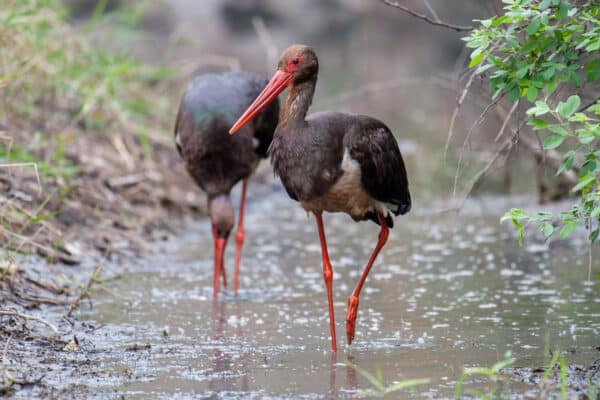
95–110 cm, 2.8 kg. The Black Stork is a large, long-legged wading bird. Its plumage is predominantly black, with an iridescent green sheen on the back and a purplish sheen on the wing coverts. The breast is black at the top, transitioning to white on the lower belly and undertail feathers. In contrast to the dark feathers, the Black Stork has a long, red bill and legs, with red skin around the eyes. Juveniles are browner and lack the iridescence, with their bill, facial skin, and legs being a dull grey-green (Anderson 2005).
Distribution
The Black Stork in South Africa, Lesotho, and Eswatini is primarily resident although there is dispersal during the non-breeding season, with significant portions of the population found in protected areas such as the Kruger National Park, where it is known to breed in the northern sections (Lee et al. 2023). This species breeds in the eastern escarpment and associated mountain ranges, including the Soutpansberg, Waterberg, and Magaliesberg ranges, and extends to some areas in the Eastern, Western and Northern Cape Provinces, where it is becoming increasingly rare. The SABAP2 report rate prediction model (Figure 1) reveals that the species is now limited to a few population strongholds, particularly in Lesotho and the Waterberg. The Karoo distribution is associated with seasonal movements (Lee 2024).
During the non-breeding season, Black Storks disperse more widely, utilising a variety of water bodies such as rivers, dams, and wetlands for foraging. The overall distribution is shaped by the availability of suitable breeding cliffs and foraging riparian habitats, but also avoids areas with high human development footprints (Figure 1).
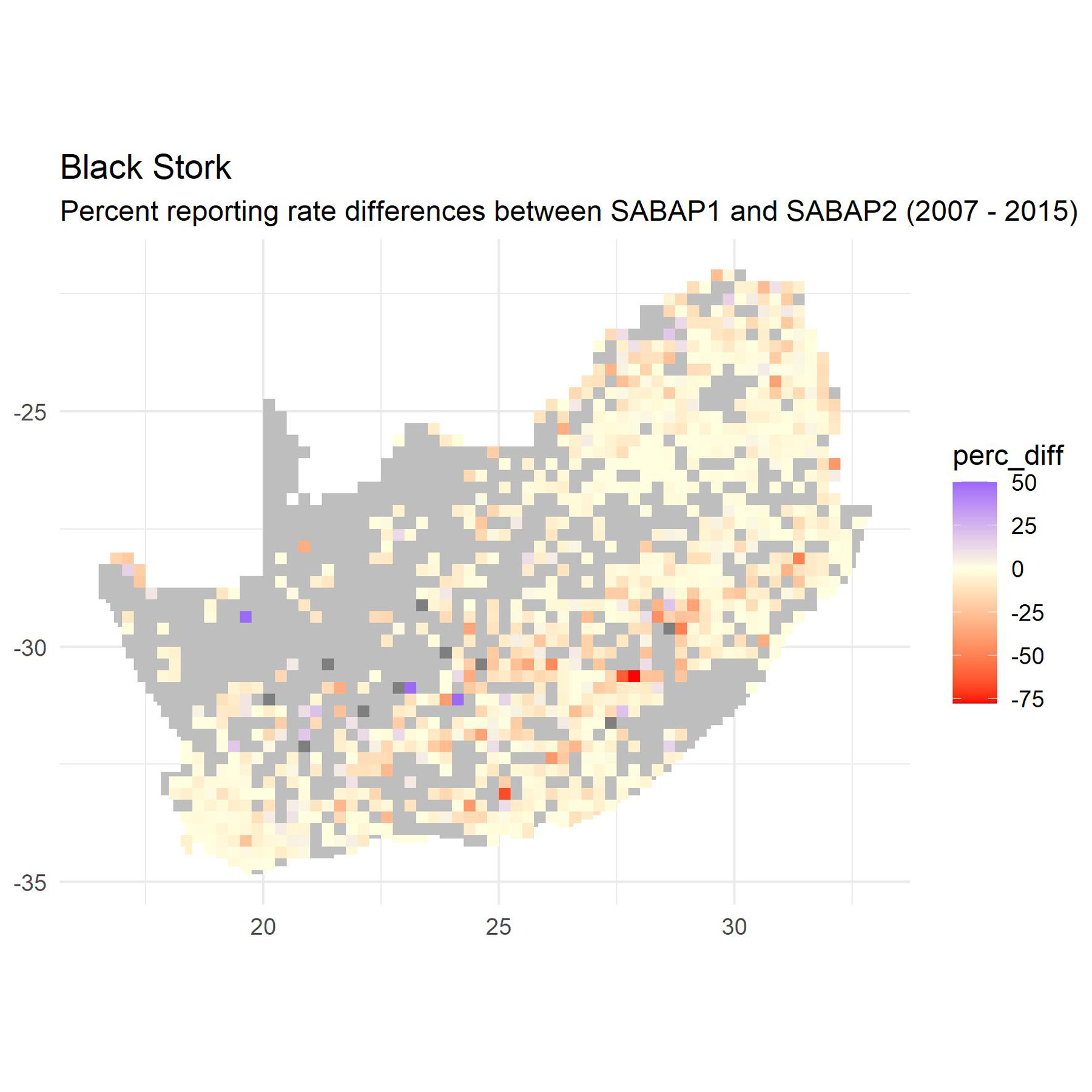
Figure 1a: SABAP distribution map for Black Stork showing percent reporting rate change between SABAP1 (1987-1991) and SABAP2 (2007-2015), illustrating the extensive regional former range.
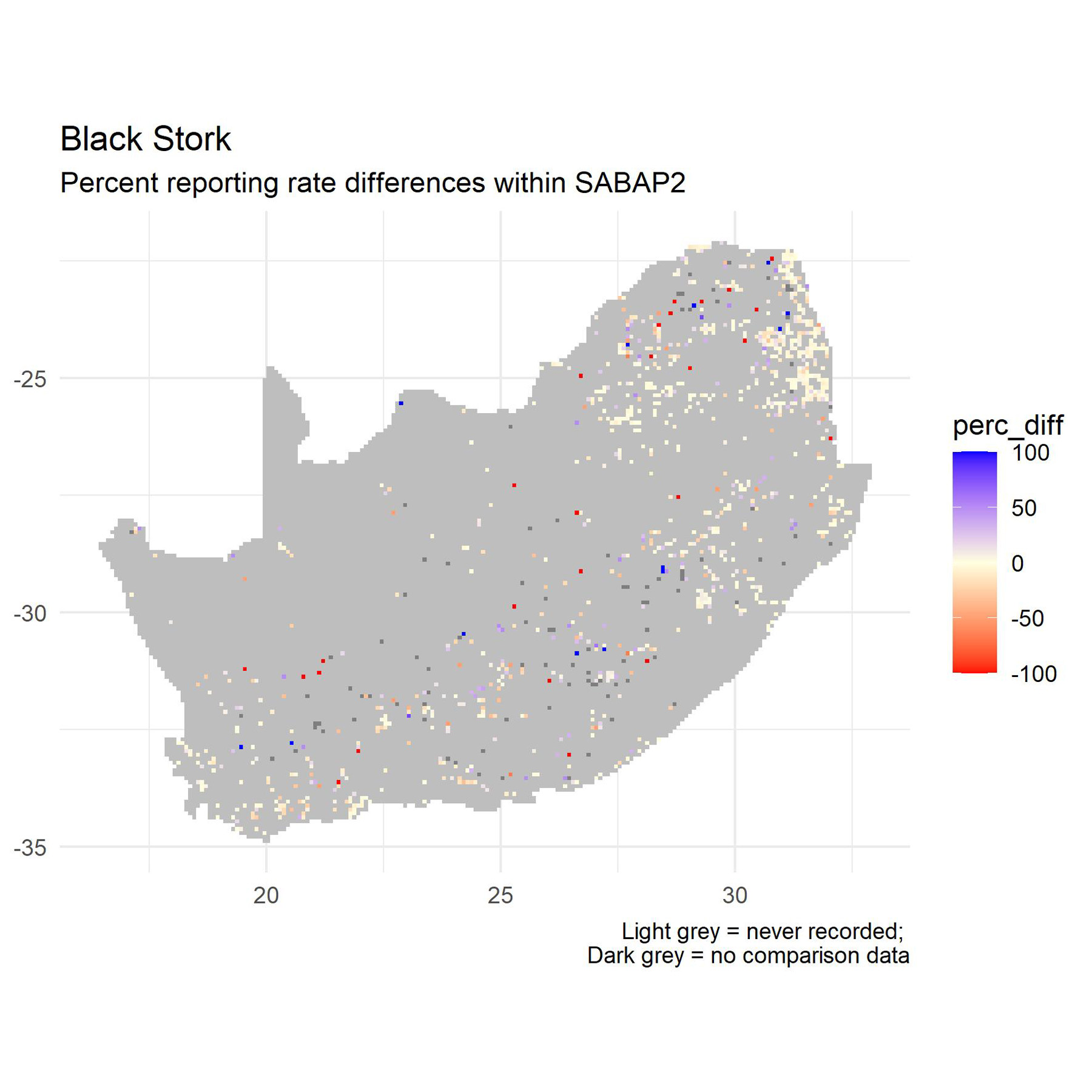
Figure 1b: Change in the percentage reporting rate for Black Stork between early (2007-2015) and late (2016-2023) SABAP2 showing recent declines in the number of records during SABAP2.
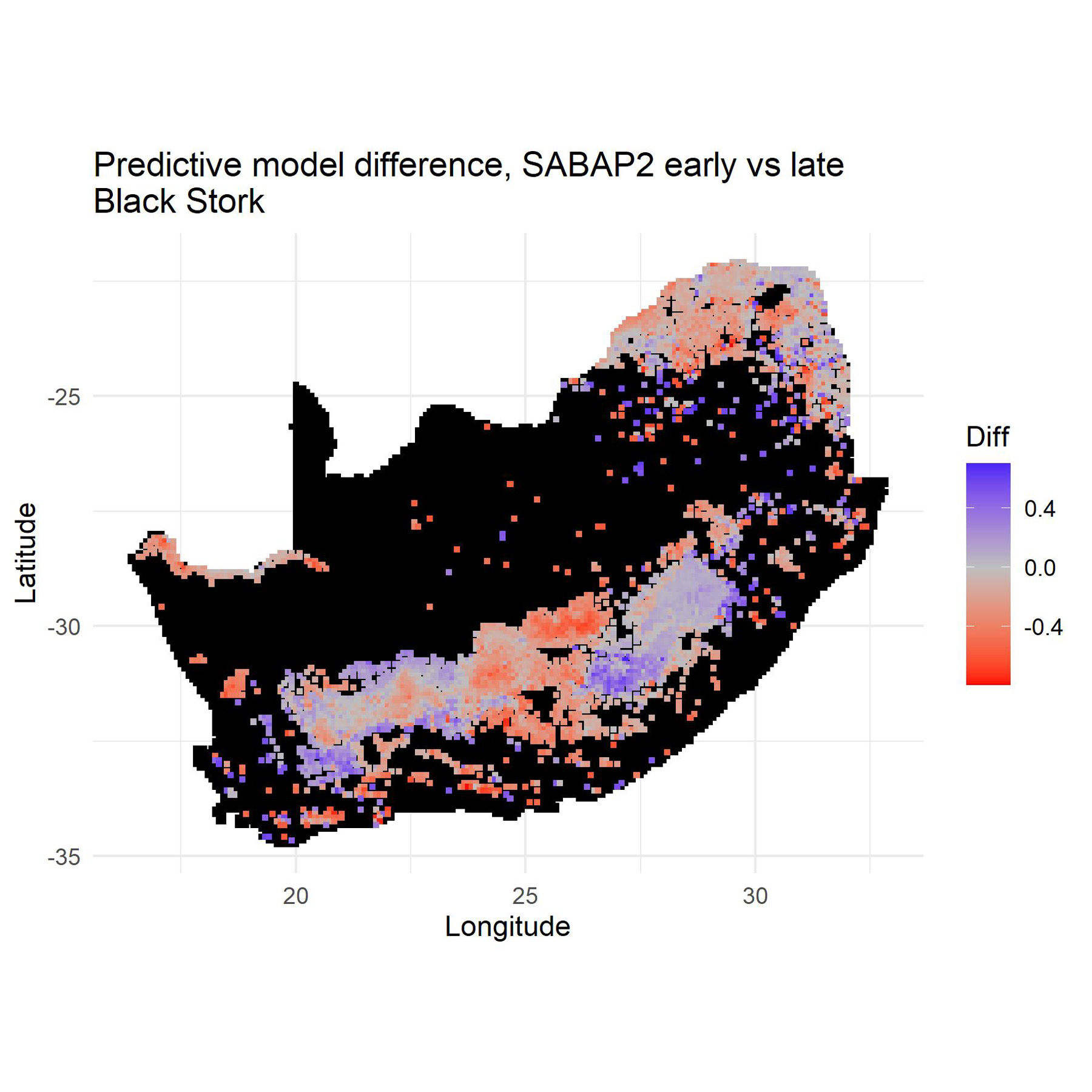
Figure 1c: Predictive modelled range change for Black Stork over three generations between early (2007-2015) and late (2016-2023) SABAP2 with predicted range contraction. Red indicating regions of decline.
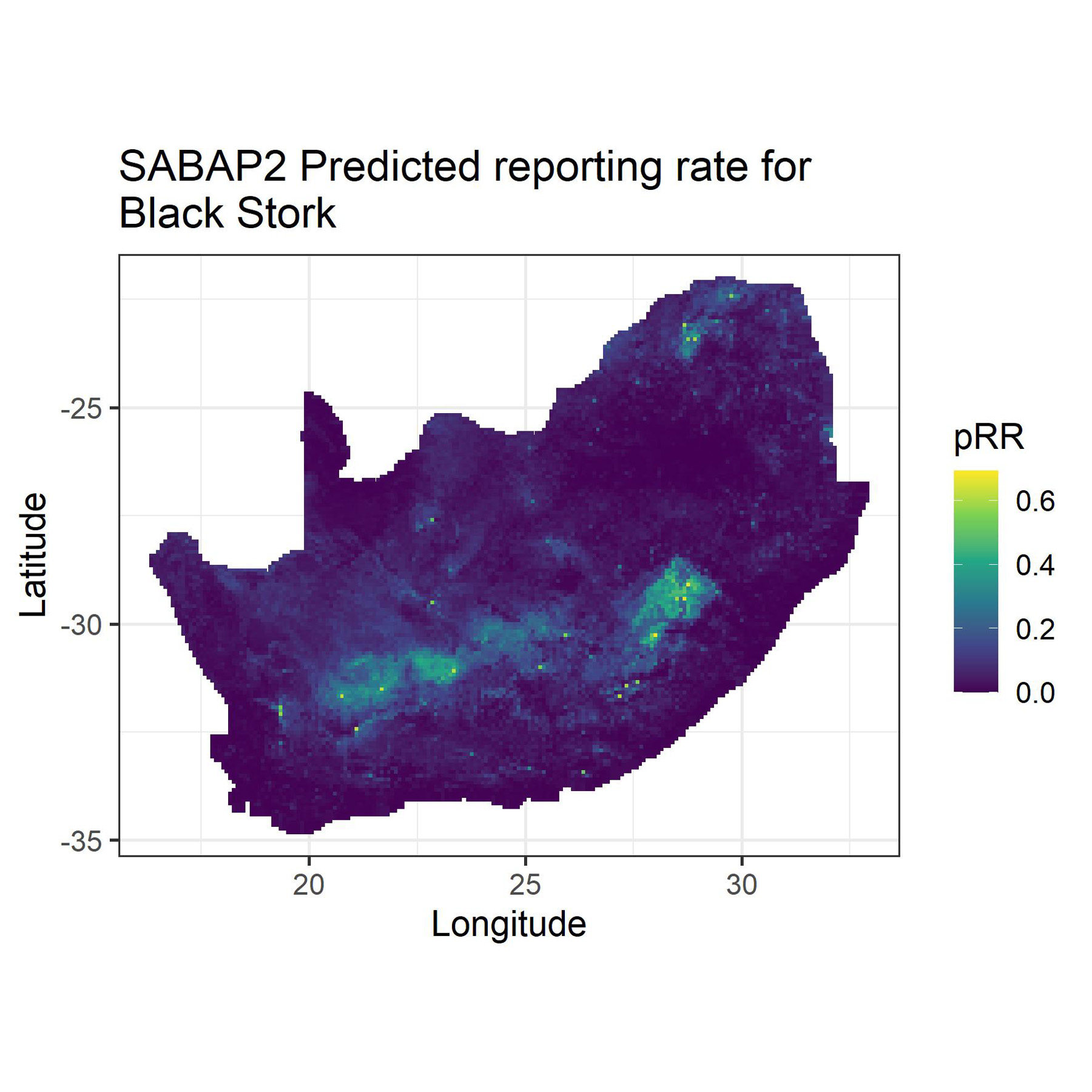
Figure 1d: The SABAP2 report rate prediction model indicates the species is now restricted to just a few population strongholds, notably Lesotho and the Waterberg, with the Karoo distribution linked to seasonal movements (from Lee 2024).
Ecology
Black Stork in Southern Africa is a solitary, cliff-nesting species that breeds during winter to exploit an abundance of prey in receding waterbodies. Typically, 2–5 eggs are laid per breeding attempt. In contrast to the European/Asian population, which nests in trees, the southern African population nests on cliffs. Predation on nests by species such as Verreauxs’ Eagle Aquila verreauxii, Martial Eagle Polemaetus bellicosus, and Chacma Baboon Papio ursinus poses a significant threat (Taylor 2015). Additionally, the Black Stork practices parental infanticide, which can further reduce chick survival rates (Klosowski et al. 2002). The generation length is approximately 15.9 years (BirdLife International 2017), making population recovery from declines slow.
Primarily piscivorous, fish constitute 91% of the Black Stork’s diet (Chevallier et al. 2008, Moreno-Opo et al. 2011). It is commonly found at dams, shallow pans, and floodplains but is absent from seasonal pans that lack fish (Allan 1997). The diet of nestlings includes amphibians and insects, differing from that of adults. The selection of foraging sites is influenced not only by fish abundance but also by human activities, adding another layer of vulnerability (Jiguet and Villarubias 2004). Habitat degradation, changes in water availability, and human disturbance at foraging and nesting sites increase the risk of population decline, making the species particularly vulnerable to extinction.
Threats & Conservation
Threats
The Black Stork faces several significant threats that contribute to its vulnerability to extinction. Habitat degradation, particularly the loss and alteration of wetlands and riparian zones, poses a major risk (Chevallier et al. 2010). These habitats are crucial for foraging and breeding, and their degradation reduces the availability of prey and suitable nesting sites. Human activities, such as damming of rivers and water extraction, further exacerbate these issues by altering water levels and flow patterns, which are vital for the species’ breeding success. Additionally, collisions with power lines (Zietsman 1993) and disturbances from human presence at nesting and foraging sites disrupt the Black Stork’s life cycle (Chevallier et al. 2010). Predation by natural predators like Verreauxs’ Eagle, Martial Eagle, and Chacma Baboon also impacts nest success (Taylor 2015). The species’ slow reproductive rate and practice of parental infanticide further hinder population recovery. Climate change poses an emerging threat, potentially altering rainfall patterns and affecting the availability of wetlands (Archer et al. 2022).
Conservation Measures Underway
There are currently no species-specific conservation interventions underway for this species. According to Taylor (2015): “The Black Stork is listed as Vulnerable under the National Environmental Management Act Biodiversity Act 10 of 2004 and as well as the Swaziland Game Act of 1991. It is placed in the Fourth Schedule: Specially Protected of the KwaZulu-Natal Nature Conservation Management Amendment Act No. 5 of 1999.”
Conservation Measures Proposed
To ensure the survival of the Black Stork, several targeted conservation measures are proposed. First, protecting and restoring critical wetland and riparian habitats is essential to provide suitable foraging and breeding sites. This includes implementing regulations to control water extraction and managing dam operations to maintain natural water flow patterns. Establishing and enforcing protected areas, particularly around key breeding sites like cliffs and water bodies, will help minimise human disturbances. Installing bird-friendly designs for power lines and promoting awareness campaigns to reduce collisions are also crucial. Conservation efforts should include ongoing monitoring and research to track population trends, breeding success, and habitat use. Engaging local communities in conservation activities and promoting sustainable land-use practices will help mitigate human impacts. Additionally, addressing climate change through habitat resilience strategies, such as creating buffer zones and restoring degraded wetlands, will support the species’ long-term survival.
Research Priorities and Questions
To make informed conservation decisions for the Black Stork, several notable gaps in our knowledge need to be addressed through targeted research:
- Home Range Size and Movement Patterns:
Gaps: There is limited understanding of the home range size and movement patterns of Black Storks, particularly how they utilize different habitats throughout the year.
Research needed: Implement satellite tagging or similar tracking technologies to study the movements, home range sizes, and habitat use of individuals. This will provide critical data on spatial requirements and seasonal movements.
- Population Size and Trends:
Gaps: Current population estimates are outdated and lack precision. Confidence in population trends is low due to conflicting data from various sources.
Research needed: Conduct comprehensive, up-to-date surveys to establish accurate population sizes and trends. Employ consistent methodologies to enable comparison over time.
- Area of Occupancy (AOO):
Gaps: Precise mapping of the AOO is needed to understand the species’ distribution accurately.
Research needed: Utilise detailed field surveys and remote sensing technologies to update and refine AOO estimates.
- Generation Time and Demographic Data:
Gaps: Information on generation time, adult and juvenile survival rates, nesting success, and recruitment rates is lacking.
Research needed: Long-term studies to gather data on survival probabilities, breeding efforts, and generational turnover. Satellite tagging can also help in collecting this demographic information, as well as understanding habitat use, dispersal and daily behaviour patterns.
- Impact of Human Activities:
Gaps: The extent of impact from human disturbances such as collisions with power lines, habitat degradation, and direct persecution is not fully understood.
Research needed: Assess the impact of various human activities on the Black Stork population. Develop and test mitigation strategies to reduce these impacts.
- Climate Change Effects:
Gaps: The potential impacts of climate change on the species’ habitat and population dynamics are not well studied.
Research needed: Model climate change scenarios to predict potential impacts on wetland availability, breeding success, and foraging efficiency. Develop adaptive conservation strategies to mitigate these effects.
- Population Viability Analysis (PVA):
Gaps: A comprehensive PVA has not been conducted due to a lack of detailed demographic data.
Research needed: Collect necessary demographic information to perform a robust PVA. This analysis will help predict future population trends and assess extinction risk under various scenarios.
- Genetic Studies:
Gaps: Information on genetic diversity and structure within and between populations is limited.
Research needed: Conduct genetic studies to understand the genetic health of the population, gene flow, and connectivity between subpopulations. This data is crucial for maintaining genetic diversity and resilience.
Contributors & References
Assessor/s
Alan Lee
Reviewer/s
Melissa Whitecross
References
Allan DG. 1997. Black Stork. In: Harrison JA, Allan DG, Underhill LG, Herremans M, Tree AJ, Parker V, Brown CJ (eds), The atlas of southern African birds. Vol. 1: Non-passerines. Johannesburg, South Africa: BirdLife South Africa. pp 86–88.
Ambrose D. 2020. Birds annotated bibliography, Lesotho annotated bibliography Section 167B. Roma, Lesotho: House 9 Publications and Mohokare Trust.
Anderson MD. 2005. Black Stork. In: Ryan PJ, Hockey P, Dean WRJ (eds), Roberts birds of southern Africa (7th Edn). Cape Town, South Africa: The Trustees of the John Voelcker Bird Book Fund. pp 620–621.
Archer E, Du Toit J, Engelbrecht C, Hoffman MT, Landman W, Malherbe J, Stern M. 2022. The 2015–19 multi-year drought in the Eastern Cape, South Africa: its evolution and impacts on agriculture. Journal of Arid Environments 196: 104630.
BirdLife International. 2017. Ciconia nigra. The IUCN Red List of Threatened Species 2017: e.T22697669A111747857. Available at http://dx.doi.org/10.2305/IUCN.UK.2017-1.RLTS.T22697669A111747857.en. [Accessed on 1 September 2024].
Brooks M, Rose S, Altwegg R, Lee AT, Nel H, Ottosson U, Thomson RL. 2022. The African Bird Atlas Project: a description of the project and BirdMap data-collection protocol. Ostrich 93: 223–232.
Chevallier D, Baillon F, Robin JP, Le Maho Y, Massemin-Challet S. 2008. Prey selection of the Black Stork in the African wintering area. Journal of Zoology 276: 276-284.
Chevallier D, Le Maho Y, Baillon F, Duponnois R, Dieulin C, Brossault P, De Franclieu P, et al. 2010. Human activity and the drying up of rivers determine abundance and spatial distribution of Black Storks Ciconia nigra on their wintering grounds. Bird Study 57: 369–380.
Delany S, Scott D. 2006. Waterbird population estimates. Wetlands International, Wageningen, The Netherlands.
Jiguet F, Villarubias S. 2004. Satellite tracking of breeding Black Storks Ciconia nigra: new insights for spatial conservation issues. Biological Conservation 120: 153–160.
Klosowski G, Klosowski T, Zielinski P. 2002. A case of parental infanticide in the black stork Ciconia nigra. Avian Science 2(1): 59-62.
Kopij G. 2016. Status of Black Stork Ciconia nigra in Lesotho. Bulletin of the African Bird Club 23: 212–214.
Lee ATK, Whitecross MA, Smit-Robinson HA, Allan DG, van den Heever L, Jenkins A, Retief EF, Colyn RB, Tarboton W, Chetty K, Brink CW. 2023. A review of the conservation status of Black Stork Ciconia nigra in South Africa, Lesotho, and Eswatini. Bird Conservation International 33: e56.
Lee ATK. 2024. Regional Red Data Book of the Birds of South Africa, Lesotho and Eswatini: SABAP2 synthesis and supporting information and graphics for Black Stork. Unpublished report. Johannesburg: BirdLife South Africa.
Liang WL, Zhu J, Ren Z-M. 2019. Complete mitochondrial genome of Ciconia nigra (Ciconiiformes: Ciconiidae), a threatened stork in China. Mitochondrial DNA Part B 4: 2509–2510.
Moreno-Opo R, Fernandez-Olalla M, Guil F, Arredondo A, Higuero R, Martín M, Soria C, et al. 2011. The role of ponds as feeding habitat for an umbrella species: best management practices for the Black Stork Ciconia nigra in Spain. Oryx 45: 448–455.
Taylor MR. 2015. Black Stork Ciconia nigra. In: Taylor MR, Peacock F, Wanless RM (eds), The Eskom Red Data Book of Birds of South Africa, Lesotho and Swaziland. Johannesburg, South Africa: BirdLife South Africa. pp 58–60.
Zietsman R. 1993. Black Stork electrocuted. Bee-eater 44: 34.
Citation
Lee ATK 2025. Black Stork. In: Lee ATK, Rose S, Banda S, Bezeng SB, Maphalala MI, Maphisa DH, Smit-Robinson H (eds), The 2025 Red Data Book of Birds of South Africa, Lesotho and Eswatini. Johannesburg, South Africa: BirdLife South Africa. Available at: https://www.birdlife.org.za/red-list/black-stork/
Our generous sponsors


