


Black-headed Heron
Ardea melanocephala

Number Of Mature
Individuals (Regional)
30 000 – 150 000

Regional
Population Trend
Stable
2025
Regional Category
Least Concern
Search by species
CONTENTSOverview
Names
|
IOC English Name: |
Black-headed Heron |
|
SA & IOC Scientific Name: |
Ardea melanocephala |
|
BirdLife International Taxonomy (scientific name): |
Ardea melanocephala |
|
Order: |
PELECANIFORMES |
|
Family: |
Ardeidae |
|
Species name author: |
Children and Vigors 1826 |
|
Afrikaans: |
Swartkopreier |
|
Sesotho (South Africa): |
kokolofitwe-hlohontsho |
|
Sesotho (Lesotho): |
kokolofitoe-hloont |
|
Siswati: |
Gilonki |
|
Zulu: |
unokilonkokhandamnyama |
Current Assessment Status
|
2025 Regional Status [Criteria] |
LC |
|
2024 Global Status [Criteria] |
LC (BirdLife International 2016) |
|
Population size (Regional) |
30 000 – 150 000 |
|
Population size (Global) |
Unknown |
|
Distribution size (AOO) (Regional) km2 |
542 325 (BIRDIE 2024) |
|
Distribution size (EOO) (Global) km2 |
1 547 907 (Lee 2024) |
|
Distribution size (EOO) (Regional) km2 |
26 000 000 (BirdLife International 2016) |
|
Generation time |
10.5 years (BirdLife International 2016) |
|
Status change reason |
No change |
|
Migrant (in the region) |
No |
|
Regional endemic |
No |
Historic Listing Information
|
2000 Regional Status |
Not Evaluated |
|
2015 Regional Status |
Not Evaluated |
|
Status change reason (if applicable) |
Not applicable |
|
2015 Population size (Regional) |
Unknown |
|
2015 Global Status |
LC |
Reason for Inclusion
Reason for Inclusion in the Assessment
Black-headed Heron Ardea melanocephala was not previously formally assessed, and was thus presumed to be a Least Concern species. Preliminary screening of Coordinated Waterbird Counts (CWAC) data indicated a significant decline in number of Black-headed Heron counted per year (Lee 2024).
Category Justification
Category Justification
Black-headed Heron is widespread throughout the region, and hence does not approach the thresholds for Vulnerable under the range size Criterion B. The regional population size is unknown but assumed to be large, or at least greater than thresholds for Criterion C.
For Criterion A, citizen science data presents contrasting trends. What appears evident is that the population is not undergoing widespread rapid declines or increases across its range. Data that does indicate declines do not provide evidence that these declines currently approach the threshold for Vulnerable under Criterion A (>30% decline over ten years or three generations) (Figure 1, Table 1, Lee 2024). Black-headed Heron is widespread outside the region, a rescue effect is therefore probable should the regional population go extinct.
For these reasons the species is assessed as Least Concern. Ongoing monitoring efforts should be maintained.
Population Justification
The global and regional population size is unknown but is assumed to be large (>10 000 mature individuals). Reporting rate from the bird atlas project is high (Lee 2024). A crude estimate of relative abundance can be derived from mapping predicted Southern African Bird Atlas Project (SABAP2) reporting rates the pentad level using a Random Forest type model (Figure 1, Lee 2024). These predicted reporting rates can be mapped to give an indication of ‘density’ within a species distribution in the absence of population estimates (Figure 1, Lee 2024). Assuming between 2 and 10 birds per pentad and 15 000 occupied pentads (Table 1), provides a population range of 30 000 – 150 000. There is low confidence in this estimate.
Trend Justification
Globally assumed to be increasing in part due to habitat alteration from agriculture creating more open and irrigated habitat (Kushlan and Hancock 2005, BirdLife International 2016). Regionally the trend is not clear. SABAP2 citizen science data indicate that declines have taken place in parts of the range (Figure 1 Table 1, Lee 2024). However, in some areas the reverse seems to have occurred (Figure 1). The number of individuals counted during CWAC indicate a non-significant declined by year but with very wide confidence intervals (declines of -9.2% in the past three generations, with CI of -37% to 33%). Coordinated Avifaunal Roadcounts (CAR) counts show the reverse, with an increase in the number of Black-headed Herons counted annually between 1998-2020. The best CAR data is from the Western Cape and Free State, and trends from this data set best reflect changes in those regions. SABAP2 probably gives the most reliable indication of what is occurring, with increases and decreases taking place. It is therefore not clear at this stage what the overall trend is for the regional population. What can be said with reasonable certainty is that the regional population is not undergoing rapid declines or increases.
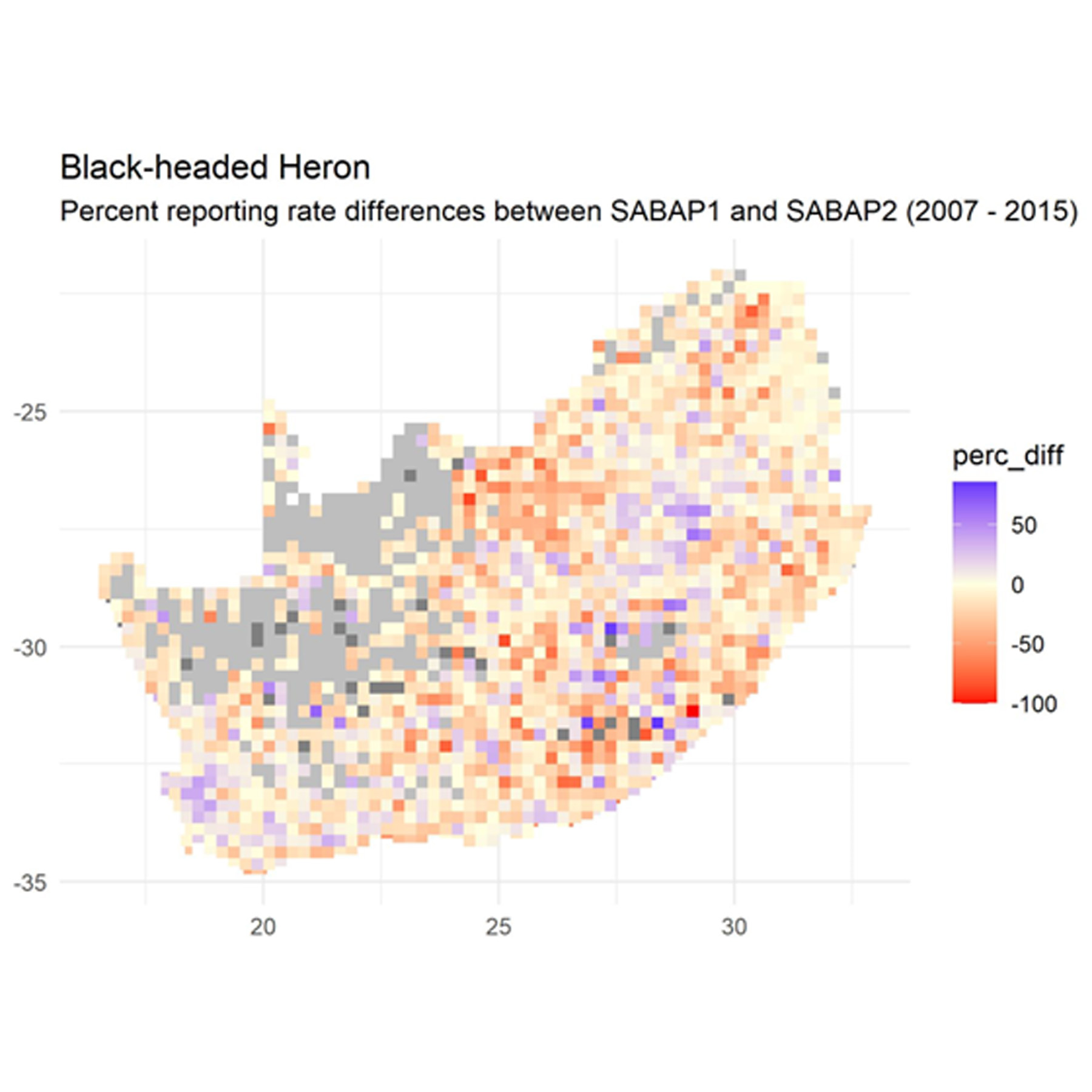
Figure 1a: SABAP distribution map showing percent reporting rate change between SABAP1 (1987-1991) and SABAP2 (2007-2015), illustrating the extensive former range for Black-headed Heron.

Figure 1b: Change in the percentage reporting rate for Black-headed Heron between early (2007-2015) and late (2016-2023) SABAP2.
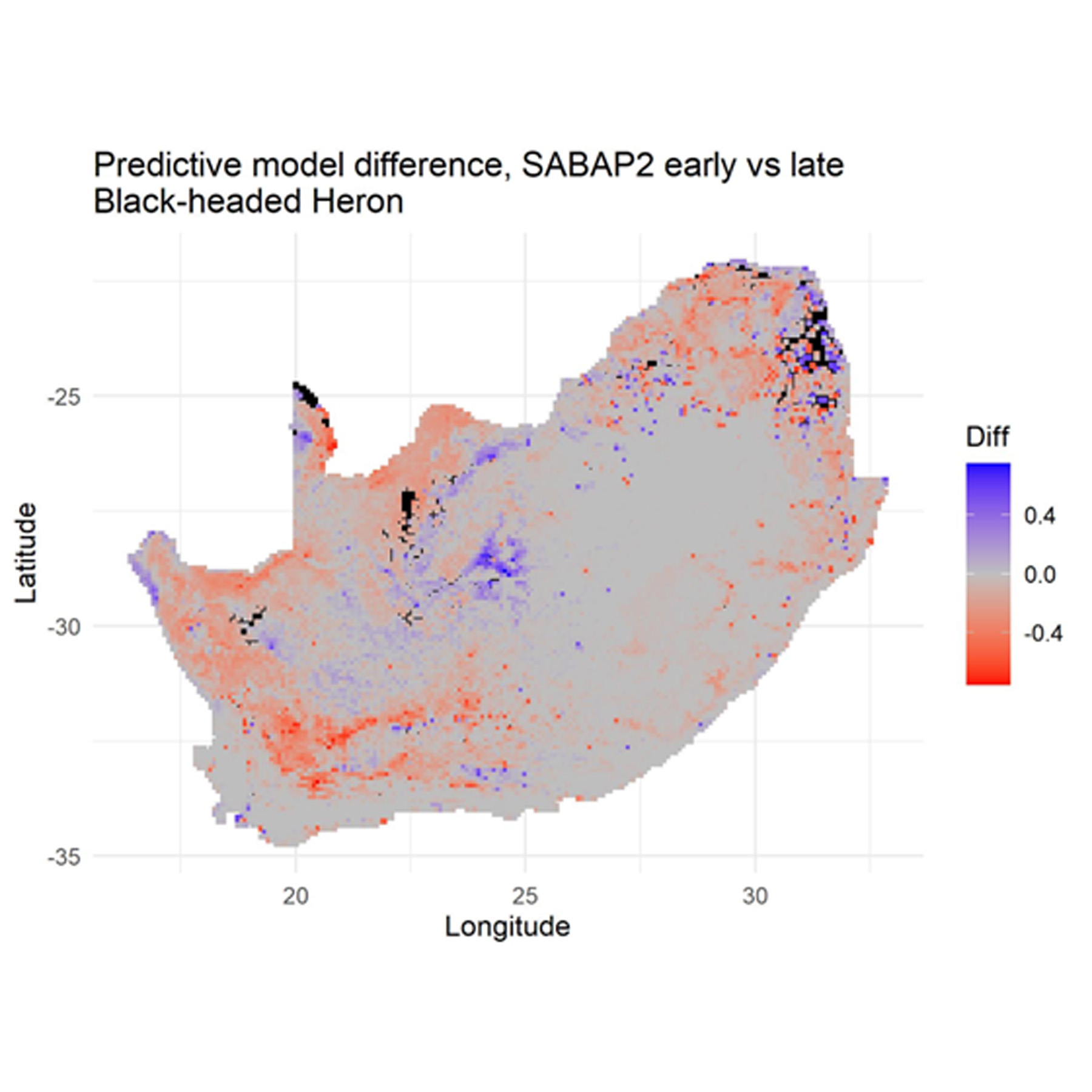
Figure 1c: Predictive modelled range change for Black-headed Heron over three generations between early (2007-2015) and late (2016-2023) SABAP2 with predicted range contraction especially in the interior regions. Red indicating regions of decline.
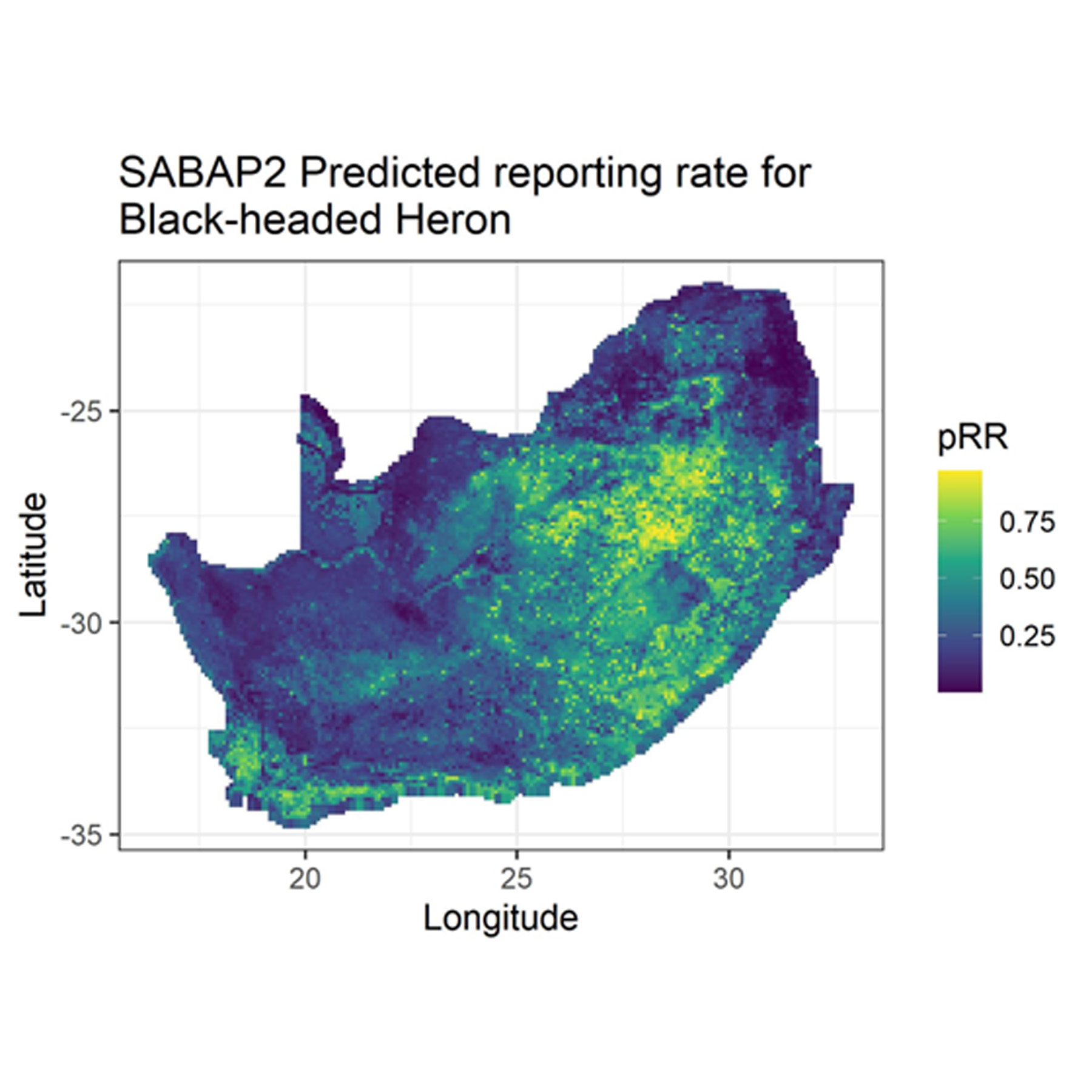
Figure 1: The SABAP2 reporting rate prediction model indicates the species is still widespread throughout the region although largely absent from the interior (from Lee 2024).
Table 1: Results from the prediction models of the number of SABAP2 pentads Black-headed Heron could occur in for the period up to 2015, and then until the end of 2023 (from Lee 2024).
|
Information |
|
|
Pentads 2015 |
16357 |
|
Pentads 2023 |
15384 |
|
Annual rate of change |
0.992 |
|
Percent change (10 years or 3 generations) |
-6.30% |
|
Category (A2) |
LC |
Biology & Ecology
Taxonomy
No notable issues. Monotypic, closely related to A. humbloti (Martínez-Vilalta et al. 2020).
Identification
92–96 cm (Brown et al. 1982, Kushlan and Hancock 2005). Sexes are alike (Hockey et al. 2005). Adult: Large, black, grey and white, head and hind neck black with narrow white band on forehead around the upper eyes (Hockey et al. 2005). 1–3 long black plumes extend from nape of neck (Hockey et al. 2005). Some individuals lack the white patch on the foreneck or have no white at all (Kushlan and Hancock 2005). The bill is black on the upper part and pale green-yellow on the lower (Hockey et al. 2005). Eyes are yellow but turn red at the start of breeding, then fade back to yellow during incubation. Legs and feet are black (Hockey et al 2005). Juveniles have a brownish-grey head and neck with off-white underparts.
Confusing species: can be confused with the Grey Heron due to their similar size. However, the two species have distinct differences. The Grey Heron has a white head and grey neck, while the Black-headed Heron features a black head and darker neck. Additionally, the Grey Heron’s underparts are black and white, compared to the Black-headed Heron’s grey underparts. The underwing of the Grey Heron is uniform, whereas the Black-headed Heron has a two-toned underwing (North 1963, Brown et al. 1982, Hancock and Kushlan 1984).
Distribution
Widespread across sub-Saharan Africa but nowhere considered abundant (Hockey et al. 2005, Martínez-Vilalta et al. 2020). Missing from extremely dry areas, such as southwestern Namibia, large parts of eastern Namibia, and the arid Kalahari Basin (Martin 1997, Figures 2, 3, Lee 2024). The highest densities are in the moist eastern half of South Africa and in areas with winter rainfall (Martin 1997).
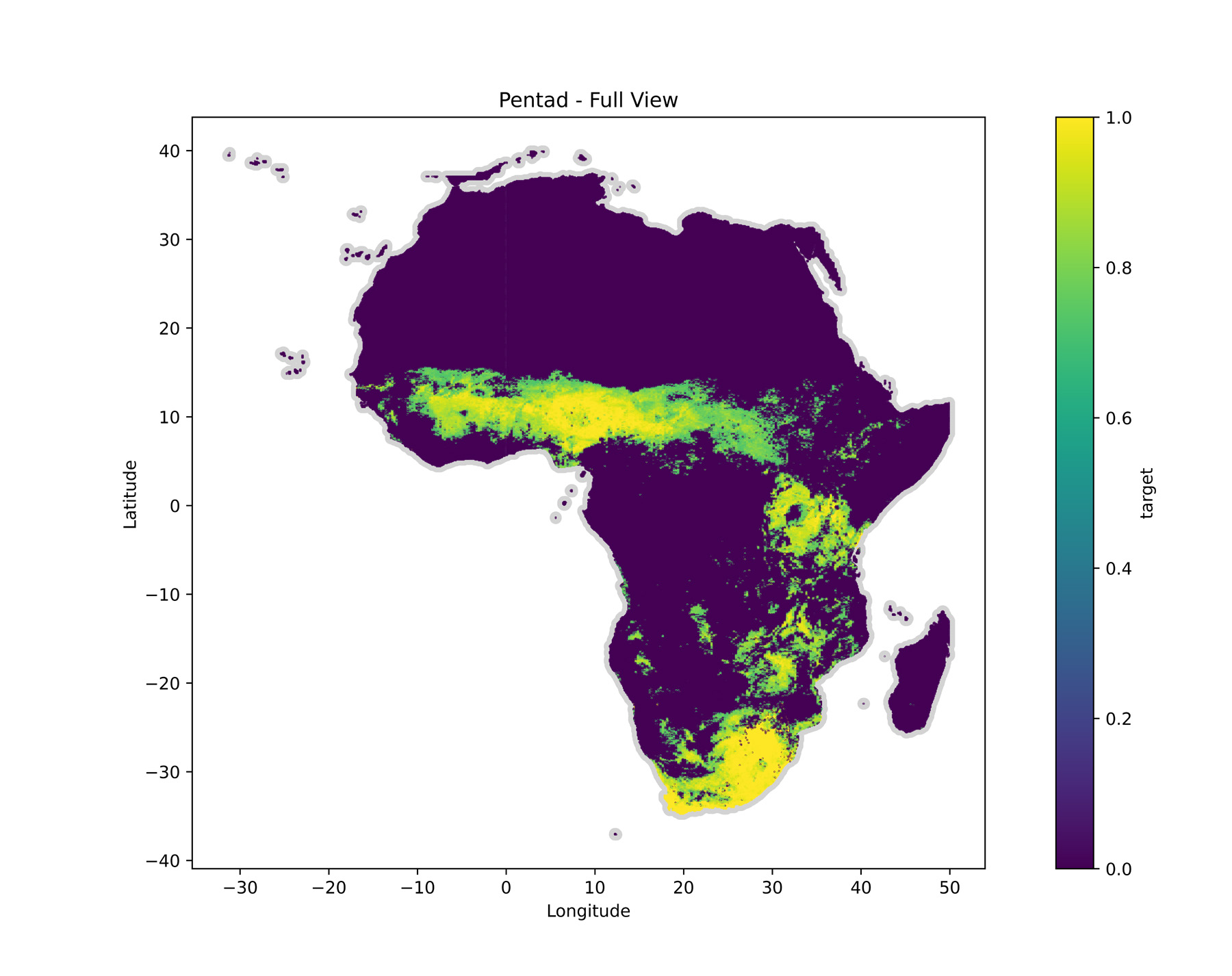
Figure 2: Africa distribution map produced from ABAP, iNaturalist and eBird data using a Random Forest model and various predictor variables for Black-headed Heron. Colour gradient is predicted probability of occurrence, with a 0.5% threshold applied. Brighter colours = higher probability of occurrence (from Lee 2024).
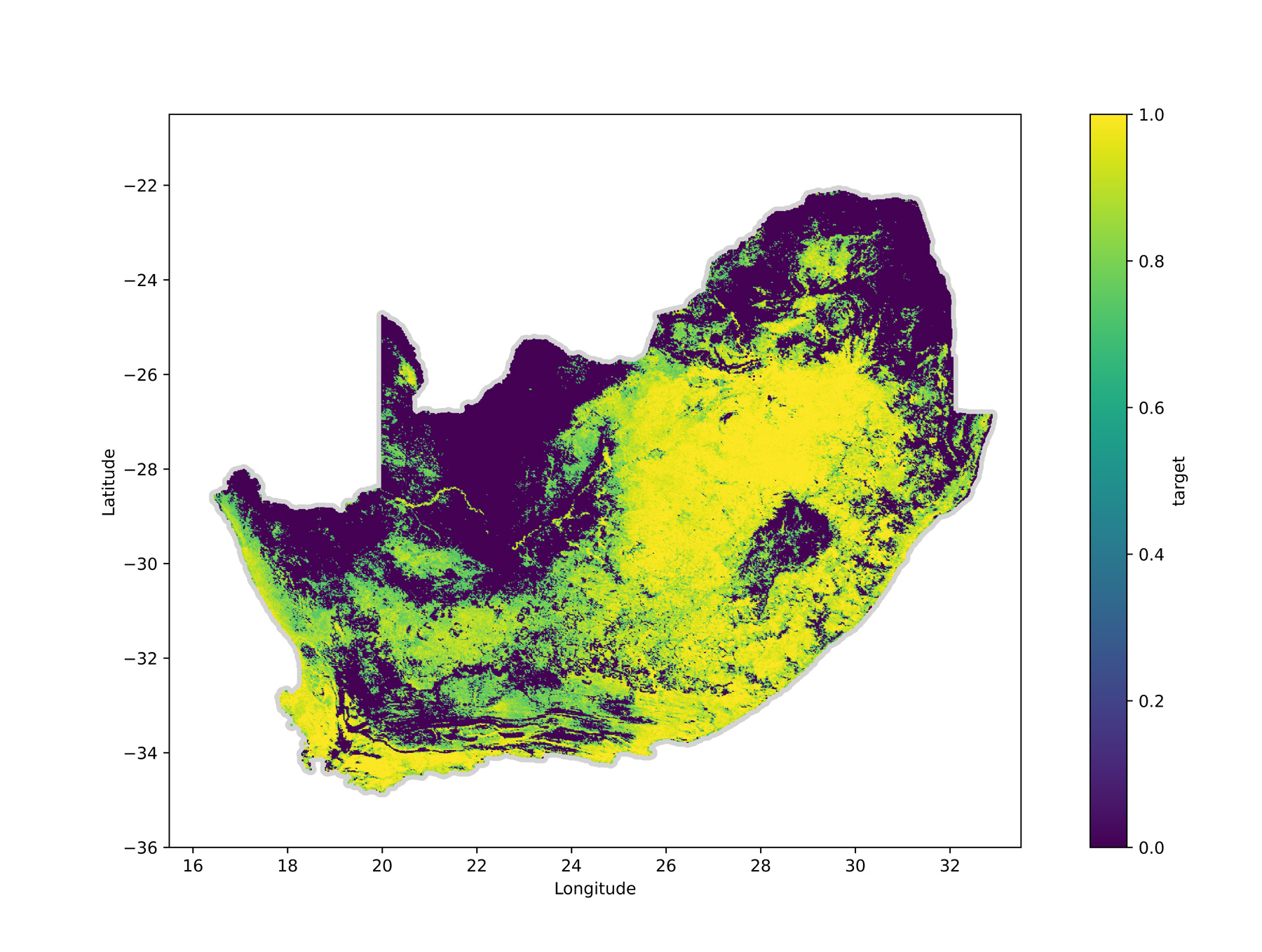
Figure 3: South Africa Black-headed Heron probability distribution map, produced from BirdLasser location data at 2x2km grid scale, using iNaturalist and eBird as absence data only. This represents the predicted range for the 2016 – 2023 period, and p>0.5 (from Lee 2024).
Ecology
Habitat:
This is a largely terrestrial species that is not tied as closely to wetlands as other herons yet is still generally associated with wet habitats. In South Africa especially, it is known to forage equally in terrestrial and semi-aquatic habitats (Martínez-Vilalta et al. 2020). It makes use of a wide variety of habitats, including moist or partially flooded open pastures, fields, marshes, margins of rivers and freshwater and alkaline lakes (Ash and Atkins 2009), cultivation, estuaries, coastal areas and forest clearings (Martínez-Vilalta et al. 2020). Black-headed Herons appear well adapted to transformed landscapes (Kopij 2006).
Migration:
Not generally considered migratory although it may move locally in response to food availability (Brown et al. 1982, Martin 1997, Figure 4). Moreover, juveniles appear to disperse widely but erratically (Brown et al. 1982, Underhill et al.1999, Oschadleus et al. 2019). Factors determining dispersal in the region are poorly understood (Oschadleus et al. 2019).
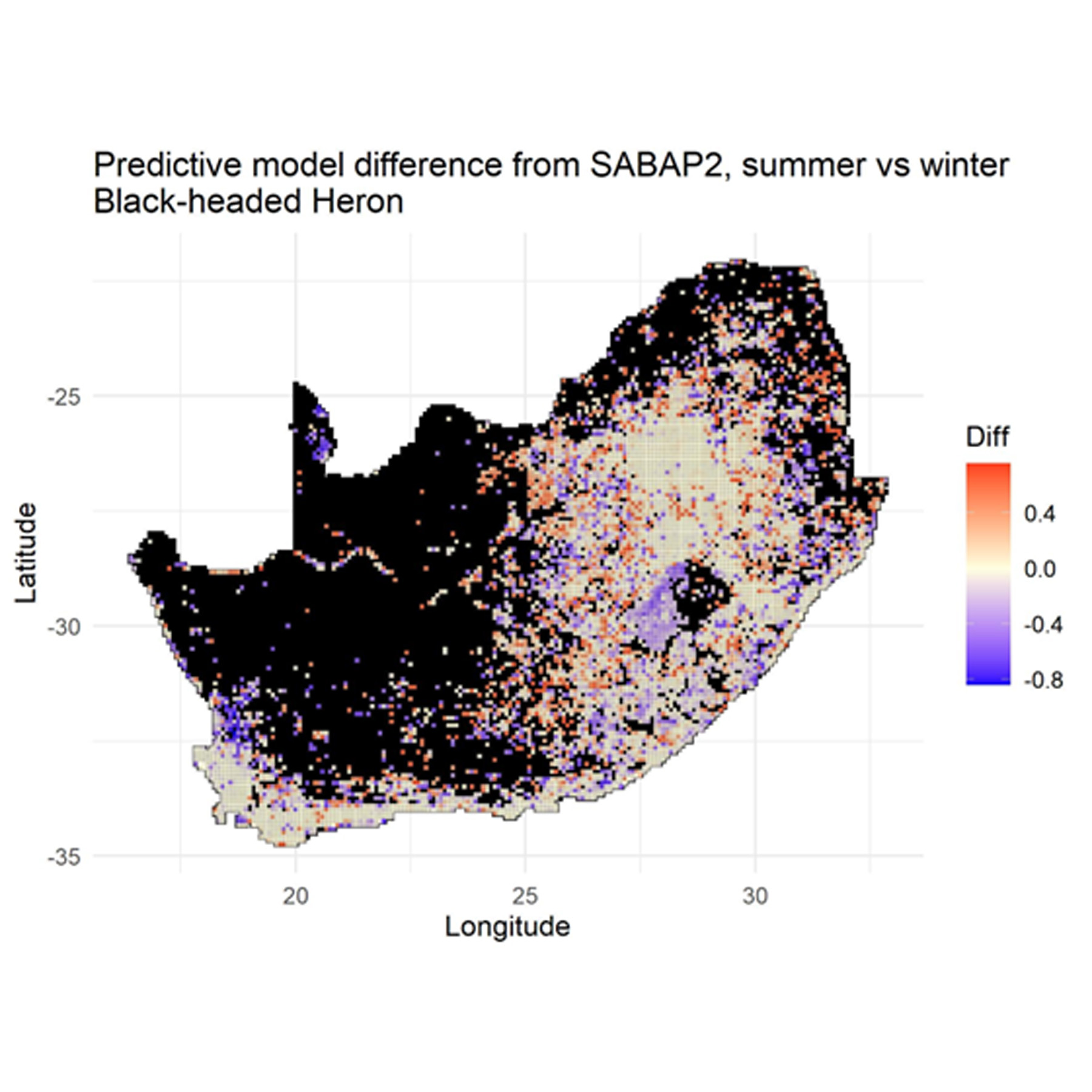
Figure 4: Reporting rate differences for two ‘seasons’: the ‘winter’ period (months May – September) and summer (November – March). Red indicates higher probability of reporting for the ‘summer’ period. For Black-headed Heron it appears that some birds are moving inland in the winter period (from Lee 2024).
Breeding:
Breeds colonially in small, mixed heronries. Nests year round in South Africa (Brown et al. 1982). The nest is made of sticks lined with twigs, leaves, grass, wool and hair placed in tall trees, less often in reedbeds, on sandstone ledges or on ground (Brown et al. 1982). Clutch size: 2–4 eggs, laid at two-day intervals (Martin 1997, Brown et al. 1982); incubation 23–27 days by both adults, commencing with first egg (Brown et al. 1982); chicks have pale grey down, slight forehead crest and yellow eyes, cared for by both adults (Brown et al. 1982); fledging at 40–55 days; juveniles independent at 60 days (Martínez-Vilalta et al. 2020). Breeding success: Generally single-brooded, but some pairs may attempt second or even third clutches (Kushland and Hancock 2005). 13.2% of the eggs laid result in hatchlings (based on 24 eggs), with an average of 0.42 fledglings produced per nesting attempt (Morake 1994).
Diet:
Feeds on a wide variety of vertebrates and invertebrates although in South Africa generally feeds on large rodents and birds (Brown et al. 1982, Cizek 2001). Diet appears to be related to season (Wanless 2005).
Other:
This is a conspicuous species and although generally solitary when hunting, Black-headed Heron roost communally with some roosts maintaining up to 100 birds (Wanless 2005). Individuals appear to return to the same roost each nice and may commute long distances from the roost site to the feeding grounds (Wanless 2005). This species is active diurnally and nocturnally (Wanless 2005).
Threats & Conservation
Threats
No species-specific threats are known in the region, but this is a poorly studied species. Assumed to have benefited from land use change, driven by agriculture, in some areas with the increase in number and extent of open and irrigated areas, as well as creation of reservoirs and dams (Kushlan and Hancock 2005). However, costs associated with feeding in agricultural areas are unknown. It may lead to exposure to pollutants and chemicals for example and disturbance during breeding season. Climate change associated with a warming and drier interior may be resulting in range contraction.
As a colonial nester this species may be affected by the presumed decline in heronries in the region. Again, this is not clear.
Conservation Measures Underway
There are no species-specific measures in place. Bird atlas data indicates that this species occurs throughout an extensive network of protected areas (Brooks et al. 2022, Lee 2024).
Conservation Measures Proposed
Identify key heronries used by this species and ensure these are protected. Many of the waterbird species will benefit from a greater emphasis on protecting and restoring known habitats outside conventional protected area networks, e.g. open spaces, seasonal wetlands. Contributions to CAR are encouraged, and a more representative network of routes across this species range would be beneficial.
Research Priorities and Questions
- Establish an estimate for the regional population size. The recommendation would be to conduct surveys at heronries to estimate the total population size and monitor trends through regular counts.
- Important heronries should be identified and protected if not in PAs.
- Actual or potential threats facing the species and its habitats should be evaluated. For example, is there evidence of buildup of agrochemical toxins in herons?
- More research is needed to better understand dispersal patterns in juveniles and potential threats associated with large scale dispersal.
Contributors & References
Assessor/s
Sanjo Rose, Maria Paul
Reviewer/s
Dave Whitelaw, Jessleena Suri
References
Ash JS, Atkins J. 2009. Birds of Ethiopia and Eritrea: An Atlas of Distribution. London: Christopher Helm.
BIRDIE. 2024. An online platform for African wetland and waterbird data. https://biodiversityadvisor.sanbi.org/contentmanagement/index?guid=42305260-12b0-4a92-912e-7d801d15fdac. [Accessed on 8 September 2024].
BirdLife International. 2016. Ardea melanocephala. The IUCN Red List of Threatened Species 2016: e.T22697008A93598165. Available at https://dx.doi.org/10.2305/IUCN.UK.2016-3.RLTS.T22697008A93598165.en [Accessed on 11 April 2024].
Brooks M, Rose S, Altwegg R, Lee ATK, Nel H, Ottosson U, Retief E, Reynolds C, Ryan PG, Shema S, Tende T, Underhill LG, Thomson RL. 2022. The African Bird Atlas Project: a description of the project and BirdMap data-collection protocol. Ostrich 93: 223–232.
Brown LH, Urban EK, Newman K. 1982. The Birds of Africa, vol. 1. London and New York: Academic Press.
Cizek A. 2001. Black-headed Heron taking Red-chested Flufftail. Honeyguide 47(2): 173–174.
Hancock J, Kushlan J. 1984. The Herons Handbook. London: Croom Helm.
Hockey PAR, Dean WRJ, Ryan PG (eds). 2005. Roberts birds of southern Africa (7th Edn). Cape Town: Trustees of the John Voelcker Bird Book Fund.
Kopij G. 2006. Diet of the Black-headed Heron Ardea melanocephala during the breeding season in South African grasslands. Biologia 61(2): 241–244.
Kushlan JA, Hancock JA. 2005. The Herons. Oxford: Oxford University Press.
Lee ATK. 2024. Regional Red Data Book of the Birds of South Africa, Lesotho and Eswatini: SABAP2 synthesis and supporting information and graphics for Black-headed Heron. Unpublished report. Johannesburg: BirdLife South Africa.
Martínez-Vilalta A, Motis A, Kirwan GM. 2020. Black-headed Heron (Ardea melanocephala), version 1.0. In: del Hoyo J, Elliott A, Sargatal J, Christie DA, de Juana E (eds), Birds of the World. Ithaca, NY: Cornell Lab of Ornithology. Available at https://doi.org/10.2173/bow.blhher1.01.
Martin AP. 1997. Black-headed Heron. In: Harrison JA et al. (eds), The Atlas of Southern African Birds, vol. 1. Johannesburg: BirdLife South Africa. p 44.
Morake B. 1994. Breeding success of Black-headed Heron Ardea melanocephala and Cattle Egret Bubulcus ibis at Phakalane sewage ponds. Babbler (Botswana) 28: 7–13.
North MEW. 1963. Breeding of the Black-headed Heron at Nairobi, Kenya, 1958–62. Journal of the East African Natural History Society and Coryndon Museum 24: 33–63.
Oschadleus HD, Paijmans D, Rose S. 2019. How far and how old: longevity and displacement records from the South African Bird Ringing Scheme for Ardeidae, Threskiornithidae and Ciconiidae. Bothalia-African Biodiversity & Conservation 49(1): 1–8.
Underhill LG, Tree AJ, Oschadleus HD, Parker V. 1999. Review of Ring Recoveries of Waterbirds in Southern Africa. Cape Town: Avian Demography Unit, University of Cape Town.
Wanless R. 2005. Black-headed Heron. In: Hockey PAR, Dean WRJ, Ryan PG (eds), Roberts birds of southern Africa (7th Edn). Cape Town: Trustees of the John Voelcker Bird Book Fund. p 589.
Citation
Rose S, Paul M 2025. Black-headed Heron. In: Lee ATK, Rose S, Banda S, Bezeng SB, Maphalala MI, Maphisa DH, Smit-Robinson H (eds), The 2025 Red Data Book of Birds of South Africa, Lesotho and Eswatini. Johannesburg, South Africa: BirdLife South Africa. Available at: https://www.birdlife.org.za/red-list/black-headed-heron/
Our generous sponsors


