


Black-crowned Night Heron
Nycticorax nycticorax

Number Of Mature
Individuals (Regional)
2 183 – 14 288

Regional
Population Trend
Decreasing
2025
Regional Category
Near Threatened
Search by species
CONTENTSOverview
Names
|
IOC English Name: |
Black-crowned Night Heron |
|
SA & IOC Scientific Name: |
Nycticorax nycticorax |
|
BirdLife International Taxonomy (scientific name): |
Nycticorax nycticorax |
|
Order: |
PELECANIFORMES |
|
Family: |
Ardeidae |
|
Species name author: |
Linnaeus 1758 |
|
Afrikaans: |
Gewone Nagreier |
|
Sesotho (South Africa): |
kokolofitwe-bosiu |
|
Sesotho (Lesotho): |
kokolofitoana-bosiu |
|
Siwati: |
|
|
Zulu: |
uSiba |
Current Assessment Status
|
2025 Regional Status [Criteria] |
NTo [A2c] |
|
2024 Global Status [Criteria] |
LC (BirdLife International 2019) |
|
Population size (Global) |
Estimated at 381 900 – 2 499 100 (Wetlands International 2015) |
|
Population size (Regional) |
Unknown |
|
Distribution size (EOO) (Regional) km2 |
1 417 945 (Lee 2024) |
|
Distribution size (EOO) (Global) km2 |
248 000 000 (BirdLife International 2019) |
|
Distribution size (AOO) (Regional) km2 |
501 212 (Lee 2024) |
|
Generation time |
8.8 years (BirdLife International 2019) |
|
Status change reason |
No change |
|
Migrant (in the region) |
Resident but nomadic |
|
Regional endemic |
No |
Historic Listing Information
|
2000 Regional Status |
Not Evaluated |
|
2015 Regional Status |
Not Evaluated |
|
Status change reason (if applicable) |
Not applicable |
|
2015 Population size (Regional) |
Unknown |
|
2015 Global Status |
LC |
Reason for Inclusion
Reason for Inclusion in the Assessment
Black-crowned Night Heron Nycticorax nycticorax was not comprehensively assessed previously. Preliminary screening of Coordinated Waterbird Counts (CWAC) data indicated a significant decline in number of Black-crowned Night Heron counted per year (Lee 2024). South Africa, Lesotho and Eswatini represent 4.5% of the modelled distribution for Africa, a significant portion of the representative subspecies, and is thus included here with a full assessment.
Category Justification
Category Justification
Black-crowned Night Heron is a poorly studied species in the region. Regionally this species is assessed as Near Threatened based on declines reported in both Southern African Bird Atlas Project (SABAP2) and CWAC. The species is considered widespread throughout the region. The regional population size is unknown.
The predicted change in Area of Occupancy (AOO) over the past three generations indicates that declines exceed the 30% threshold for Vulnerable under Criterion A2 (Table 1). However, this decline is considered to be overestimated (Figure 1). CWAC counts also indicate that the population has declined over the past three generations: -63% (-83%, -24%) (from Lee 2024) at levels that reach Endangered by A2. However, recent counts have been higher.
Although these rates of decline meet the 30% threshold for Vulnerable, given the very widespread distribution of this species outside of the region the assessment outcome is amended to Near Threatened based on the high likelihood of a rescue effect occurring should the regional population go extinct. The assessment is thus NTo [A2c].
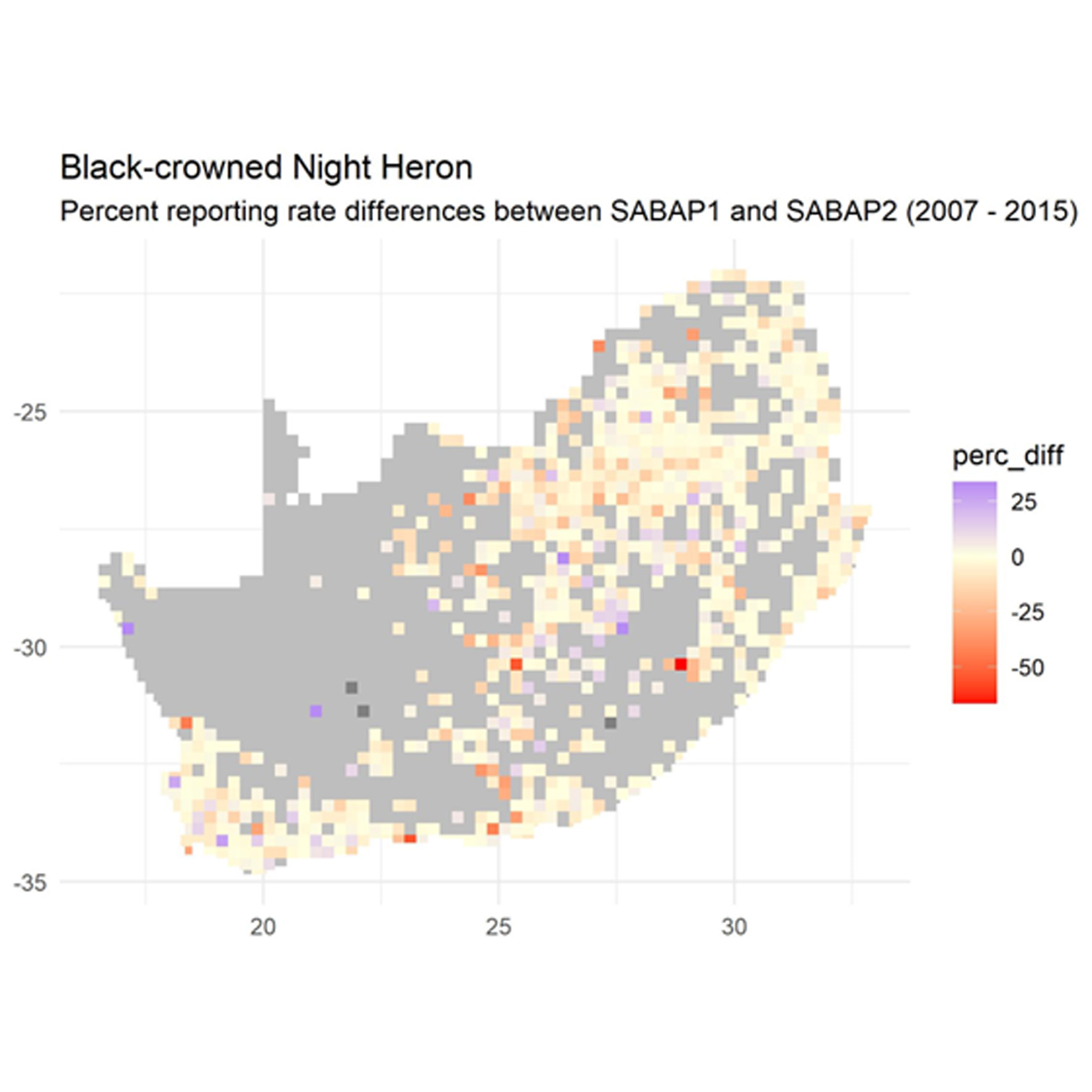
Figure 1a: SABAP distribution map showing percent reporting rate change between SABAP1 (1987-1991) and SABAP2 (2007-2015), illustrating the extensive former range for Black-crowned Night Heron.
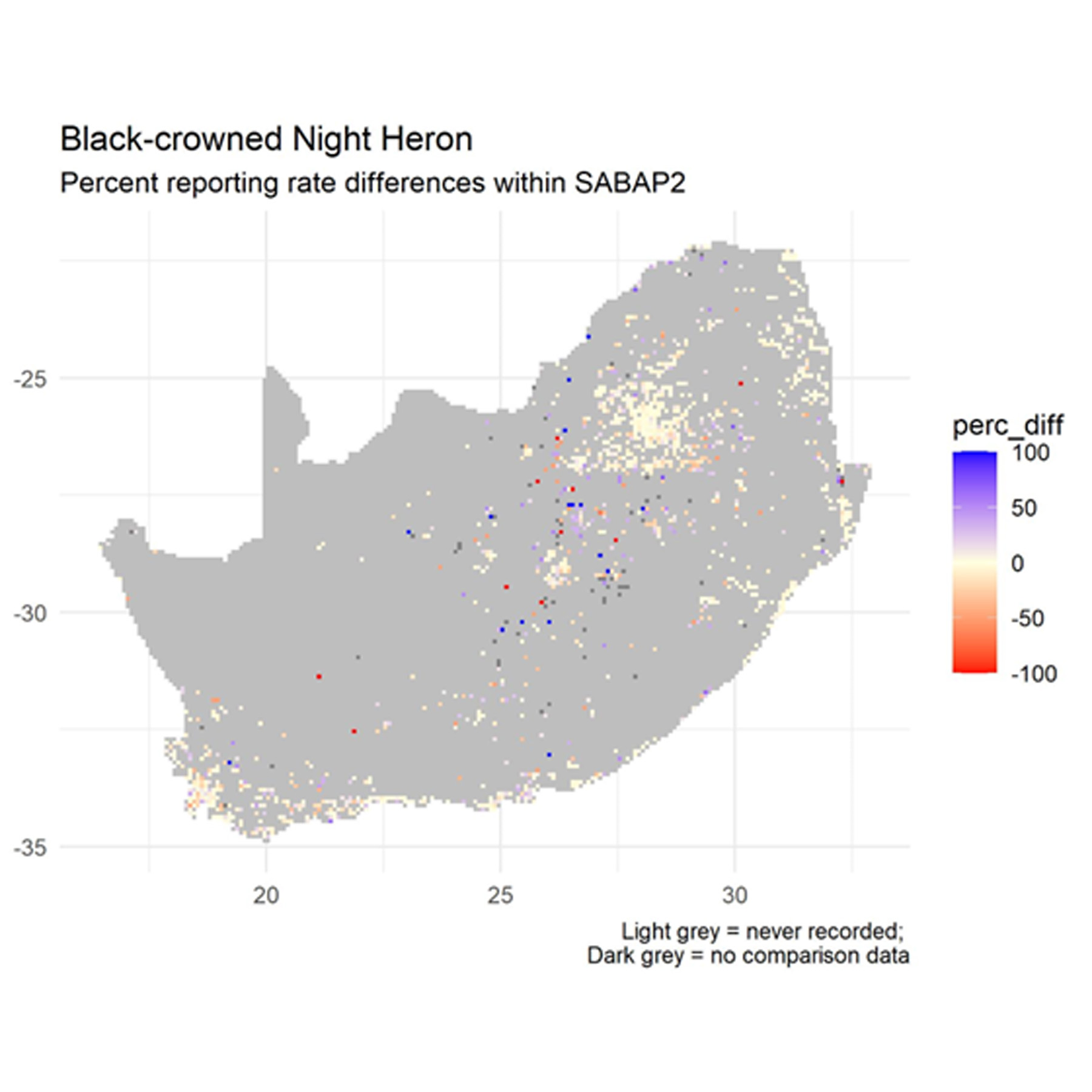
Figure 1b: Change in the percentage reporting rate for Black-crowned Night Heron between early (2007-2015) and late (2016-2023) SABAP2 showing substantial range decline.
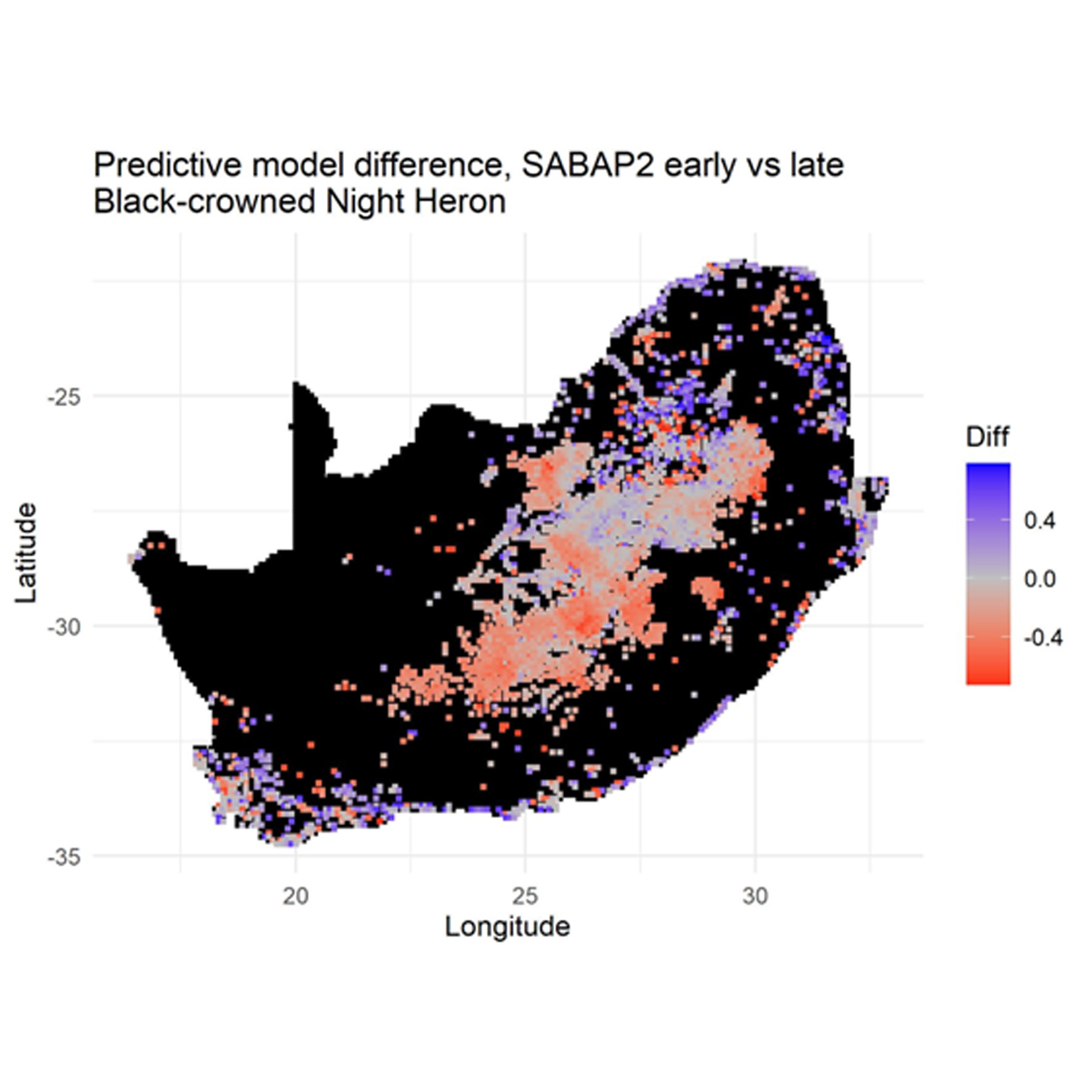
Figure 1c: Predictive modelled range change for Black-crowned Night Heron over three generations between early (2007-2015) and late (2016-2023) SABAP2; with extensive predicted range contraction indicated in red.
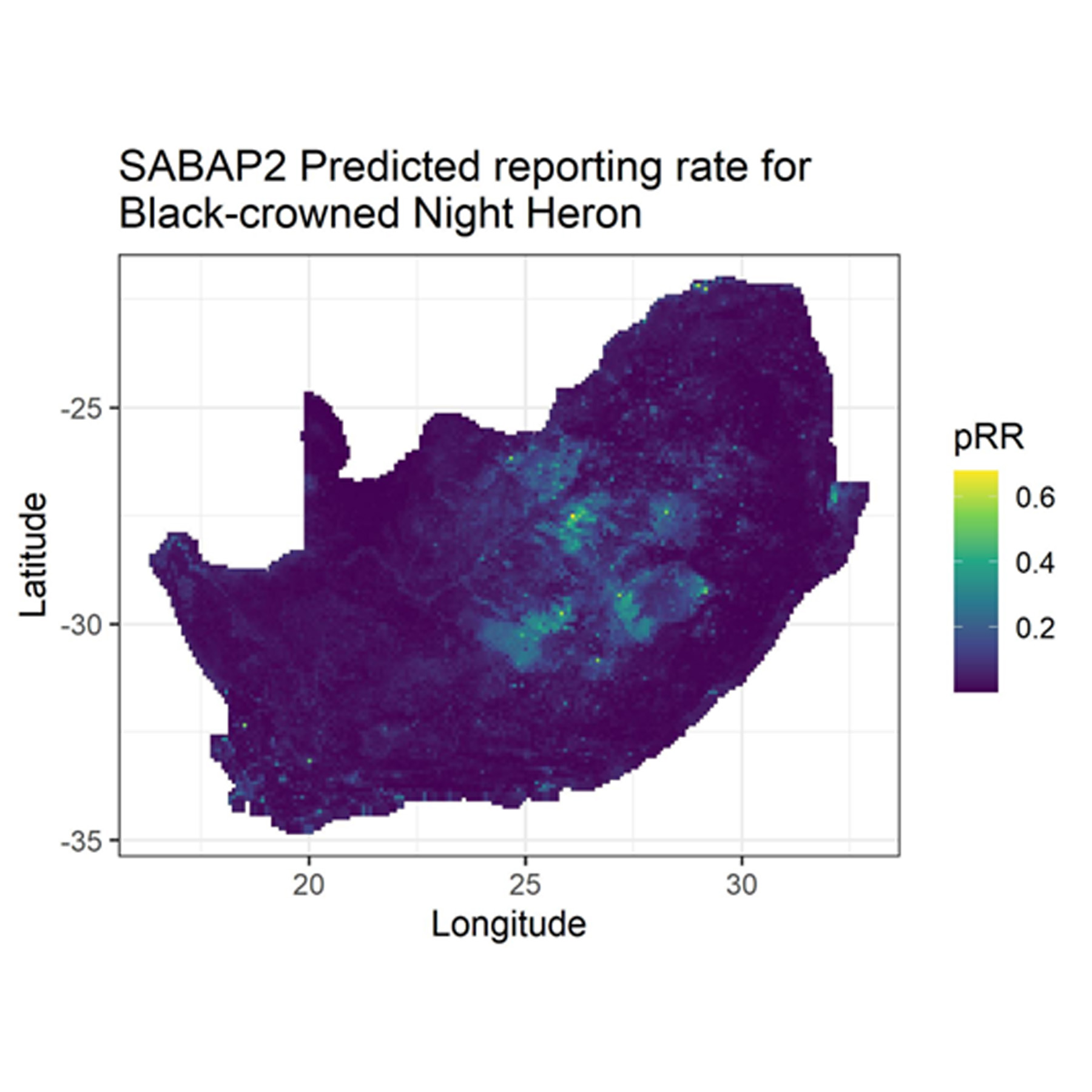
Figure 1: The SABAP2 reporting rate prediction model indicates the species still has a relatively widespread but patchy distribution throughout the region (from Lee 2024).
Population Justification
This species has a very widespread global distribution, with a population estimate of 381 900 – 2 499 100 mature individuals (Wetlands International 2015). By extrapolation of the regional EOO to the global EOO, between 2 183 and 14 288 may be present in the region. Confidence in this is low. Regionally, no reliable recent estimate exists for the either the regional or migrant populations. The estimate for the resident population in tropical Africa (including Madagascar and Seychelles) is estimated to be between 25 000 and 100 000 birds (Rose and Scott 1994).
Black-crowned Night Heron cannot be considered abundant regionally. From BIRDIE, the population estimates by province are very low. It is unclear what percentage of the actual population those estimates represent so values need to be interpreted cautiously. The lower bound from these BIRDIE data is 1130 (sum up the upper 95% CI). The sum of the mean of all counts at CWAC sites is 1022 and the sum of the maximum counts is 2493. It is likely there are <10 000 birds in the region. Given that this species does not appear to roost at their feeding sites (where CWAC counts take place) and the spread of CWAC sites this estimate can be considered an underestimate.
Trend Justification
The global population is considered to be in decline (BirdLife International 2019).
Regionally, both SABAP2 and CWAC data provide evidence of decline that exceed the threshold for Vulnerable (Table 1, Figures 1,2, Lee 2024). From CWAC counts, estimated percent change from Year = 1997.75 to 2023: -63% (-83%, -24%), with no filter on group size applied, using a quasi-poisson model accounting for season (Lee 2024), and linear model annual rate of decline of 5% (95% CI: -7 to -3%). The cause of the decline is not clearly understood but could reflect more extreme fluctuations in climate, affecting the availability of water bodies. Black-crowned Night Heron show a preference for more permanent water bodies with suitable roosting sites nearby. While they will undertake local movements in response to drought or favourable conditions, they may be experiencing the effects of climate variation in the drier interior.
Table 1: Percentage predicted range change based on the number of SABAP2 pentads that Black-crowned Night Heron could occur in, for the period of 2007-2015, and 2016-2023. These values are used to calculate an annual rate of change and the percentage change over the longer of 10 years or three generations (Criterion A) (from Lee 2024).
|
Information |
|
|
Pentads 2015 |
3076 |
|
Pentads 2023 |
2092 |
|
Annual rate of change |
0.953 |
|
Percent change (10 years or 3 generations) |
-33.90% |
|
Category (A2) |
VU |
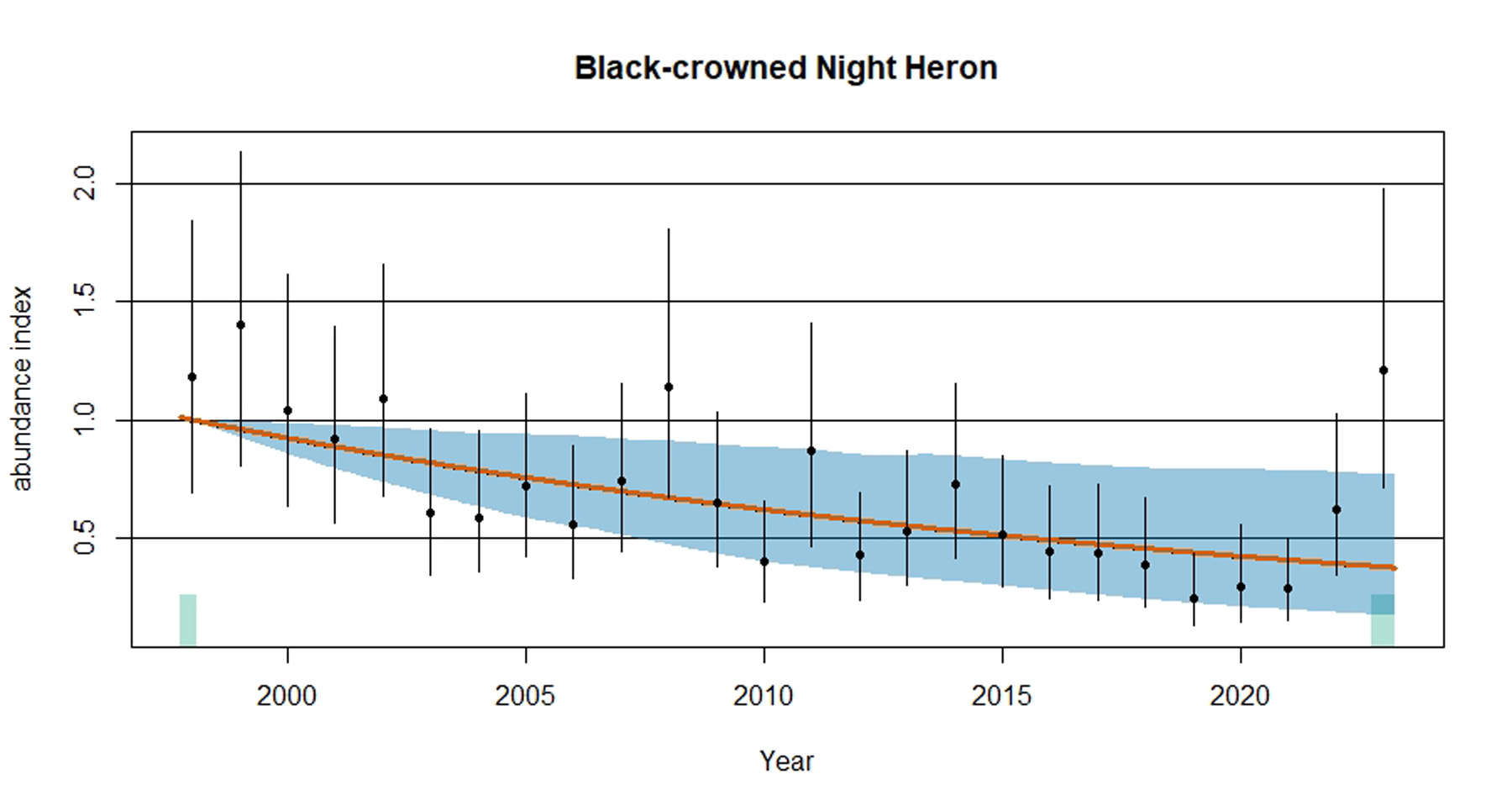
Figure 2: Poptrend chart illustrating declines using CWAC data for Black-crowned Night Heron.
Biology & Ecology
Taxonomy
Black-crowned Night Heron was formally described by Carli Linnaeus in 1758 in the tenth edition of his Systema Naturae as Ardea nicticorax. Initially placed with herons, egrets and cranes, it was placed in the genus Nycticorax by Thomas Forster in 1817; specifically created to accommodate Black-crowned Night Heron. It is a cosmopolitan species, absent only from Australia and Antarctica. Four sub-species are recognised with the nominate race Nycticorax n. nycticorax being the most widespread and found in Europe, Asia, Philippines, Indonesia and Africa. In Australia and Oceania, Black-crowned Night Heron is replaced by the similar Nankeen Night Heron Nycticorax caledonicus.
Taxonomy follows IOC 14.1 (2024).
Identification
56 cm (Hockey et al. 2005). Sexes are alike in plumage and can be indistinguishable in appearance, but males are slightly larger. Adults have a grey back and wings with white underparts (Hockey et al. 2005). They have a characteristic blue-black crown after which they are named after and deep red eyes (Hockey et al. 2005). The beak is black while the legs are yellow which turns red during breeding season (Hockey et al. 2005). Two or three long white plumes extend from the back of the head and are used in courtship displays (Hockey et al. 2005). In their roosting posture during the day, they appear hunched over and only extend their necks when in a more hunting posture.
Distribution
The Black-crowned Night Heron is essentially a cosmopolitan species, found across Europe, Asia, North and South America, Africa and Madagascar (del Hoyo et al. 1992, Hancock and Kushlan 1984, Figure 3). It is widespread in Southern African but typically absent from dry regions such as Northern Cape (Martin 1997, Figure 1). It is also absent from most of Namibia, except for the extreme north, the higher areas of Lesotho and the drier interior of the Eastern Cape (Figure 1). In Lesotho, the population was estimated at 5-10 breeding pairs in 2005-2010 (G. Kopij, unpubl data). In the Free State, in two largest heronries in this province, in Sandveld Nature Reserve and Willem Pretorius Game Reserve, only few pairs were recorded as nesting (Kopij 1996, Kopij and Nuttall 1996). Numbers at sites fluctuate greatly: CWAC counts at Nylsvlei range from 1 (2021), to 343 (2008), with 245 recorded in 2023. This variation is likely due to nomadic or migratory populations.
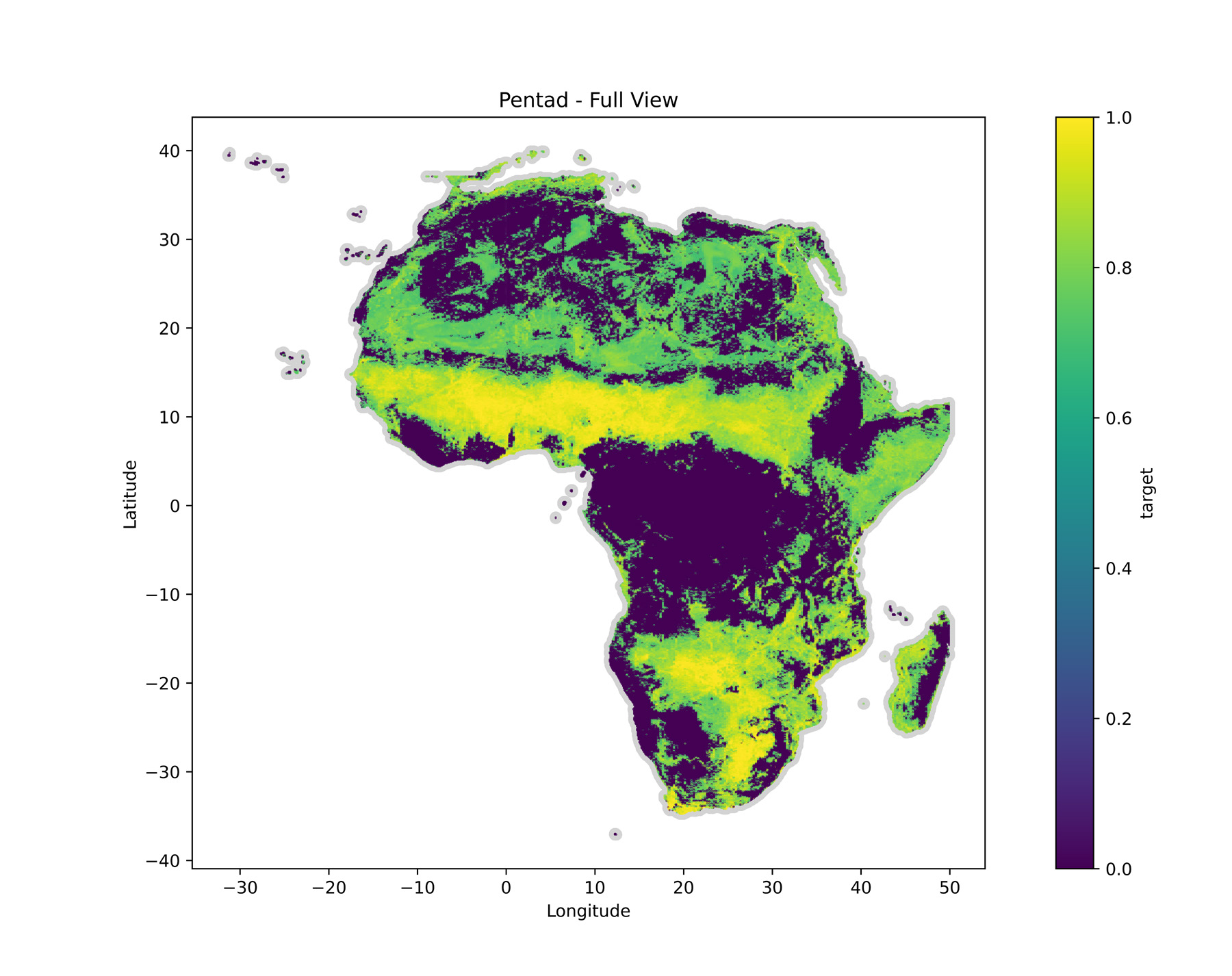
Figure 3: Probability distribution map for Black-crowned Night Heron from ABAP, eBird and iNaturalist data (from Lee 2024).
Ecology
Black-crowned Night Heron inhabit wetlands, rivers, lakes, swamps, marshes, estuaries as well as dams and ponds (Brown et al. 1982, Hancock and Kushlan 1984, Martin 1997, Taylor et al. 1999). The species has a wide tolerance for water quality conditions, being found in saline, brackish or freshwater wetlands (del Hoyo et al. 1992). They require nearby trees, dense vegetation or reeds to roost during daylight hours, emerging at dusk to forage along muddy or sandy shorelines and patches of shallow water (Martin 1997, del Hoyo et al. 1992).
While a number of the northern hemisphere populations are migratory, movement patterns in the region are less clear (BirdLife International 2024, del Hoyo et al. 1992, Martin 1997, Underhill et al. 1999). SABAP2 reporting rate shows a strong seasonal pattern, with higher reporting rates over summer months (Lee 2024), suggesting a significant migratory population (Figure 4), although some populations are clearly also resident.
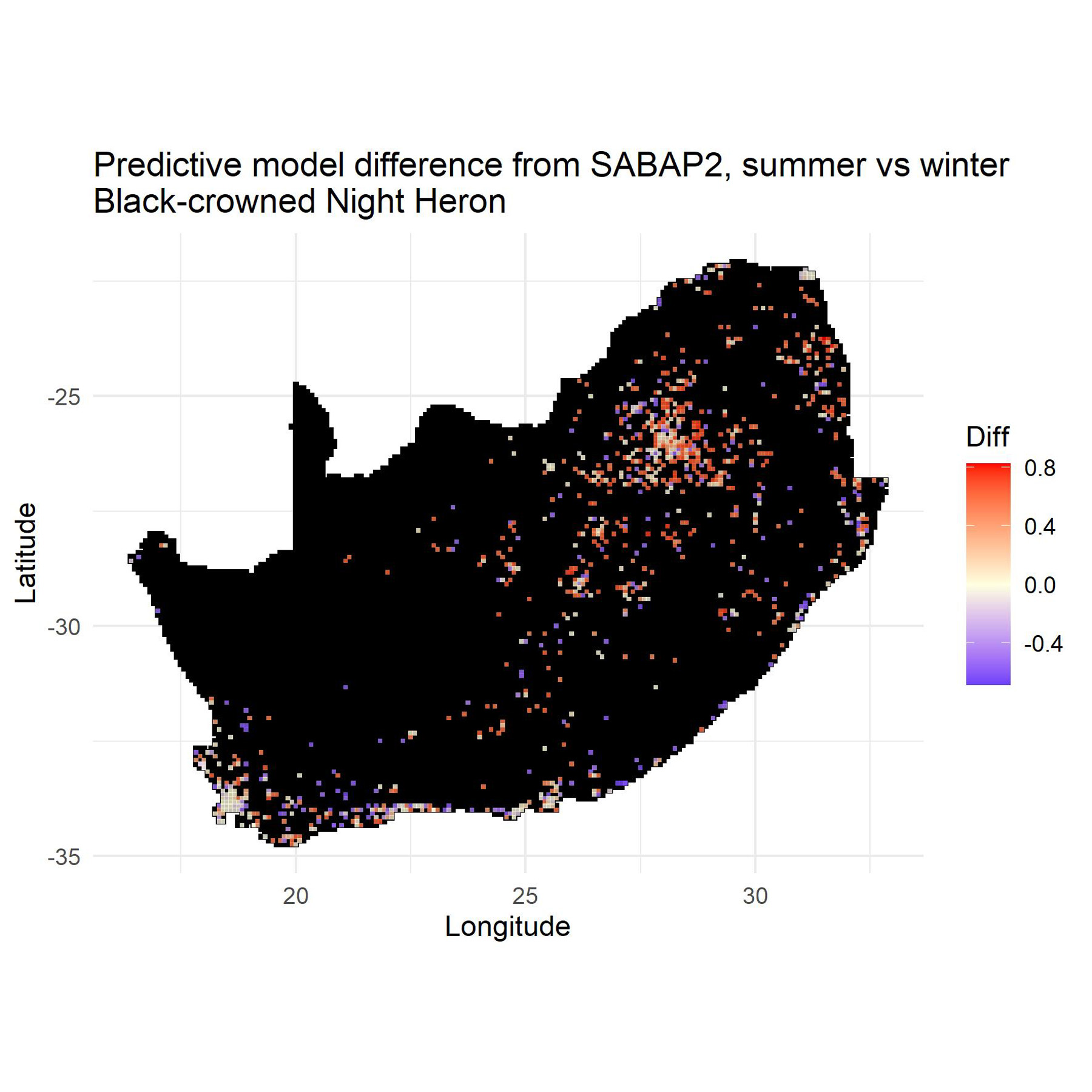
Figure 4: Map showing the difference in prediction models for summer vs winter from SABAP2 data (from Lee 2024).
Breeding occurs year-round, with peak activity often coinciding with the wet season (Hockey et al. 2005). Sexual maturity is reached at 2-3 years (del Hoyo et al. 1992). Breeding may occur in small colonial groups or in mixed colonies (del Hoyo et al. 1992, Kushlan and Hancock 2005). At Rondevlei (Cape Town) breeding occurs in small communal groups along with ten other waterbirds species (herons, egrets, ibis, spoonbill and cormorants) (D Gibbs, pers obs). The nest is a platform made of twigs and reeds built on trees, cliff ledges and on the ground at protected sites (del Hoyo et al. 1992, Kushlan and Hancock 2005). Clutch size is 2-4 eggs, (Maclean 1993), and mean clutch size varies regionally (Hockey et al. 2005). Eggs are laid at 48-hour intervals (Brown et al. 1982), and incubation period is 22-26 days done by both sexes (Brown et al. 1982). Chicks leave nest at 20-25 days (Brown et al. 1982, Hancock and Kushlan 1984). Breeding success is variable. May double brood, but typically, only one young fledges per pair each year (del Hoyo et al. 1992, Brown et al. 1982). Nests are prone to collapse (Hockey et al. 2005) and are vulnerable to disturbance and damage (Brown et al. 1982).
Crepuscular and nocturnal foragers (Brown et al. 1982, Hancock and Kushlan 1984). A generalist feeder, known to eat a wide variety of shoreline and aquatic species such as fish, frogs, tadpoles, turtles, snakes, lizards, adult and larval insects as well as spiders, crustaceans, mollusks, leeches, small rodents, bats and the eggs and chicks of other bird species (del Hoyo et al. 1992, Kushlan and Hancock 2005).
Threats & Conservation
Threats
The species is threatened by wetland drainage and destruction (del Hoyo et al. 1992, Kushlan and Hancock 2005) and by drought in non-breeding areas (Hafner and Kushlan 2002). It is highly susceptible to pesticides (del Hoyo et al. 1992, Kwon et al. 2004, Kushlan and Hancock 2005) such as organophosphates, carbamates (Kwon et al. 2004) and DDE (a breakdown product of DDT) which negatively affect hatching success (Kushlan and Hancock 2005). There are also cases of genetic damage to chicks as a result of petroleum contamination (Custer 2000). The species is susceptible to avian influenza (Melville and Shortridge 2006) and Newcastle disease so may be threatened by future outbreaks (Kuiken et al. 2006). It is also persecuted (anti-predation killing) at aquaculture facilities due to its depredation on fish stocks (Kushlan and Hancock 2005) and has suffered declines due to the exploitation of chicks from nesting colonies in the past (del Hoyo et al. 1992). Chicks of the species are still taken for food in some areas (e.g. Madagascar) (Kushlan and Hancock 2005, Hafner 2000) and adults are hunted and traded at traditional medicine markets in Nigeria (Nikolaus 2001). Black-crowned Night Heron are also susceptible to avian botulism.
Conservation Measures Underway
Although not specific to this species, CWAC monitoring helps maintain trends for the regional population. In addition, this species will benefit from sustainable management of river valleys and reed marshes, including the reduction of water pollution and fish overexploitation and minimise disturbance from recreation at the breeding sites.
Conservation Measures Proposed
There are no specific conservation measures in place at the time of writing. Increased protection of freshwater wetlands generally is necessary in the region.
Avoid disturbance to nesting sites. Important breeding colonies should be identified and protected as necessary if not within formal protected areas.
Research Priorities and Questions
- The regional population size needs to be determined. Given the nocturnal nature of this species, it can be under recorded as it roosts on deep cover during the day. It only becomes readily visible to observers at dusk and often only near roosts. Anecdotal evidence is that birds leaving a roost at dusk far exceed those which can be counted during daylight at the roost (D Gibbs, pers obs). This needs to be taken into account during future counts. Note: It is possible in some cases that reduced reporting rates for waterbird species could in part be attributed to increased growth of reedbeds, particularly in wetlands suffering from eutrophication. Increased reedbeds makes access, as well as observation, difficult for observers. In the case of Black-crowned Night Heron their vocal nature makes surveying relatively easy if done at dusk at roosting sites.
- Factors behind the regional decline need to be established through population monitoring.
- Establish to what extent the regional population is migratory.
- The potential effects of organophosphates on this species should be evaluated.
Contributors & References
Assessor/s
Dalton Gibbs, Maria Paul, Sanjo Rose
Reviewer/s
Grzegorz Kopij
References
BirdLife International. 2019. Nycticorax nycticorax (amended version of 2016 assessment). The IUCN Red List of Threatened Species 2019: e.T22697211A155515762. https://dx.doi.org/10.2305/IUCN.UK.2016-3.RLTS.T22697211A155515762.en. [Accessed on 21 August 2024].
BirdLife International. 2024. Species factsheet: Black-crowned Night-heron Nycticorax nycticorax. https://datazone.birdlife.org/species/factsheet/black-crowned-night-heron-nycticorax-nycticorax [Accessed on 21 August 2024].
Brown LH, Urban EK, Newman K. 1982. The Birds of Africa. Vol. 1. London, UK: Academic Press.
Custer TW. 2000. Environmental contaminants. In: Kushlan JA, Hafner H (eds), Heron conservation. San Diego, USA: Academic Press. pp 251–267.
del Hoyo J, Elliott A, Sargatal J. 1992. Handbook of the Birds of the World. Vol. 1. Barcelona, Spain: Lynx Edicions.
Hafner H. 2000. Heron nest site conservation. In: Kushlan JA, Hafner H (eds), Heron conservation. San Diego, USA: Academic Press. pp 201–217.
Hafner H, Kushlan JA. 2002. Action plan for conservation of the herons of the world. Gland, Switzerland; Cambridge, UK; and Arles, France: Heron Specialist Group.
Hancock J, Kushlan J. 1984. The Herons Handbook. London, UK: Croom Helm.
Hockey PAR, Dean WRJ, Ryan PG (eds). 2005. Roberts birds of southern Africa (7th Edn). Cape Town, South Africa: Trustees of the John Voelcker Bird Book Fund.
Irwin MPS. 1981. The Birds of Zimbabwe. Salisbury, Zimbabwe: Quest Publishing.
Kopij G. 1996. A mixed heronry at Willem Pretorius Game Reserve, Free State province. Mirafra (Bloemfontein) 13(3/4): 63–67.
Kopij G, Nuttall RJ. 1996. Heronries at Sandveld Nature Reserve. Mirafra (Bloemfontein) 13(1): 11–19.
Kuiken T, Fouchier RAM, Rimmelzwaan GF, Osterhaus ADME. 2006. Emerging viral diseases in waterbirds. In: Boere G, Galbraith C, Stroud D (eds), Waterbirds around the world. Edinburgh, UK: The Stationary Office. pp 418–421.
Kushlan JA, Hancock JA. 2005. The herons. Oxford, UK: Oxford University Press.
Kwon YK, Wee SH, Kim JH. 2004. Pesticide poisoning events in wild birds in Korea from 1998 to 2002. Journal of Wildlife Diseases 40(4): 737–740.
Maclean GL. 1993. Roberts’ Birds of Southern Africa (6th Edn). Cape Town, South Africa: John Voelcker Bird Book Fund.
Martin AP. 1997. Black-crowned Night Heron. In: Harrison JA et al. (eds), The Atlas of Southern African Birds. Vol. 1: 68–69. Johannesburg, South Africa: BirdLife South Africa.
Melville DS, Shortridge KF. 2006. Migratory waterbirds and avian influenza in the East Asian-Australasian Flyway with particular reference to the 2003–2004 H5N1 outbreak. In: Boere G, Galbraith C, Stroud D (eds), Waterbirds around the World. Edinburgh, UK: The Stationery Office. pp 432–438.
Nikolaus G. 2001. Bird exploitation for traditional medicine in Nigeria. Malimbus 23: 45–55.
Rose PM, Scott DA. 1994. Waterfowl population estimates. Slimbridge: IWRB.
Taylor PB, Navarro RA, Wren-Sargent M, Harrison JA, Kieswetter SL. 1999. TOTAL CWAC Report: Coordinated Waterbird Counts in South Africa, 1992–1997. Cape Town, South Africa: Avian Demography Unit, University of Cape Town.
Underhill LG, Tree AJ, Oschadleus HD, Parker V. 1999. Review of ring recoveries of waterbirds in southern Africa. Cape Town, South Africa: Avian Demography Unit, University of Cape Town.
Wetlands International. 2015. Waterbird Population Estimates. Available: wpe.wetlands.org.
Citation
Gibbs D, Paul M, Rose S 2025. Black-crowned Night Heron. In: Lee ATK, Rose S, Banda S, Bezeng SB, Maphalala MI, Maphisa DH, Smit-Robinson H (eds), The 2025 Red Data Book of Birds of South Africa, Lesotho and Eswatini. Johannesburg, South Africa: BirdLife South Africa. Available at: https://www.birdlife.org.za/red-list/black-crowned-night-heron/
Our generous sponsors


