


Bateleur
Terathopius ecaudatus

Number Of Mature
Individuals (Regional)
<1 000

Regional
Population Trend
Decreasing
2025
Regional Category
Endangered
Search by species
CONTENTSOverview
Names
|
IOC English Name: |
Bateleur |
|
SA & IOC Scientific Name: |
Terathopius ecaudatus |
|
BirdLife International Taxonomy (scientific name): |
Terathopius ecaudatus |
|
Order: |
ACCIPITRIFORMES |
|
Family: |
Accipitridae |
|
Species name author: |
Daudin 1800 |
|
Afrikaans: |
Berghaan |
|
Sesotho (South Africa): |
ntsu-petleke |
|
Sesotho (Lesotho): |
ntsu-petleke |
|
Siswati: |
Ingculungculu |
|
Zulu: |
ingqungqulu |
Current Assessment Status
|
2025 Regional Category [Criteria] |
EN [A2ab+C1] |
|
2024 Global Category [Criteria] |
EN [A2acde+3cde+4acde] (BirdLife International 2020) |
|
Population size (Regional) |
<1000 (EWT, unpubl data) |
|
Population size (Global) |
>10 000 (Ferguson-Lees and Christie 2001) |
|
Distribution size (EOO) (Regional) km2 |
786 252 (Lee 2024) |
|
Distribution size (EOO) (Global) km2 |
23 500 000 (BirdLife International 2020) |
|
Distribution size (AOO) (Regional) km2 |
109 572 (Lee 2024) |
|
Generation time |
15.3 years (Birdlife International 2020) |
|
Status change reason |
No change |
|
Migrant (in the region) |
Not a migrant |
|
Regional endemic |
No |
Historic Listing Information
|
2000 Regional Status |
VU [A1a+2b; C1] |
|
2015 Regional Status |
EN [A2bc+3c+4bc; C1] |
|
Status change reason (if applicable) |
Genuine (recent) |
|
2015 Population size (Regional) |
c. 900 mature individuals |
|
2015 Global Status |
NT [A2acde] |
Reason for Inclusion
Reason for Inclusion in the Assessment
The Bateleur Terathopius ecaudatus was assessed as regionally Endangered in 2015 (Taylor 2015) and is currently listed as globally Endangered (Birdlife International 2020). While the regional population does not meet the >5% of the global population threshold, this is considered an artefact of recent extensive declines in the region (e.g. Figure 1) and hence is still included in the 2025 Regional Red Data List.
Category Justification
Category Justification
Based on recent analyses using road count and atlasing data, both the regional and global population of the Bateleur satisfies the population trend Criterion of A2 for regionally Endangered (an observed, estimated, inferred or suspected population-size reduction of ≥50% over the past three generations (46 years), where the reduction or its causes may not have ceased or may not be understood or may not be reversible). In addition, the population size is estimated to number <1000 mature individuals and a continuing decline of at least 20% within the next two generations (31 years) is predicted, satisfying Criterion C1.
Population Justification
The global population has not been quantified but is suspected to number in the tens of thousands (Ferguson-Lees and Christie 2001). Barnes (2000) estimated the regional population at c. 1400 mature individuals in 2000, although no mention was made of the manner in which this estimate was obtained. Watson and Maritz (2000) reported that, although Bateleur populations were stable in the protected- area network in South Africa, there had been a virtual 100% decline outside of these areas from the 1940s to 1980s. Southern African Bird Atlas (SABAP2) data indicate a 20% decrease in Area of Occupancy (AOO) since SABAP1 (Lee 2024). In addition to this, reporting rates within the species’ strongholds, namely Kruger National Park and Kgalagadi Transfrontier Park, are lower in SABAP2 than in SABAP1. It has also declined in Eswatini, from a previous population of 25 breeding pairs to just four pairs (Monadjem and Rasmussen 2008).
The species is highly visible as well as easily recognisable and it is unlikely that it was under-reported during the atlasing periods. Counts of Bateleurs in southern Africa in the late 1960s were used to estimate the annual adult survival rate at 94–97% (Brown and Cade 1972). Comparing counts of Bateleurs from road counts conducted in Botswana in 2015-2016 with those conducted along the same routes in 1991-1995 revealed that numbers of Bateleurs had declined significantly (by 70%) in protected areas – presumably because of food declines, but there was no significant decline in protected areas (Garbett et al. 2018). Declines of Bateleurs have been reported across South Africa, where they are among the 50 worst-performing bird species in the country, according to SABAP data (Underhill and Brooks 2014). In the Kgalagadi Transfrontier Park (Kalahari Gemsbok National Park) and surrounding areas (in Namibia, Botswana and South Africa), there was a 40% decline in the number of active nesting territories over a 10-year period (Herholdt et al. 1996). Already, by 1980, Bateleurs were considered to have undergone severe declines in South Africa, with likely decreases elsewhere in southern Africa too (Steyn 1982).
In the 1980s, South Africa was estimated to have around 600 pairs of Bateleurs, with 70% of the population living in the Kruger National Park and adjacent conservation areas (Tarboton and Allan 1984). Counts of Bateleurs in the Satara region of the Kruger National Park over 19 consecutive months in the late 1960s revealed an unbalanced sex ratio, where adult males outnumbered adult females nearly two to one, and further research is needed to determine the cause of this, and whether it could be related to differences between the sexes in their uses of different areas (Brown and Cade 1972). Pairs in the Kruger National Park and elsewhere in the Lowveld reportedly occupy territories of 40 km2 (Tarboton and Allan 1984).
Taking into account the reported decreases, the regional population is estimated at c. 900 mature individuals. Confidence in this regional population estimate is moderate to low.
Trend Justification
The overall rate of decline in the global population is difficult to estimate, however, recent research indicates that Bateleurs are amongst the ten fastest declining raptors across Africa. Work conducted on the species across large swathes of its African range has shown concerning declines of up to 91%, exceeding the limits defining its current global threat category of Endangered to Critically Endangered (Shaw et al. 2024).
An analysis using SABAP reporting rates during 2008-2021 suggests that the Bateleur has declined at 20% (overall percentage rate of change) over 46 years (Lee 2024). Assuming that the estimate of 1400 provided by Barnes (2000) was correct and based upon a current regional population of c. 900 mature individuals, the decrease in the region has been c. 73% over the past three generations. Confidence in this regional population trend estimate is moderate to low.
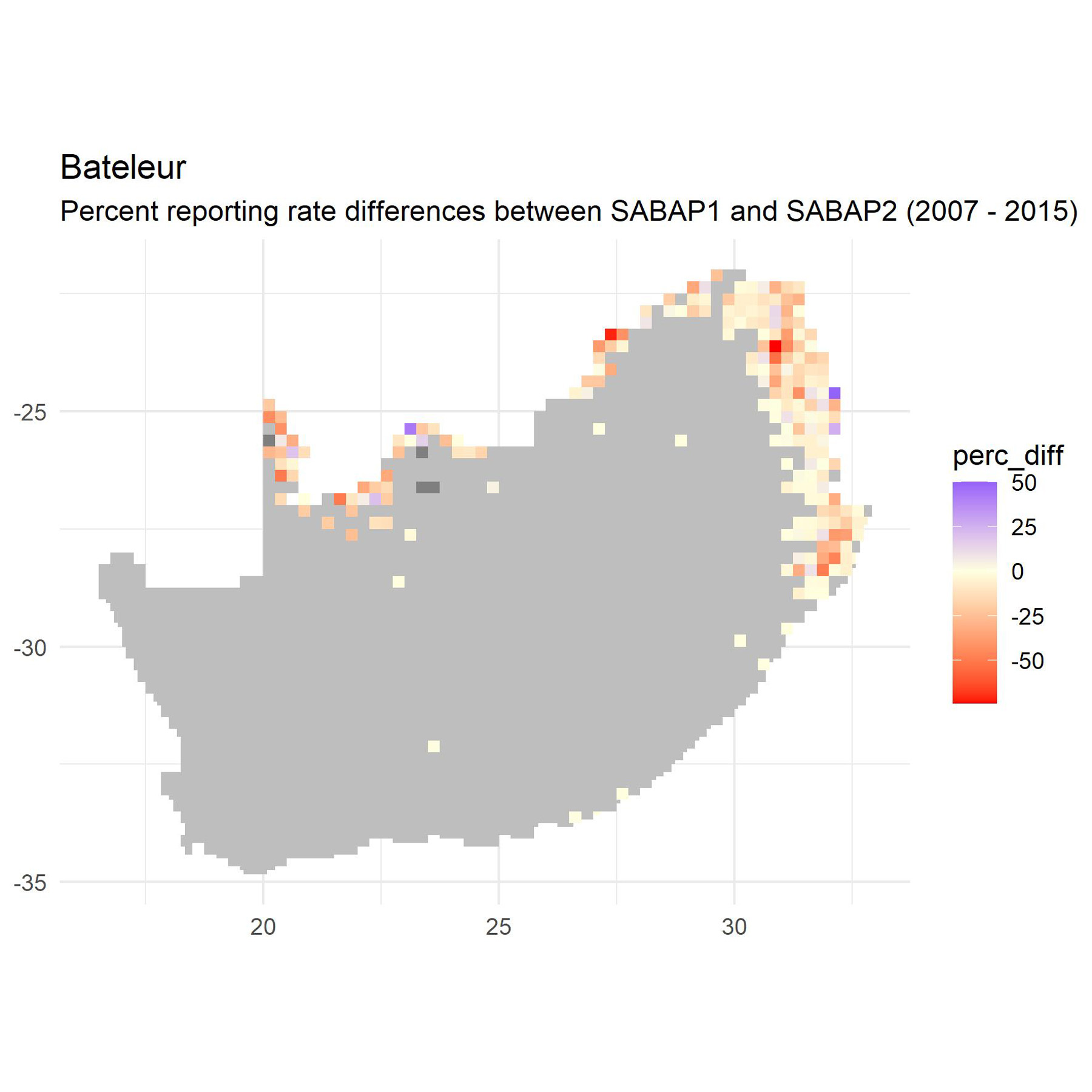
Figure 1: Above is a map of Quarter Degree Grid Cell level change between SABAP1 and the SABAP2 period 2007-2015, being roughly comparable in terms of time and effort. The measure is a simple subtraction of percentage reporting rate for each period. Blue indicates higher reporting rate, red indicates lower, while cream is no change. Grey is not recorded, which could be either the species was not recorded or there is no data. Given protocol differences between SABAP1 and SABAP2, these results are indicative or supportive of change, but further evidence would be required to support a position of population change from these results alone. Note the dominance of red pentads indicating a general decrease in reporting rates over much of its regional distribution (from Lee 2024).
Table 1: Percentage predicted range change comparing the number of pentads Bateleur could occur in for the period 2007-2015, with 2008-2023 (Lee 2024).
|
Information |
|
|
Pentads 2015 |
1858 |
|
Pentads 2023 |
1482 |
|
Annual rate of change |
0.972 |
|
Percent change (10 years or 3 generations) |
-20.50% |
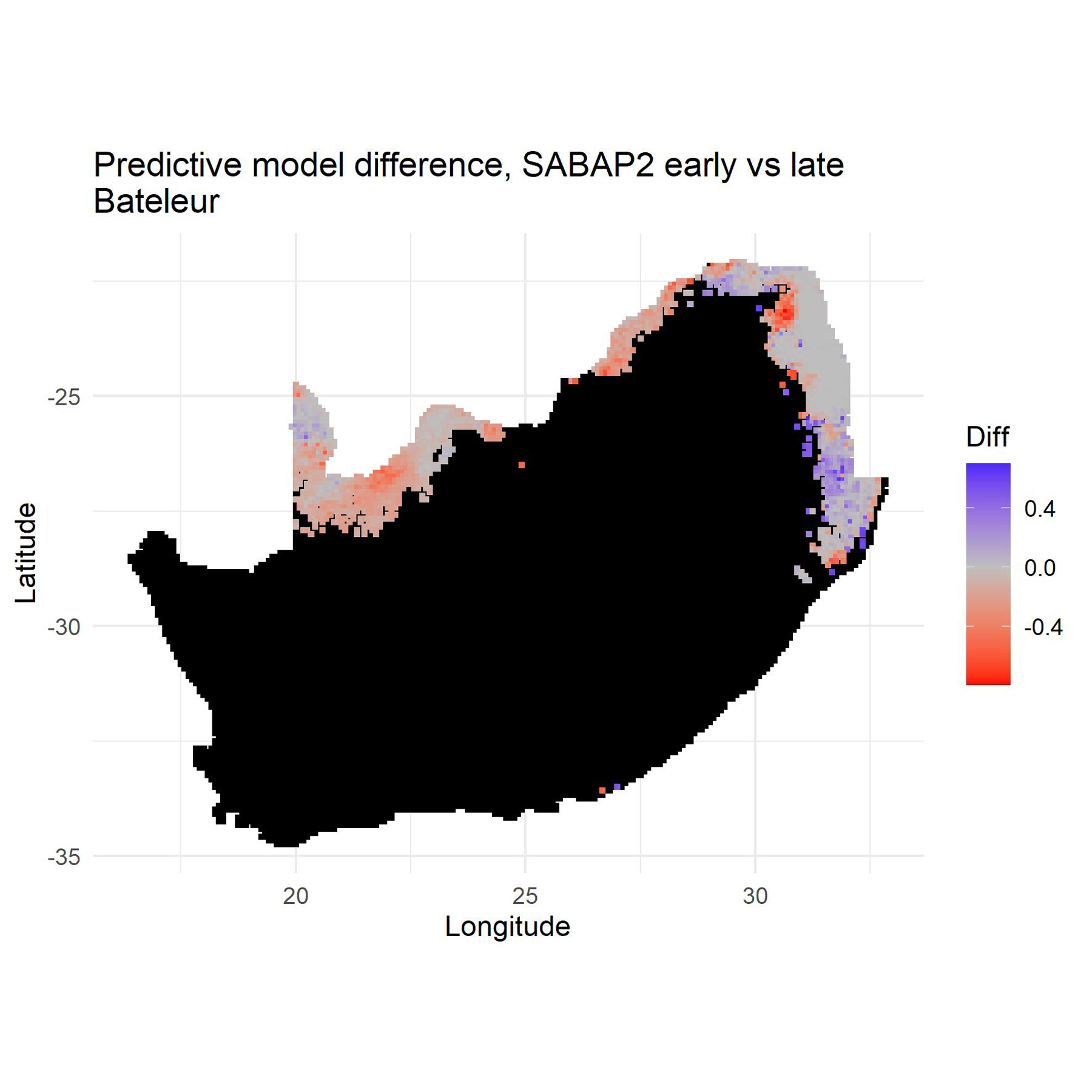
Figure 2: Output from the predictive occurrence modeling routine from Table 1, the difference between the models is displayed as a heatmap (late minus early), with red indicating lower probability of recording for the more recent change, and blue indicating higher). Percentage change over 46 years is -20% (from Lee 2024).
Table 2: Prediction models were run using Birdlasser data filtered to a 2x2km grid. Confidence of absence was augmented using iNaturalist and eBird data. The ‘red’ package in R was used to estimate Extent of Occurrence (EOO) and Area of Occupancy (AOO) based on the resulting grids at probabilities of 0.4, 0.5 and 0.6 to provide bounds on the mean estimates (from Lee 2024).
|
AOO |
EOO |
|
|
Mean |
109572 |
786252 |
|
Lower |
93920 |
764975 |
|
Upper |
124964 |
804463 |
Biology & Ecology
Taxonomy
There are no notable issues.
Identification
55–70 cm; 1.8–2.95 kg; wingspan 168–190 cm (Ferguson-Lees and Christie 2001). Bare facial skin, legs and feet bright red. Bill is yellow-orange with black tip. Of all the birds of prey species in Africa, the Bateleur is one of the most colourful and therefore noticeable (Brown and Cade 1972). This is a sexually dimorphic species, both in the adult and pre-adult plumages; Bateleurs assume their full adult plumage at seven to eight years of age, with adult males showing a thick black band on the underside of the trailing edge of the wing, while adult females have a narrow black band on the trailing edge (Brown and Cade 1972), distinctive especially in low rocking flight with upturned wingtips. When seen from above, males have uniformly black secondaries, while females have greyish-white secondaries tipped with black (Brown and Cade 1972). Adult, pre-adult, subadult, immature and juvenile plumages can be distinguished, with young birds being dark or light brown, and with longer tails, and broader, more rounded wings, than the adults (Brown and Cade 1972). At just three or four years old, Bateleurs may show secondary sex characteristics in their wings, particularly the width of the dark band on the trailing edge (Brown and Cade 1972). About 7% of adults have back cream-coloured (not chestnut), and pale chestnut-coloured tail (Ferguson-Lees and Christie 2001).
Distribution
The Bateleur has an extensive range across much of sub-Saharan Africa (from southern Mauritania, Senegal, southern Mali and Guinea east to southern Sudan, northern South Sudan, Ethiopia, west Somalia and south to Namibia, Botswana and northern and north-eastern South Africa) (BirdLife International 2020). It also occurs in south-west Arabia (south-west Saudi Arabia and Yemen).
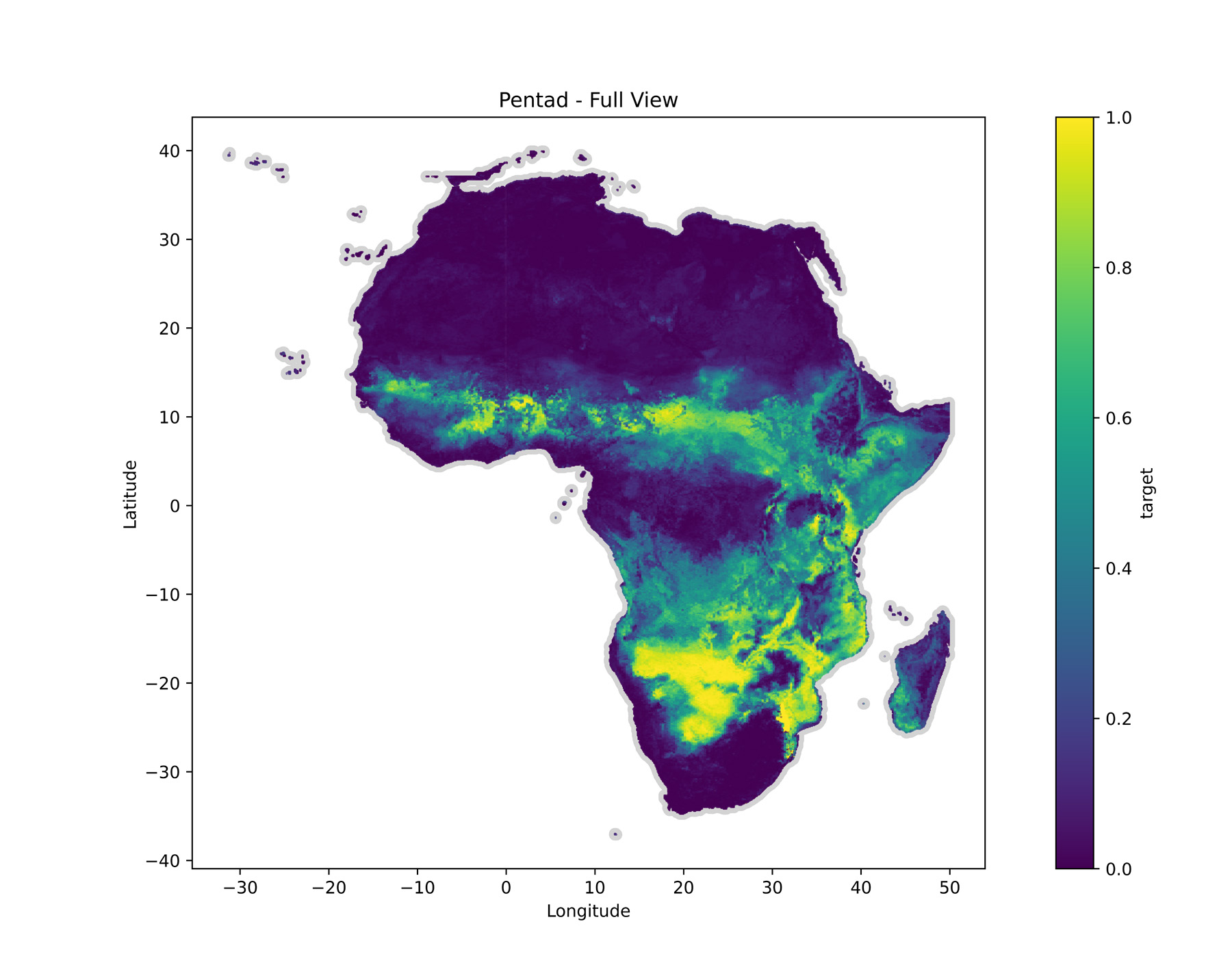
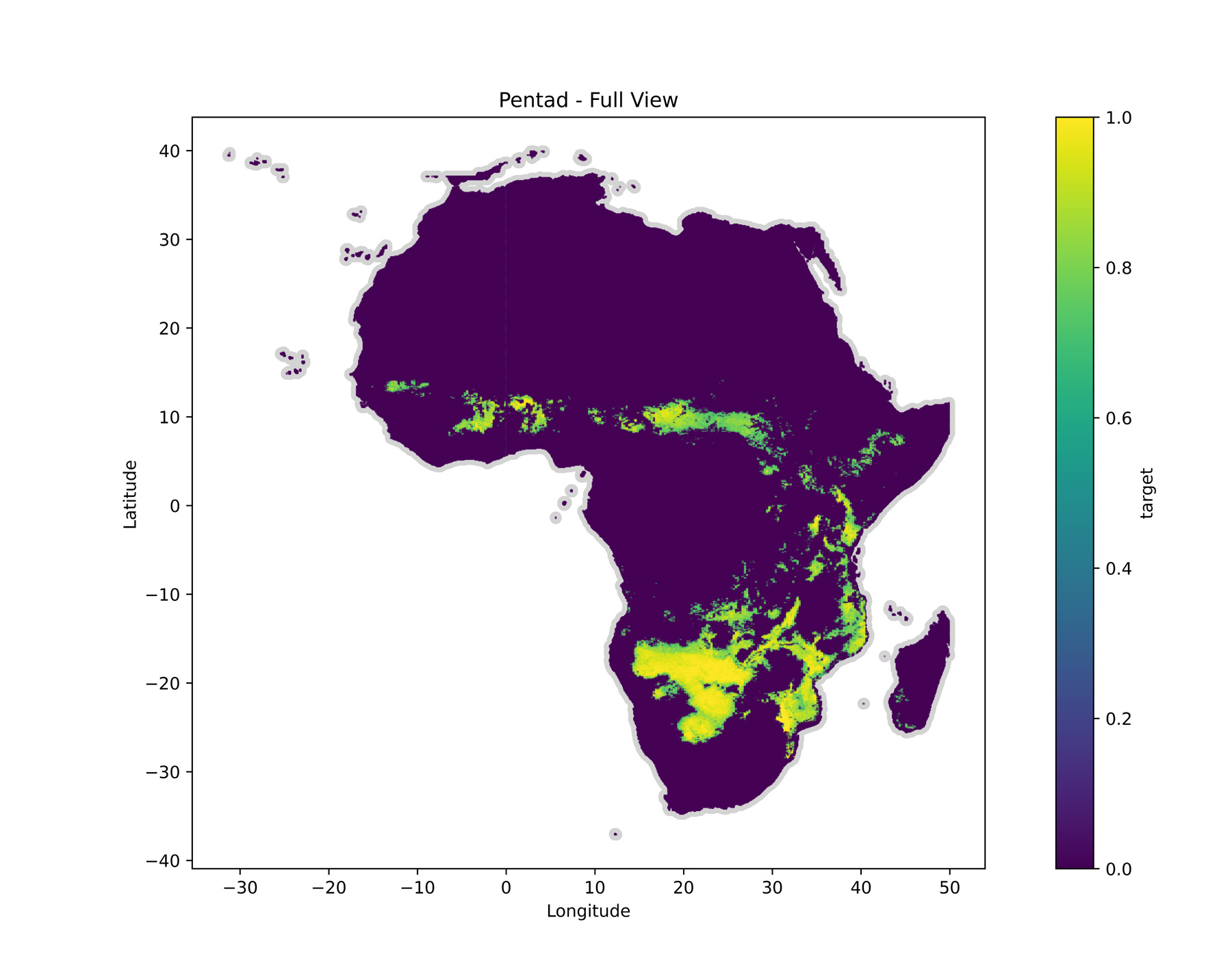
Figure 3: Africa distribution maps for Bateleur produced from ABAP, iNaturalist and eBird data using a Random Forest model and various predictor variables. Colour gradient is predicted probability of occurrence, with a 0.5% threshold applied. Brighter colours = higher probability of occurrence. Pentad scale (top) and pentad scale p>0.5 (bottom) (from Lee 2024).
In southern Africa, it is found in South Africa, Namibia, Botswana, Zimbabwe and southern Mozambique (Simmons 2005). Within the region, the species has been largely extirpated outside of protected areas, with the Greater Kruger National Park now holding the majority of the regional population, followed by Kgalagadi Transfrontier Park and the northern KwaZulu-Natal parks of Hluhluwe-iMfolozi Park and iSimangaliso Wetland Park. The adults are largely sedentary (Brown et al. 1982), while juveniles disperse from their natal areas (Simmons 2005). Two atlas records from Beaufort West in Western Cape and Kenton on Sea in Eastern Cape probably represent vagrant records and not a shift in the distribution of the regional population and explain the increase in EOO. The AOO, on the other hand, has shown a decrease of 20.50% since SABAP1 (Lee 2024). Recent analysis of reporting rates has supported the species’ heavy dependance on protected areas (Lee 2024).
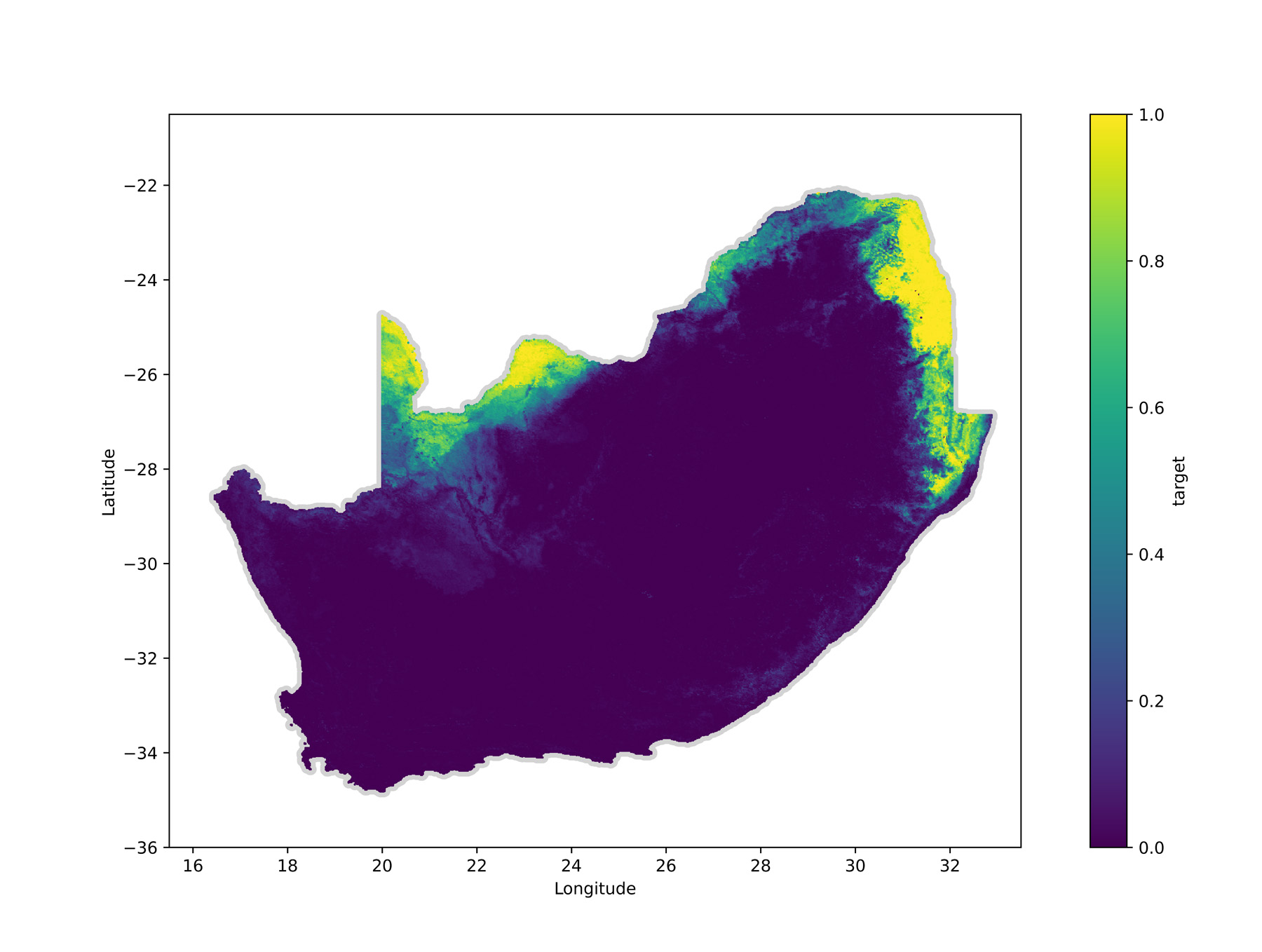
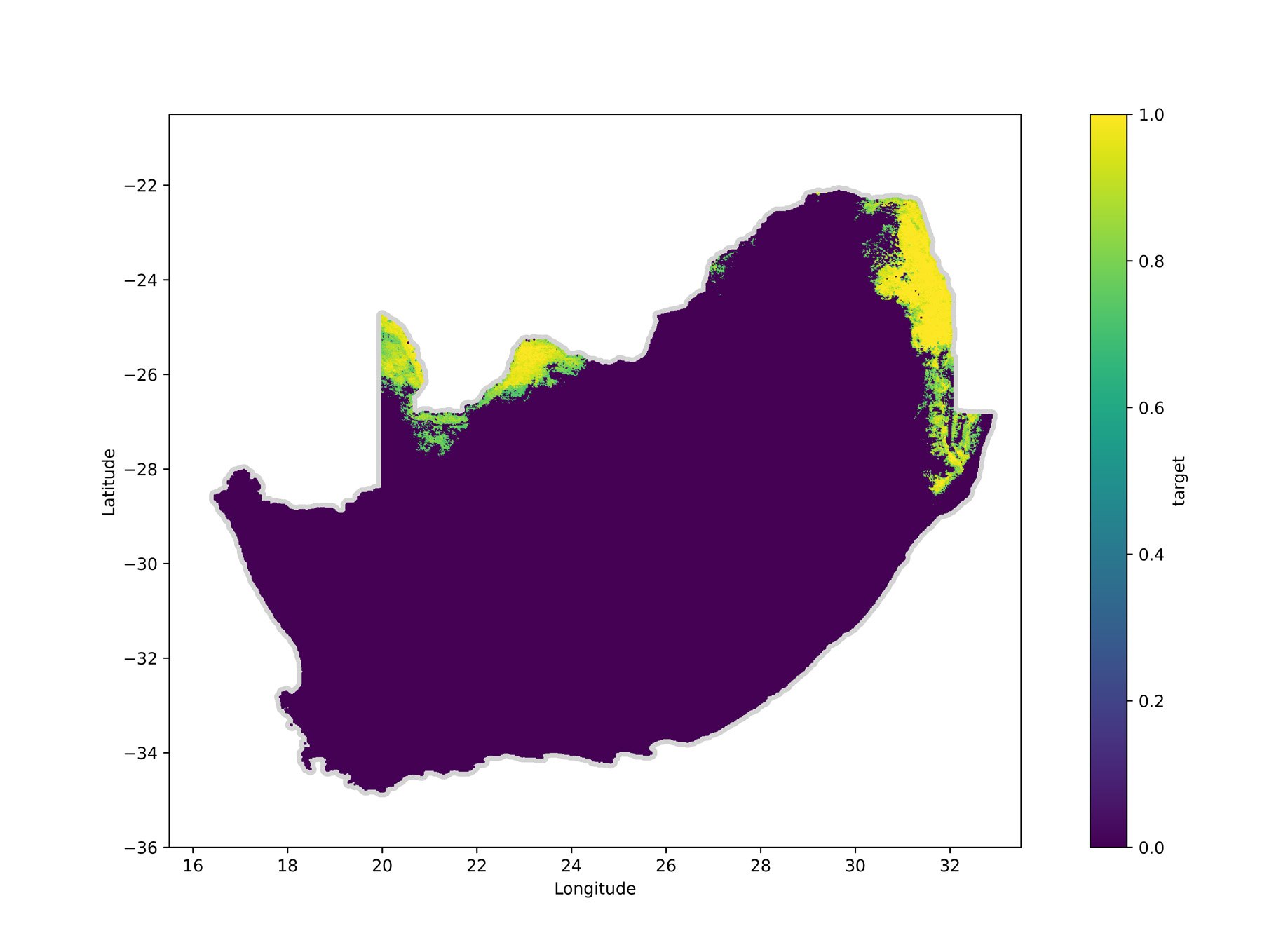
Figure 4: Bateleur probability distribution map for South Africa, produced from BirdLasser location data at 2x2km grid scale, using iNaturalist and eBird as absence data only. This represents the predicted range for the 2016-2023 period, pentad scale (top) and pentad scale p>0.5 (bottom) (from Lee 2024).
Ecology
The Bateleur inhabits open country, including grasslands, savanna, and subdesert thornbush, ranging from sea level to 4500 meters, but generally found below 3000 meters (Ferguson-Lees and Christie 2001). In South Africa the species is found in savannah and open to moderately dense woodland, including Kalahari thornveld, Vachellia (Acacia) savannah and Mopane Colophospermum mopane woodlands (Simmons 1997, Simmons 2005) as well as semi-desert shrubland. It is absent from mountains, heavily wooded and treeless habitats. While it is generally considered resident, some adults and immatures exhibit nomadic behavior (Tate et al. In prep, Ferguson-Lees and Christie 2001), with tracked juveniles and subadults found to move and disperse within vast ranges of over 250 000 km² (Tate et al. In prep). Adults forage over a large range of 50–29 000 km² (Tate et al. In prep, Ferguson-Lees and Christie 2001) covering up to 480 km per day (Tate et al. In prep).
Nests are constructed in the canopy of large trees, with breeding occurring primarily from September to May in West Africa, year-round in East Africa, and from December to August in southern Africa (Ferguson-Lees and Christie 2001). Forty-four breeding attempts of the Bateleur were recorded in the Kruger National Park in 1966-1969 (Brown and Cade 1972). Breeding pairs laid no more than one egg, and produced a maximum average of 0.66 young per egg laid (more likely the overall productivity is no higher than 0.5 young per pair per year, when non-breeding pairs and pairs that failed early in the breeding season are taken into account (Brown and Cade 1972). Also, it seems likely that Bateleurs may not breed every year, due to the long period of dependence of the fledglings on their parents (Brown and Cade 1972). Work on the breeding biology of Bateleurs was conducted in the Kruger National Park in the early 1980s, and this author again noted single-egg clutches, with low reproductive rates further reduced by natural predation, long incubation and nestling periods, and numbers of young being limited by territoriality (Watson 1988, 1990). The generation length of 15.3 years is provided by BirdLife International (BirdLife International 2020).
Bateleurs have a unique and time-consuming foraging style, which uses low-altitude soaring flight, which needs specialised aerodynamics, to cover large areas, searching for carrion and prey (Tarboton and Allan 1984, Watson 1988). They are facultative scavengers, feeding on carrion from a range of animals, and with a variety of other mammalian and avian scavengers (Steyn 1982, Simmons 2005). The species takes both live and dead food, preying on mammals and birds, but also consuming some reptiles, insects, and occasionally birds’ eggs and crabs (Ferguson-Lees and Christie 2001, Simmons 2005). Juveniles and immatures in Kruger National Park were found to scavenge up to 85% of prey items. Up to 50 individuals, especially immatures, may gather at emergences of termite alates (Ferguson-Lees and Christie 2001). Of 238 prey items collected from Bateleur nests in Zimbabwe, 48% were birds, 42% were mammals, 8% were reptiles, and 2% were fish (Steyn 1980).
Threats & Conservation
Threats
Threats to Bateleurs include anthropogenic activity (Steyn 1980) and poisoning (Herholdt, Kemp and du Plessis 1996, Virani et al. 2011, Roxburgh and McDougall 2012, Ogada 2014, The Endangered Wildlife Trust and the Peregrine Fund 2024). Bateleurs are now mostly confined to protected areas, or areas with low human density, and this has contributed to making them among the most threatened birds of prey in southern Africa (Loftie-Eaton 2014). Habitat loss and bush encroachment (making it harder for scavenging birds to locate carrion) have been proposed as a key driver for the decline in numbers of Bateleurs across their range (Loftie-Eaton 2014). Between 1988 and 1994, declines were observed in the number of Bateleur nesting sites in the Kalahari Gemsbok National Park and surrounding areas (in Namibia, Botswana and South Africa), and the causes of these declines were suggested to be persecution in the surrounding farmlands, disturbance of nest sites, and poisoning (Herholdt et al. 1996).
Steyn (1980) reiterated the risks of disturbing Bateleurs at their nests and that they may desert nests if disturbed, for example if a hide is built nearby. Poisoned Bateleurs were found in the Kgalagadi Transfrontier Park in the 1990s (Herholdt et al. 1996). Of the 344 cases tested by the Toxicology Laboratory (Agricultural Research Council-Onderstepoort Veterinary Institute) between 2009 to 2014 from birds, included two confirmed cases of Bateleurs being poisoned with aldicarb (Ogada, Botha and Shaw 2015). At the Moholoholo Wildlife Rehabilitation Centre (Limpopo), 12 Bateleurs were admitted between 2002 and 2018, and reasons for these admissions included broken wings (n = 4), poisoning (n = 4), and ‘Bateleurs found in possession of arrested suspect’ (n = 2), suggesting this species is illegally traded in the Greater Kruger National Park (both of these suspects were found between Orpen Road and Klaserie) (Mashele et al. 2021).
Bateleurs are facultative scavengers and often fall victim to poisons left out for other wildlife. Indeed, the African Wildlife Poisoning database has recorded Bateleur fatalities at many of the wildlife poisoning events across Africa, with over 30 fatality records from 2015-2024. Bateleurs are vulnerable to poisoning as they are highly mobile, and spend large amounts of time on the wing, readily picking out carcasses and carrion in the landscape from the air with their remarkable eyesight. They are also typically the first raptor (and vertebrate for that matter) on a carcass and very often lead vultures to carcasses (L. Thompson, J. Davies, G. Tate, pers. obs.). African vultures locate their food by sight, using the behaviour of conspecifics, other vulture species, and other scavenging raptors such as Bateleurs to help them find food (Botha et al. 2017). Therefore, the loss (through further poisoning) of Bateleurs will likely speed up the functional extinction of vultures (near obligate scavengers), which in turn will have dire consequences in terms of a One Health perspective (Ottinger et al. 2021).
Conservation Measures Underway
The Bateleur is a key focus of several projects and initiatives under the Endangered Wildlife Trust’s Birds of Prey Programme. The Endangered Wildlife Trust has initiated a population monitoring project on Bateleurs in the Kruger National Park and has started a GPS tracking study on the species across southern Africa, with a focus on the Greater Kruger region of the Lowveld. This work is aimed at investigating range use and dependance on protected areas and establishing robust management plans for the species. Poisoning response training and intervention, as well as technology tools used to detect and rapidly respond to wildlife poisoning events, have likely contributed to the reduction in the loss of Bateleur to poisoning in more recent years. The Endangered Wildlife Trust has been active with an awareness and education programme for landowners and stock farmers in the Northern Cape since 1985, which has been successful in reducing the number of poisoning incidents. The Bateleur is listed under Schedule 2: Specially Protected Wild Animal of the Limpopo Environmental Management Act No 7 of 2003.
Conservation Measures Proposed
Bateleurs are a very understudied raptor species across their African range. The species’ heavy dependence on protected areas underscores the importance of expanding conservation areas (e.g. Figure 5). The current goal to cover 30% of land by 2030, a key target agreed upon at the UN Convention on Biological Diversity COP15, will certainly benefit the species, and ensuring the protection and expansion of these areas is crucial for the long-term survival of the Bateleur.
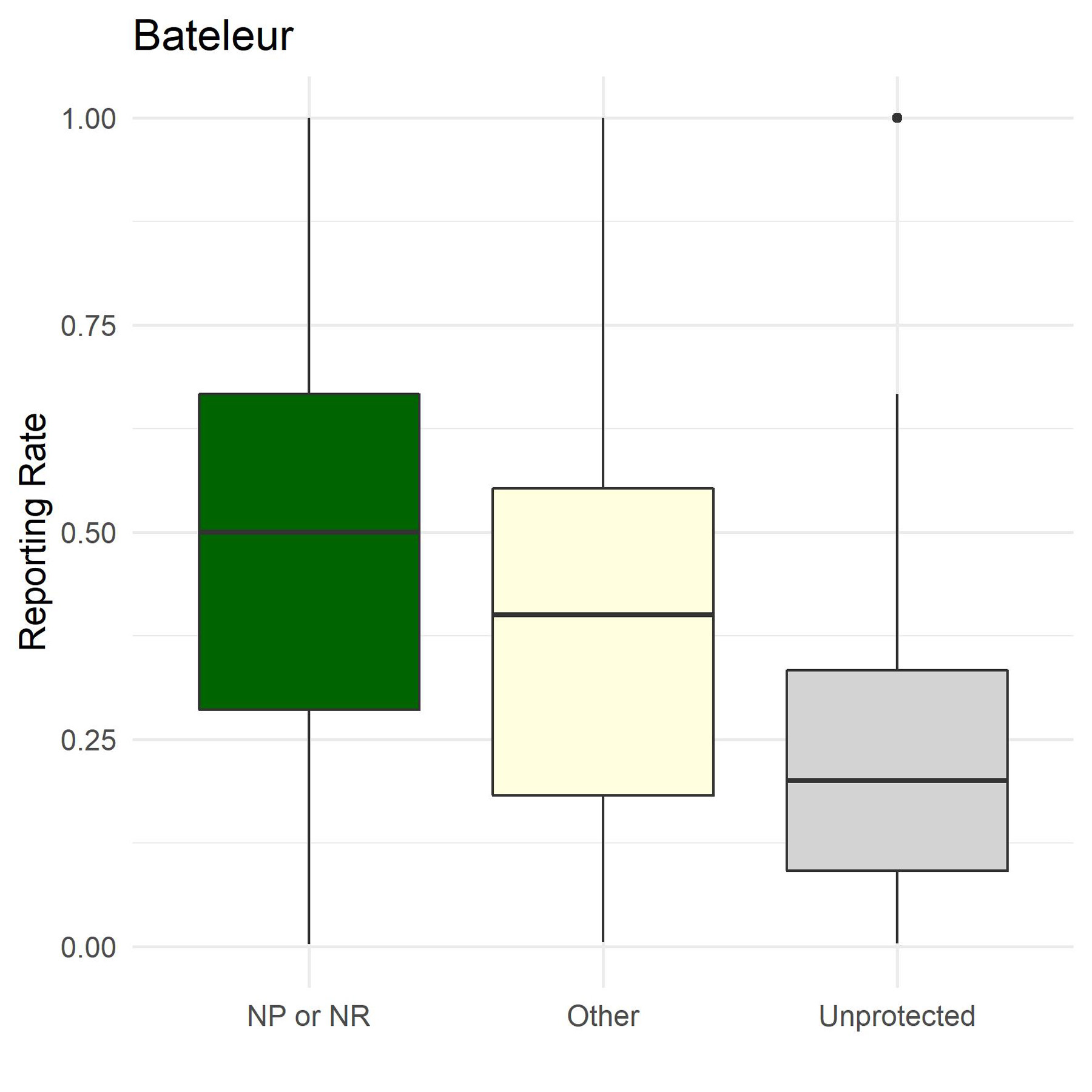
Figure 5: Boxplot comparisons of SABAP2 reporting rate in National Parks (NP), ‘Other” (Conservancies, Biosphere Reserves etc.) and Nature reserves (NR) in the Bateleur range. The ratio of range (number of pentads) in both protected categories to unprotected is 3.08, indicate most of the range is in a protected area (from Lee 2024).
Initiatives aimed at reducing the impact of poisoning are vital given the increasing trends in wildlife poisoning across the region.
A Population and Habitat Viability Assessment (PHVA) is recommended, as is a Biodiversity Management Plan, culminating in a National Species Recovery Plan. The awareness programme run by Endangered Wildlife Trust needs to be expanded to parts of the species’ former range.
Research Priorities and Questions
- Apart from SABAP data, the population status and trends are poorly understood especially in population stronghold regions of the Lowveld and Kalahari. Ongoing monitoring and research projects are vital to monitor population status and trends, understand current and emerging threats and to adapt/improve conservation interventions for the species.
- What is the current breeding performance of the species within large, protected areas? What are the drivers behind breeding performance?
- Regular road transects and counts within the species range will assist in establishing baseline population trends and numbers.
- A study of the dispersal and movement of immature birds outside of protected areas requires investigation.
Contributors & References
Assessor/s
Gareth Tate
Reviewer/s
Andre Botha
References
Barnes KN. 2000. Bateleur Terathopius ecaudatus. In: KN Barnes (ed), The Eskom Red Data Book of Birds of South Africa, Lesotho and Swaziland. Johannesburg, South Africa: BirdLife South Africa. pp 86–88.
BirdLife International. 2020. Terathopius ecaudatus. Available: https://www.iucnredlist.org/species/22695289/174413323#population [Accessed on 5 June 2024].
Brown L, Cade T. 1972. Age classes and population dynamics of the Bateleur and African Fish Eagle. Ostrich 43: 1–16.
Ferguson-Lees J, Christie DA. 2001. Raptors of the World. London: Christopher Helm.
Garbett R, Herremans M, Maude G, Reading RP, Amar A. 2018. Raptor population trends in northern Botswana: A re-survey of road transects after 20 years. Biological Conservation 224: 87–99. Available: DOI: 10.1016/j.biocon.2018.05.020.
Herholdt J, Kemp A, du Plessis D. 1996. Aspects of the breeding status and ecology of the Bateleur and Tawny Eagle in the Kalahari Gemsbok National Park, South Africa. Ostrich 67: 126–137.
Lee ATK. 2024. Regional Red Data Book of the Birds of South Africa, Lesotho and Eswatini: SABAP2 synthesis and supporting information and graphics for Bateleur. South Africa: BirdLife South Africa, unpublished report.
Loftie-Eaton M. 2014. Geographic Range Dynamics of South Africa’s Bird Species. PhD thesis. University of Cape Town.
Mashele NM, Thompson LJ, Downs CT. 2021. Traditional health practitioners’ and other community members’ perceptions of vultures in the Kruger to Canyons Biosphere Region, South Africa. Journal of Raptor Research 55(3): 340–358. Available: DOI: 10.3356/JRR-20-34.
Monadjem A, Rasmussen MW. 2008. Nest distribution and conservation status of eagles, selected hawks and owls in Swaziland. Gabar 19: 1–22.
Ogada DL. 2014. The power of poison: Pesticide poisoning of Africa’s wildlife. Annals of the New York Academy of Sciences 1322(1): 1–20. Available: DOI: 10.1111/nyas.12405.
Ottinger MA, Botha A, Buij R, Coverdale B, Gore ML, Harrell RM, Hassell J, Krüger S, et al. 2021. A strategy for conserving Old World vulture populations in the framework of One Health. Journal of Raptor Research 55: 374–387.
Roxburgh L, McDougall R. 2012. Vulture Poisoning Incidents and the Status of Vultures in Zambia and Malawi. Vulture News 62(1): 33–39. Available: DOI: 10.4314/vulnew.v62i1.3.
Shaw P, Ogada D, Dunn L, Buij R, Amar A, Garbett R, Herremans M, Virani MZ, et al. 2024. African savanna raptors show evidence of widespread population collapse and a growing dependence on protected areas. Nature Ecology & Evolution 8. Available: DOI: 10.1038/s41559-023-02236-0.
Simmons RE. 1997. Bateleur Terathopius ecaudatus. In: Harrison JA, Allan DG, Underhill LG, Herremans M, Tree AJ, Parker V, Brown CJ (eds), The atlas of southern African birds Vol I: Non-passerines. Johannesburg, South Africa: BirdLife South Africa. pp 202–203.
Simmons RE. 2005. Bateleur Terathopius ecaudatus. In: Hockey PAR, Dean WRJ, Ryan PG (eds), Roberts – Birds of Southern Africa, 7th edn. Cape Town, South Africa: The Trustees of the John Voelcker Bird Book Fund. pp 498–500.
Steyn P. 1982. Birds of prey of southern Africa. Beckenham, UK: Groom Helm.
Tarboton WR, Allan DG. 1984. The status and conservation of birds of prey in the Transvaal. Transvaal museum monograph 3: 76–79.
Tate GJ, Davies JP, Thompson LJ, Botha AJ, Maude G, Wikelski M. Ranging behaviour in the Bateleur Terathopius ecaudatus. In prep.
Taylor MR. 2015. Bateleur. In: Taylor MR, Peacock F, Wanless RM (eds), The Eskom Red Data Book of Birds of South Africa, Lesotho and Swaziland. Johannesburg: BirdLife South Africa. pp 93–94.
The Endangered Wildlife Trust and the Peregrine Fund. 2024. The African Wildlife Poisoning Database. Available: www.awpd.cloud [Accessed on 19 June 2024].
Underhill LG, Brooks M. 2014. Preliminary summary of changes in bird distributions between the first and second Southern African bird atlas projects (SABAP1 AND SABAP2). Biodiversity Observations 258–293.
Virani MZ, Kendall C, Njoroge P, Thomsett S. 2011. Major declines in the abundance of vultures and other scavenging raptors in and around the Masai Mara ecosystem, Kenya. Biological Conservation 144(2): 746–752. Available: DOI: 10.1016/j.biocon.2010.10.024.
Watson R. 1988. The influence of nestling predation on nest site selection and behaviour of the bateleur. African Zoology 23: 143–49.
Watson RT. 1990. Population Dynamics of the Bateleur in the Kruger National Park. Ostrich 61(1–2): 5–12. Available: DOI: 10.1080/00306525.1990.9633931.
Watson RT, Maritz AWA. 2000. Bateleur Terathopius ecaudatus. In: Verdoorn GH, Bildstein KL, Ellis S (eds), Selected African Falconiformes Conservation Assessment and Management Plan. Apple Valley, United States of America: IUCN/SSC Conservation Breeding Specialist Group. pp 74–76.
Citation
Tate G 2025. Bateleur. In: Lee ATK, Rose S, Banda S, Bezeng SB, Maphalala MI, Maphisa DH, Smit-Robinson H (eds), The 2025 Red Data Book of Birds of South Africa, Lesotho and Eswatini. Johannesburg, South Africa: BirdLife South Africa. Available at: https://www.birdlife.org.za/red-list/bateleur/
Our generous sponsors


