



African Jacana
Actophilornis africanus

Number Of Mature
Individuals (Regional)
>10 000

Regional
Population Trend
Stable
2025
Regional Category
Least Concern
Search by species
CONTENTSOverview
Names
|
IOC English Name: |
African Jacana |
|
SA & IOC Scientific Name: |
Actophilornis africanus |
|
BirdLife International Taxonomy (scientific name): |
Actophilornis africanus |
|
Order: |
CHARADRIIFORMES |
|
Family : |
Jacanidae |
|
Species name author: |
Gmelin JF 1789 |
|
Afrikaans: |
Grootlangtoon |
|
Sesotho (South Africa): |
mohatsakwena |
|
Sesotho (Lesotho): |
mohatsakoena |
|
Siswati: |
|
|
Zulu: |
unondwayizomkhulu, umathandaluziba |
Current Assessment Status
|
2025 Regional Category [Criteria] |
LC |
|
2024 Global Category [Criteria] |
LC (BirdLife International 2024) |
|
Population size (Regional) |
Unknown |
|
Population size (Global) |
667 000 (BirdLife International 2024) |
|
Distribution size (EOO) (Regional) km2 |
1 516 615 (Lee 2024) |
|
Distribution size (EOO) (Global) km2 |
24 400 000 (BirdLife International 2024) |
|
Distribution size (AOO) (Regional) km2 |
141 375 (BIRDIE 2024) |
|
Generation time |
5.2 years (BirdLife International 2024) |
|
Status change reason |
No change |
|
Migrant (in the region) |
Resident |
|
Regional endemic |
No |
Historic Listing Information
|
2000 Regional Status |
Not Evaluated |
|
2015 Regional Status |
Not Evaluated |
|
Status change reason (if applicable) |
Not applicable |
|
2015 Population size (Regional) |
Unknown |
|
2015 Global Status |
LC |
Reason for Inclusion
Reason for Inclusion in the Assessment
African Jacana Actophilornis africanus was not assessed in the previous Regional Red List assessments, and was thus presumed to be Least Concern. Preliminary screening of Coordinated Waterbird Counts (CWAC) data indicated a significant decline in numbers of African Jacana counted per year.
Category Justification
Category Justification
African Jacana is a highly nomadic species that is considered widespread throughout the region. Its nomadism makes it very difficult to accurately determine a population size or infer trends from monitoring data. While the regional population size is unknown, localised count data support the assumption that it exceeds 10 000 mature individuals when suitable conditions are available (wet years).
Data from the bi-annual CWAC project, as well as modelled change in the Area of Occupancy (AOO) from the Southern African Bird Atlas Project (SABAP2), indicate that the regional population might be declining. However, considerable uncertainty exists as to whether declines represent seasonal fluctuations or population level change. It is also not clear what could be driving this decline as African Jacana show remarkable flexibility in the type of freshwater habitats they will utilise for breeding and foraging (e.g. Jenni and Kirwan 2020).
Modelled declines in AOO from SABAP2 indicate a possible decline of 24.8% which approaches the threshold for regionally Vulnerable (Criterion A). African Jacana are widespread throughout Southern Africa, so a regional rescue effect is considered a reasonable possibility for this species. As there is currently insufficient evidence to show that this species is threatened by extinction in the region, this assessment therefore recommends that African Jacana be listed as Least Concern.
Population Justification
Global population size unknown but estimated to number at least 1 000 000 individuals (approximately 670 000 mature individuals) (BirdLife International 2024). Regionally the population size is unknown but assumed >10 000 as African Jacana can congregate in large numbers (>1000) at a single site during wet years (Tarboton 2005). African Jacana have been reported throughout the region and appear capable of utilising even small man-made dams for foraging and nesting (e.g. Jenni and Kirwan 2020).
Trend Justification
The global population is considered stable (BirdLife International 2024).
Regionally, both CWAC and SABAP2 indicate that African Jacana might be in decline in some parts of its range; while increasing or stable trends are observed elsewhere (Figure 1). Utilising citizen science data to determine population trends for such a highly nomadic species capable of responding rapidly to changing water levels is extremely difficult. Within the southern part of its range (which includes the region) African Jacana are assumed to have benefited from the increase in small man-made dams and stock watering points (Jenni and Kirwan 2020). W Tarboton (pers comms) indicated that in 50 years of monitoring this species on the 16 000 ha Nyl floodplain the status has not changed. African Jacana are absent in dry years and abundant (several hundred individuals) in wet years.
The change in modelled AOO from SABAP2 data, which show steep declines in the past three generations (24.8%) (Figure 1), is very likely an overestimation, influenced by trends in the northern part of the range (for which there are little raw atlas data).
While CWAC data indicated that there is a decline in the number of African Jacana counted each year, analyses using the poptrend package (Knape 2016) showed that the declines are not significant over a three-generation period (Figure 2). The estimated declines from CWAC data were -29% (-69%, 49%) over three generations (Figure 2, Lee 2024).
While African Jacana need freshwater wetland habitats, which are regionally in decline, this species is highly adaptable and will utilise man-made dams and invasive, non-indigenous vegetation (de Swardt 2015, Jenni and Kirwan 2020). Continued frequent monitoring at key locations for this species is recommended to improve confidence in count trend results.
Overall, there is currently no evidence to suggest that African Jacana are experiencing rates of decline approaching a threatened status in South Africa. Confidence in this population trend estimate is medium.
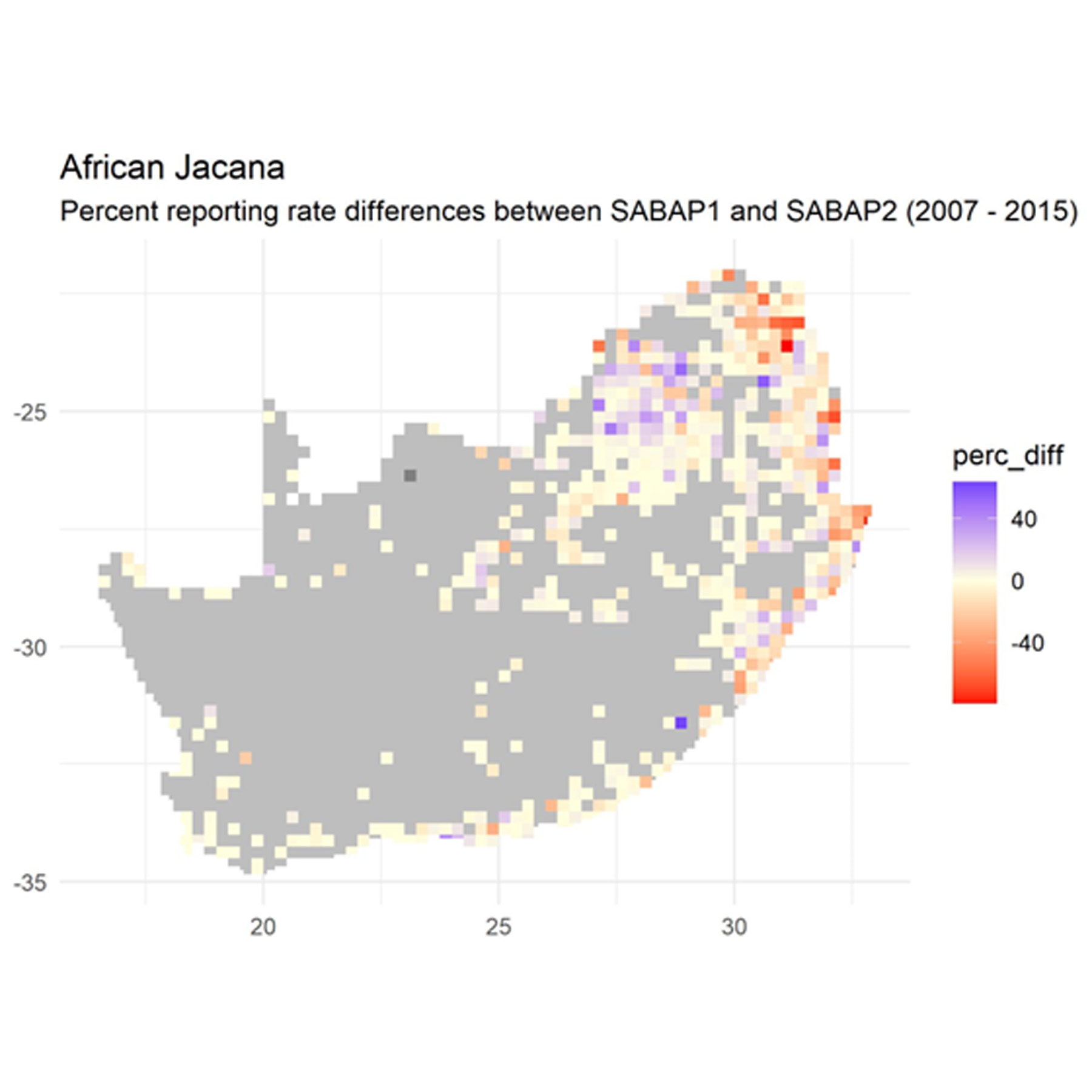
Figure 1a: SABAP distribution map showing percent reporting rate change between SABAP1 (1987-1991) and SABAP2 (2007-2015), illustrating the former range for African Jacana.
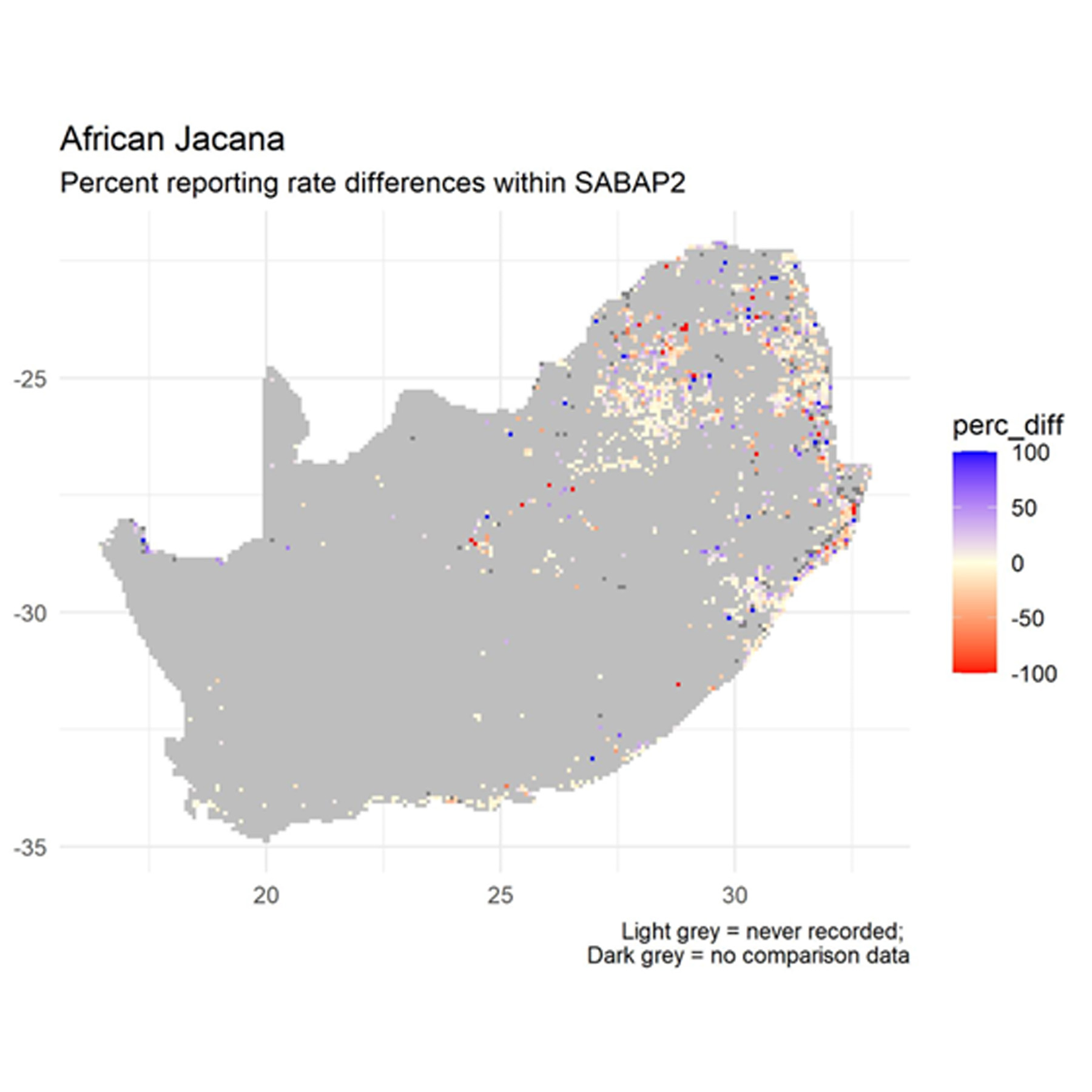
Figure 1b: Change in the percentage reporting rate for African Jacana between early (2007-2015) and late (2016-2023) SABAP2.
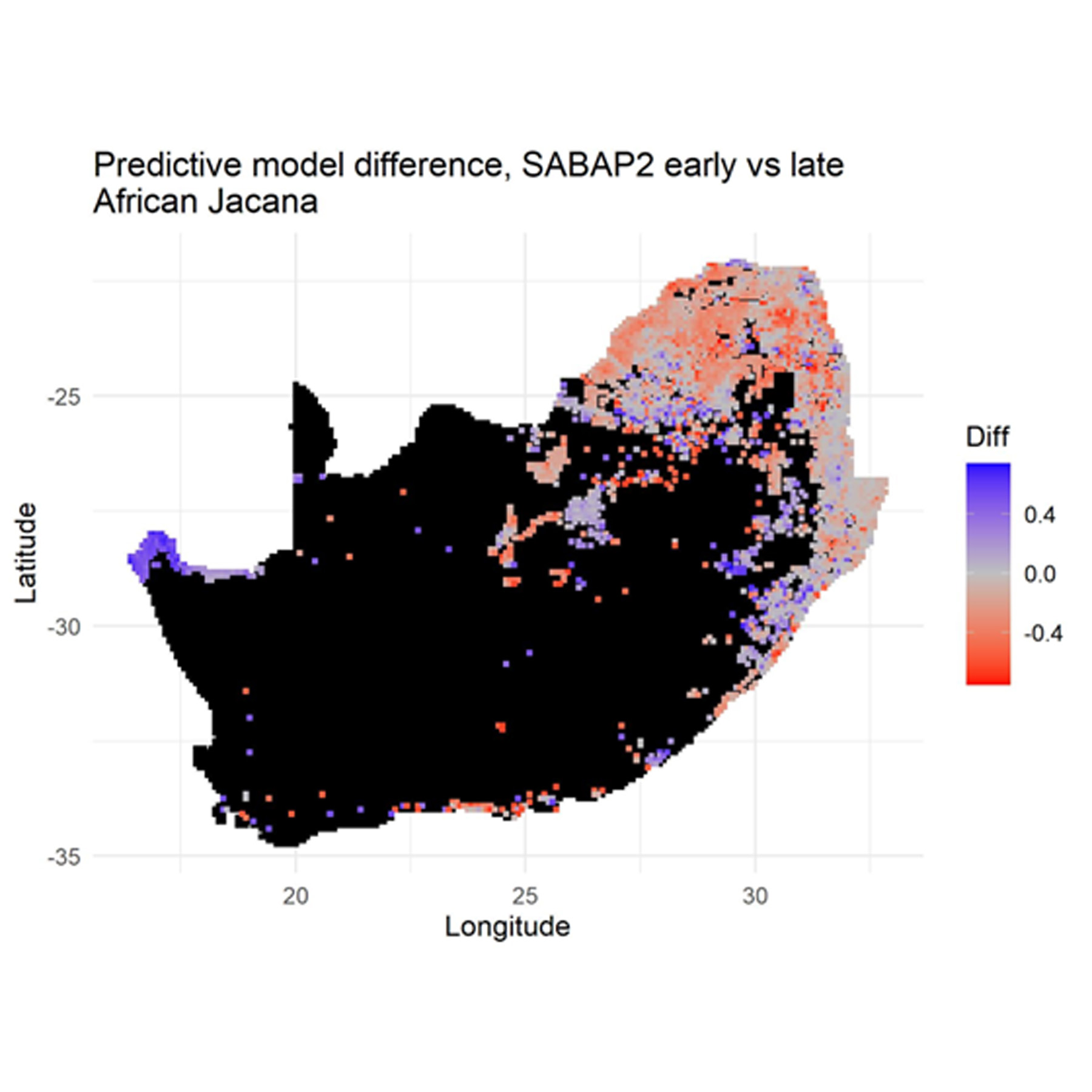
Figure 1c: Predictive modelled range change for Arican Jacana over three generations between early (2007-2015) and late (2016-2023) SABAP2.
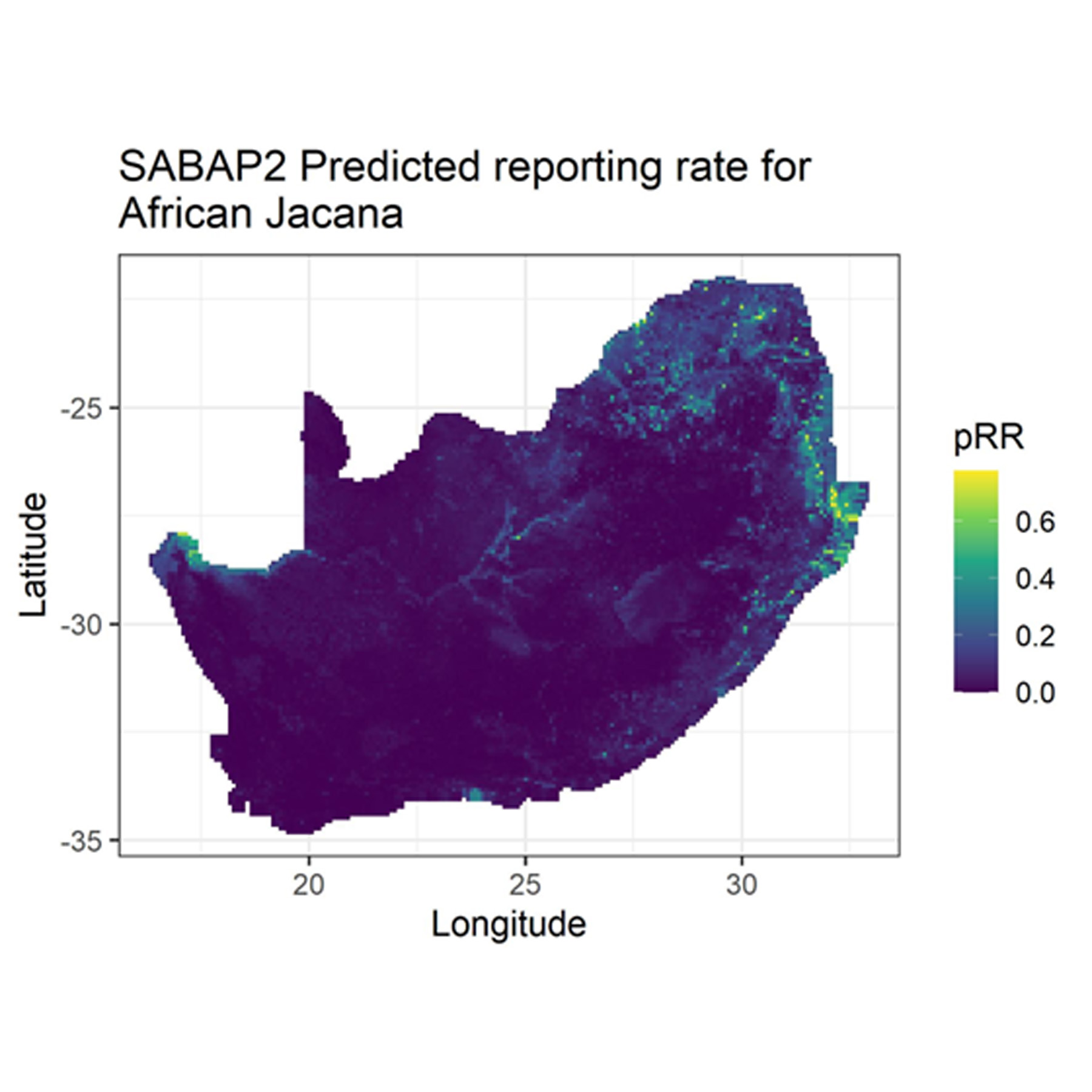
Figure 1d: The SABAP2 reporting rate prediction model suggests that African Jacana still remains widespread (from Lee 2024).
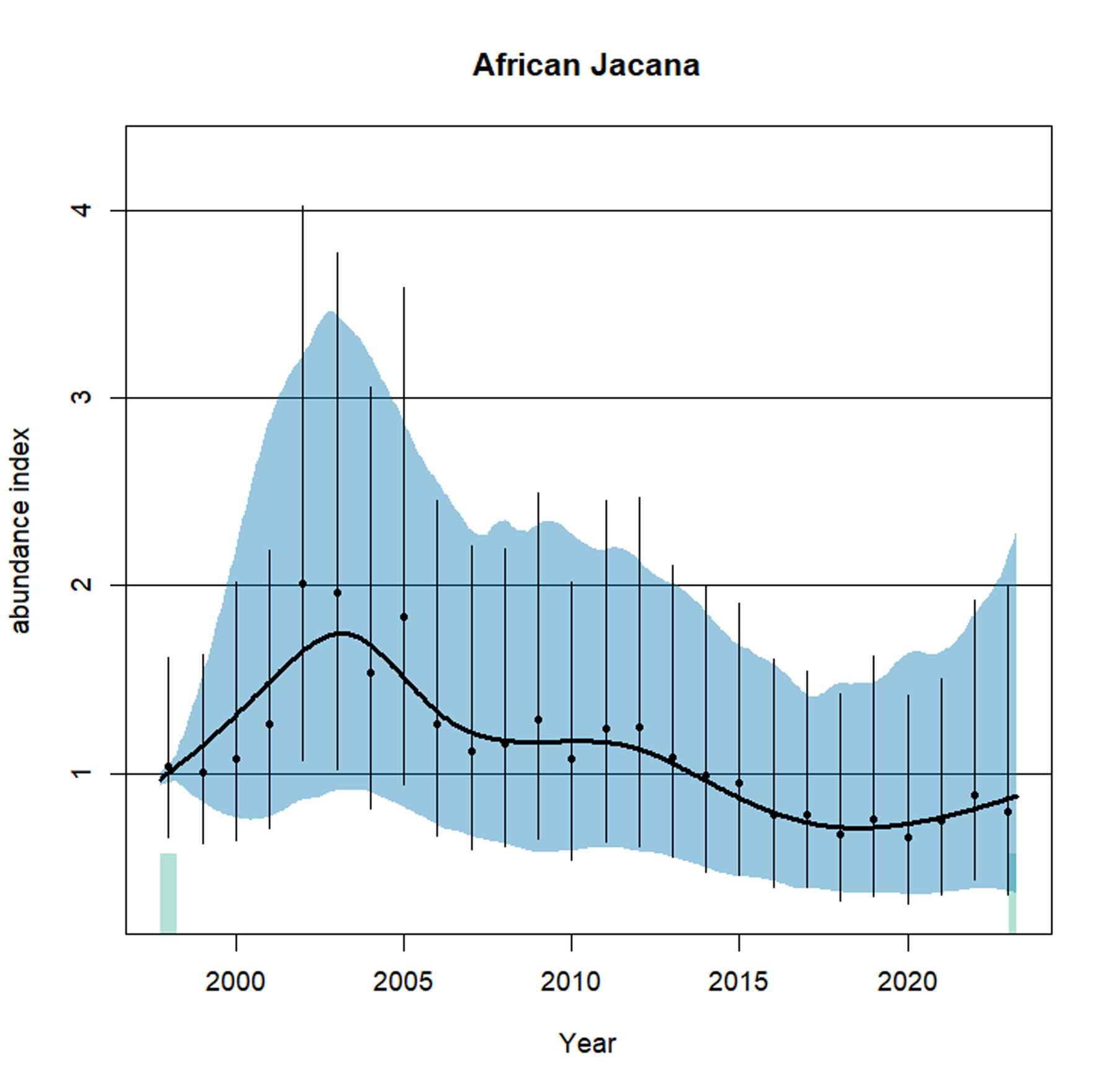
Figure 2: Poptrend model of CWAC counts for African Jacana showing non-significant declines over a three-generation period.
Biology & Ecology
Taxonomy
There are no notable issues. Monotypic species, closely related to Madagascar Jacana A. albinucha.
Identification
23–31 cm; male 115–224 g, female 167–290 g. Adult African Jacanas are striking with a sky-blue facial shield and bill. Crown, sides of face and back of neck black. Front of neck and throat is white which merges into a golden yellow on the upper breast which becomes dark cinnamon brown on the lower breast, wings and back. In flight, rump, secondaries and underbody are a dark maroon whilst primaries are black (only visible in flight or display). Immature has crown and hindneck blackish with some brown feathers; supercilium white, upperparts pale brown with glossy green, except chestnut rump, secondaries and greater coverts; underparts white with weak yellowish breastband and chestnut on side of thighs (Jenni and Kirwan 2020).
Distribution
Widespread across sub-Saharan Africa (Figure 3). Largely restricted to wetland habitats and absent from forest belts or arid zones. Regionally, more common in the northeastern parts of South Africa (Figure 4). According to the modelled distribution of Figure 3 at the pentad level, 2.9% of the distribution falls within South Africa, Lesotho and Eswatini. However, the regional EOO represents 6.2% of the global EOO, and as such a full assessment is warranted.
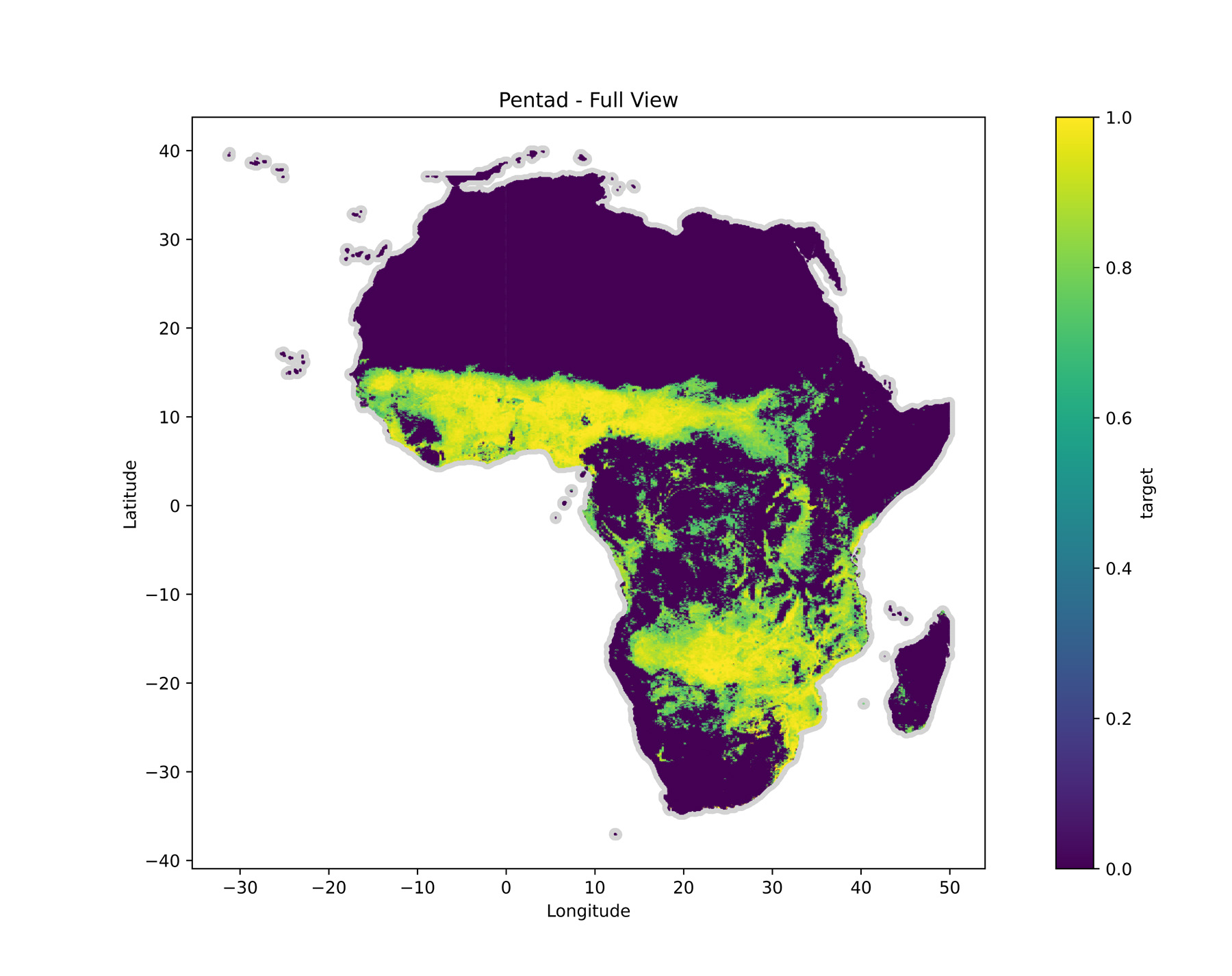
Figure 3: Africa wide probability distribution map for African Jacana from African Bird Atlas Project (ABAP), eBird and iNaturalist data. Yellow shows areas of greater probability of occurrence (from Lee 2024).
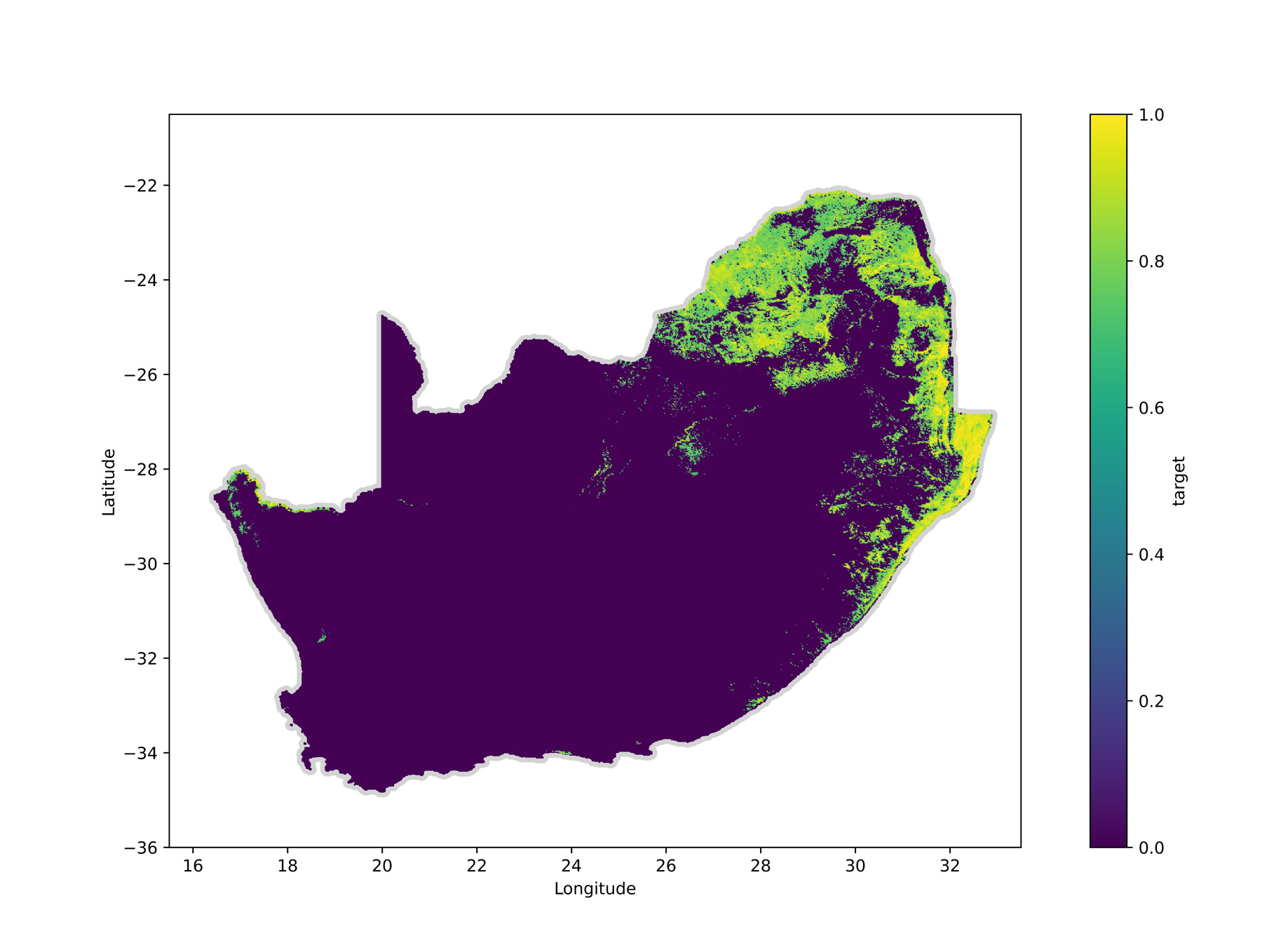
Figure 4: Regional probability distribution map for African Jacana map from SABAP2, eBird and iNaturalist data modelled at 2×2 km resolution. Yellow shows areas of greater probability of occurrence (from Lee 2024).
Ecology
Habitat:
The African Jacana primarily inhabits wetland habitats, showcasing a strong affinity for areas with shallow water and abundant aquatic vegetation. Its preferred habitats include freshwater marshes, ponds, lakeshores, slow-flowing rivers, and wetlands with lily pads and other floating vegetation. These environments provide not only suitable foraging grounds but also nesting sites as the African Jacana lay its eggs on floating vegetation.
It also depends on tall emergent vegetation near the shoreline for concealment.
The species is well-adapted to navigating the water’s surface using its long legs and specialised toes, to walk on vegetation, the long feet and toes allows them to distribute its weight evenly, preventing it from breaking through the surface tension of the water on vegetation.
Migration:
The African Jacana is generally considered a resident bird but is capable of moving large distances in response to rainfall.
Breeding:
The African Jacana can breed any month of the year in wetlands that are permanent but only during wet season in areas that are seasonal. The African Jacana constructs its nest with vegetation, forming a shallow platform above the water. Typically, the nest is positioned on floating vegetation, such as water lilies or reeds, providing a secure foundation for the eggs. The nest is carefully woven and well-camouflaged within the surrounding vegetation, offering protection for the eggs and chicks. The eggs have a pale background with spots or blotches in different shades, including brown, beige, or olive.
African Jacana are polyandrous. Typically, one female mates with many males and the female will lay 3-4 eggs. Once the eggs have been laid by the females, the male assumes responsibility for incubating, foraging and chick-rearing. Due to the mating system of the African Jacana, more than one male can be involved in incubating and raising eggs in the same nest and may not necessarily be the biological father. Incubation period averages 24 days. Chicks are precocial but are guarded closely by the male. Fledging occurs between 28 to 35 days after which chicks become significantly less dependent on the male. Care ceases after 40 days at which point they are fully independent.
Diet:
The species is known to forage both within waterside plants and on dry land at the water’s edge. The diet of the African Jacana mainly consists of insects and other invertebrates, such as bees or dragonflies or worms and even spiders and molluscs that they pick from the floating vegetation or on the surface of the water. Sometimes, they eat seeds.
Threats & Conservation
Threats
Specific threats faced by this species are not well known. As a wetland species reliant on freshwater general threats are inferred based on the knowledge that wetland habitats in South Africa are highly vulnerable to loss through cultivation and development and to degradation due to pollution, overgrazing and artificial alteration of water depth (damming and flooding) and development (Skowno et al. 2019).
Conservation Measures Underway
No species-specific measures are currently in place.
Conservation Measures Proposed
The lack of specific knowledge makes recommending conservation measures difficult. African Jacana will likely benefit from increased protection of freshwater wetlands generally in the region and the rehabilitation of polluted and degraded wetlands where possible.
Research Priorities and Questions
- Regular repeat monitoring at key sites for this species is recommended to better understand how population trends vary over time and what variables are linked to these trends.
- Monitoring projects like CWAC and SABAP2 need to continue.
Contributors & References
Assessor/s
Sanjo Rose, Maria Paul
Reviewer/s
Phil Whittington, Warwick Tarboton
References
BIRDIE Release Version v1.0.0. 2024. African Jacana. [Accessed on 10 April 2024].
BirdLife International. 2024. Actophilornis africanus. The IUCN Red List of Threatened Species 2024: e.T22693528A265020215. [Accessed on 6 January 2025].
de Swardt DH. 2015. Observations of African Jacanas at Rooidam, Bloemfontein. Ornithological Observations 6: 202–204.
Jenni DA, Kirwan GM. 2020. African Jacana (Actophilornis africanus), version 1.0. In: del Hoyo J, Elliott A, Sargatal J, Christie DA, de Juana E (eds), Birds of the World. Ithaca, NY, USA: Cornell Lab of Ornithology. https://doi.org/10.2173/bow.afrjac1.01.
Knape J. 2016. Decomposing trends in Swedish bird populations using generalized additive mixed models. Journal of Applied Ecology 53: 1852–1861.
Lee ATK. 2024. Regional Red Data Book of the Birds of South Africa, Lesotho and Eswatini: SABAP2 synthesis and supporting information and graphics for African Jacana. Unpublished report. Johannesburg, South Africa: BirdLife South Africa.
Skowno AJ, Poole CJ, Raimondo DC. 2019. National Biodiversity Assessment 2018: The status of South Africa’s ecosystems and biodiversity; Synthesis Report. Pretoria, South Africa: South African National Biodiversity Institute. Available at: http://opus.sanbi.org/handle/20.500.12143/6362.
Tarboton WR. 2005. Lesser Jacana. In: Hockey PAR, Dean WRJ, Ryan PG (eds), Roberts birds of southern Africa (7th Edn). Cape Town: Trustees of the John Voelcker Bird Book Fund. pp 381–382.
Citation
Rose S, Paul M 2025. African Jacana. In: Lee ATK, Rose S, Banda S, Bezeng SB, Maphalala MI, Maphisa DH, Smit-Robinson H (eds), The 2025 Red Data Book of Birds of South Africa, Lesotho and Eswatini. Johannesburg, South Africa: BirdLife South Africa. Available at: https://www.birdlife.org.za/red-list/african-jacana/
Our generous sponsors


