


Three-banded Plover
Charadrius tricollaris

Number Of Mature
Individuals (Regional)
>25 000

Regional
Population Trend
Decreasing
2025
Regional Category
Least Concern
Search by species
CONTENTSOverview
Names
|
IOC English Name: |
Three-banded Plover |
|
SA & IOC Scientific Name: |
Charadrius tricollaris |
|
BirdLife International Taxonomy (scientific name): |
African Three-banded Plover (Charadrius tricollaris) |
|
Order: |
CHARADRIIFORMES |
|
Family: |
Charadriidae |
|
Species name author: |
Vieillot 1818 |
|
Afrikaans: |
Driebandstrandkiewiet |
|
Sesotho (South Africa): |
patapeta-ihlokgubedu |
|
Sesotho (Lesotho): |
patapeta-ihlokhubelu |
|
Siswati: |
|
|
isiZulu: |
igwigwi |
Current Assessment Status
|
2025 Regional Category [Criteria] |
LC |
|
2024 Global Category [Criteria] |
LC (BirdLife International 2024) |
|
Population size (Global) |
46 700 – 93 300 (BirdLife International 2024) |
|
Population size (Regional) |
>25 000 |
|
Distribution size (EOO) (Regional) km2 |
1 514 996 (Lee 2024) |
|
Distribution size (EOO) (Global) km2 |
16 300 000 (BirdLife International 2024) |
|
Distribution size (AOO) (Regional) km2 |
1 065 556 (Lee 2024) |
|
Generation time |
5.2 years (BirdLife International 2016), 4.43 years (BirdLife International 2024) |
|
Status change reason |
No change |
|
Migrant |
No |
|
Regional endemic |
No |
Historic Listing Information
|
2000 Regional Status |
Unknown |
|
2015 Regional Status |
Not Evaluated |
|
Status change reason (if applicable) |
Not Evaluated |
|
2015 Population size (Regional) |
Unknown |
|
2015 Global Status |
LC |
Reason for Inclusion
Reason for Inclusion in the Assessment
Three-banded Plover Charadrius tricollaris was not previously assessed. Preliminary screening of Coordinated Waterbird Counts (CWAC) data indicated a significant decline in the number of Three-banded Plover counted per year (Lee 2024). Furthermore, wader numbers globally are in decline, and within the region, both migrant and resident waders have been shown to be in decline (Ryan 2013), suggesting a need to assess certain species.
Category Justification
Category Justification
The regional population of the Three-banded Plover has a widespread distribution and is estimated to exceed 25 000 mature individuals. While CWAC count totals indicate steep declines over the past three generations, the reporting rate from the second Southern African Bird Atlas Project (SABAP2) show a stable population over the same period.
Reporting rates from SABAP2 points to a 1% decline which is well below the 30% threshold of Vulnerable under Criterion A (Table 1, Figure 1, Lee 2024). Poptrend results from CWAC suggest that declines of -53% (95% CI: -73%, -15%) may have occurred (Figure 2). A decline of 53% does meet the Vulnerable threshold. However, Three-banded Plover is a good candidate for a rescue effect as it occurs throughout Southern Africa and was recently assessed to have an increasing global population trend (BirdLife International 2024). Three-banded Plover is therefore regionally assessed as Least Concern with a declining population. Continued monitoring is recommended.
Population Justification
The global population is estimated to number 46 700 – 93 300 mature individuals (BirdLife International 2024). Historical estimates for the region are 40 000 – 70 000 birds (Underhill et al. 1999) and 25 000 – 50 000 (Turpie and Tree 2005). No recent estimate exists, and it is therefore assumed that the regional population exceeds 25 000 but confidence in this estimate is low.
Trend Justification
The global population is thought to be increasing (BirdLife International 2024). Trends from SABAP2 tentatively agree with these results, as trend analysis for the region using SABAP2 data shows a significantly higher probability of reporting, with a high confidence in this trend while change in Area of Occupancy (AOO) seems stable over the past three generations (Lee 2024). In addition, between SABAP1 (1986-1997) and SABAP2 data, indicating stable reporting rates over several decades in the region (Lee 2024).
Table 1: Percentage predicted range change based on the number of pentads that Three-banded Plover could occur in, for the period of 2007-2015, and 2016-2023. These values are used to calculate an annual rate of change and the percentage change over the longer of 10 years or three generations (Criterion A) (from Lee 2024).
|
Information |
|
|
Pentads 2015 |
16536 |
|
Pentads 2023 |
16361 |
|
Annual rate of change |
0.999 |
|
Percent change (10 years or 3 generations) |
-1.10% |
|
Category (A2) |
LC |
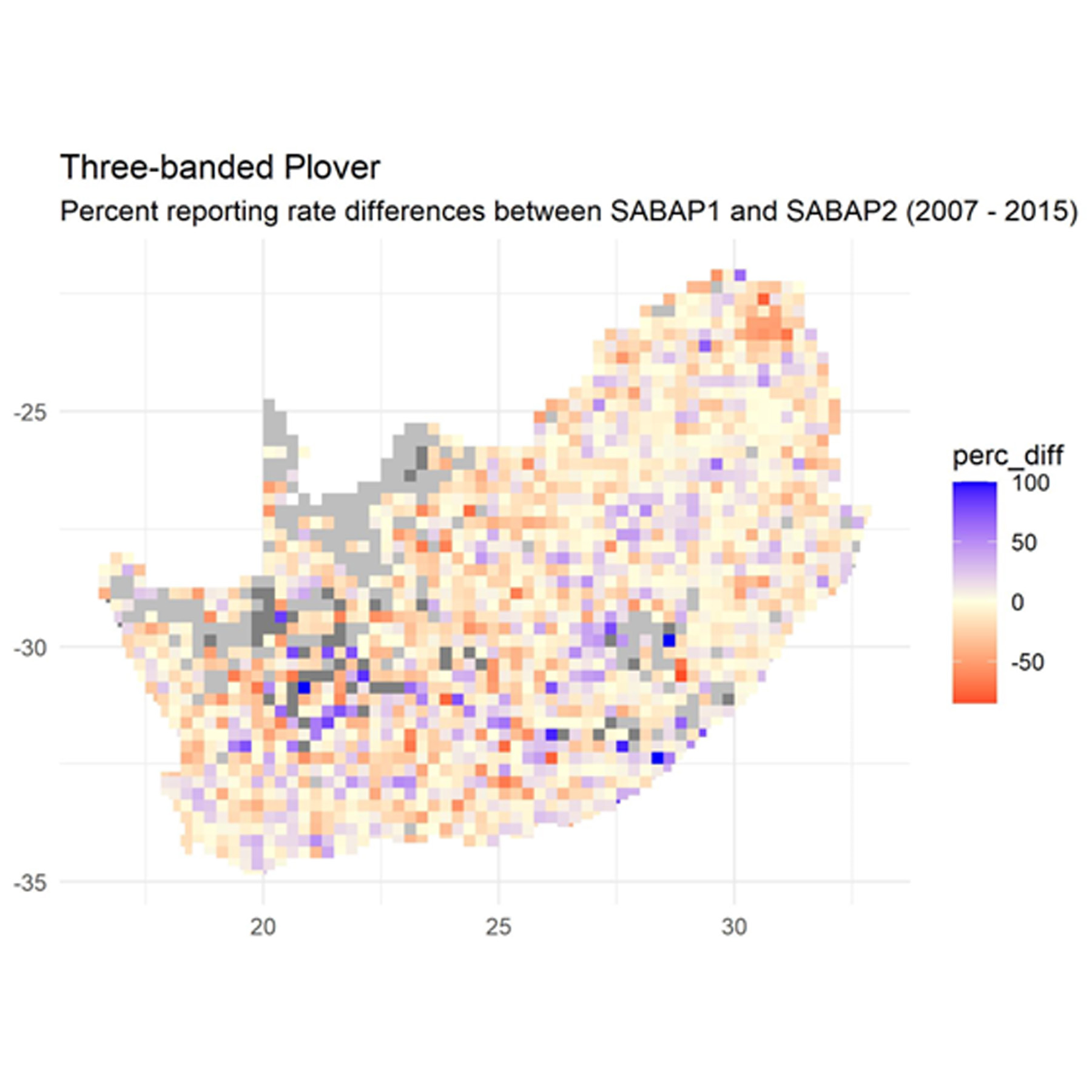
Figure 1a: SABAP distribution map showing percent reporting rate change between SABAP1 (1987-1991) and SABAP2 (2007-2015), illustrating the extensive former range for Three-banded Plover.
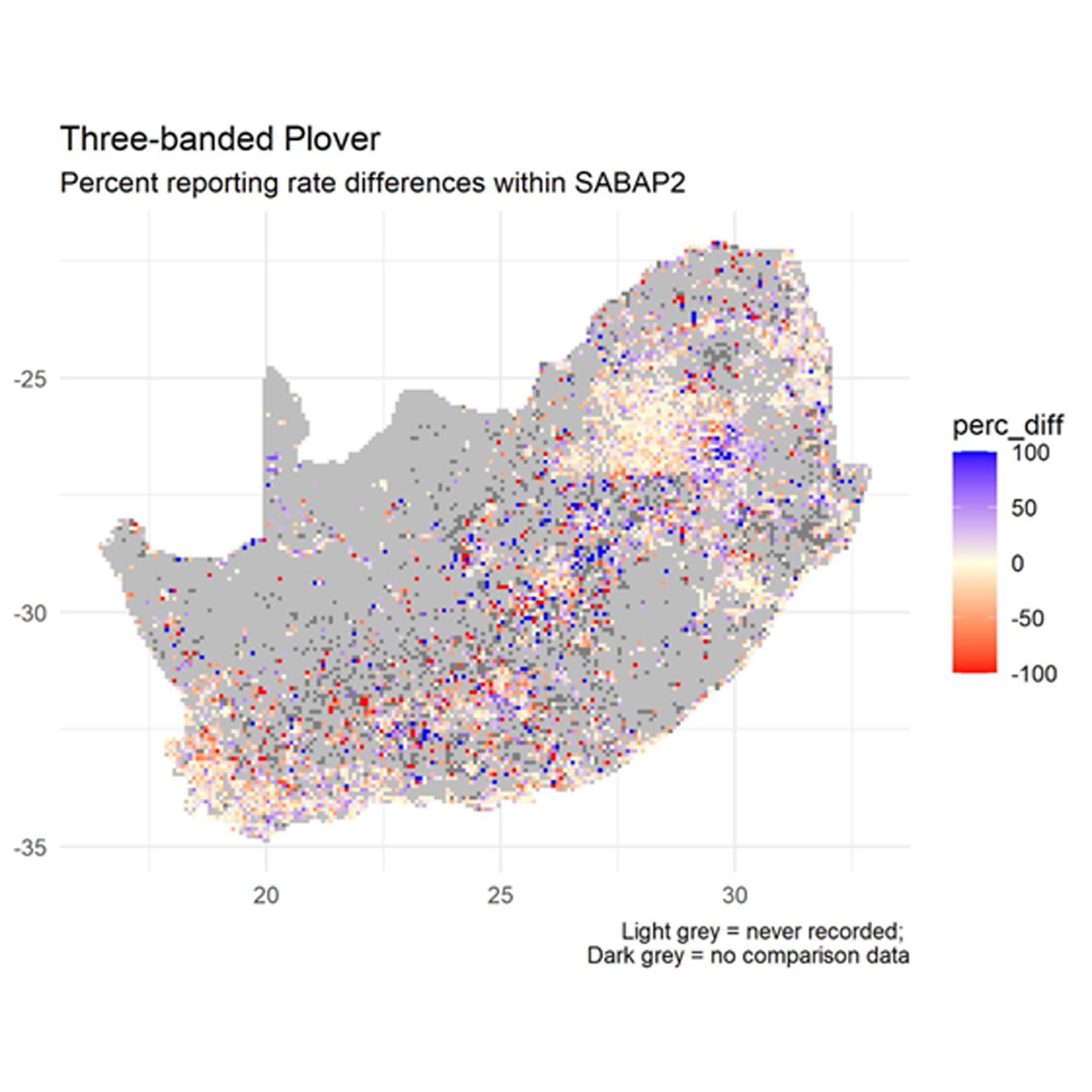
Figure 1b: Change in the percentage reporting rate for Three-banded Plover between early (2007-2015) and late (2016-2023) SABAP2.
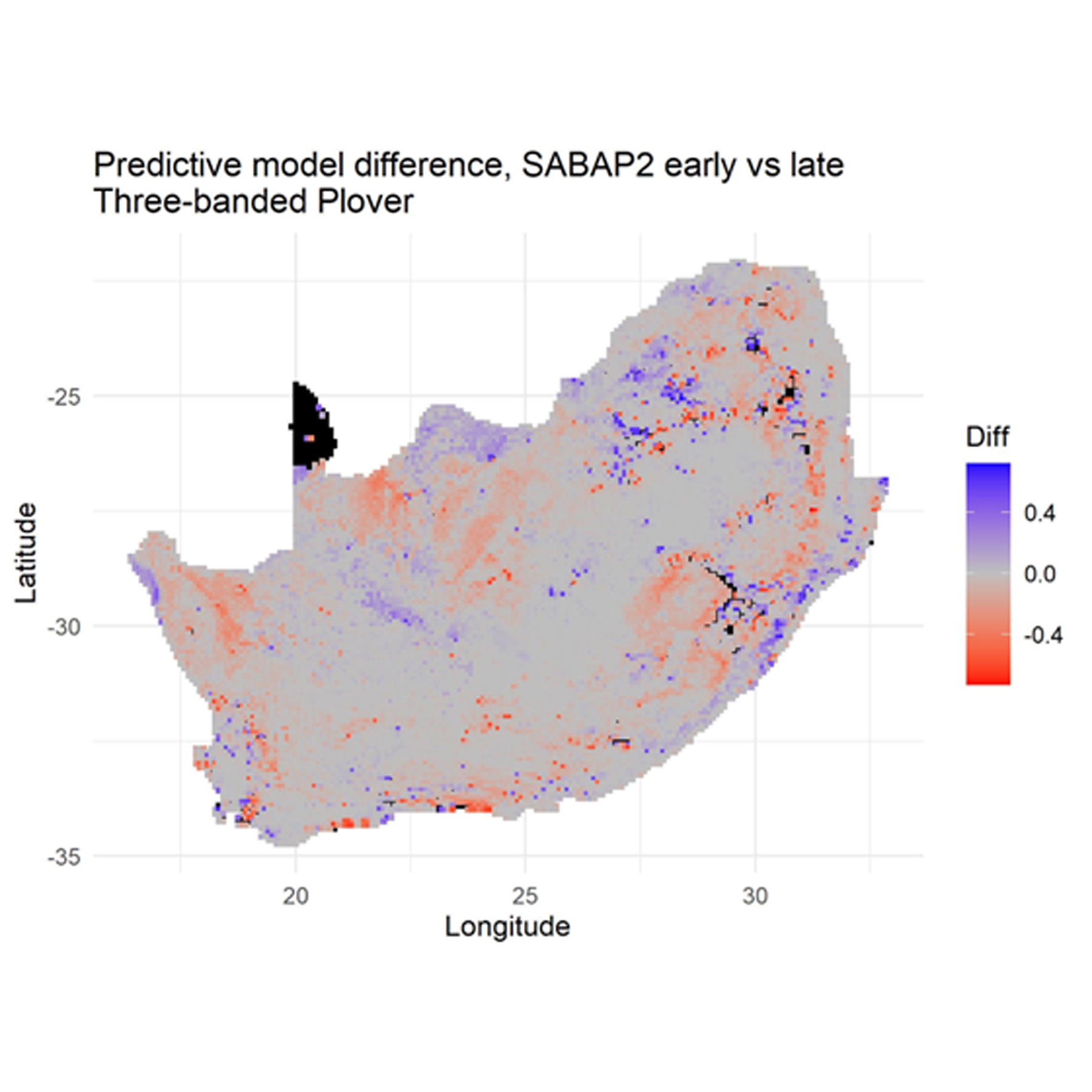
Figure 1c: Predictive modelled range change for Three-banded Plover over three generations between early (2007-2015) and late (2016-2023) SABAP. Red indicating regions of decline.
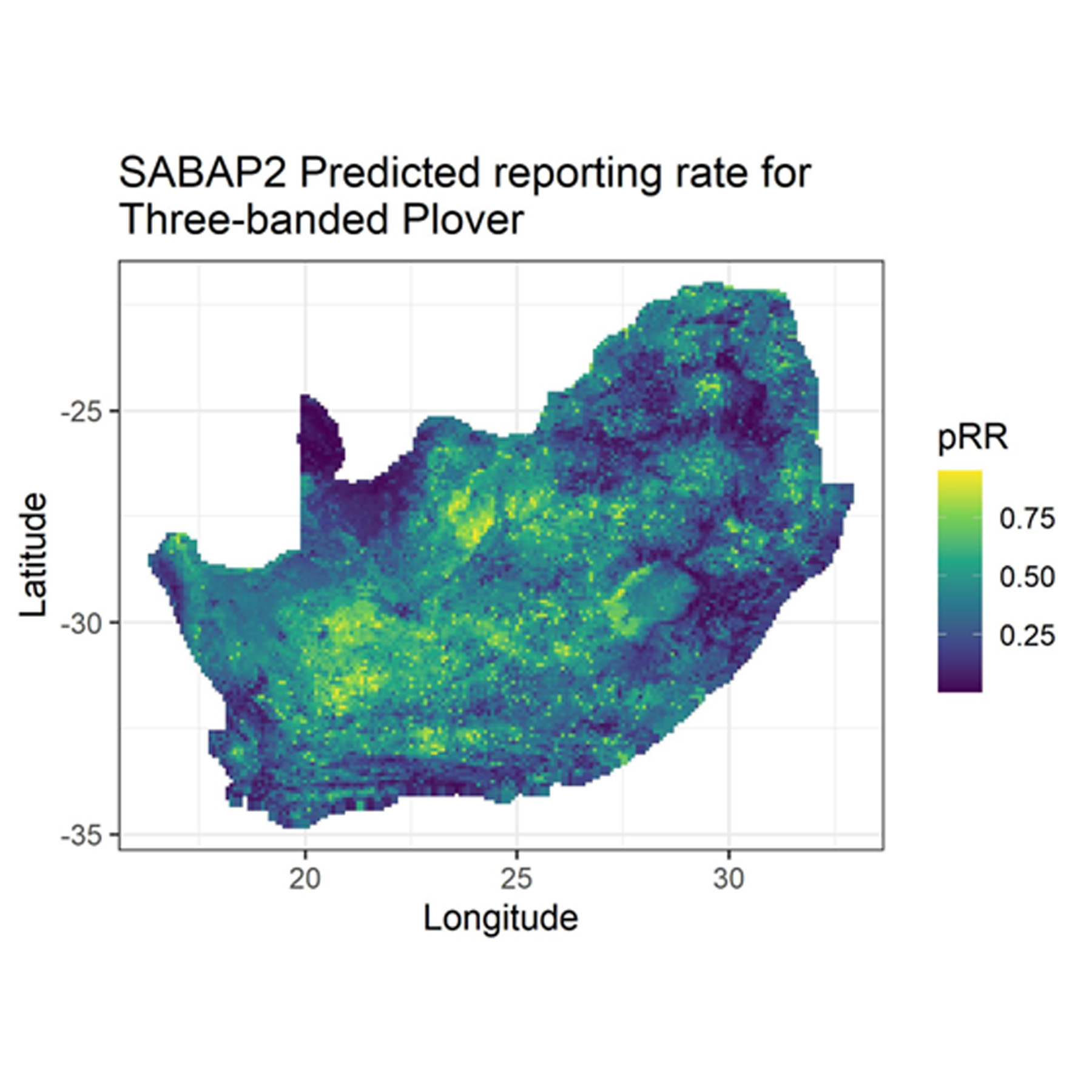
Figure 1d: The SABAP2 reporting rate prediction model indicates that Three-banded Plover is still widespread throughout the region. Plots from Lee (2024).
From poptrend analyses (Knape 2016), CWAC count totals indicate that declines up to -53% (95% CI: -73%, -15%) (Figure 2) may have occurred. Determining population trends from CWAC sites is challenging as declines may represent change in species range, rather than population declines. However, continued monitoring is strongly advised.
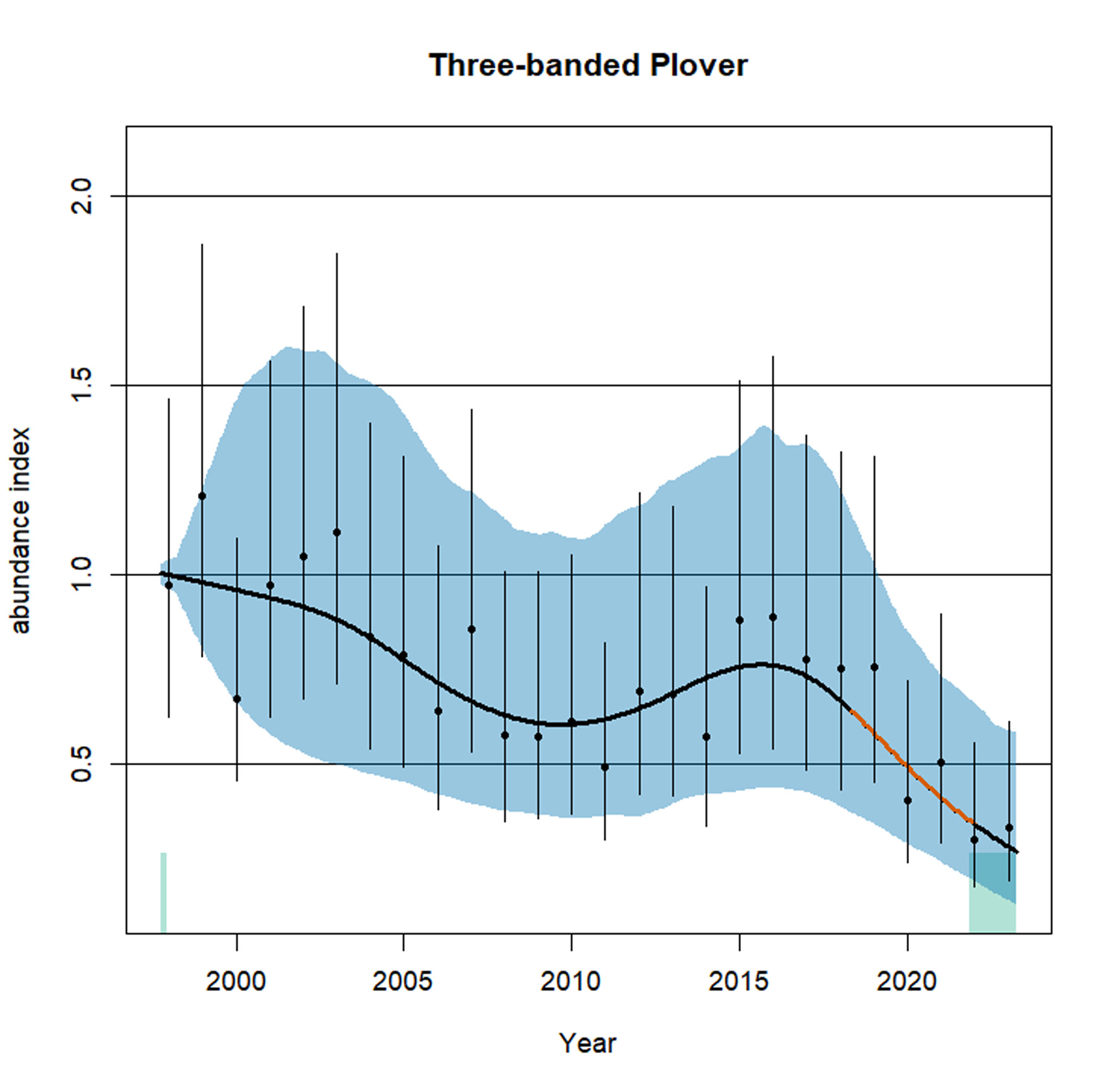
Figure 2: Poptrend model results for Three-banded Plover from CWAC data. Red indicates periods of significant decline (from Lee 2024).
Biology & Ecology
Taxonomy
There is some inconsistency over the taxonomy of the Three-banded Plover. While some sources now combine Madagascar Three-banded Plover and African Three-banded Plover as a single species, each as a subspecies (Clements et al. 2023, Gill et al. 2024), BirdLife International still considers them separate species (BirdLife International 2024).
Identification
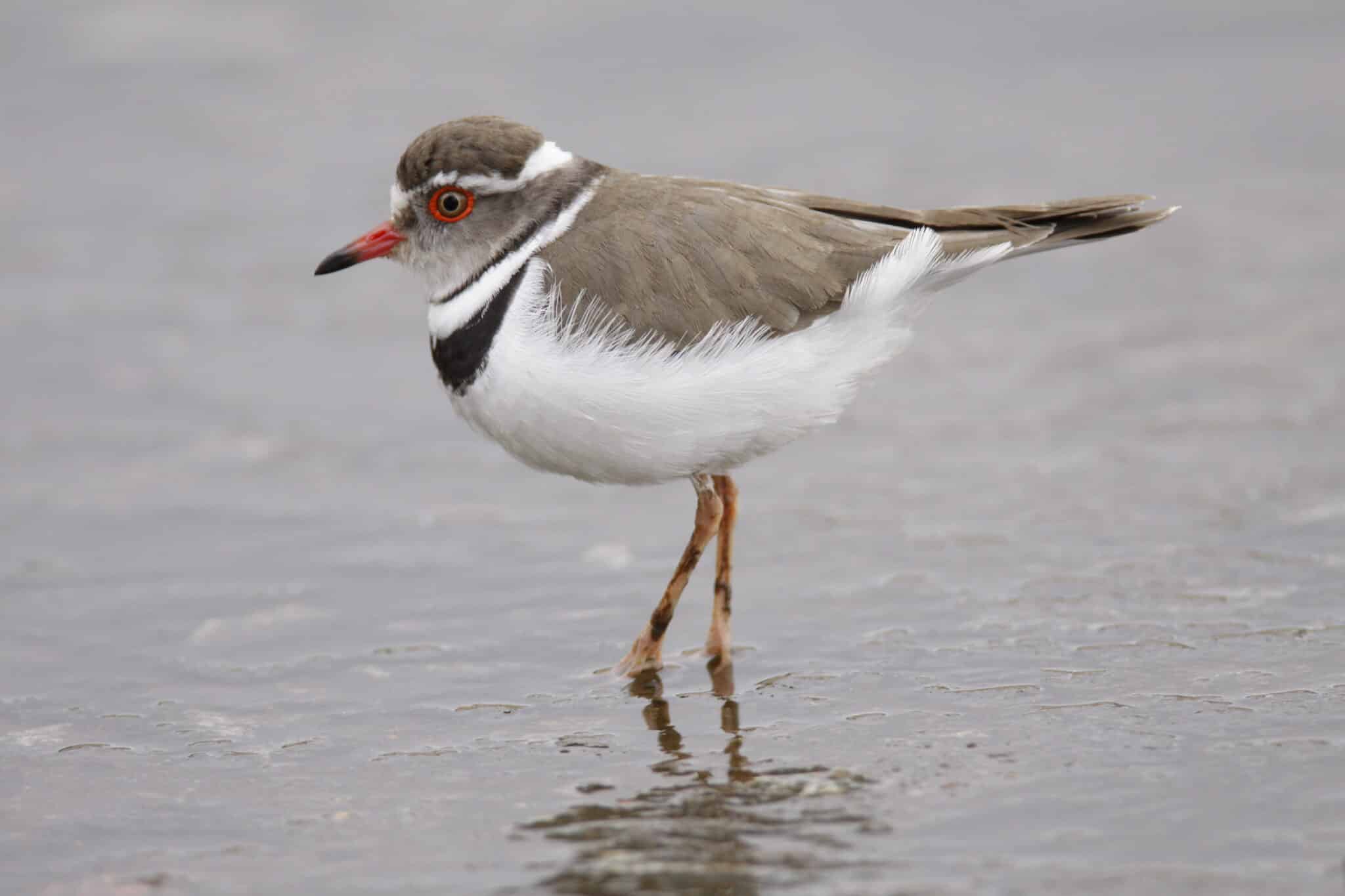
18 cm (Turpie and Tree 2005). The sexes are alike. Adult: distinctive small wader easily identified alongside similar-sized waders. The red eye ring, red bill (tipped black) in combination with white forehead and supercilia, and distinctive combination of black, white, and black chest bands are diagnostic, legs and feet are pink (Turpie and Tree 2005). Juvenile: dull version of the adult (Turpie and Tree 2005).
Confusing species: could be confused with Common Ringed Plover C. hiaticula, however this species has a single and not double breast band, and its cheeks are grey rather than white and it lacks the red eye ring (Turpie and Tree 2005).
Distribution
The Three-banded Plover is widely distributed across Southern Africa. Within the region it can be found across most areas, although is generally absent or uncommon in the driest areas of the Northern Cape, mountainous regions or heavily wooded areas (Tree 1997, Figures 3 and 4).
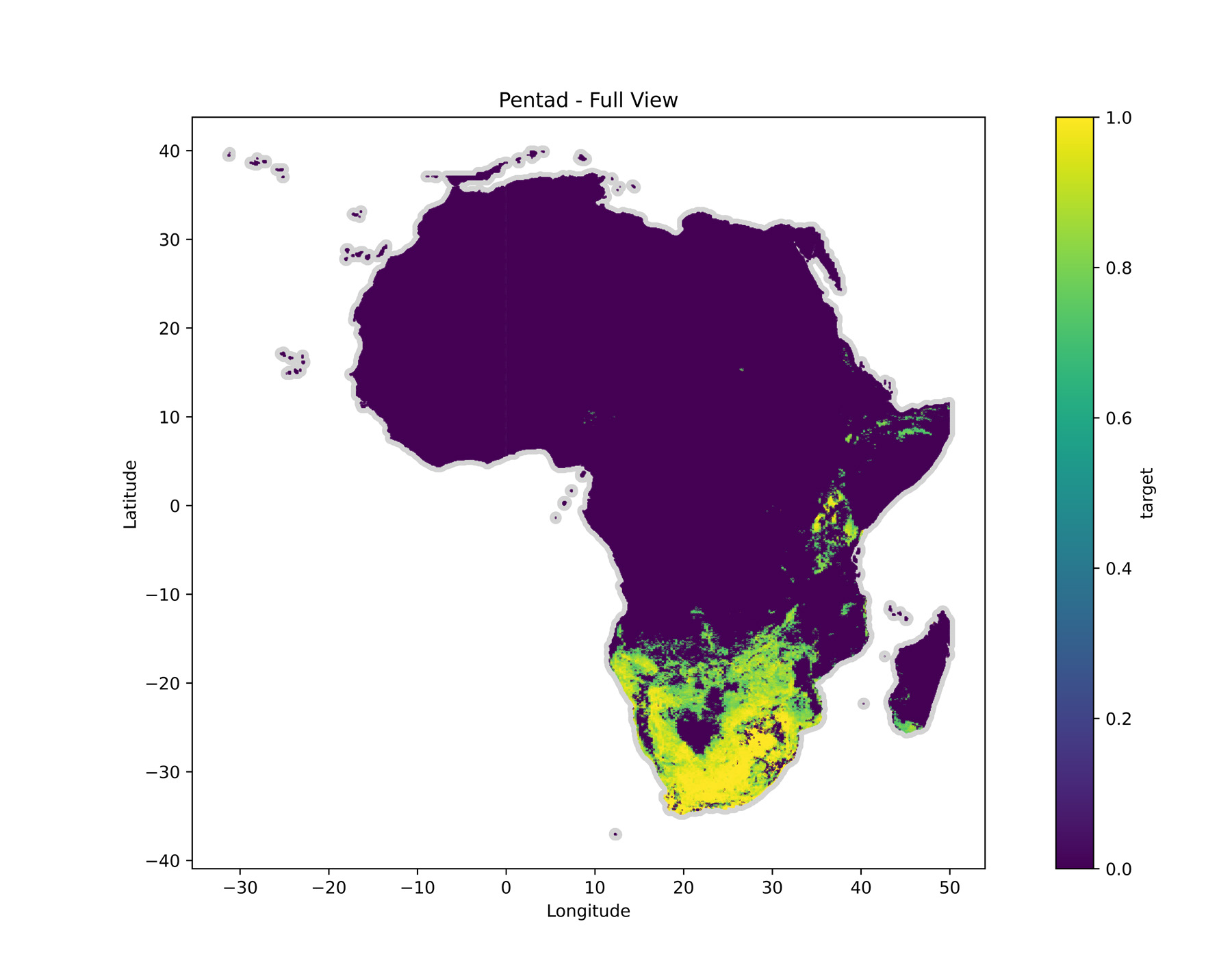
Figure 3: Probability distribution map for Three-banded Plover from ABAP, iNaturalist and eBird occurrence records. Yellow indicates area of greatest probability of occurrence. Map from Lee 2024.
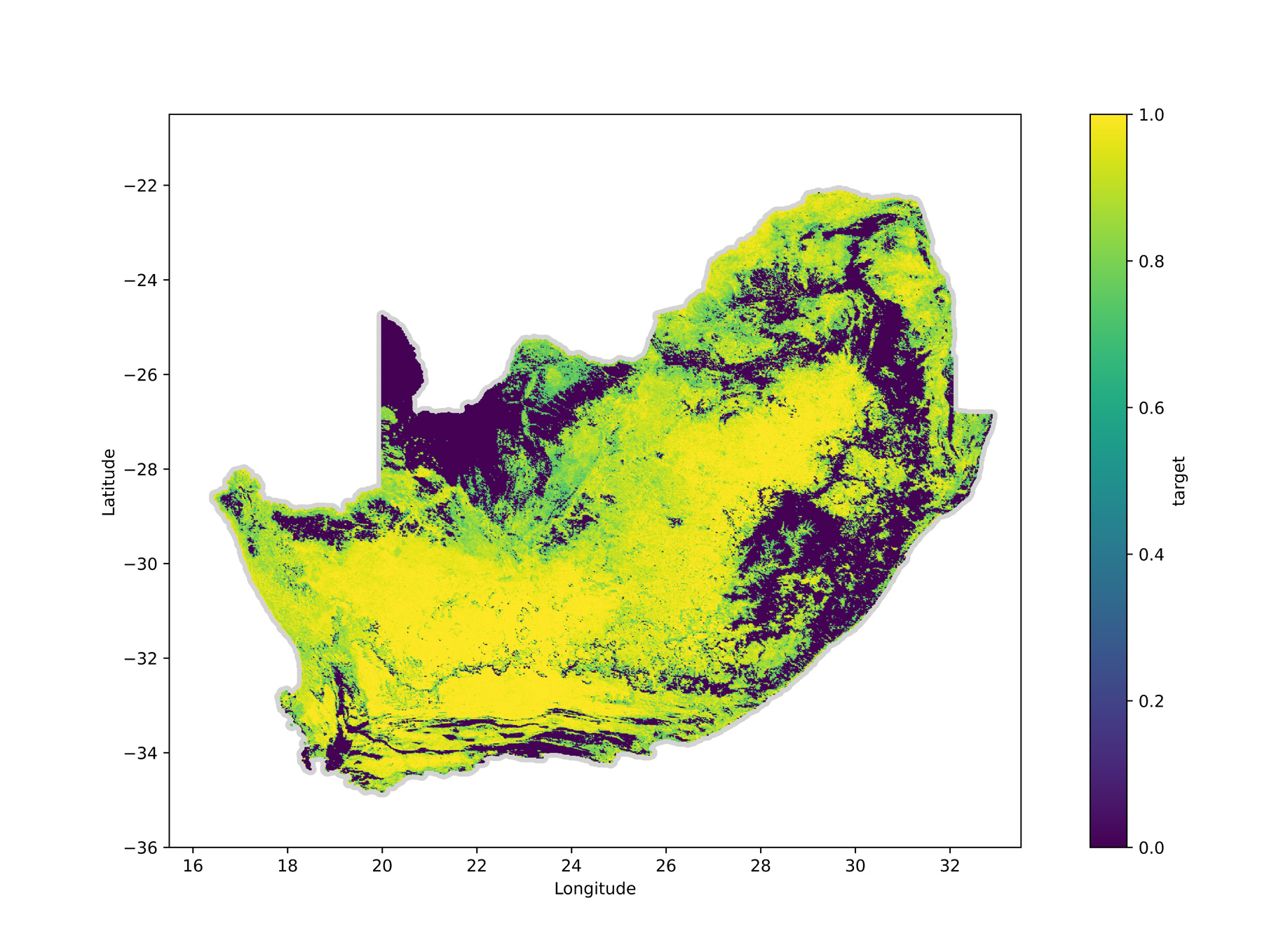
Figure 4: Probability distribution map for Three-banded Plover from SABAP2, iNaturalist and eBird occurrence records. Yellow indicates area of greatest probability of occurrence. Map from Lee 2024.
Ecology
Habitat:
Three-banded Plovers can be found the shoreline of most inland waterbodies even very small seasonal pans, preferring firm gravel or muddy edges of inland farm dams, pools, streams, rivers, and sewage works (Turpie and Tree 2005, del Hoyo et al. 2023), adapting well to disturbed and man-made systems (BirdLife International 2024). It can occasionally be found along coastal estuaries and lagoons but very rarely on beaches.
Migration:
The Three-banded Plover is essentially non-migratory in the region, although it is thought to move seasonally in response to rainfall when necessary (Underhill et al. 1999).
Breeding:
The Three-banded Plover is a monogamous, solitary, and territorial nester (Tree 1974). It can opportunistically breed throughout the year if conditions are suitable, with a peak in laying dates between July and December (Turpie and Tree 2005). The nest is a simple scrape in the ground with a preference for clear, firm sand, mud, or gravel shores close to water for nesting (Turpie and Tree 2005, BirdLife International 2024). Typically, 1–3 eggs are laid, usually 2 and rarely 3 (Tree 1974, Hockey and Douie 1995). Incubation lasts 26–28 days, and is done by both sexes (Blaker 1966, Tree 1974, Tyler 1978, Urban et al. 1986). Oldest ring bird recovered was at least 11.5 years old (Underhill et al. 1999).
The breeding success of the Three-banded Plover is notable for being often double-brooded, and in some cases, triple-brooded, laying two to three clutches of eggs in a single breeding season. It has been observed that sometimes a second clutch is laid even before the first brood has fully fledged (Tree 1974, Wilson 1981).
Diet:
The diet of the Three-banded Plover consists of a variety of terrestrial and aquatic invertebrates, including insects, and their larvae, along with crustaceans, small molluscs, and worms (Turpie and Tree 2005, BirdLife International 2024).
Threats & Conservation
Threats
Three-banded Plover are poorly studied in the region and therefore no species-specific threats have been recorded. It is assumed however that this species will be impacted by continued degradation of freshwater habitats and disturbance.
Conservation Measures Underway
There are currently no dedicated conservation measures in place for the Three-banded Plover, although it will benefit from broad wetland-based conservation initiatives. Although it adapts well to disturbed landscapes, continually degrading or removing wetlands and rivers could impact the species.
Conservation Measures Proposed
A collective conservation effort to improve the health of rivers, estuaries, and even existing man-made waterways like dams needs to be urgently implemented in South Africa to benefit this and other species.
Research Priorities and Questions
- An updated regional population estimate is required.
- The regional population trend needs to be confirmed.
- Focused research on localised movements within the region with telemetry or GPS units would add value to our understanding of their movements.
- The impacts of associating with polluted or degraded rivers, dams, or estuary systems need to be assessed.
- Impacts of climate change (specifically increased air temperatures) on embryo viability.
Contributors & References
Assessor/s
Mark Brown, Maria Paul
Reviewer/s
Garret Skead
References
BirdLife International. 2016. Charadrius tricollaris. The IUCN Red List of Threatened Species 2016: e.T22727471A94950399. https://dx.doi.org/10.2305/IUCN.UK.2016-3.RLTS.T22727471A94950399.en. [Accessed on 05 April 2024].
BirdLife International. 2024. Charadrius tricollaris. The IUCN Red List of Threatened Species 2024: e.T22727471A264970343. [Accessed on 07 January 2025].
Blaker D. 1966. Notes on the sandplovers Charadrius in southern Africa. Ostrich 37: 95–102.
Clements JF, Rasmussen PC, Schulenberg TS, Iliff MJ, Fredericks TA, Gerbracht JA, Lepage D, Spencer A, Billerman SM, Sullivan BL, Wood CL. 2023. The eBird/Clements checklist of birds of the world: v2023. Downloaded from https://www.birds.cornell.edu/clementschecklist/download/
del Hoyo J, Wiersma P, Kirwan GM, Collar N, Christie DA, Boesman PFD. 2023. Three-banded Plover (Charadrius tricollaris). In: Keeney BK (ed), Birds of the World version 1.1. Ithaca, NY, USA: Cornell Lab of Ornithology. Available: https://doi.org/10.2173/bow.thbplo1.01.1
Gill F, Donsker D, Rasmussen P (eds). 2024. IOC World Bird List (v14.1).
Hockey P, Douie C. 1995. Waders of Southern Africa. Struik Winchester, Cape Town.
Knape J. 2016. Decomposing trends in Swedish bird populations using generalized additive mixed models. Journal of Applied Ecology 53: 1852–1861.
Lee ATK. 2024. Regional Red Data Book of the Birds of South Africa, Lesotho and Eswatini: SABAP2 synthesis and supporting information and graphics for Three-banded Plover. Unpublished report. Johannesburg: BirdLife South Africa.
Ryan PG. 2013. Medium‐term changes in coastal bird communities in the Western Cape, South Africa. Austral Ecology 38: 251–259.
Tree AJ. 1974. A comparative ecological study of the Kittlitz Plover and Treble-banded Plover at Lake McIlwaine. Unpubl. M Sc Thesis, Univ. Rhodesia.
Tree AJ. 1997. Threebanded Plover. In: Harrison JA et al. (eds). The Atlas of Southern African Birds. Vol. 1:384. BirdLife South Africa, Johannesburg.
Turpie JK, Tree AJ. 2005. Three-banded Plover Charadrius tricollaris. In: Hockey PAR, Dean WRJ, Ryan PG (eds). Roberts – Birds of Southern Africa (7th Edn). Cape Town, South Africa: The Trustees of the John Voelcker Bird Book Fund. pp 400–401.
Tyler S. 1978. Observations on the nesting of the Three-Banded Plover Charadrius tricollaris. Scopus 2:39–41.
Underhill LG, Tree AJ, Oschadleus HD, Parker V. 1999. Review of Ring Recoveries of Waterbirds in Southern Africa. Cape Town: Avian Demography Unit, University of Cape Town.
Urban EK, Fry CH, Keith S. 1986. The Birds of Africa. Vol. 2. Academic Press, London.
Wetlands International. 2014. Waterbird Population Estimates. Available at: http://wpe.wetlands.org. [Accessed on 12 June 2014].
Wilson J. 1981. Observations of waders at Magobane Dam, south-east Botswana. Babbler 1:8–11.
Citation
Brown M, Paul M 2025. Three-banded Plover. In: Lee ATK, Rose S, Banda S, Bezeng SB, Maphalala MI, Maphisa DH, Smit-Robinson H (eds), The 2025 Red Data Book of Birds of South Africa, Lesotho and Eswatini. Johannesburg, South Africa: BirdLife South Africa. Available at: https://www.birdlife.org.za/red-list/three-banded-plover/
Our generous sponsors


