


Maccoa Duck
Oxyura maccoa

Number Of Mature
Individuals (Regional)
1 200 – 1 700

Regional
Population Trend
Decreasing
2025
Regional Category
Vulnerable
Search by species
CONTENTSOverview
Names
|
IOC English Name: |
Maccoa Duck |
|
SA & IOC Scientific Name: |
Oxyura maccoa |
|
BirdLife International Taxonomy (scientific name): |
Oxyura maccoa |
|
Order: |
ANSERIFORMES |
|
Family: |
Anatidae |
|
Species name author: |
Eyton 1838 |
|
Afrikaans: |
Bloubekeend |
|
Sesotho (South Africa): |
letata-lomoputswa |
|
Sesotho (Lesotho): |
letata-lomoputsoa |
|
isiXhosa: |
Idada |
|
Siswati: |
|
|
Zulu: |
idadelikhandamnyama |
Current Assessment Status
|
2025 Regional Category [Criteria] |
VU [A2ace] |
|
2024 Global Category [Criteria] |
EN [A2acde] (BirdLife International 2021) |
|
Population size (Regional) |
1200 – 1700 (Berutti et al. 2007, Wetlands International 2024) |
|
Population size (Global) |
2300 – 4100 (Wetlands International 2024) |
|
Distribution size (EOO) (Regional) km2 |
1 081 027 (Lee 2024) |
|
Distribution size (EOO) (Global) km2 |
8 300 000 (BirdLife International 2021) |
|
Distribution size (AOO) (Regional) km2 |
159 660 (Lee 2024) |
|
Generation time |
5.5 years (Birdlife International 2021) |
|
Status change reason |
Genuine change in status |
|
Migrant (in the region) |
No, but subject to local movements |
|
Regional endemic |
No |
Historic Listing Information
|
2000 Regional Status |
Not Assessed |
|
2015 Regional Status |
NT [C1] |
|
Status change reason (if applicable) |
Genuine change in status |
|
2015 Population size (Regional) |
4500 – 5500 |
|
2015 Global Status |
NT [C1] |
Reason for Inclusion
Reason for Inclusion in the Assessment
The species is currently listed as Near Threatened regionally (Taylor 2015) and Endangered globally (BirdLife International 2021). >5% of the global range falls within the region.
Category Justification
Category Justification
Maccoa Duck Oxyura maccoa has a small declining regional population. The decline in Area of Occupancy (AOO) over the past three generations of 39% meets the threshold for Vulnerable under the Criterion A2c. In addition, declines in population numbers of 40–42% satisfy the threshold of Vulnerable under Criterion A2a. Pollution is a significant threat to the species triggering Criterion A2e.
While the estimated regional population size of the Maccoa Duck (c. 1200 – 1700 mature individuals) meets the threshold of Endangered under Criterion C1, confidence in this estimate is low and therefore this criterion is not invoked. Establishing the regional population size should be prioritised. A rescue effect is not considered plausible for this species.
The regional population of Maccoa Duck is therefore assessed as Vulnerable [A2ace].
Population Justification
BirdLife International (2021) set the global population at 4800 – 5700 mature individuals. An updated estimate from Wetlands International (2024) puts the global population at 2400 – 4100 mature individuals.
The Southern African population is estimated to number 3000 – 4000 individuals (c. 1900 –2600 mature individuals) (Wetlands International 2024). Using data from Berruti et al. (2007), it is estimated that South Africa holds roughly 65% of the Southern African population of Maccoa Duck. Applying this percentage to the Wetlands International (2024) estimates for Southern Africa it is inferred that the number of Maccoa Duck within the region is c. 1200 – 1700 mature individuals. Confidence in this estimate is, however, low as it relies on dated information.
Trend Justification
The following were used to determine population trends:
- Southern African Bird Atlas Project (SABAP2) data: This is presence absence data collected per pentad (grid approximately 9 km x 7 km). Data from the project was divided into two periods (2007-2015 and 2016-2023) and static variable models were used to predict the number of pentads species that could occur in within each period (Figure 1). The models predicted a decline in AOO between the two periods of 39.2% (Lee 2024).
- Published estimates: Nagy and Langendoen (2020) estimated that the Southern African population had decreased by 52% over 16 years (2002-2018). This equates to a decline of 53% over a three-generation period (16.5 years). Based on the growth rate between 2008 and 2017 they predict that the population will decline by 42% in three generations compared to population levels in 2008. The population is still in decline but the rate does appear to have slowed since 2008 (BirdLife International 2021).
- Coordinated Waterbird Counts (CWAC) data: Counts totals at CWAC sites were modeled using the poptrend package (Knape 2016). Over three generations (2007-2023) the estimated percentage decline was 40% (-68%, 4.2%) (Figure 2).
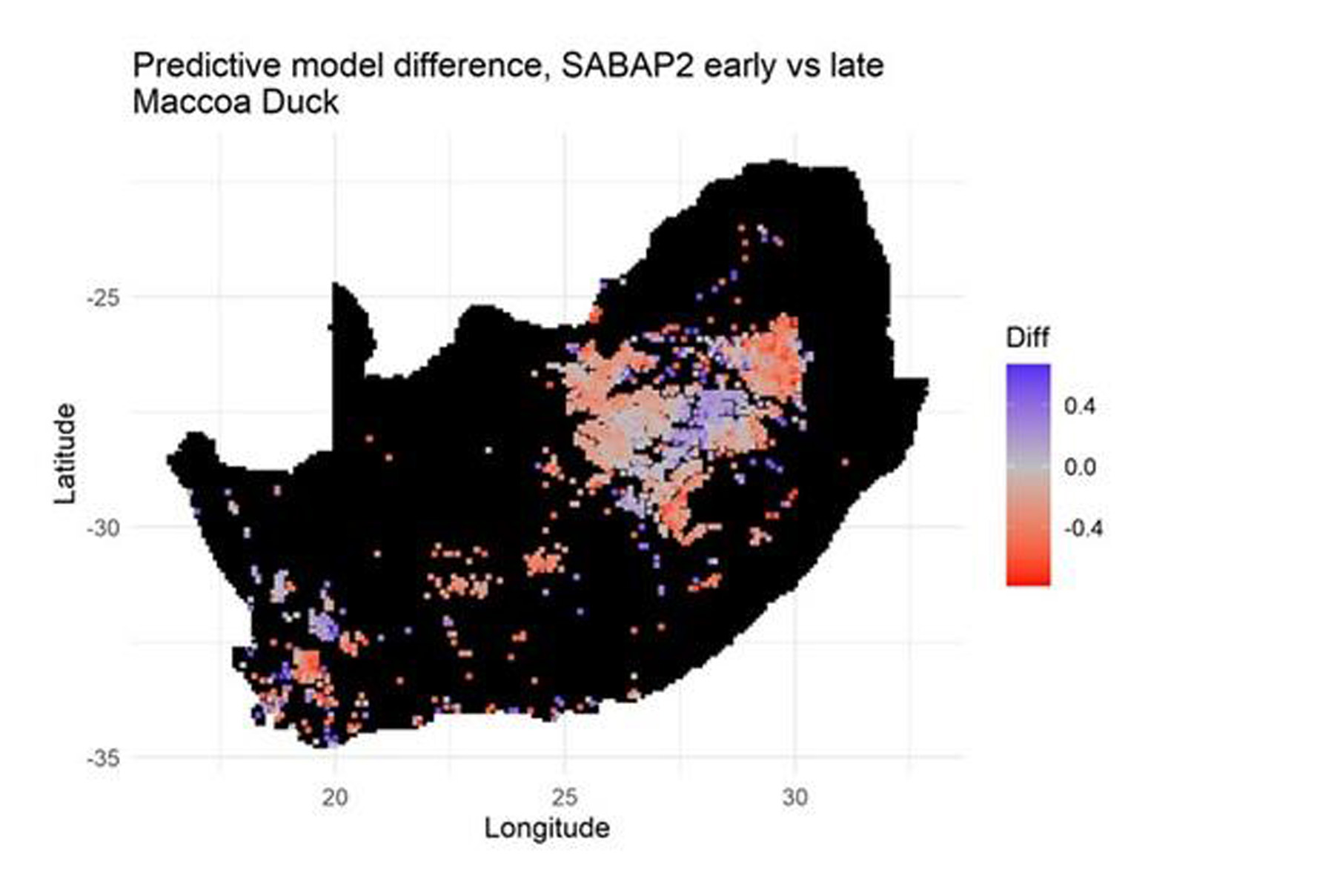
Figure 1. Predictive occurrence model results comparing reporting rates from 2007-2015 and 2016-2023. Red indicates a lower predicted probability of recording for the latter period while blue indicates a higher predicted probability of recording Maccoa Duck. Map from Lee (2024).
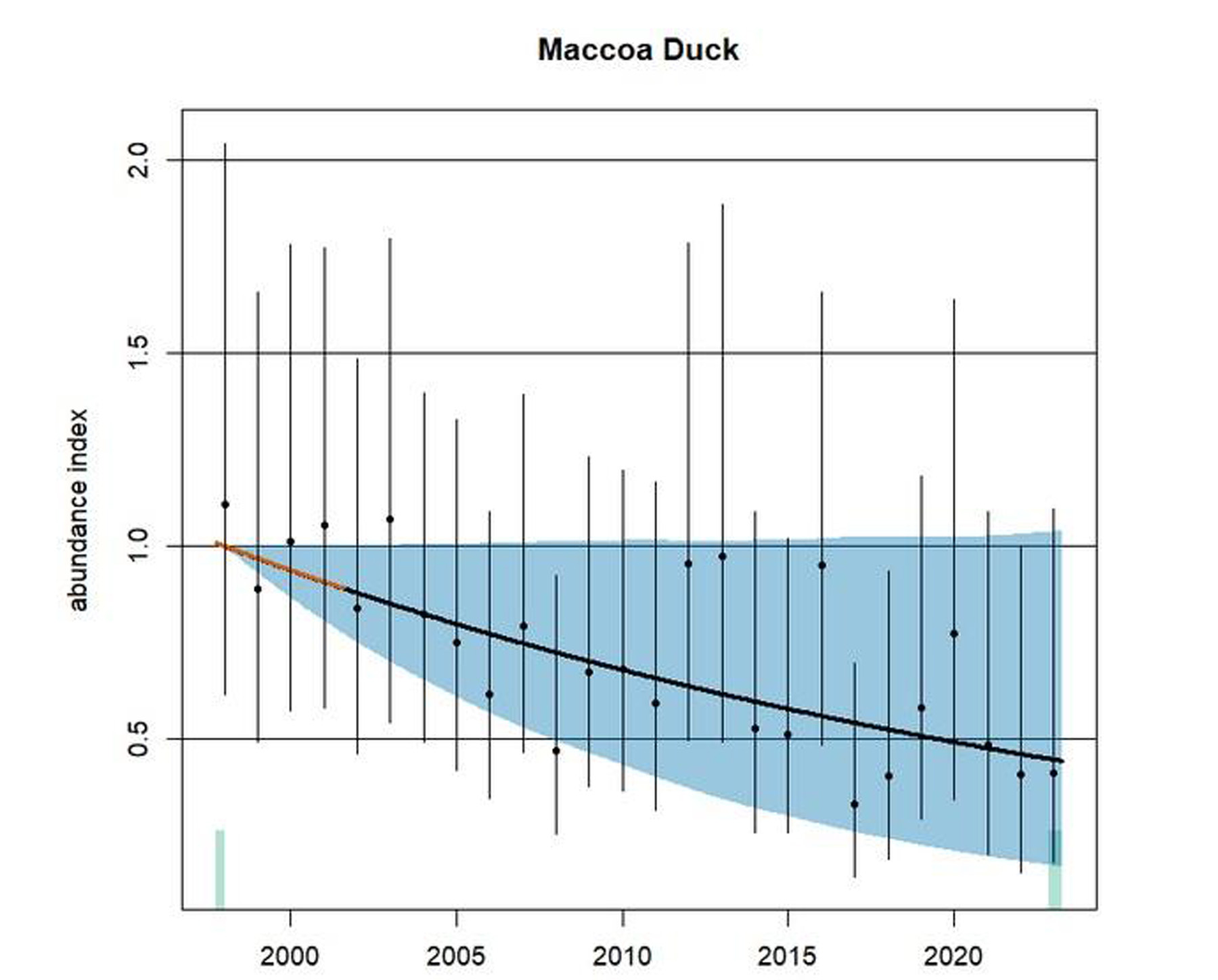
Figure 2: Poptrend model results of change in abundance index over time for Maccoa Duck from CWAC data. Red indicates periods of significant decline. The pattern is similar using data with >200 counts filtered out.
All these estimates of decline meet the threshold of Vulnerable under the population reduction criteria.
Biology & Ecology
Taxonomy
The species is monotypic. Wetlands International (2024) do however, recognise three disjunct populations; Ethiopian Highlands, Eastern Africa and Southern Africa populations.
Identification
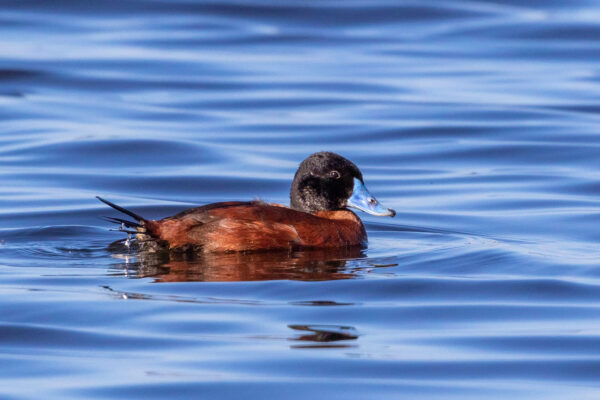
48–51 cm, 600 (female) – 800 g (male). It is a small squat duck that sits low in the water often with tail sometimes raised. Sexes are dimorphic in plumage colouration (Colahan 2005). The male is mostly chestnut in colour with a dull black head and bright blue bill. Eyes are dark brown, and legs and feet are grey. Non-breeding males are similar to female birds but have a darker crown and breast. Females are dark brown colour with a whitish streak below the eye extending from the lores to almost the nape. The chin and throat are whitish in colour and the bill is dark brown (Clark 1964, Clancey 1967). The species may be confused with Southern Pochard Netta erythrophthalma especially the females of each species. Female Southern Pochards have a vertical white crescent behind the eye as opposed to the horizontal vertical stripe below the eye. The male Southern Pochard has a red eye, dark bill and does not have the obvious colour contrast between head and body. Maccoa Duck tends to swim much lower in the water and the often-raised tail is a distinguishing characteristic (Colahan 2005).
Distribution
The Maccoa Duck has three distinct geographical distribution ranges. The Ethiopian Highland population extends from southern Eritrea to central Ethiopia, the east African population occurs in southern Kenya and northern Tanzania while the Southern African population can be found from Namibia and Zimbabwe southwards to the most southern regions of South Africa (Carboneras et al. 2020). Within the region it is sparsely distributed with the stronghold for the species occurring on the Highveld and in the Western Cape Province, with scattered records in the Northern Cape, Free State, Eastern Cape, far north-eastern South Africa and the uplands of KwaZulu-Natal. It is mostly absent from the arid areas (Figure 3). The species is a vagrant to Eswatini, but relatively common in the lowlands of Lesotho (Maclean 1997).
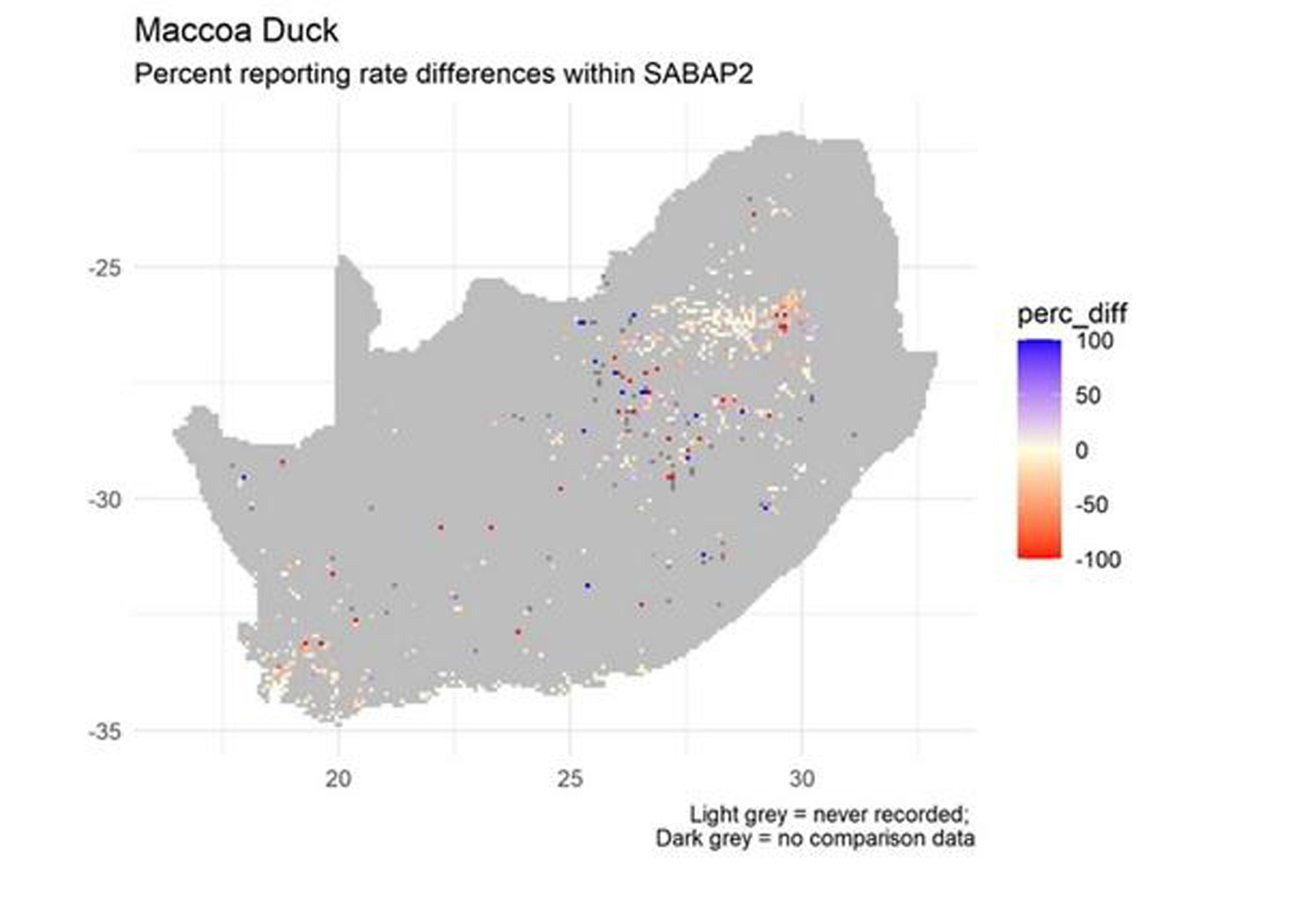
Figure 3: Distribution map of Maccoa Duck also showing pentad level change between SABAP2 periods 2007-2015 and 2016-2023 as percentage difference (from Lee 2024).
Ecology
Habitat:
Maccoa Duck prefers deep permanent wetlands with emergent vegetation that support rich concentrations of benthic organisms (Maclean 1997, Colahan 2005).
Migration:
Fluctuating numbers of Maccoa Duck indicate considerable movements, and the species is probably mostly nomadic and dispersive (Maclean 1997, Colahan 2005).
Breeding:
The nest is a deep bowl constructed from stems, situated in emergent vegetation over deep water (Clark 1964). The species is polygamous, with two or more females nesting simultaneously within the territory of a single male which is defended from other males (Tarboton 2001). Laying occurs between September and March, although there are records from other months Clancey (1967). Clutch size is 5–6 eggs but if more than eight eggs it is probable that a second female has added to the clutch as this is regular occurrence (Tarboton 2001). Only the female incubates the eggs (25–27 days) and care for the young (Clark 1964). The fledgling period is unknown (Tarboton 2001).
Diet:
Maccoa Duck feeds mostly on small invertebrates which it obtains through diving and straining food items from wetland sediment. They may also feed on water fleas, snails, as well as some seed and roots. Females that are incubating or have broods forage across male territories, with no interference from territorial males (Colahan 2005).
Threats & Conservation
Threats
The relationship between the threats facing this species and the observed population trends are poorly understood. Alien invasive aquatic plants are probably the most serious threat facing Maccoa Duck amongst those listed by Berruti et al. (2007). Within South Africa water hyacinth Eichhornia crassipes poses a significant threat to wetland systems (e.g. Cilliers 1991, Hill and Coetzee 2017). Basaula et al. (2021) demonstrated that water hyacinth in several wetland systems in India severely impacted numbers of amongst others Common Pochard Aythya ferina and Tufted Duck Aythya fuligula, both of which have similar habitat niches to Maccoa Duck. There are, however, several other invasive aquatic plant species e.g. water lettuce Pistia stratiotes, salvinia Salvinia molesta, parrots feather Myriophullum aquaticum (Hill et al. 2020) that may also pose a threat to Maccoa Duck.
Some improvement has been shown with the introduction of biological control on aquatic invasive plants (e.g. red water fern Azolla filiculoides as discussed in Hill and Coetzee 2017). At the time of the latter publication water hyacinth was, however, not considered to be under complete biological control, but the impact thereof had been significantly reduced, through the introduction of biological control agents.
Effective control has resulted in the decline of floating plants populations, but there has been an increase in the establishment and spread of submerged and emergent invasive plant species. Possible infestations of new invasive species within South Africa remain a concern (Hill et al. 2020).
Additional threats listed by Berruti et al. (2007) applicable to South Africa include draining of wetlands, variable water levels, improved treatment of sewage water, disturbance from recreational usage on large waterbodies and botulism. Other possible threats included in the single species action plan were competition and hybridisation with Ruddy Duck Oxyura jamaicensis, the bird trade and the introduction of alien benthic-feeding fish (most notably the Common Carp Cyprinus carpio) (Berruti et al. 2007). The White-headed Duck Oxyura leucocephala a species with similar traits and habitat requirements as the Maccoa Duck declined in two lakes systems due to the invasion of the Common Carp (Maceda-veiga et al. 2017), highlighting the threat this species may pose on Maccoa Duck.
Conservation Measures Underway
The species is listed under Appendix II of the Convention of Migratory species of Wild animals (CMS). Appendix II covers migratory species that have an unfavourable conservation status and that require international agreements for their conservation management, as well as those that have a conservation status which would significantly benefit from international cooperation that could be achieved by an international agreement (CMS 2024). The species is therefore included in the African-Eurasian Migratory Waterbird Agreement (AEWA). The South Africa population is listed in Column A, Category 1a (Species, which are listed as threatened on the IUCN Red list of Threatened Species, as reported in the most recent summary by BirdLife International) and Category 1b (Populations, which number less than around 10,000 individuals) (AEWA 2022).
An International single species action plan was developed in 2007 for the species (Berruti et al. 2007) with the aim of stabilising or increasing natural populations of Maccoa Duck through identified actions. It is unclear as to whether any of the actions listed for the region have been initiated let alone completed.
Conservation Measures Proposed
- The single species action plan was completed in 2007. While the lifespan of the plan was not indicated in the document it is generally accepted as 5 or 10 years in other species action plans. The Maccoa Duck species action plan is therefore long overdue for an update and revision including evaluating whether listed actions were achieved or not.
- Key sites for the species need to be identified and relevant management actions implemented to ensure the suitability of the site for Maccoa Duck remains intact.
Research Priorities and Questions
- The impact and regional relevance of many of the threats listed in the species action plan are unknown and need to be researched. The same will apply to any new threats identified e.g. the impact of climate change on the habitat of the species.
- Better estimates are needed of the regional population in order to ensure that the correct regional status is assigned to this species.
- More information is needed on the movement ecology of this species to better understand how the species utilises wetlands in the region and to also help better assess population changes within the regional population.
Contributors & References
Assessor/s
Kevin Shaw
Reviewer/s
Doug Harebottle
References
AEWA. 2022. Agreement on the Conservation of African-Eurasian Migratory Waterbirds (AEWA) – Agreement Text and Annexes. As amended at the 8th Session of the Meeting of the Parties to AEWA. UNEP/AEWA Secretariat 26 – 30 September 2022, Budapest, Hungary.
Basaula R, Sharma HP, Belant JL, Sapkota K. 2021. Invasive water hyacinth limits globally threatened waterbird abundance and diversity at Lake Cluster of Pokhara Valley, Nepal. Sustainability 13: 13700. Available: https://doi.org/10.3390/su132413700.
Berruti A, Baker N, Buijs D, Colahan BD, Davies C, Dellegn Y, Eksteen J, Kolberg H, Marchant A, Mpofu Z, Nantongo-Kalundu P, Nnyiti P, Pienaar K, Shaw K, Tyali T, van Niekerk J, Wheeler MJ, Evans SW (eds). 2007. International Single Species Action Plan for the Conservation of the Maccoa Duck (Oxyura maccoa). AEWA Technical Series No. 14. Bonn, Germany.
BirdLife International. 2021. Oxyura maccoa. The IUCN Red List of Threatened Species 2021: e.T22679820A181759055. https://dx.doi.org/10.2305/IUCN.UK.2021-3.RLTS.T22679820A181759055.en. [Accessed on 24 September 2024].
Carboneras C, Kirwan GM, Sharpe CJ. 2020. Maccoa Duck (Oxyura maccoa). In: del Hoyo J, Elliott A, Sargatal J, Christie DA, de Juana E (eds), version 1.0. Birds of the World. Ithaca, NY, USA: Cornell Lab of Ornithology. https://doi.org/10.2173/bow.macduc1.01
Cilliers CJ. 1991. Biological control of water hyacinth Eichhornia crassipes (Ponterderiaceae), in South Africa. Agriculture, Ecosystems and Environment 37: 207– 217.
Clark A. 1964. The Maccoa Duck (Oxyura maccoa (Eyton). Ostrich 35: 264–276.
Clancey PA. 1967. Gamebirds of southern Africa. Cape Town: Purnell & Sons.
CMS. 2024. Convention on the Conservation of Migratory Species of Wild Animals (CMS) – Agreement Appendices. As amended at the 14th Conference of the Parties 12-17 February 2024, Samakand, Uzbekistan and effective from the 17th May 2024.
Colahan B. 2005. Maccoa Duck. In: Hockey PAR, Dean WRJ, Ryan PG (eds), Roberts birds of southern Africa 7th Edn. Cape Town: Trustees of the John Voelcker Bird Book Fund. pp 89–91.
Hill MP, Coetzee J. 2017. The biological control of aquatic weeds in South Africa: Current status and future challenges. Bothalia 47: 12. Available: https://doi.org/10.4102/abc.v47i2.2152
Hill MP, Coetzee JA, Martin GD, Smith R, Strange EF. 2020. Invasive alien aquatic plants in South African freshwater ecosystems. In: van Wilgen BW, Measey J, Richardson DM, Wilson JR, Zengeya TA (eds), Biological Invasions in South Africa. Switzerland: Springer Open.
Knape J. 2016. Decomposing trends in Swedish bird populations using generalized additive mixed models. Journal of Applied Ecology 53: 1852–1861.
Lee ATK. 2024, Regional Red Data Book of the Birds of South Africa, Lesotho and Eswatini: SABAP2 synthesis and supporting information and graphics for Maccoa Duck. Unpublished report. Johannesburg: BirdLife South Africa.
Maceda-veiga A, Lopez R, Green AJ. 2017. Dramatic impact of alien carp Cyprinus carpio on globally threatened diving ducks and other waterbirds in Mediterranean shallow lakes. Biological Conservation 212: 74–85.
Maclean GL. 1997. Maccoa Duck Oxyura maccoa. In: Harrison. JA, Allan, DG, Underhill, LG, Herremans, M, Tree, AJ, Parker, V and Brown, CJ (eds), The atlas of southern African birds. Vol1: Non-passerines. Johannesburg: BirdLife South Africa. pp 468–469.
Nagy S, Langendoen T. 2020. Flyway Trend Analyses Based on Data from the African-Eurasian Waterbird Census from the Period of 1967–2018. Wageningen: Wetlands International.
Tarboton W. 2001. A guide to the nests & eggs of southern African birds. Cape Town: Struik Publishers.
Taylor MR. 2015. Maccoa Duck Oxyura maccoa. In: Taylor MR, Peacock F, Wanless RW (eds), The Eskom Red Data Book of Birds of South Africa, Lesotho and Swaziland. Johannesburg, South Africa: BirdLife South Africa. pp 296–298.
Wetlands International. 2024. Waterbirds Populations Portal. Available: https://wpp.wetlands.org/. [Accessed on 24 September 2024].
Citation
Shaw K 2025. Maccoa Duck. In: Lee ATK, Rose S, Banda S, Bezeng SB, Maphalala MI, Maphisa DH, Smit-Robinson H (eds), The 2025 Red Data Book of Birds of South Africa, Lesotho and Eswatini. Johannesburg, South Africa: BirdLife South Africa. Available at: https://www.birdlife.org.za/red-list/maccoa-duck/
Our generous sponsors


