


Wattled Crane
Grus carunculata

Number Of Mature
Individuals (Regional)
213

Regional
Population Trend
Decreasing
2025
Regional Category
Endangered
Search by species
CONTENTSOverview
Names
|
IOC English Name: |
Wattled Crane |
|
SA & IOC Scientific Name: |
Grus carunculatus |
|
BirdLife International Taxonomy (scientific name): |
Bugeranus carunculatus |
|
Order: |
GRUIFORMES |
|
Family: |
Gruidae |
|
Species name author: |
Gmelin JF 1789 |
|
Afrikaans: |
Lelkraanvoël |
|
Sesotho (South Africa): |
Motlathomo |
|
Sesotho (Lesotho): |
Motlathomo |
|
Siswati: |
|
|
Zulu: |
uBhamukwe |
Current Assessment Status
|
2025 Regional Status [Criteria] |
EN [D] |
|
2024 Global Status [Criteria] |
VU [A2acde+3cde+4acde] (BirdLife International 2018) |
|
Population size (Regional) |
213 mature individuals (EWT unpubl data 2024) |
|
Population size (Global) |
>9600 individuals (Morrison 2019) |
|
Distribution size (EOO) (Regional) km2 |
141 466 (Lee 2024) |
|
Distribution size (EOO) (Global) km2 |
6 070 000 (BirdLife International 2018) |
|
Distribution size (AOO) (Regional) km2 |
8824 (Lee 2024) |
|
Generation time |
14 years (R Martin, unpubl data) |
|
Status change reason |
Improved status |
|
Migrant (in the region) |
No |
|
Regional endemic |
No |
Historic Listing Information
|
2000 Regional Status |
CR [A2c; C1+2a] |
|
2015 Regional Status |
CR [C1+2a(ii)] |
|
Status change reason (if applicable) |
No change |
|
2015 Population size (Regional) |
<250 mature individuals |
|
2015 Global Status |
VU [A2acde+3cde+4acde; C1+2a(ii)] |
Reason for Inclusion
Reason for Inclusion in the Assessment
The species was listed as regionally Critically Endangered in 2015 and is currently listed as globally Vulnerable.
Category Justification
Category Justification
The regional population of the Wattled Crane Bugeranus carunculatus satisfies the population-size Criterion D for regionally Endangered, with <250 mature individuals occurring in the region, much of this number occurring in the wetlands of KwaZulu-Natal province (Jordan et al. 2020). Regionally, neither Criteria A, B nor C apply (see Population Justification below).
In 2015 the species was recorded as Critically Endangered under Criteria C1+2a(ii), relating to large declines across the species range. Although the declines across provinces continue to dwindle the KZN population continues to increase. The South Africa regional population no longer meets the criteria for Critically Endangered, but does meet the criteria for Endangered, given its small population size. The emerging threats of avian influenza and increasing storm and hail damage could lead to mass mortality events, along with the ongoing decline of observation in all other provinces. This could feasibly knock the population backwards a couple of decades. There is no role for the central global population to offer any rescue effect to this distinct population in South Africa.
Population Justification
The annual crane aerial survey in 2020 in KwaZulu-Natal put the largest estimated population size at 399 individuals (the largest count for the province over 30 years (Jordan et al. 2020)). However, the average number of birds observed between 2011 and 2023 was 288 individuals. In addition, there are known breeding pairs in the Eastern Cape and on the 2023 aerial survey, five birds were observed, and the estimated maximum number of mature individuals is 10 birds (B Gibbons pers comms). Furthermore, it is estimated that a maximum of 12 mature individuals can be found in Mpumalanga and a further 8 mature individuals in Memel and Ingula, Free State (B Gibbons pers comms). Based on this, the regional population is estimated at c. 316 individuals (the sum of 288 in KwaZulu-Natal (average), 6 in the Free State, 12 in Mpumalanga, and 10 in the Eastern Cape: the latter being a maximum number for each province). The Wattled Crane floater flock regionally migrate to Cedarville in the Eastern Cape annually, although breeding territories for the species are held throughout the year across the region.
Wattled Cranes in South Africa are sedentary and territorial to their nest sites, whilst non-breeders, the ‘floater flock’, do not hold territories for breeding (Meine and Archibald 1996, McCann and Benn 2006, Winker 1998). In this way it is easy to separate reproductively active birds from those that are not. There is little scientific data to explain why the floater flocks exist in population dynamics, however, it can be inferred that there are limiting resources that prevent more pairs to form (Winker 1998). The aerial survey takes place in the Wattled Crane breeding season, which enables observations of active breeding territories. The birds that are not paired or in family groups are part of the floater flock. As such, the mature individuals are identified as the breeding population of the total numbers on the aerial survey. During breeding season aerial surveys (July–August) the floater flock comprised between 34–62% of the observed population, averaging 49% of the population over the last 12 years surveys. The average population count of mature individuals (breeding birds) in KwaZulu-Natal between 2011 and 2023 is 144 individuals (Figure 1).
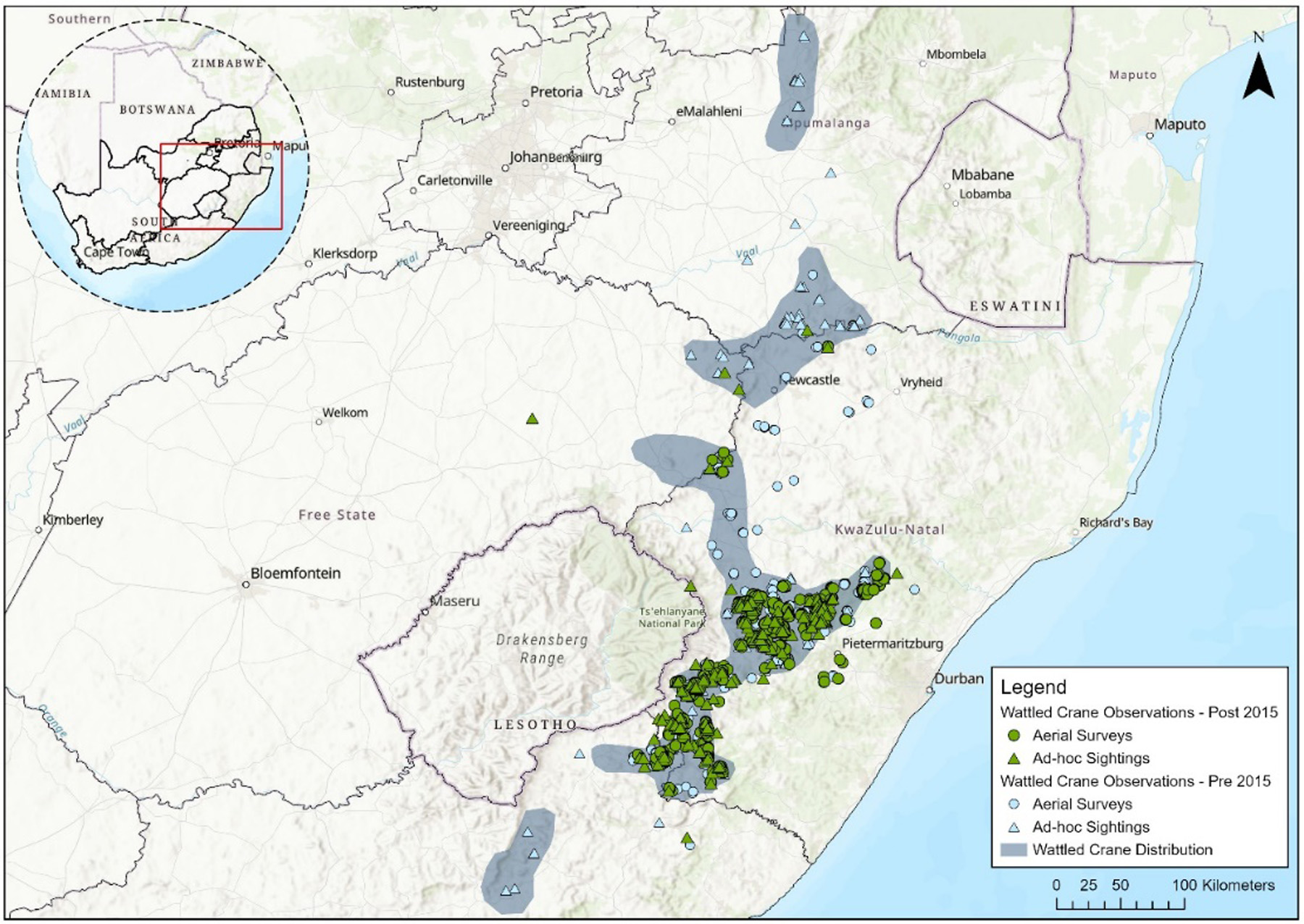
Figure 1: Wattled Crane regional distribution ad-hoc sightings data (denoted by the triangles) and repeated aerial survey data (denoted by the circles) for pre and post 2015, distribution polygon from Red List website https://www.iucnredlist.org/search?query=Wattled%20crane&searchType=species.
In the Red List guidelines (Version 16, March 2024), the pool of non-reproductive (e.g., suppressed) individuals that will quickly become reproductive if a mature individual dies, must be considered when estimating the number of mature individuals. This means that we need to take into account at least a portion of the floater flock population. However, not all individuals within the floater flock can be considered mature and capable of reproduction, as a proportion of the floater flock consists of immature birds. We do not have an estimate of the proportion of mature individuals in the floater flock. If we assume 67% (A Lee pers comms) of the entire population are mature individuals, then of 316 individuals 213 are mature individuals. This then indicates that 71 mature individuals exist in the floater flock accounting for 45% of the floater flock. As the maximum number of mature individuals 213 is below the threshold to be classified as Endangered then the species must be recorded as Endangered (Figure 2).
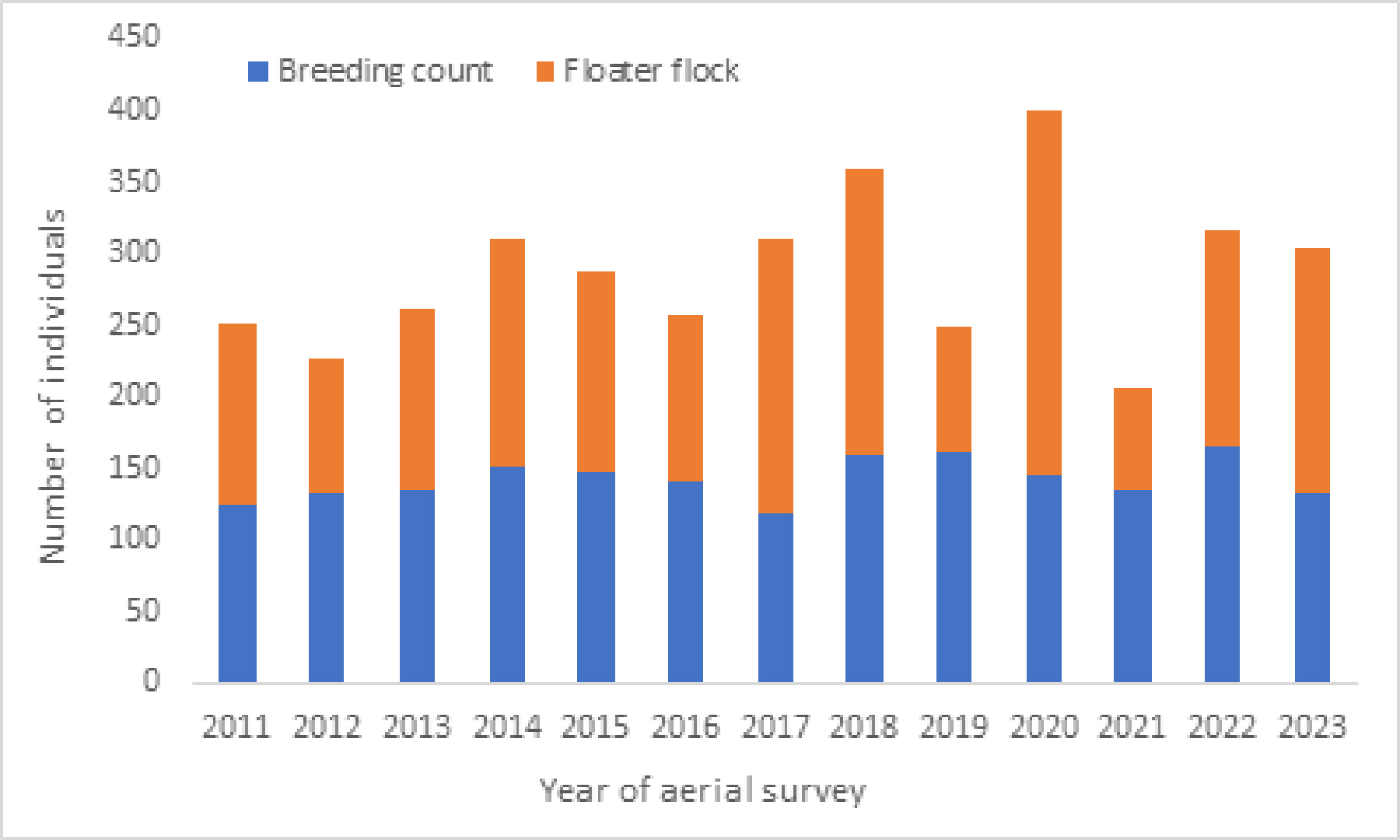
Figure 2: The number of Wattled Cranes in the KwaZulu-Natal aerial surveys from 2010-2023 distinguishing between pair territories (breeding count) and the non-breeding floater flock.
Alternatively, the maximum number of breeding territories identified was 84 in 2020, accounting for 168 mature individuals, whilst the lowest recorded breeding territories, since the last 2015 assessment, was in 2017 with only 59 nests counted accounting for 118 mature individuals. This firmly places the Wattled Cranes as Endangered by Criterion D. The recent drop in observable nesting territories in the last few years is notable. It is unclear what causes these fluctuations and whether they are significant but further investigation is necessary.
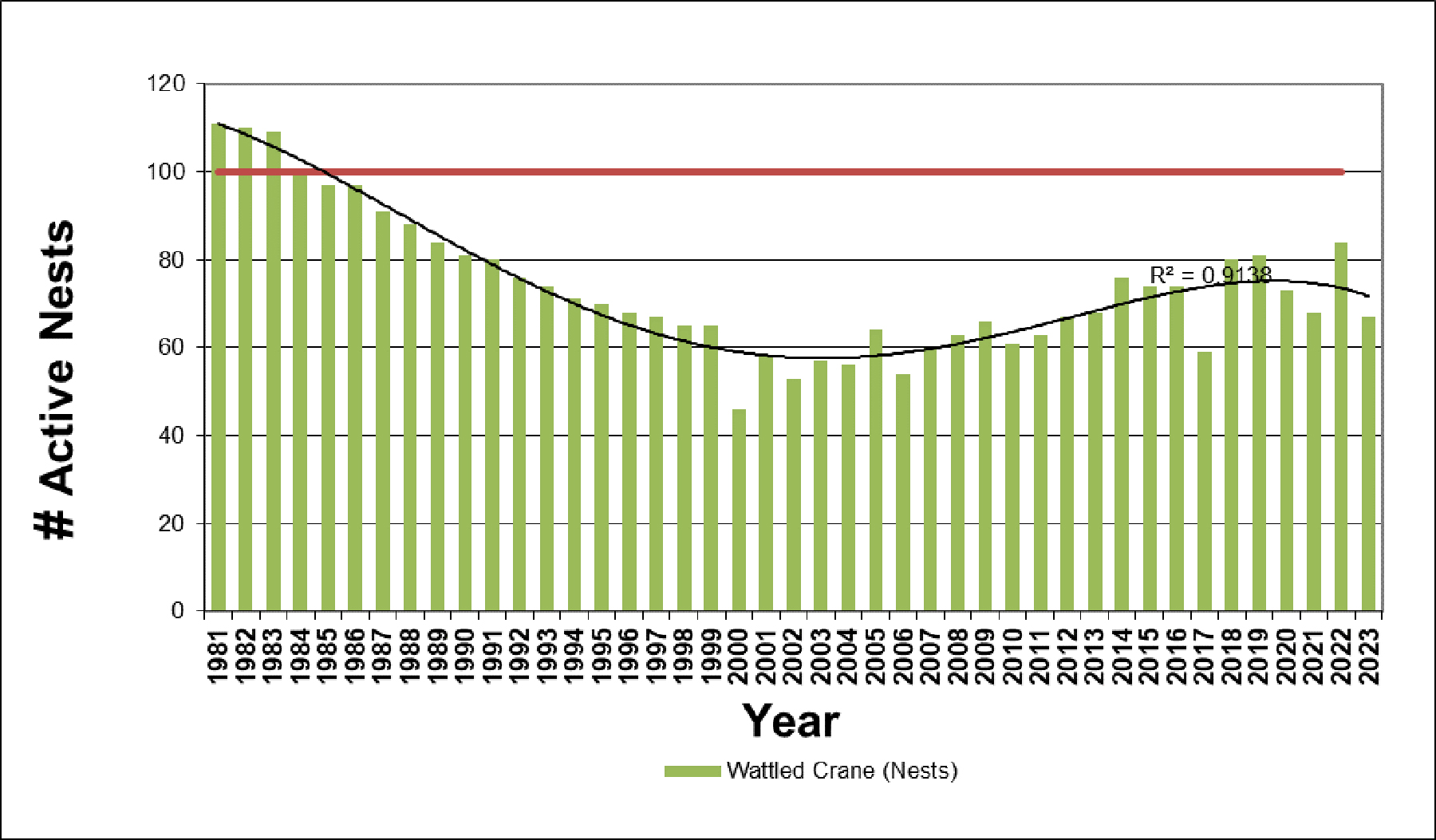
Figure 3: Wattled Crane breeding territories observed from KwaZulu-Natal aerial surveys between 1981 to 2023 (Ezemvelo KwaZulu-Natal Wildlife desired target orange line) (Coverdale 2024).
Although the Wattled Crane population is increasing regionally the observations of the species observed in provinces, excluding KwaZulu-Natal, continues to dwindle. Area of occupancy has continued to decline between 2015 and 2023 by -17%. The area of occupancy measured in km2 has drastically reduced from 42 930 km2 in 2015 to 8824 km2 in 2024, an 80% decline. Given this caution is advised on the vulnerability of the species to further declines. The only province where we are observing increases is in KwaZulu-Natal but unless conservation action is taken in other provinces the risk of extirpation from these areas is likely. Furthermore, as the core distribution of the species is in KwaZulu-Natal it accounts for 91% of the regional population (288 KZN individuals, 28 individuals in other provinces).
Category A is not fitting for this species as the population decline has been reversed in South Africa in the last two decades. Category B is not valid as the species EOO and AOO for the species is larger than the current limits. However, there appears to be a continued contraction of the species range due to the increase of the population in KwaZulu-Natal, the stronghold. The declines of the species number in provinces outside of KwaZulu-Natal are difficult to ascertain. We attempted to use the Coordinated Avifaunal Roadcounts (CAR) data to look at trends outside of KwaZulu-Natal, compared to within KwaZulu-Natal, but the data were too patchy to make robust deductions. In addition, the CAR are known to be less reliable with rare species like Wattled Crane (Hofmeyr 2012).
The population does not meet the criteria for C1+2a(ii) as it did when assessed in 2015. Although the number of mature individuals is classified as Critically Endangered based population numbers, the species does not meet the criteria for C1 or C2 based on decline rates (see below).
The species is classified under Endangered under Category D as the population of mature individuals is less than 250. Confidence in this regional population estimate is high.
Trend Justification
The global population is in decline (BirdLife International 2018). Regionally, although the population has increased in KwaZulu-Natal (Galloway-Griesel et al. 2022), there is some indication of stabilising numbers since 2018 (Figure 4). The nonsignificant increases identified since 2018 could relate to the difficulty in capturing non-breeding birds on the aerial surveys as they are not as sedentary as the breeding birds, although it could be the species population increase is reaching a ceiling. The populations in other provinces continue to decline or remain stable and small. Mpumalanga with the largest decline is estimated to have 12 mature individuals (B Gibbons pers comms), but this area would have formally carried a population of 29 mature individuals in the region in 1980, which amounts to a decline of 79% (Tarboton et al. 1987). Within the Eastern Cape, the mature individuals (breeding) remain at around 8–10 mature individuals (B Gibbons pers comms). Free State is estimated at 6 mature individuals primarily in the Memel area and 2 mature individuals at Ingula, this has remained stable over the last 20 years (B Gibbons pers comms). The stability in the Eastern Cape and Free State may indicate that the historically small number in these areas relates to restricted breeding grounds. The reduction in Mpumalanga is attributed to the ongoing and persistent threat of habitat destruction from mining.
The regional population is tentatively considered to be stable whilst recognising that the increases in KwaZulu-Natal are offsetting the declines in other provinces (i.e. not sufficient to meet the thresholds for Criteria A or C).
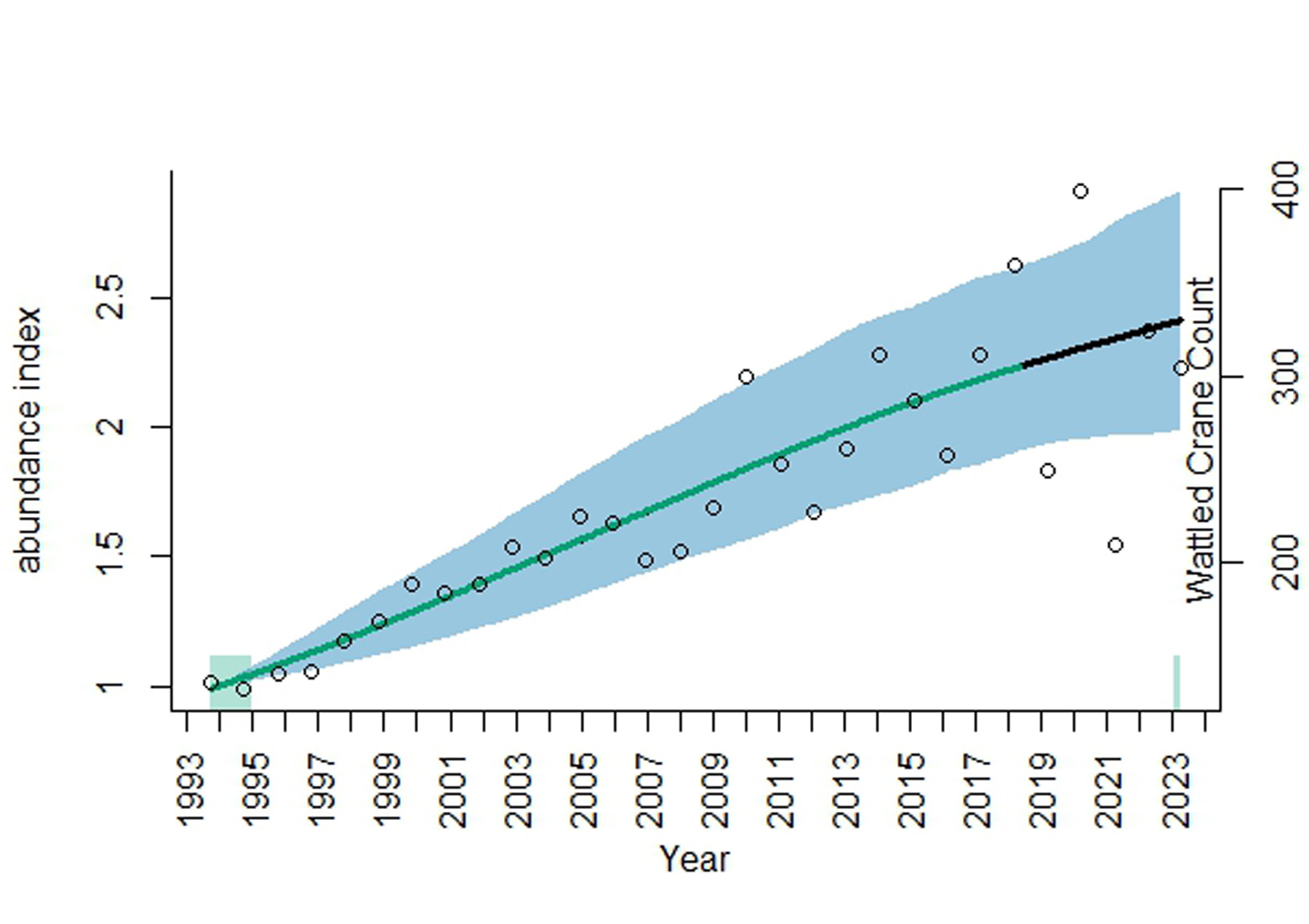
Figure 4: A Generalised Additive Model fitted to the Wattled Crane population estimates for KwaZulu-Natal (aerial census) between 1994 and 2023. The green line indicates a statistically significant increase in numbers up until 2018. Thereafter the population increase has slowed/stabilised. The uncertainty in the model (95% Cl) is indicated in the blue. Aerial survey counts from 1994 to 2023 of Wattled Cranes. The raw count data is indicated by the open circles.
Biology & Ecology
Taxonomy
The south-central population of Wattled Cranes are not linked to the South African population and this regional population is genetically distinct to the other populations but is considered a single species (Jones et al. 2006).
Identification
120–175 cm, 7.5–8.4 kg. A tall, stately crane of upland marshes. Sexes similar but male slightly larger. Head dark slaty grey above the eyes and crown, otherwise white, including the wattles, which are almost fully feathered and hang down from upper throat. Breast, primaries, secondaries, and tail coverts black. Secondaries long, nearly reaching the ground. Upper breast and neck white extending up to the face. Back and wings ashy grey. Legs and toes black. Juveniles have tawny body plumage, lack the bare skin on the face, and have less prominent wattles (Allan 2005).
Distribution
The Wattled Crane is restricted to Africa, with three sub-populations recognised (Beilfuss et al. 2007). The largest sub-population of birds are in the south-central African states of Zambia, Botswana, Angola, Democratic Republic of Congo, Tanzania and Zimbabwe. Two smaller populations of similar size occur in Ethiopia and South Africa (Beilfuss et al. 2007). South Africa’s population of Wattled Cranes was historically widespread and found in all four of the former provinces. However, the species’ range has reduced significantly, resulting in it being confined to the eastern grasslands of South Africa, with 90% of the population restricted to KwaZulu-Natal Midlands and Southern Drakensberg (Morrison 2019). The two most important protected sites are uMngeni Vlei (8–12 mature individuals) and Ntsikeni Vlei (24 individuals maximum count) (S Krüger pers comms, Ezemvelo KwaZulu-Natal Wildlife) followed by Umvoti Vlei, Karkloof Nature Reserve, Kamberg Nature Reserve and Highmoor segment of Maloti Heritage National Park.
A few pairs of Wattled Cranes are found in the grasslands of northern Eastern Cape around Ugie and Maclear and the Highveld grasslands of Mpumalanga and eastern Free State (Smith et al. 2016; B Gibbons pers comms, International Crane Foundation/Endangered Wildlife Trust) (Figure 1). In South Africa, breeding pairs are largely sedentary, while non-breeding birds or ‘floaters’ tend to move up to 100 km away from the breeding sites but some fly as far as 190 km (Jordan 2018). There is no evidence of movement in and out of the region (McCann et al. 2001) and the regional population is therefore considered a single isolated sub-population of the African population. The species is regionally extinct in Eswatini (Monadjem et al. 2003). The last record of Wattled Crane in Lesotho was at Sehlabathebe National Park in the early 1980s (Osborne and Tigar 1990).
Ecology
The Wattled Crane is the most wetland dependent crane species in Africa (Morrison 2019). The majority of the cranes live on the large wetlands and floodplains in southern Africa river basins. Wattled Cranes here regionally move to follow local movement of water availability. However, they will use smaller wetlands in upland areas throughout their range (Morrison 2019). Regionally the species breed on channelled or discontinuously channelled wetlands associated with lower streams e.g. headwater systems, in the grassland biome (Meine and Archibald 1996). Breeding birds are sedentary to their territories, whilst the non-breeding birds ‘floater flock’ in KwaZulu-Natal migrate between the Midlands, KwaZulu-Natal and Cedarville, Eastern Cape during the months of November to February (Jordan 2018).
Historically, Wattled Crane breeding pairs in KwaZulu-Natal occupied areas from 960–2066 masl where rainfall averages 925 mm per year (range 675–1650 mm) while birds in Mpumalanga breed on an ecologically distinct, plateau-like watershed about 50×20 km in extent, at an altitude of 1850–2300 masl (Morrison and Bothma 1998). High annual rainfall (1270 mm) and poor surface drainage have resulted in numerous permanently wet marshy areas (Tarboton 1984) with breeding territories being in permanently inundated sedge wetlands (Meine and Archibald 1996, Morrison 2019). Home ranges in South Africa average 16.64 km2, with the core breeding area only 2.3% of the home range (McCann and Benn 2006). Home ranges in South Africa are dominated by open natural grasslands, and wetlands made up at least 7.1% of the home range with wooded areas, temporarily irrigated and dryland cultivated agriculture the remainder (Coverdale 2006, McCann and Benn 2006).
In the last three years observations of the species outside these defined ranges including an individual observed on the 10th of April 2024 on the coast heading towards Ballito, have been recorded. In addition, nest sites are observed occasionally outside the former range, although these nests have not proven to be successful (personal observation). Furthermore, there have been recorded incidents of interspecific competition at nest sites and in one incident led to the death of a pair of breeding Wattled Cranes (J Van Der Westhuizen pers comms) and in a separate incident a group of 9 non-breeding individuals killed a chick of pre-fledge age (D Lay pers comms). This anecdotal information does lend itself to some concern around carrying capacity within the KwaZulu-Natal stronghold.
Threats & Conservation
Threats
The primary threat and main cause of decline over the past three decades has been the loss and degradation of permanent, palustrine wetlands through intensified agriculture, afforestation, dam construction, alien plant infestation and draining of wetlands (McCann et al. 2001). Grassland areas surrounding breeding sites are vital for foraging and cover for chicks (McCann and Benn 2006). Habitat loss in KwaZulu-Natal and Mpumalanga continues at an alarming rate due to land conversion for agriculture and mining (Allan et al. 1997, Leonard 2016, Leonard 2018, Jewitt et al. 2015). Inappropriate management of wetlands with regard to timing and frequency of burning is a threat to nesting Wattled Cranes (Bentos 2002). Wetlands are used as fire breaks on agricultural and forestry properties and burning often coincides with the peak period for Wattled Crane breeding, leading to loss of eggs and chicks. Wattled Cranes are particularly prone to collisions with overhead powerlines, especially those located between breeding, roosting, and foraging sites. There is also an emerging threat of collisions with renewable energy infrastructure (wind turbines and additional power lines) and loss of habitat to renewable energy infrastructure (increased road networks, clearing for solar farms, etc.), this threat is particularly notable in Mpumalanga and KwaZulu-Natal. The threat of illegal removal of eggs and or chicks from the wild is relevant and strict trade control measures need to be implemented giving it the status of CITES Appendix II.
Southern Africa is predicted to be a hotspot for extreme weather changes leading to intense periods of rainfall and long periods of drought (Chemura et al. 2022). These changes are going to impact maize production within South Africa, a crop that Wattled Crane ‘floater flock’ are frequently observed on and a key crop for the majority of South Africans (Akanbi et al. 2021, Jordan 2018). Chemura et al. (2022) modelled predictions to identify key maize growing areas into the future, one of these areas overlaps with core Wattled Crane breeding sites in KwaZulu-Natal. Wattled Crane breeding sites are wetlands and require pristine grasslands to be accessible in the home territory (Wojtaszekova 2008). The reduction of key maize production areas in other parts of South Africa are going to lead to an increased demand to convert grasslands to maize lands within the core range of Wattled Cranes, reducing available breeding sites for the species. To allow the sustained production of maize there is much discussion in the agricultural sector around the need for damming to enable the watering of crops (Akbani et al. 2021). Further to this the global trend in dairy farming is seeing an increase intensification and upscaling of farms, which leads to increased pressure to convert grasslands to pastures (FAO 2018, Clay et al. 2020). The destruction of habitat and the reduction of wetlands were the reasons for the decreasing population of Wattled Cranes from the 1980’s onwards.
Another potential risk is linked to higher rainfall intensities and changes in sediment yield and discharge to wetlands that could create (geomorphic) change in those systems (Dallas and Rivers-Moore 2014). Erosion or deposition into wetlands occupied by breeding Wattled Cranes can change the character of the wetlands (Dallas and Rivers-Moore 2014), further impacting availability of breeding sites. Increased flooding of nesting areas during the winter breeding seasons is likely to see a reduced breeding success further impacting population success of the species.
An additional new threat that is predicted to continue and increase is hail. This is specifically a problem for bird species as the number of hailstorms is set to increase annually in South Africa. Not only will the number of storms increase but the size of the hail is predicted to increase in KwaZulu-Natal (Raupach et al. 2021, Punge et al. 2023). Hail in KwaZulu-Natal has been increasing in size and frequency. The economies of scale dictates that the increase of non-preventable damage to crops will lead to an increase in planting to ensure financial returns for farmers. Hail related incidents causing mass deaths of birds have already occurred in KwaZulu-Natal with the well-known killing of hundreds of falcons and initiating a massive rescue operation to save damaged birds. This incident impacted Amur Falcons in March of 2019 at a roost site in Mooi River, which is an area within the core range of Wattled Cranes.
A final emerging threat is avian influenza, which is seeing an increase in South Africa (FAO 2023). Although there is no mention of crane fatalities in this FAO media release, we have a confirmed case of 40 Grey Crowned Cranes killed by H5N2 virus in June 2023 (Dr C Kylie pers comms, Eastern Cape State Vet). Realising this threat is not to be ignored for other crane species as the proximity in farming areas for foraging, e.g. maize lands, can leave the floater flock susceptible to succumb to influenza. If one incident of the same size occurred in the Wattled Crane population, it would take reduce the population by 12% in the KwaZulu-Natal population (278 individuals), similar figures recorded in the aerial survey in 2011.
Conservation Measures Underway
Crane conservation efforts in the region started in the 1980s due to significant population declines of the three crane species found in South Africa. Ezemvelo KwaZulu-Natal Wildlife, a government conservation body, protects and conserves important crane habitats through its network of nature reserves. Ezemvelo KwaZulu-Natal Wildlife adopted a provincial monitoring plan which is implemented in partnership with the Endangered Wildlife Trust. This includes aerial surveys of cranes and nest site monitoring within the province. The KwaZulu-Natal Crane Foundation, which was founded in 1989, runs an active schools program on education and raising awareness of cranes and their habitats in the Midlands of KwaZulu-Natal.
The Endangered Wildlife Trust began crane research and conservation action in 1994. Efforts to date have included monitoring, understanding movement, power-line investigations and mitigation, crop damage research and mitigation, awareness creation and conservation of key areas through promotion of sustainable management, and inclusion of key areas into the Biodiversity Stewardship Programme. More recently, through the analyses of ringing and tracking data of the Wattled Cranes, we hope to guide future conservation actions through understanding how the cranes utilise the landscape through different life stages.
The Wattled Crane Recovery Programme (WCRP) was established in 2000 out of a workshop run by the IUCN Conservation Breeding Specialist Group. The WCRP was established to create a sustainable captive population of Wattled Cranes in captivity as a safety net should a catastrophe occur in the wild population. Supplementation techniques for the release of the Wattled Cranes have been established in the 1990’s (Pittman 2007, Morrison 2019). However, due to slight increases in wild populations in KwaZulu-Natal a decision was made in 2015 to place on hold the release of Wattled Cranes. The captive population is managed under the African Association of Zoos and Aquaria’s (PAAZA) Wattled Crane African Preservation Programme and now aims to develop a sustainable captive population.
Conservation Measures Proposed
The IUCN CPSG ran a Population and Habitat Viability Analysis (PHVA) in 2000, this was reviewed in 2009 and, a PHVA will be run again in August 2024 to reassess the population viability with updated data to establish any new threats to the species. At this workshop new conservation targets will be established and prioritised. It is anticipated that ongoing grassland and wetland protection will remain priorities with the restoration of wetlands to expand the breeding site availability for the species becoming more focused. Habitat destruction is a keen and persistent threat to the species and the demand for land resources and agriculture are expected to increase. Nine trackers have been placed on cranes in KwaZulu-Natal to understand the movement of the floater flock, and this data will be analysed by August 2024. In addition, research using drones to assess breeding success and wetland degradation will start this year with the aim to create more efficient monitoring techniques for the species and associated habitat.
Research Priorities and Questions
- An extensive investigation into disease risks and potential impacts on regional Wattled Crane populations is required, specifically avian influenza.
- A rapid-assessment technique for wetland suitability for Wattled Cranes should be developed.
- Landscape use of the non-breeding life stage and its associated roosting and foraging sites should be determined to focus conservation action.
- Keeping abreast of changes in agricultural practices and the associated impact on the species is vital to stay ahead of impacts on the floater flock.
- Efficiency of long-term monitoring and associated technology is required to maintain monitoring for this small population.
- Wetland restoration guidelines are vital for the expansion of breeding sites for the species.
- Understand more about range shrinkage for the species outside of KwaZulu-Natal.
- Establish Carrying Capacity for Wattled Cranes in KwaZulu-Natal and other provinces.
Contributors & References
Assessor/s
Lara Jordan, Christie Craig, Bradley Gibbons
Reviewer/s
Carina Pienaar, Sanjo Rose
References
Akanbi RT, Davis N, Ndarana T. 2021. Climate change and maize production in the Vaal catchment of South Africa: assessment of farmers’ awareness, perceptions and adaptation strategies. Climate Research 82: 191–209.
Allan DG, Harrison JA, Navarro R, van Wilgen BW, Thompson MW. 1997. The impact of commercial afforestation on bird populations in Mpumalanga Province, South Africa—insights from bird-atlas data. Biological Conservation 79: 173–181.
Allan DG. 2005. Wattled Crane. In: Hockey PAR, Dean WRJ, Ryan PG (eds), Roberts birds of southern Africa 7th Edn. Cape Town: Trustees of the John Voelcker Bird Book Fund. pp 311–313.
Beilfuss RD, Dodman T, Urban EK. 2007. The status of South African cranes in 2005. Ostrich 78: 174–184.
Bentos CM. 2002. The status and prospects of Wattled Cranes Grus carunculatus in the Marromeu complex of the Zambezi Delta. MSc thesis, University of Cape Town, Cape Town, South Africa.
BirdLife International. 2018. Bugeranus carunculatus. The IUCN Red List of Threatened Species 2018: e.T22692129A129880815. https://dx.doi.org/10.2305/IUCN.UK.2018-2.RLTS.T22692129A129880815.en. [Accessed on 05 May 2024].
Chemura A, Nangombe SS, Gleixner S, Chinyoka S, Gornott C. 2022. Changes in climate extremes and their effect on maize (Zea mays L.) suitability over Southern Africa. Frontiers in Climate 4: 890210.
Clay N, Garnett T, Lorimer J. 2020. Dairy intensification: Drivers, impacts and alternatives. Ambio 49: 35–48. https://doi.org/10.1007/s13280-019-01177-y.
Coverdale BM. 2006. The use of geographic information systems to investigate the effect of land use change on Wattled Crane Bugeranus carunculatus breeding productivity in KwaZulu-Natal, South Africa. MSc thesis. Pietermaritzburg, South Africa: University of KwaZulu-Natal.
Coverdale BM. 2024. KwaZulu-Natal Biodiversity Status Assessment Report 2023 – Wattled Crane Bugeranus carunculatus. Unpublished report. Pietermaritzburg, South Africa: Ezemvelo KZN Wildlife.
Dallas HF, Rivers-Moore N. 2014. Ecological consequences of global climate change for freshwater ecosystems in South Africa. South African Journal of Science 110: 01–11.
Department of National Parks and Wildlife (DNPW). 2022. Report on the 2022 dry season aerial survey of Kafue Lechwe and large waterbirds of the Kafue Flats in Zambia. Chilanga, Zambia.
FAO. 2018. Dairy and dairy products. In: OECD-FAO agricultural outlook 2018–2027. Rome: Food and Agriculture Organization of the United Nations. http://www.fao.org/docrep/i9166e/i9166e_Chapter7_Dairy.pdf. Accessed 6 June 2018.
FAO Co-convened Scientific Task Force on Avian Influenza and Wild Birds. 2023. Scientific Task Force on Avian Influenza and Wild Birds statement on H5N1 high pathogenicity avian influenza in wild birds – Unprecedented conservation impacts and urgent needs.
Galloway-Griesel T, Roxburgh L, Smith T, McCann K, Coverdale B, Craigie J, Pretorius M, Nicholson S, Michael M, Durgapersad K, Chetty K. 2023. Evidence of the effectiveness of conservation interventions from long-term aerial monitoring of three crane species in KwaZulu-Natal, South Africa. Bird Conservation International 33: e7. https://doi.org/10.1017/S0959270921000496.
Hofmeyr SD. 2012. Impacts of environmental change on large terrestrial bird species in South Africa: insights from citizen science data. PhD Thesis, University of Cape Town, South Africa.
Jewitt D, Goodman PS, Erasmus BFN, O’Connor TG, Witkowski TF. 2015. Systematic land-cover change in KwaZulu-Natal, South Africa: Implications for biodiversity. South African Journal of Science 111: 01–09. https://dx.doi.org/10.17159/SAJS.2015/20150019.
Jones KL, Rodwell L, McCann KI, Verdoorn GH, Ashley MV. 2006. Genetic conservation of South African Wattled Cranes. Biological Conservation 127: 98–106.
Jordan L. 2018. Bridging the gap for the South African Wattled Cranes (Bugeranus carunculatus); population health and biology as it relates to captivity and release. MSc thesis. Pietermaritzburg, South Africa: University of KwaZulu-Natal.
Jordan L, Smith T, Craige J. 2020. Minimum population size and distribution of Blue, Grey Crowned, and Wattled Crane in KwaZulu-Natal, South Africa, determined by aerial surveys. Johannesburg, South Africa: Endangered Wildlife Trust and Ezemvelo KZN Wildlife.
Lee A. 2024. Regional Red Data Book of the Birds of South Africa, Lesotho and Eswatini: SABAP2 synthesis and supporting information and graphics for Wattled Crane. Unpublished report. Johannesburg, South Africa: BirdLife South Africa.
Leonard L. 2016. State governance, participation and mining development: Lessons learned from Dullstroom, Mpumalanga. Politikon. https://doi.org/10.1080/02589346.2016.1245526.
Leonard L. 2018. Examining civil society social capital relations against mining development for local sustainability: The case of Dullstroom, Mpumalanga, South Africa. Sustainable Development.
McCann KI, Wilkins H, Morrison KL. 2001. Population dynamics of the Wattled Crane (Bugeranus carunculatus). In: Proceedings of the 22nd International Ornithological Congress, Durban, South Africa.
McCann KI, Benn GA. 2006. Land use patterns within Wattled Crane (Bugeranus carunculatus) home ranges in an agricultural landscape in KwaZulu-Natal, South Africa. Ostrich 77: 186–194.
Meine CD, Archibald GW (eds). 1996. The Cranes: Status Survey and Conservation Action Plan. Gland, Switzerland and Cambridge, UK: IUCN.
Monadjem A, Boycott RC, Parker V, Culverwell J. 2003. Threatened vertebrates of Swaziland: Swaziland red data book: fishes, amphibians, reptiles, birds and mammals. Mbabane, Eswatini: Ministry of Tourism, Environment and Communications.
Morrison K. 2019. Species Review: Wattled Crane. In: Mirande CM, Harris JT (eds), Crane Conservation Strategy. Baraboo, Wisconsin: International Crane Foundation.
Morrison KL, Bothma JD. 1998. Wetland nesting sites of wattled and grey crowned cranes on the Steenkampsberg Plateau, South Africa. South African Journal of Wildlife Research 28(4): 110–120.
Osborne PE, Tigar BJ. 1990. The status and distribution of birds in Lesotho. Newbury, UK: Nature Conservation Bureau Ltd.
Pittman JM. 2007. Update on the Wattled Crane recovery program, South Africa. Re-introduction News: 17–19.
Punge HJ, Bedka KM, Kunz M, Bang SD, Itterly KF. 2023. Characteristics of hail hazard in South Africa based on satellite detection of convective storms. Natural Hazards and Earth System Sciences 23: 1549–1576. https://doi.org/10.5194/nhess-23-1549-2023.
Raupach TH, Martius O, Allen JT, Kunz M, Lasher-Trapp S, Mohr S, Rasmussen KL, Trapp RJ, Zhang Q. 2021. The effects of climate change on hailstorms. Nature Reviews Earth & Environment 2: 213–226.
Smith T, Page-Nicholson S, Morrison K, Gibbons B, Jones GW, van Niekerk M, Botha B, Oliver K, McCann K, Roxburgh L. 2016. The African Crane Database (1978-2014): Records of three threatened crane species from southern and eastern Africa. Biodiversity Data Journal 4: e9794. https://doi.org/10.3897/BDJ.4.e9794.
Tarboton WR. 1984. The status and conservation of the Wattled Crane in the Transvaal. In: Ledger JA (ed), Proceedings of the Fifth Pan-African Ornithological Congress. Johannesburg: Southern African Ornithological Society. pp 665–678.
Tarboton WR, Kemp MI, Kemp AC. 1987. Birds of the Transvaal. Pretoria, South Africa: Transvaal Museum.
Wojtaszekova K. 2008. Habitat requirement for breeding of the endangered Wattled Crane (Grus carunculatus) in KwaZulu-Natal, South Africa. MSc thesis. Leeds, UK: University of Leeds.
Citation
Jordan L, Craig CA, Gibbons B 2025. Wattled Crane. In: Lee ATK, Rose S, Banda S, Bezeng SB, Maphalala MI, Maphisa DH, Smit-Robinson H (eds), The 2025 Red Data Book of Birds of South Africa, Lesotho and Eswatini. Johannesburg, South Africa: BirdLife South Africa. Available at: https://www.birdlife.org.za/red-list/wattled-crane/
Our generous sponsors


